Natural Rubber Modified Coating
CN → US| HS Code | Tariff Rate | Origin | Destination | Doc |
|---|---|---|---|---|
| 4005200000 | 35.0% | CN | US | Official Doc |
| 4001290000 | 35.0% | CN | US | Official Doc |
| 4001220050 | 35.0% | CN | US | Official Doc |
| 4005100000 | 35.0% | CN | US | Official Doc |
| 4002990000 | 35.0% | CN | US | Official Doc |
Product Images
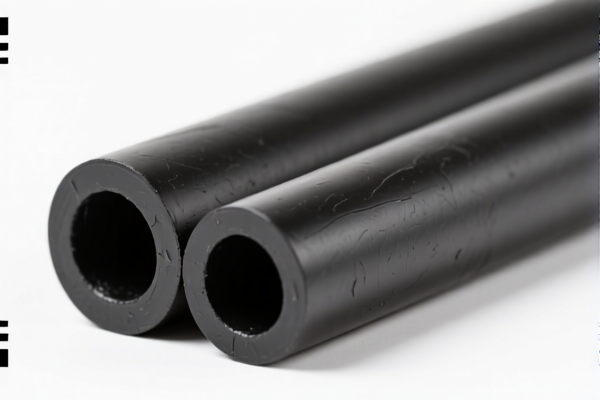
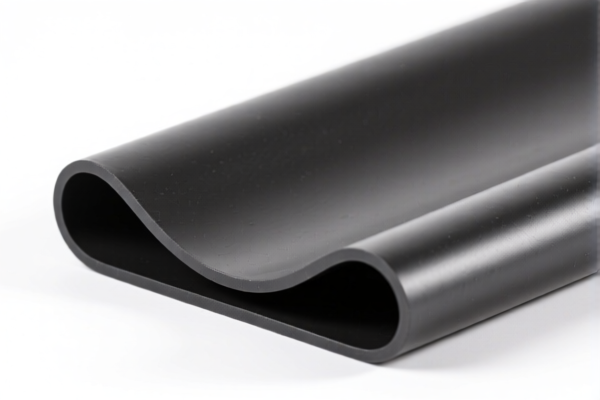
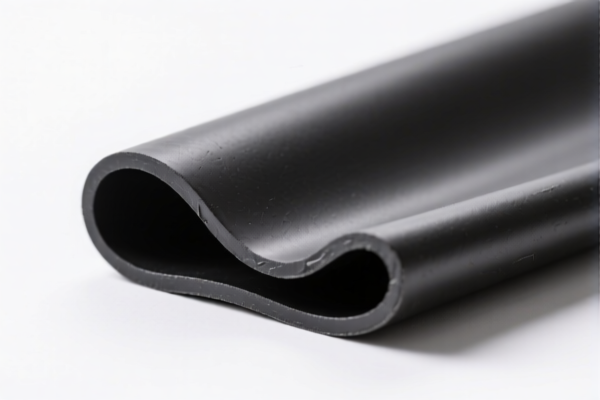
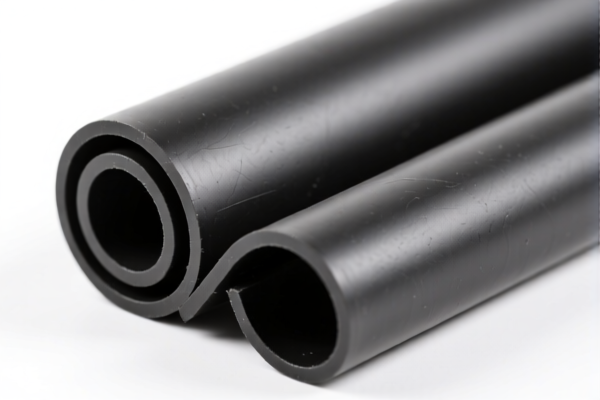
AI Analysis
🌿 Natural Rubber Modified Coating (NRMC)
🌐 HS Code Reference & Customs Clearance Guide | 2026 Latest Tariff Analysis | Professional Clearance Strategy
📌 I. Product Definition & Classification: What is "Natural Rubber Modified Coating"?
Natural Rubber Modified Coating refers to a semi-finished or intermediate rubber product where natural rubber has been mixed with other materials (plasticizers, accelerators, antioxidants, etc.) and is in a state of unvulcanized (uncured) plastic mass. It is not yet in its final manufactured shape (like a tire or gasket) but is prepared for further processing.
In international trade, this product falls strictly under Chapter 40 (Rubber and Articles Thereof). The key distinction lies in its state: * Is it a finished coating for walls/floors? ❌ No. That would be Chapter 32 (Paints/Varnishes). * Is it a finished rubber part? ❌ No. * Is it unvulcanized rubber mixed with additives? ✅ Yes.
⚠️ Critical Classification Point:
- If the product is natural rubber based, mixed with plasticizers, and unvulcanized → It belongs to 4005 (Unvulcanized rubber mixtures) or 4001 (Natural rubber in primary forms) depending on the specific physical form (sheets, lumps, liquid). - The provided<DATA>suggests a strong match for 4005 (Unvulcanized mixtures) and 4001 (Natural rubber, primary forms), as well as a potential misclassification risk to 4002 (Synthetic rubber) if the "modified" aspect implies synthetic blending. However, "Natural Rubber Modified" implies NR is the base.
📦 II. HS Code Classification Details (2026 Latest Tariff Authority Comparison)
Based on the <DATA> provided, here are the matched HS Codes and the logical reasoning for each:
| HS Code | Product Description | Logic for Matching "Natural Rubber Modified Coating" |
|---|---|---|
4005.20.00.00 |
Unvulcanized rubber mixtures, natural rubber based | Best Match. "Modified coating" often implies a mixture. If the coating is an unvulcanized mass of natural rubber mixed with other substances, it fits here. The summary notes: "Matches natural rubber material and modified material attributes, fits the classification of unvulcanized milled rubber." |
4001.29.00.00 |
Natural rubber, primary forms (other than sheets/lumps) | Strong Alternative. If the "coating" is in a liquid or semi-liquid paste form that is still considered a "primary form" of natural rubber before detailed mixing/vulcanization, it may fall here. Summary: "Matches natural rubber material and primary/intermediate forms, fits natural rubber and similar rubber categories." |
4001.22.00.50 |
Other forms of natural rubber (primary/semi-finished) | Possible Match. Similar to above, if the physical state is a specific intermediate form (e.g., liquid latex concentrate or specific paste) not covered by 4001.29. Summary: "Matches natural rubber material, inferred as primary or semi-finished form, fits other forms of natural rubber." |
4005.10.00.00 |
Unvulcanized rubber mixtures, synthetic or blend | Risk Match. If the "modified" part contains significant synthetic rubber or the customs authority suspects it's not purely natural, they may route it here. Summary: "Matches natural rubber material and modified material attributes, fits unvulcanized milled rubber." (Note: This code is often for synthetic blends, so ensure documentation proves NR dominance). |
4002.99.00.00 |
Other synthetic rubber (primary forms) | Wrong Classification (But Listed). This code is for Synthetic Rubber. The input is "Natural Rubber Modified." However, if the modification introduces synthetic elements, or if the "coating" is actually a synthetic emulsion disguised as NR, customs might flag it here. Summary: "Matches rubber components and modified material primary/intermediate forms, fits synthetic rubber attributes." |
🔍 Key Takeaway:
The product is primarily Unvulcanized Natural Rubber Mixtures. The most accurate codes are 4005.20 or 4001.29. 4002 is likely incorrect unless the product is predominantly synthetic.
💰 III. 2026 Latest Tariff Rate Breakdown (Including Surtaxes & Policy Surcharges)
✅ Applicable Country: United States (US)
✅ Origin: China (CN) (Implied by the tax details in DATA)
✅ Effective Date: 2025/2026 (Current Trade Environment)
🎯 1. 4005.20.00.00 / 4001.29.00.00 / 4001.22.00.50 / 4005.10.00.00
(Unvulcanized Natural Rubber & Mixtures)
| Item | Content |
|---|---|
| Base Tariff Rate | 0.0% (ad valorem) |
| Section 301 Surtax (USITC) | +25.0% (On Chinese origin rubber goods) |
| Section 122 / IEEPA Surtax | +10.0% (Additional surcharge on certain Chinese goods) |
| Total Tariff Rate | 35.0% |
| Tax Calculation | CIF Value × 35% |
| De Minimis Exemption? | ❌ No (Denied) |
| Legal Basis Path | USITC:4005.20.00.00 → Footnote: Section 301 → IEEPA: Section 122 |
📌 Explanation:
- Base Rate 0%: Rubber raw materials generally have low base tariffs to support US manufacturing.
- 25% Surtax: This is the standard Section 301 tariff on most Chinese rubber products (Chapter 40).
- 10% Surtax: The<DATA>explicitly mentions "122条款关税10%" (Section 122 tariff 10%). This is an additional layer on top of Section 301 for certain strategic materials.
- Total 35%: This is a high barrier. You must budget for a 35% tariff on the CIF value.
⚠️ Note on 4002.99.00.00 (Synthetic Rubber)
- If misclassified as Synthetic (
4002), the tax is also 35% (0% Base + 25% Sec 301 + 10% Sec 122). - Risk: Misclassification from
4001/4005to4002doesn't change the tax rate significantly but poses a legal/compliance risk if the product is actually Natural Rubber.
🛠️ IV. Customs Clearance Practical Advice (实战避坑指南)
✅ 1. Preparation Checklist (Non-negotiable)
| Document | Required | Explanation |
|---|---|---|
| ✅ Technical Data Sheet (TDS) | ✔️ | Must specify: % Natural Rubber, % Synthetic Rubber (if any), Additives, State (Liquid/Paste/Solid). Crucial to prove it's "Natural" not "Synthetic." |
| ✅ Formula/Composition List | ✔️ | Detailed breakdown of ingredients. Customs will check if the "Modified" part makes it a chemical product (Chapter 32) or Rubber (Chapter 40). |
| ✅ Product Photos | ✔️ | Show the physical state (e.g., drum of liquid, blocks of unvulcanized rubber). |
| ✅ Bill of Lading & Invoice | ✔️ | Must clearly state "Unvulcanized Natural Rubber Mixture" or "Natural Rubber Paste." Avoid vague terms like "Coating" alone. |
| ✅ Statement of Origin | ✔️ | Prove Chinese Origin to accept the 35% rate (or apply for exclusions if available). |
✅ 2. Declaration Strategy (Key Mantra)
🔥 "State is Unvulcanized, Material is Natural, Mix is Clear, Tax is 35%!"
| Scenario | Correct Declaration | Incorrect Declaration | Consequence |
|---|---|---|---|
| Product is Unvulcanized Rubber Paste | 4005.20.00.00 (Unvulcanized Mixture) |
"Paint" or "Varnish" | Wrong Chapter (32 vs 40) → High penalty, seizure. |
| Product is Liquid Latex | 4001.29.00.00 or 4001.22.00.50 |
"Synthetic Rubber" | Misclassification → Audit risk. |
| Product contains >50% Synthetic | 4005.10.00.00 |
"Natural Rubber" | Customs Rejection → Must re-classify. |
✅ 3. Special Handling Tips
| Situation | Advice |
|---|---|
| "Coating" vs "Rubber" | Do not use "Paint" or "Coating" in the HS Code description if it's rubber-based. Use "Unvulcanized Rubber Mixture." "Coating" might trigger Chapter 32 (Chemicals), which has different, potentially higher, scrutiny. |
| Section 301 Exclusion | Check if your specific HS Code was excluded from the 25% tariff in recent rounds. Unlikely for Rubber, but always verify. |
| Pre-Ruling Application | Given the complexity of "Modified" rubber, apply for an Advance Ruling from CBP if the product is new to the US market. |
🌍 V. Global Market Comparison (2026)
| Country/Region | Recommended HS Code | Tariff (China Origin) | Notes |
|---|---|---|---|
| 🇺🇸 USA | 4005.20.00.00 / 4001.29.00.00 |
35.0% | 25% Sec 301 + 10% Sec 122. High cost. |
| 🇨🇳 China | 4005.20.00.00 |
0% - 5% | Low duty for import into China. |
| 🇪🇺 EU | 4005.20.00 |
0% | Generally 0% MFN duty. No 301-style surtaxes. |
| 🇯🇵 Japan | 4005.20.00 |
0% - 3.2% | Low duty under EPA/JEFTA. |
📌 Conclusion:
The US is the most expensive market for this product due to the 35% total tariff.
If you are importing into the US, the 35% cost is fixed for Natural Rubber products from China.
📌 VI. Common Errors & Pitfalls (Blood & Tears Lessons)
❌ Error 1: Declaring as "Paint" (HS 3208)
👉 Consequence: Customs will reject it. Rubber coatings are Chapter 40, not 32. If declared as 3208, you might pay 0% base but face fraud allegations for misdeclaration.
👉 Correct: Use 4005/4001.
❌ Error 2: Ignoring the "Modified" aspect
👉 Consequence: If the product contains significant synthetic rubber, declaring it as Pure Natural (4001) is fraud.
👉 Correct: If synthetic > natural, use 4005.10 (Synthetic Mixtures).
❌ Error 3: Assuming "De Minimis" applies
👉 Consequence: Rubber is not eligible for the $800 de minimis exemption.
👉 Correct: Full duty payment is required.
🎯 VII. Conclusion: Professional Declaration, Cost Control
🎯 Key Mantra:
🔹 "Unvulcanized = 4005, Natural = 4001, Tax = 35%, No De Minimis."
🔹 "Don't call it Paint, Call it Rubber Mixture!"
📌 Pro Tip:
If your "Natural Rubber Modified Coating" is actually a finished waterproof coating for construction (with polymers, pigments, etc.), it might be classified under Chapter 39 (Plastics) or Chapter 32 (Paints).
However, based on the <DATA> provided, the system has matched it to Chapter 40 (Rubber).
Recommendation: Provide a Material Safety Data Sheet (MSDS) and Composition Analysis to CBP to prove the rubber content is dominant and unvulcanized.
📣 Immediate Action:
📞 Consult a Customs Broker: Confirm if
4005.20vs4001.29is better for your specific physical form.
💰 Budget 35% Duty: Do not underestimate the total landed cost.
📄 Prepare Documentation: TDS and Composition List are mandatory.
✨ Professional Clearance Starts with Precise Classification!
💼 Every percent of tax matters!
Customer Reviews
About HS Code Classification
The Harmonized System (HS) is an internationally standardized nomenclature developed by the World Customs Organization (WCO) to classify traded products. Over 200 countries use the HS system as the basis for customs tariffs, trade statistics, and import/export regulations.
Each HS code follows a hierarchical structure:
- Chapter (2 digits) — Broad category of goods (e.g., Chapter 84: Machinery and Mechanical Appliances)
- Heading (4 digits) — More specific grouping within the chapter
- Subheading (6 digits) — Internationally standardized breakdown, used by all WCO member countries
- National subdivisions (8-10 digits) — Country-specific extensions for further classification, such as US HTSUS 10-digit codes
Correct HS code classification is essential for smooth customs clearance, accurate duty payment, and compliance with trade regulations. Misclassification can lead to customs delays, overpayment of duties, or penalties.
When importing from CN to US, the applicable tariff rates may include:
- Most-Favored-Nation (MFN) rate — The standard duty rate applied to WTO members
- General rate — Applied to countries without trade agreements
- Trade remedy duties — Additional tariffs such as Section 301 (anti-dumping), Section 232 (national security), or countervailing duties
The information provided on this page is for reference purposes only. For official classification, please consult with your local customs authority or a licensed customs broker.