Natural Rubber Tire Treads
CN → US| HS编码 | 关税税率 | 原产国 | 目的国 | 文档 |
|---|---|---|---|---|
| 4005200000 | 35.0% | CN | US | 官方文档 |
| 4006100000 | 20.4% | CN | US | 官方文档 |
| 4012909000 | 37.7% | CN | US | 官方文档 |
| 4012904500 | 39.2% | CN | US | 官方文档 |
| 4005910000 | 35.0% | CN | US | 官方文档 |
商品图片
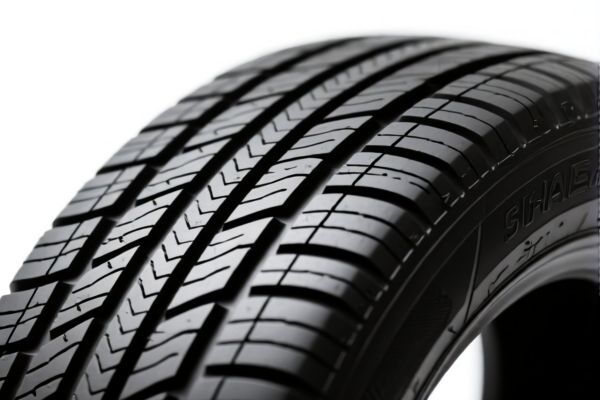
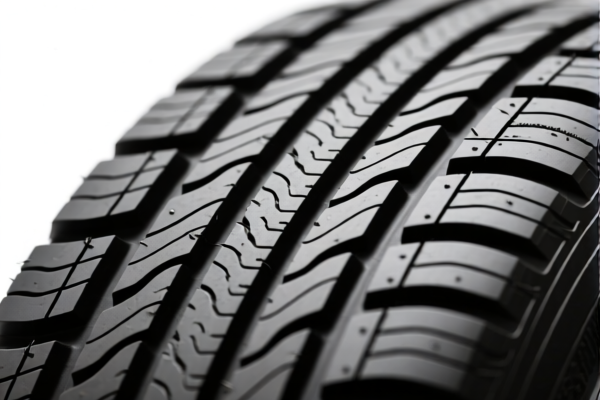
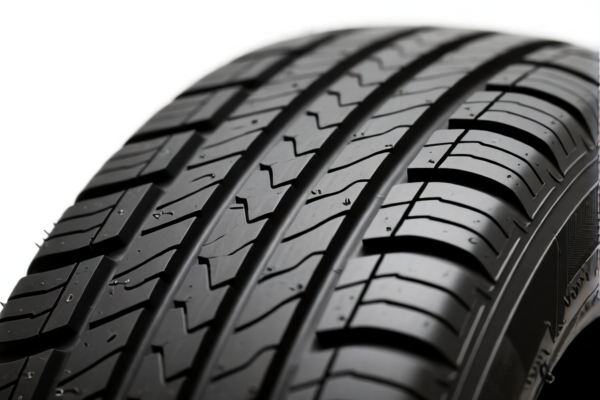
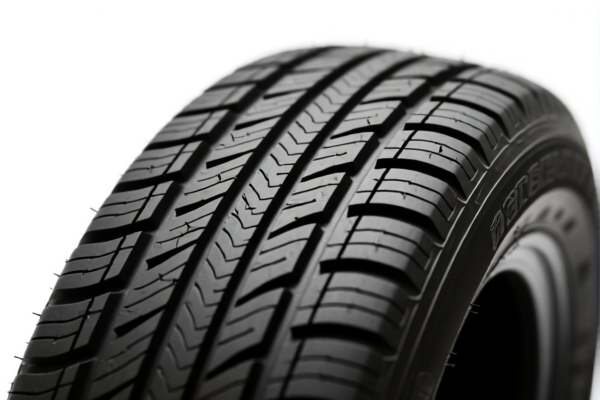
AI分析
🚛 Natural Rubber Tire Treads: The "Sole" of the Industry
🌐 HS Code Reference & Customs Clearance Guide | 2026 Latest Tariff Breakdown | Strategic Entry for Used Tire Treads
📌 Part 1: Product Definition & Classification – Do You Truly Know Your "Treads"?
Tire treads (often referred to as "rebuilt treads" or "uncured treads") are the critical contact surface of a tire, designed to be affixed to a tire casing during the retreading process. In international trade, these are not yet finished tires but intermediate rubber products. They fall under Chapter 40 (Rubber and Articles Thereof), specifically focusing on unvulcanized rubber in basic forms (plates, sheets, strips) or specialized retreading components.
Key Distinctions:
- Uncured vs. Cured: If the tread is uncured (soft, sticky, requiring heat/pressure to bond), it generally falls under Chapter 40 (Rubber). If it is a finished, vulcanized tire with a new tread layer already applied and sold as a unit, it might be classified differently (e.g., Ch 4012 for used retreaded tires, though the input data focuses on the tread material itself).
- Form Factor: Are they in rolls, individual pre-formed shapes, or sheet-like layers? The "summary" data suggests a focus on unvulcanized/semi-finished forms (strip, plate, sheet).
⚠️ Critical Classification Point:
- If the product is "uncured rubber in the form of strips/plates" intended for retreading → HS 4005 or 4006.
- If the product is viewed as a "part/accessory of a tire" in a finished retread context → HS 4012.
- Note: The provided data highlights specific HS codes based on material (rubber) and form (tread/strip).
📦 Part 2: HS Code Classification Details (Based on Provided Data)
The following table details the five potential HS codes from the <DATA> source, along with their corresponding tax structures.
| HS Code | Summary / Rationale | Total Tax Rate | Tax Breakdown (Base + Add-on) |
|---|---|---|---|
| 4005.20.00.00 | Unvulcanized Compound Rubber: Matches material (rubber) and form (tread as primary/plate-like). Fits "uncured or semi-finished rubber products." | 35.0% | Base: 0.0% Add-on: 25.0% Section 301: 10% |
| 4006.10.00.00 | Other Rubber Articles: Matches material (rubber), use (tire retreading), and form ("hump" strips/unvulcanized). | 20.4% | Base: 2.9% Add-on: 7.5% Section 301: 10% |
| 4012.90.90.00 | Parts of Tires: Matches material (rubber) and use (tread/retreading related). Fits specific sub-features under this category. | 37.7% | Base: 2.7% Add-on: 25.0% Section 301: 10% |
| 4012.90.45.00 | Natural Rubber Parts: Matches form (tread) and use (retreading). Material is natural rubber, fitting the natural rubber subsection. | 39.2% | Base: 4.2% Add-on: 25.0% Section 301: 10% |
| 4005.91.00.00 | Other Unvulcanized Rubber: Matches material (rubber) and form (tread as plate/sheet/strip basic form). Fits uncured mixed rubber. | 35.0% | Base: 0.0% Add-on: 25.0% Section 301: 10% |
🔍 Key Insight:
- HS 4005 & 4006 treat the tread as a raw/semi-finished rubber good.
- HS 4012 treats the tread as a part of a tire.
- The tax burden varies significantly from 20.4% (most favorable) to 39.2% (highest) depending on whether it is classified as "uncured rubber" or a "tire part."
💰 Part 3: 2026 Tariff Rate Detailed Analysis
✅ Target Market: United States (US)
✅ Origin: China (CN) (Inferred from "Section 301" and high add-on tariffs)
✅ Applicable Laws:
- Base Tariff: Standard MFN rate.
- Section 301 Tariff (10%): Specific additional duty on Chinese goods.
- USITC Add-on: Varies by HS code (25% or 7.5%).
🎯 1. The "Lowest Rate" Option: 4006.10.00.00
Total Rate: 20.4%
| Item | Detail |
|---|---|
| Base Duty | 2.9% |
| Section 301 Duty | 10.0% |
| USITC Add-on | 7.5% |
| Total Effective Rate | 20.4% |
| Why this rate? | Classified under "Other rubber articles" where the specific duty structure is more favorable for certain rubber forms. |
📌 Explanation:
This is the most cost-effective classification among the provided options. It requires proving the product is an "other rubber article" (like a specific strip/hump form) rather than a generic compound or tire part.
🎯 2. The "Standard Uncured Rubber" Options: 4005.20.00.00 & 4005.91.00.00
Total Rate: 35.0%
| Item | Detail |
|---|---|
| Base Duty | 0.0% |
| Section 301 Duty | 10.0% |
| USITC Add-on | 25.0% |
| Total Effective Rate | 35.0% |
| Why this rate? | Classified as "Unvulcanized Rubber." The base rate is 0%, but the 25% USITC penalty pushes the total high. |
📌 Explanation:
While the base duty is zero, the heavy penalty for Section 301 goods makes this more expensive than4006.10.00.00. This classification is common if the treads are sold as bulk unvulcanized rubber strips.
🎯 3. The "Tire Part" Options: 4012.90.90.00 & 4012.90.45.00
Total Rates: 37.7% – 39.2%
| HS Code | Base | 301 | USITC | Total |
|---|---|---|---|---|
4012.90.90.00 |
2.7% | 10% | 25% | 37.7% |
4012.90.45.00 |
4.2% | 10% | 25% | 39.2% |
📌 Explanation:
Classifying as a "tire part" incurs a 25% USITC add-on. Additionally,4012.90.45.00has a higher base duty (4.2%) due to its specific sub-category for natural rubber parts. Avoid this classification if possible due to the highest tax burden.
🛠️ Part 4: Customs Clearance Practical Advice
✅ 1. Documentation Checklist (Non-Negotiable)
| Document | Requirement | Purpose |
|---|---|---|
| Product Specification Sheet | Must state: UNCURED (Unvulcanized), Material Composition (% Natural Rubber, etc.), Dimensions | To prove it is not a "finished tire" and fits Chapter 40. |
| Photos/Video | Clear images of the tread profile, showing no vulcanization (stickiness/flexibility). | Prevents misclassification as "Used Tire" or "Vulcanized Part." |
| Commercial Invoice | Describe as: "Uncured Natural Rubber Treads for Tire Retreading" – Do NOT use vague terms like "Tire Parts" without context. | Aligns description with HS Code 4006 or 4005. |
| Certificate of Origin | Required for Section 301 determination. | Confirms China origin, triggering the 10% additional duty. |
| Bill of Lading | Ensure weight/volume matches invoice. | Avoids discrepancy checks. |
✅ 2. Classification Strategy (Pro Tips)
🔥 Golden Rule: "Uncured is Cheaper, Cured is Costly."
| Scenario | Recommended HS Code | Reasoning |
|---|---|---|
| Bulk Uncured Treads (rolls, strips) | 4006.10.00.00 |
Lowest Tax (20.4%). Best for raw material importers. |
| Individual Pre-Formed Uncured Treads | 4005.20.00.00 or 4005.91.00.00 |
Higher Tax (35%). Use if 4006 is rejected due to "special form." |
| Vulcanized/Finished Treads | 4012.90.xxxx |
Highest Tax (37-39%). Avoid unless legally required. |
| Used Retreaded Tires (not treads) | 4012.20.00.00 |
Not in data, but common. Note: Used tires have different restrictions. |
✅ 3. Common Pitfalls to Avoid
❌ Mistake 1: Declaring as "Tire Accessories" without specifying "Uncured Rubber."
👉 Risk: CBP may classify under 4012 (37-39% tax) instead of 4006 (20.4%).
👉 Fix: Always explicitly state "UNCURED" and "FOR RETREADING" in the description.
❌ Mistake 2: Confusing "Treads" with "Used Tires."
👉 Risk: Used tires may face import bans or different duties.
👉 Fix: Provide evidence that the product is a component, not a complete used tire.
❌ Mistake 3: Ignoring Section 301.
👉 Risk: Assuming base duty is the only cost.
👉 Fix: Budget for the additional 10% Section 301 duty on all China-origin rubber goods.
🌍 Part 5: Global Market Comparison (Quick Reference)
| Market | Likely HS Code | Est. Total Duty | Notes |
|---|---|---|---|
| 🇺🇸 USA | 4006.10.00.00 |
20.4% | Best case. Includes 25% USITC + 10% 301. |
| 🇨🇳 China | 4006.10.00.00 |
~10-12% | Lower base duties, no Section 301. |
| 🇪🇺 EU | 4006.10.00.00 |
~5-7% | No major US-style penalties. |
| 🇲🇽 Mexico | 4006.10.00.00 |
~0-5% | Potential under USMCA if originating there. |
📌 Conclusion for US Importers:
The 20.4% rate on4006.10.00.00is the target. Achieving this requires precise documentation proving the goods are unvulcanized rubber articles (treads) and not finished tire parts.
📌 Part 6: Summary & Action Plan
- Verify Product State: Ensure treads are UNVULCANIZED. If cured, rates jump to 37%+.
- Choose HS Code: Aim for
4006.10.00.00(20.4% total) over4005or4012. - Prepare Docs: Invoice must say "Uncured Rubber Treads."
- Calculate Cost: Budget for 20.4% total duty (Base + 301 + USITC).
- Consult Broker: File an Advance Ruling with CBP if the product form is unique.
🎯 Final Tip:
"Uncured = Lower Tax. Cured = Higher Tax. Documentation is King."
Mislabeling "uncured" as "tires" or "parts" can cost you 17% more in duties. Play it safe, classify accurately, and save profit.
✨ Professional Clearance Starts with Precise Classification!
💼 Your Bottom Line Depends on This 20.4% vs. 39.2% Decision!
用户评价
关于 HS 编码归类
协调制度(HS)是由世界海关组织(WCO)制定的国际贸易商品分类标准。全球 200 多个国家采用 HS 系统作为海关关税、贸易统计和进出口监管的基础。
每个 HS 编码遵循以下层级结构:
- 章(2 位)——商品大类(例如:第 84 章:机器和机械设备)
- 品目(4 位)——章内的更具体分类
- 子目(6 位)——国际通用细分,所有 WCO 成员国统一使用
- 本国细分(8-10 位)——各国自行扩展的细分编码,如美国 HTSUS 10 位编码
正确的 HS 编码归类对于顺利通关、准确缴纳关税和遵守贸易法规至关重要。错误归类可能导致海关延误、多缴关税或罚款。
从CN进口到US时,适用的关税税率可能包括:
- 最惠国(MFN)税率——适用于 WTO 成员国的标准关税税率
- 普通税率——适用于无贸易协定国家
- 贸易救济关税——附加关税,如 301 条款(反倾销)、232 条款(国家安全)或反补贴税
本页内容仅供参考。如需正式归类,请咨询当地海关或持牌报关代理。