Natural Rubber for O Rings
CN → US| HS编码 | 关税税率 | 原产国 | 目的国 | 文档 |
|---|---|---|---|---|
| 4016931010 | 37.5% | CN | US | 官方文档 |
| 4016100000 | 35.0% | CN | US | 官方文档 |
| 4016931010 | 37.5% | CN | US | 官方文档 |
| 4016100000 | 35.0% | CN | US | 官方文档 |
| 4016931010 | 37.5% | CN | US | 官方文档 |
商品图片
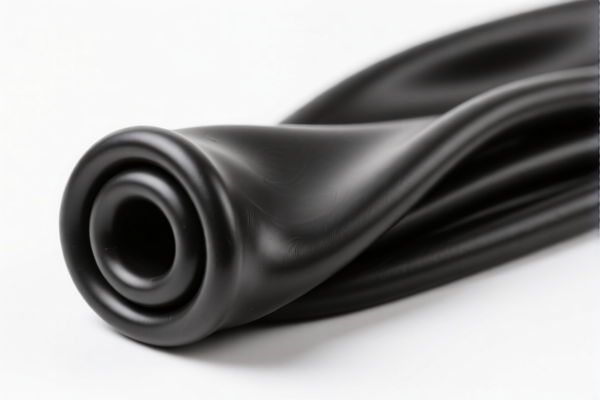
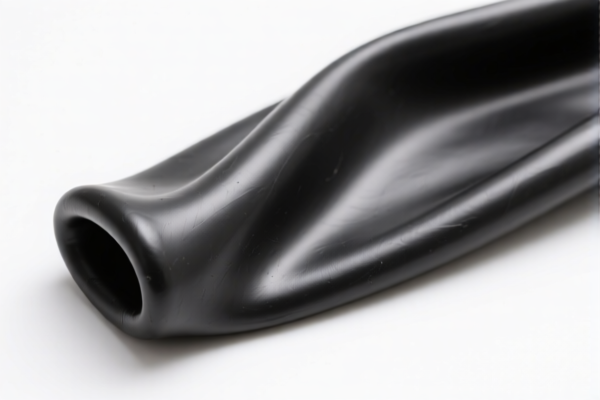
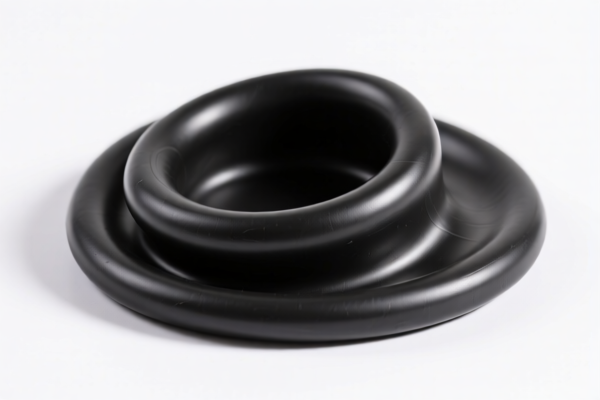
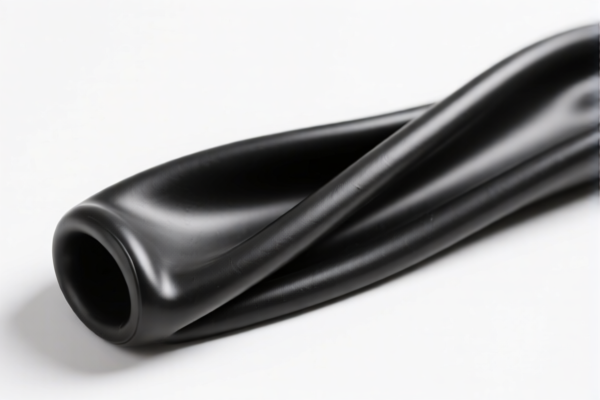
AI分析
🛠️ Natural Rubber O-Rings: HS Code Classification & Duty Breakdown (2026)
🌐 HS Code Reference & Customs Clearance Guide | 2026 Latest Tariff Analysis | Professional Clearance Strategy
📌 I. Product Definition: Are You Sure It’s Just "Natural Rubber"?
O-rings are critical sealing components used in automotive, industrial, and hydraulic systems. In international trade, the classification of O-rings depends strictly on material composition and physical state (specifically, whether they are made of foam rubber or solid rubber).
Key Distinction: * Foam Rubber O-Rings: Made of cellular, porous rubber. Classified under heading 4016.10. * Solid/Compressed Rubber O-Rings: Made of dense, vulcanized rubber (including natural rubber). Classified under heading 4016.93 (specifically for gaskets, washers, etc.).
⚠️ Critical Warning:
- If the material is Natural Rubber Foam → Use 4016.10.00.00
- If the material is Solid Natural Rubber (standard O-rings) → Use 4016.93.10.10
- Misclassification leads to severe underpayment/overpayment of duties and potential customs seizures.
📦 II. HS Code Classification Details (2026 Latest Tariff Authority)
Based on the provided data, here are the two primary HS Codes applicable to Natural Rubber O-Rings, along with their specific tax implications.
| HS Code | Product Description | Material State | Primary Use Case | Tax Burden |
|---|---|---|---|---|
4016.10.00.00 |
Natural Rubber Foam O-Rings | Cellular/Porous Foam | Soft sealing, acoustic insulation, low-pressure gaskets | 35.0% |
4016.93.10.10 |
Natural Rubber Solid O-Rings | Dense Vulcanized Rubber | Automotive seals, hydraulic systems, high-pressure applications | 37.5% |
🔍 Detailed Analysis: -
4016.10.00.00: This code specifically covers "Other articles of cellular rubber." If your O-ring has a sponge-like texture, it falls here. Note that the Base Tariff is 0%, but the total effective rate is higher due to additions. -4016.93.10.10: This code covers "Other articles of vulcanized rubber other than hard rubber," specifically gaskets, washers, and similar articles. This is the standard code for solid natural rubber O-rings. It carries a 2.5% Base Tariff.
💰 III. 2026 Latest Tariff Rate Breakdown (Including Surcharges & Policy Add-ons)
✅ Applicable Country: United States (US)
✅ Origin: China (CN)
✅ Effective Date: Post-2025 (Current Policy Context)
🎯 1. 4016.10.00.00 — Natural Rubber Foam O-Rings
| Item | Detail |
|---|---|
| Base Tariff | 0.0% (ad valorem) |
| Section 301 Surcharge | +25.0% (Additional duty on Chinese goods) |
| Section 122 Tariff | +10.0% (Specific trade remedy duty) |
| Total Effective Rate | 35.0% |
| Calculation Basis | CIF Value × 35.0% |
| De Minimis Exemption | ❌ Not Eligible (High duty rates typically block Section 321 de minimis claims) |
| Legal Basis Path | USITC:4016.10.00.00 → Section 301 Footnote → Section 122 |
📌 Explanation:
- Although the base duty is 0%, the 25% Section 301 tariff and 10% Section 122 tariff stack on top.
- Total: 35%.
- This applies only if the O-ring is made of foam/cellular natural rubber.
🎯 2. 4016.93.10.10 — Solid Natural Rubber O-Rings (Standard)
| Item | Detail |
|---|---|
| Base Tariff | 2.5% (ad valorem) |
| Section 301 Surcharge | +25.0% (Additional duty on Chinese goods) |
| Section 122 Tariff | +10.0% (Specific trade remedy duty) |
| Total Effective Rate | 37.5% |
| Calculation Basis | CIF Value × 37.5% |
| De Minimis Exemption | ❌ Not Eligible |
| Legal Basis Path | USITC:4016.93.10.10 → Section 301 Footnote → Section 122 |
📌 Explanation:
- This is the most common classification for standard automotive or industrial O-rings made of dense natural rubber.
- The 2.5% base tariff makes it slightly more expensive in base duty than foam, but the add-ons are identical.
- Total: 37.5%.
- Note: Even if described as "Vulcanized Rubber," if it is solid and used as a seal/gasket, this is the correct code.
🛠️ IV. Customs Clearance Practical Advice (Avoid Pitfalls)
✅ 1. Document Checklist (Mandatory)
| Document | Required? | Reason |
|---|---|---|
| ✅ Product Specification Sheet | ✔️ | Must explicitly state "Natural Rubber" and "Foam" vs "Solid" density. |
| ✅ Material Safety Data Sheet (MSDS) | ✔️ | Proves chemical composition (Natural Rubber Latex vs Synthetic). |
| ✅ Product Photographs | ✔️ | Close-up of cross-section to prove cellular (foam) vs solid structure. |
| ✅ Commercial Invoice | ✔️ | Clearly state "O-Ring, Natural Rubber, [Foam/Solid]" – DO NOT just say "Rubber Parts." |
| ✅ Packing List | ✔️ | Ensure no mixed shipments of foam and solid O-rings under one HS code. |
✅ 2. Declaration Strategy (Key Mnemonics)
🔥 "Foam is 10, Solid is 93, 35% vs 37.5%, Check the Density First!"
| Scenario | Correct HS Code | Error if Wrong |
|---|---|---|
| Soft, sponge-like O-ring | 4016.10.00.00 (35%) |
Declaring as 4016.93 (37.5%) → Overpay 2.5% |
| Hard, dense O-ring | 4016.93.10.10 (37.5%) |
Declaring as 4016.10 (35%) → Underpay 2.5% → Penalty Risk! |
| Fluoroelastomer (FKM) O-ring | 4016.93.10.10 (37.5%) |
Declaring as "Natural Rubber" → Fraud/Seizure (Different material, same code structure but different description) |
⚠️ Critical Note on Fluoroelastomer (FKM/Viton):
The data shows that Fluoroelastomer O-rings are also classified under4016.93.10.10with a 37.5% total duty. Even though the material is synthetic (not natural), if it is a solid vulcanized rubber seal, it often falls into the same "Other articles of vulcanized rubber" bucket. However, always verify if specific sub-noting excludes synthetics. In this dataset, it is included in4016.93.10.10.
✅ 3. Special Handling Tips
| Situation | Recommendation |
|---|---|
| Mixed Materials | If a shipment contains both Natural Rubber and Nitrile O-rings, separate them or declare the highest duty risk item accurately. |
| OEM Custom Parts | Provide the end-user’s drawing specifying "Natural Rubber Compound" to avoid being misclassified as synthetic. |
| Small Samples | Remember, de minimis exemptions (Section 321) are generally blocked for items with >$250 in duties or specific restrictions. With 35-37.5% duty, small parcels may still be taxed if not carefully structured. |
🌍 V. Global Market Comparison (2026)
| Market | HS Code | Base Duty | Add-ons (China Origin) | Total Est. Duty | Notes |
|---|---|---|---|---|---|
| 🇺🇸 USA | 4016.93.10.10 |
2.5% | +25% (301) +10% (122) | 37.5% | High barrier to entry for rubber parts. |
| 🇺🇸 USA | 4016.10.00.00 |
0.0% | +25% (301) +10% (122) | 35.0% | Slightly lower, but rare for standard seals. |
| 🇨🇳 China (Import) | 4016.93.10.10 |
~5-10% | None (MFN) | ~10% | Low duty for domestic consumption. |
| 🇪🇺 EU | 4016.93.10.10 |
0-2% | None (WTO MFN) | ~0-2% | No Section 301/122 equivalents. |
| 🇲🇽 Mexico | 4016.93.10.10 |
0% (USMCA) | None | 0% | If qualifying under USMCA rules of origin. |
📌 Conclusion:
- The US market is the most expensive due to Section 301 and Section 122 tariffs.
- Mexico (USMCA) offers a 0% duty alternative if the O-rings meet rules of origin. Consider supply chain diversification.
📌 VI. Common Mistakes & Pitfalls (Lessons Learned)
❌ Mistake 1: Declaring Solid O-rings as "Foam O-rings" to save 2.5%.
👉 Consequence: Customs audit, penalties for undervaluation, and potential cargo detention.
❌ Mistake 2: Using "Rubber Gasket" as a generic description without specifying material.
👉 Consequence: Customs may assign a default higher duty code or require expensive lab testing to determine material.
❌ Mistake 3: Ignoring Section 122 Tariff.
👉 Consequence: If the product falls under specific steel/aluminum or related trade remedies, Section 122 may apply incorrectly or be missed, leading to back-taxes.
✅ Correct Approach:
"O-Ring, Natural Rubber, Solid, Vulcanized, Automotive Seal, Model XYZ, Made in China"
🎯 VII. Conclusion: Precision is Profit
🎯 Remember:
🔹 "Foam is 10, Solid is 93."
🔹 "35% vs 37.5%: A 2.5% difference is worth the inspection."
🔹 "Check the Density: Porous vs. Dense."
📌 Pro Tip:
If you are importing large volumes, consider supply chain shifting to Mexico (USMCA) to eliminate the 35-37.5% US tariffs entirely. The 0% duty under USMCA can save you significant margin on high-volume rubber goods.
📣 Immediate Action:
📞 Contact your customs broker with the exact material composition and physical structure (foam/solid) of your O-rings.
🚀 Request a Binding Ruling from US Customs if the classification is ambiguous.
💼 Optimize your HS Code to ensure you are not overpaying or risking penalties.
✨ Professional Clearance Starts with Accurate Classification!
💼 Every percent of duty matters in the Rubber Trade!
用户评价
关于 HS 编码归类
协调制度(HS)是由世界海关组织(WCO)制定的国际贸易商品分类标准。全球 200 多个国家采用 HS 系统作为海关关税、贸易统计和进出口监管的基础。
每个 HS 编码遵循以下层级结构:
- 章(2 位)——商品大类(例如:第 84 章:机器和机械设备)
- 品目(4 位)——章内的更具体分类
- 子目(6 位)——国际通用细分,所有 WCO 成员国统一使用
- 本国细分(8-10 位)——各国自行扩展的细分编码,如美国 HTSUS 10 位编码
正确的 HS 编码归类对于顺利通关、准确缴纳关税和遵守贸易法规至关重要。错误归类可能导致海关延误、多缴关税或罚款。
从CN进口到US时,适用的关税税率可能包括:
- 最惠国(MFN)税率——适用于 WTO 成员国的标准关税税率
- 普通税率——适用于无贸易协定国家
- 贸易救济关税——附加关税,如 301 条款(反倾销)、232 条款(国家安全)或反补贴税
本页内容仅供参考。如需正式归类,请咨询当地海关或持牌报关代理。