Natural Rubber for O Rings
CN → US| HS Code | Tariff Rate | Origin | Destination | Doc |
|---|---|---|---|---|
| 4016931010 | 37.5% | CN | US | Official Doc |
| 4016100000 | 35.0% | CN | US | Official Doc |
| 4016931010 | 37.5% | CN | US | Official Doc |
| 4016100000 | 35.0% | CN | US | Official Doc |
| 4016931010 | 37.5% | CN | US | Official Doc |
Product Images
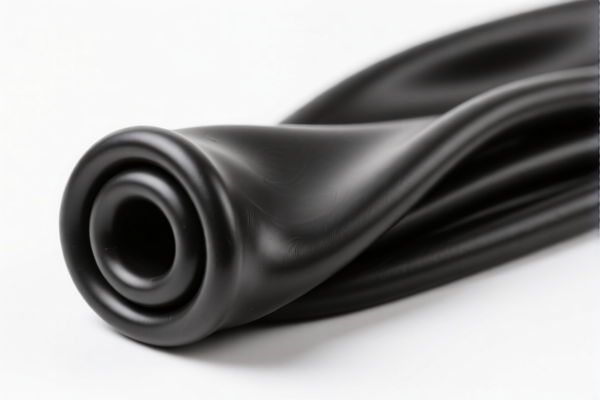
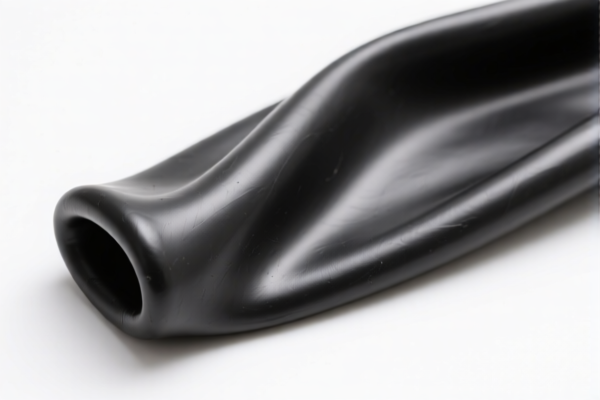
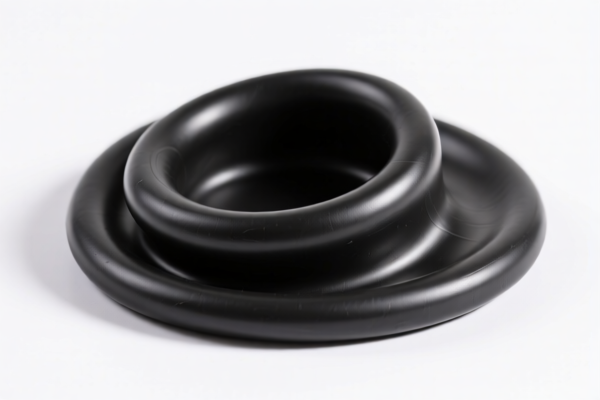
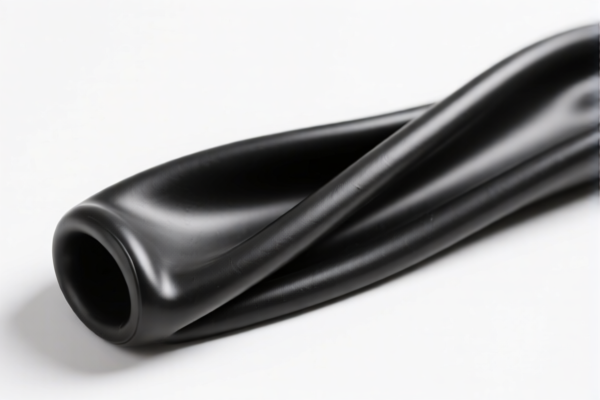
AI Analysis
🛠️ Natural Rubber O-Rings: HS Code Classification & Duty Breakdown (2026)
🌐 HS Code Reference & Customs Clearance Guide | 2026 Latest Tariff Analysis | Professional Clearance Strategy
📌 I. Product Definition: Are You Sure It’s Just "Natural Rubber"?
O-rings are critical sealing components used in automotive, industrial, and hydraulic systems. In international trade, the classification of O-rings depends strictly on material composition and physical state (specifically, whether they are made of foam rubber or solid rubber).
Key Distinction: * Foam Rubber O-Rings: Made of cellular, porous rubber. Classified under heading 4016.10. * Solid/Compressed Rubber O-Rings: Made of dense, vulcanized rubber (including natural rubber). Classified under heading 4016.93 (specifically for gaskets, washers, etc.).
⚠️ Critical Warning:
- If the material is Natural Rubber Foam → Use 4016.10.00.00
- If the material is Solid Natural Rubber (standard O-rings) → Use 4016.93.10.10
- Misclassification leads to severe underpayment/overpayment of duties and potential customs seizures.
📦 II. HS Code Classification Details (2026 Latest Tariff Authority)
Based on the provided data, here are the two primary HS Codes applicable to Natural Rubber O-Rings, along with their specific tax implications.
| HS Code | Product Description | Material State | Primary Use Case | Tax Burden |
|---|---|---|---|---|
4016.10.00.00 |
Natural Rubber Foam O-Rings | Cellular/Porous Foam | Soft sealing, acoustic insulation, low-pressure gaskets | 35.0% |
4016.93.10.10 |
Natural Rubber Solid O-Rings | Dense Vulcanized Rubber | Automotive seals, hydraulic systems, high-pressure applications | 37.5% |
🔍 Detailed Analysis: -
4016.10.00.00: This code specifically covers "Other articles of cellular rubber." If your O-ring has a sponge-like texture, it falls here. Note that the Base Tariff is 0%, but the total effective rate is higher due to additions. -4016.93.10.10: This code covers "Other articles of vulcanized rubber other than hard rubber," specifically gaskets, washers, and similar articles. This is the standard code for solid natural rubber O-rings. It carries a 2.5% Base Tariff.
💰 III. 2026 Latest Tariff Rate Breakdown (Including Surcharges & Policy Add-ons)
✅ Applicable Country: United States (US)
✅ Origin: China (CN)
✅ Effective Date: Post-2025 (Current Policy Context)
🎯 1. 4016.10.00.00 — Natural Rubber Foam O-Rings
| Item | Detail |
|---|---|
| Base Tariff | 0.0% (ad valorem) |
| Section 301 Surcharge | +25.0% (Additional duty on Chinese goods) |
| Section 122 Tariff | +10.0% (Specific trade remedy duty) |
| Total Effective Rate | 35.0% |
| Calculation Basis | CIF Value × 35.0% |
| De Minimis Exemption | ❌ Not Eligible (High duty rates typically block Section 321 de minimis claims) |
| Legal Basis Path | USITC:4016.10.00.00 → Section 301 Footnote → Section 122 |
📌 Explanation:
- Although the base duty is 0%, the 25% Section 301 tariff and 10% Section 122 tariff stack on top.
- Total: 35%.
- This applies only if the O-ring is made of foam/cellular natural rubber.
🎯 2. 4016.93.10.10 — Solid Natural Rubber O-Rings (Standard)
| Item | Detail |
|---|---|
| Base Tariff | 2.5% (ad valorem) |
| Section 301 Surcharge | +25.0% (Additional duty on Chinese goods) |
| Section 122 Tariff | +10.0% (Specific trade remedy duty) |
| Total Effective Rate | 37.5% |
| Calculation Basis | CIF Value × 37.5% |
| De Minimis Exemption | ❌ Not Eligible |
| Legal Basis Path | USITC:4016.93.10.10 → Section 301 Footnote → Section 122 |
📌 Explanation:
- This is the most common classification for standard automotive or industrial O-rings made of dense natural rubber.
- The 2.5% base tariff makes it slightly more expensive in base duty than foam, but the add-ons are identical.
- Total: 37.5%.
- Note: Even if described as "Vulcanized Rubber," if it is solid and used as a seal/gasket, this is the correct code.
🛠️ IV. Customs Clearance Practical Advice (Avoid Pitfalls)
✅ 1. Document Checklist (Mandatory)
| Document | Required? | Reason |
|---|---|---|
| ✅ Product Specification Sheet | ✔️ | Must explicitly state "Natural Rubber" and "Foam" vs "Solid" density. |
| ✅ Material Safety Data Sheet (MSDS) | ✔️ | Proves chemical composition (Natural Rubber Latex vs Synthetic). |
| ✅ Product Photographs | ✔️ | Close-up of cross-section to prove cellular (foam) vs solid structure. |
| ✅ Commercial Invoice | ✔️ | Clearly state "O-Ring, Natural Rubber, [Foam/Solid]" – DO NOT just say "Rubber Parts." |
| ✅ Packing List | ✔️ | Ensure no mixed shipments of foam and solid O-rings under one HS code. |
✅ 2. Declaration Strategy (Key Mnemonics)
🔥 "Foam is 10, Solid is 93, 35% vs 37.5%, Check the Density First!"
| Scenario | Correct HS Code | Error if Wrong |
|---|---|---|
| Soft, sponge-like O-ring | 4016.10.00.00 (35%) |
Declaring as 4016.93 (37.5%) → Overpay 2.5% |
| Hard, dense O-ring | 4016.93.10.10 (37.5%) |
Declaring as 4016.10 (35%) → Underpay 2.5% → Penalty Risk! |
| Fluoroelastomer (FKM) O-ring | 4016.93.10.10 (37.5%) |
Declaring as "Natural Rubber" → Fraud/Seizure (Different material, same code structure but different description) |
⚠️ Critical Note on Fluoroelastomer (FKM/Viton):
The data shows that Fluoroelastomer O-rings are also classified under4016.93.10.10with a 37.5% total duty. Even though the material is synthetic (not natural), if it is a solid vulcanized rubber seal, it often falls into the same "Other articles of vulcanized rubber" bucket. However, always verify if specific sub-noting excludes synthetics. In this dataset, it is included in4016.93.10.10.
✅ 3. Special Handling Tips
| Situation | Recommendation |
|---|---|
| Mixed Materials | If a shipment contains both Natural Rubber and Nitrile O-rings, separate them or declare the highest duty risk item accurately. |
| OEM Custom Parts | Provide the end-user’s drawing specifying "Natural Rubber Compound" to avoid being misclassified as synthetic. |
| Small Samples | Remember, de minimis exemptions (Section 321) are generally blocked for items with >$250 in duties or specific restrictions. With 35-37.5% duty, small parcels may still be taxed if not carefully structured. |
🌍 V. Global Market Comparison (2026)
| Market | HS Code | Base Duty | Add-ons (China Origin) | Total Est. Duty | Notes |
|---|---|---|---|---|---|
| 🇺🇸 USA | 4016.93.10.10 |
2.5% | +25% (301) +10% (122) | 37.5% | High barrier to entry for rubber parts. |
| 🇺🇸 USA | 4016.10.00.00 |
0.0% | +25% (301) +10% (122) | 35.0% | Slightly lower, but rare for standard seals. |
| 🇨🇳 China (Import) | 4016.93.10.10 |
~5-10% | None (MFN) | ~10% | Low duty for domestic consumption. |
| 🇪🇺 EU | 4016.93.10.10 |
0-2% | None (WTO MFN) | ~0-2% | No Section 301/122 equivalents. |
| 🇲🇽 Mexico | 4016.93.10.10 |
0% (USMCA) | None | 0% | If qualifying under USMCA rules of origin. |
📌 Conclusion:
- The US market is the most expensive due to Section 301 and Section 122 tariffs.
- Mexico (USMCA) offers a 0% duty alternative if the O-rings meet rules of origin. Consider supply chain diversification.
📌 VI. Common Mistakes & Pitfalls (Lessons Learned)
❌ Mistake 1: Declaring Solid O-rings as "Foam O-rings" to save 2.5%.
👉 Consequence: Customs audit, penalties for undervaluation, and potential cargo detention.
❌ Mistake 2: Using "Rubber Gasket" as a generic description without specifying material.
👉 Consequence: Customs may assign a default higher duty code or require expensive lab testing to determine material.
❌ Mistake 3: Ignoring Section 122 Tariff.
👉 Consequence: If the product falls under specific steel/aluminum or related trade remedies, Section 122 may apply incorrectly or be missed, leading to back-taxes.
✅ Correct Approach:
"O-Ring, Natural Rubber, Solid, Vulcanized, Automotive Seal, Model XYZ, Made in China"
🎯 VII. Conclusion: Precision is Profit
🎯 Remember:
🔹 "Foam is 10, Solid is 93."
🔹 "35% vs 37.5%: A 2.5% difference is worth the inspection."
🔹 "Check the Density: Porous vs. Dense."
📌 Pro Tip:
If you are importing large volumes, consider supply chain shifting to Mexico (USMCA) to eliminate the 35-37.5% US tariffs entirely. The 0% duty under USMCA can save you significant margin on high-volume rubber goods.
📣 Immediate Action:
📞 Contact your customs broker with the exact material composition and physical structure (foam/solid) of your O-rings.
🚀 Request a Binding Ruling from US Customs if the classification is ambiguous.
💼 Optimize your HS Code to ensure you are not overpaying or risking penalties.
✨ Professional Clearance Starts with Accurate Classification!
💼 Every percent of duty matters in the Rubber Trade!
Customer Reviews
About HS Code Classification
The Harmonized System (HS) is an internationally standardized nomenclature developed by the World Customs Organization (WCO) to classify traded products. Over 200 countries use the HS system as the basis for customs tariffs, trade statistics, and import/export regulations.
Each HS code follows a hierarchical structure:
- Chapter (2 digits) — Broad category of goods (e.g., Chapter 84: Machinery and Mechanical Appliances)
- Heading (4 digits) — More specific grouping within the chapter
- Subheading (6 digits) — Internationally standardized breakdown, used by all WCO member countries
- National subdivisions (8-10 digits) — Country-specific extensions for further classification, such as US HTSUS 10-digit codes
Correct HS code classification is essential for smooth customs clearance, accurate duty payment, and compliance with trade regulations. Misclassification can lead to customs delays, overpayment of duties, or penalties.
When importing from CN to US, the applicable tariff rates may include:
- Most-Favored-Nation (MFN) rate — The standard duty rate applied to WTO members
- General rate — Applied to countries without trade agreements
- Trade remedy duties — Additional tariffs such as Section 301 (anti-dumping), Section 232 (national security), or countervailing duties
The information provided on this page is for reference purposes only. For official classification, please consult with your local customs authority or a licensed customs broker.