Needle Aspirator
CN → US| HS编码 | 关税税率 | 原产国 | 目的国 | 文档 |
|---|---|---|---|---|
| 9018310080 | 110.0% | CN | US | 官方文档 |
| 3926902100 | 21.7% | CN | US | 官方文档 |
| 9018390050 | 10.0% | CN | US | 官方文档 |
商品图片
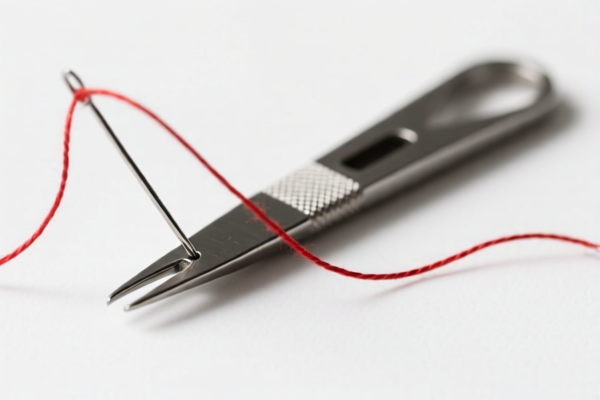
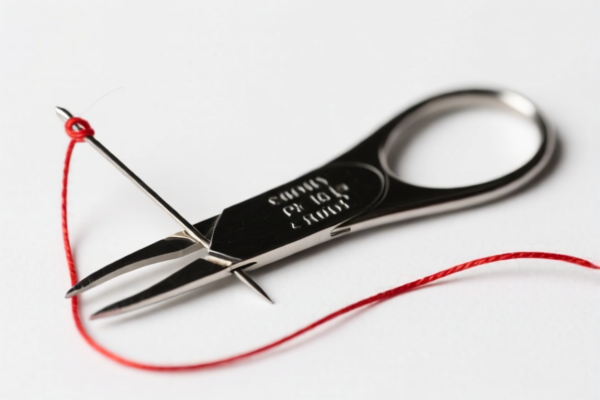
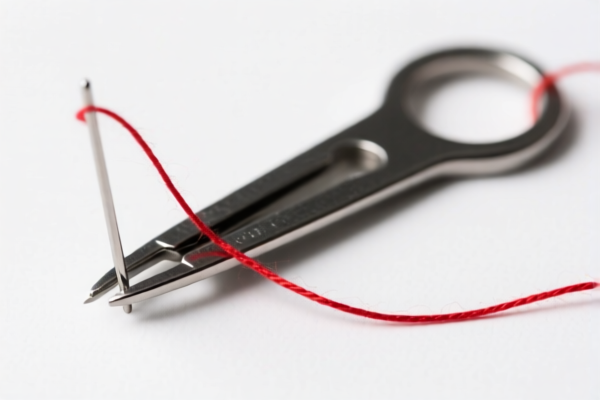
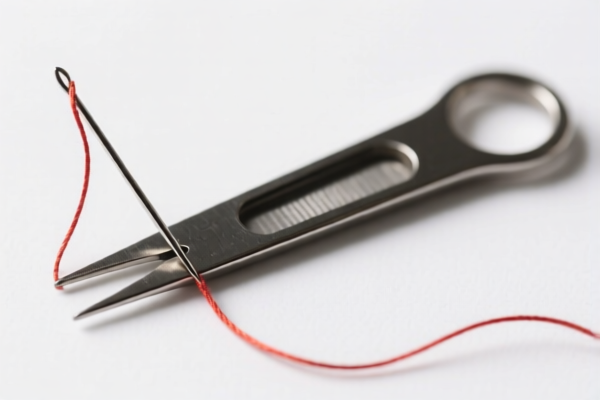
AI分析
💉 Needle Aspirator (Suction Devices for Medical Use)
🌐 HS Code Reference & Customs Clearance Guide | 2026 Latest Tariff Analysis | Professional Strategy
📌 I. Product Definition & Classification: What is a "Needle Aspirator"?
A Needle Aspirator is a medical device primarily used in surgical, dental, or diagnostic procedures to remove fluids, gases, or tissue samples from the body via negative pressure (suction). In international trade, its classification depends heavily on its material, specific application, and structural integration.
It is crucial to distinguish between: 1. Medical Instruments: If it is a functional part of a larger medical system or a standalone diagnostic tool. 2. Plastic Accessories/Components: If it is a disposable plastic part attached to a larger device. 3. Catheters/Drainage Tubes: If the "needle" is actually a flexible catheter or drainage tube used for continuous fluid removal.
⚠️ Key Classification Divergence:
- If it is a sterile, single-use plastic syringe-like device →9018.31.00.80or3926.90.21.00
- If it is a metal/plastic drainage catheter →9018.39.00.50
- Note: The distinction often lies in whether the item is considered a "syringe" (9018) or a "plastic article" (3926), or a "catheter" (9018.39).
📦 II. HS Code Classification Details (Based on Provided Data)
| HS Code | Product Description (Inferred) | Key Criteria | Total Tax Rate |
|---|---|---|---|
9018.31.00.80 |
Other Syringes (Medical Instruments) | Classifies as a medical injection/suction device; non-specific material requirement. | 110.0% |
3926.90.21.00 |
Other Plastic Articles (Medical Accessories) | Infers plastic material; used as a medical accessory/component; falls under medical plastic articles. | 21.7% |
9018.39.00.50 |
Other Medical Instruments (Catheters/Drainage) | Used as a medical instrument (needle-related); form logic matches catheters/drains; material is metal/plastic. | 10.0% |
🔍 Critical Analysis:
-9018.31.00.80: High risk if classified strictly as a "syringe" due to high additional duties.
-3926.90.21.00: Potential cost-saving classification if the item is clearly a plastic component rather than a standalone medical instrument, but still attracts significant duties.
-9018.39.00.50: Most favorable tariff (10%) if the device can be logically argued as a catheter or drainage tube (common for flexible aspirators) rather than a rigid syringe.
💰 III. Detailed Tariff Breakdown (2026 Latest Rates)
✅ Scope: Based on provided tax details (likely US Import from China, given "Section 301" and "122 Clause" references).
✅ Base Duty: Often 0% for medical instruments (9018), but Additional Duties apply.
🎯 1. 9018.31.00.80 —— Other Syringes (Medical Instrument)
| Item | Detail |
|---|---|
| Base Duty | 0.0% |
| Additional Duty (Section 301) | 100.0% |
| 122 Clause Duty | 10.0% |
| Total Effective Rate | 110.0% |
| Calculation | CIF Value × 110% |
| De Minimis Exemption | ❌ Not Eligible (High value/additional duties usually block de minimis) |
| Legal Basis | Medical Instrument Heading + High Section 301 Footnotes |
📌 Explanation:
- This classification treats the item as a standard medical syringe.
- The 100% additional duty is punitive, likely targeting specific Chinese medical supply chains under trade restrictions.
- Total 110% makes this classification prohibitively expensive unless exempted.
🎯 2. 3926.90.21.00 —— Other Plastic Articles (Medical Use)
| Item | Detail |
|---|---|
| Base Duty | 4.2% |
| Additional Duty (Section 301) | 7.5% |
| 122 Clause Duty | 10.0% |
| Total Effective Rate | 21.7% |
| Calculation | CIF Value × 21.7% |
| De Minimis Exemption | ❌ Not Eligible (Additional duties apply) |
| Legal Basis | Chapter 39 (Plastics) + Specific Medical Plastic Footnotes |
📌 Explanation:
- This classification assumes the item is primarily plastic.
- While cheaper than9018.31, the 4.2% base duty plus 7.5% additional duty still results in a moderate tax burden.
- Useful if the product is a disposable plastic tip or non-functional accessory.
🎯 3. 9018.39.00.50 —— Other Medical Instruments (Catheters/Drainage)
| Item | Detail |
|---|---|
| Base Duty | 0.0% |
| Additional Duty (Section 301) | 0.0% |
| 122 Clause Duty | 10.0% |
| Total Effective Rate | 10.0% |
| Calculation | CIF Value × 10% |
| De Minimis Exemption | ❌ Not Eligible (122 clause duty applies) |
| Legal Basis | Medical Instrument Heading + Lower Section 301 Footnotes |
📌 Explanation:
- This is the most cost-effective classification.
- It relies on arguing that the aspirator is a catheter, drainage tube, or similar device rather than a "syringe."
- Zero Base Duty and Zero Section 301 Additional Duty (only 10% for "122 Clause") make this highly attractive.
- Key Argument: "The device functions as a drainage/catheter system, not a simple injection syringe."
🛠️ IV. Customs Clearance Practical Advice (Strategic Recommendations)
✅ 1. Material & Functional Documentation (Crucial for Classification)
| Document | Purpose | Key Content |
|---|---|---|
| Product Specification Sheet | Prove Material | Explicitly state if the device is plastic, metal, or composite. |
| Technical Diagram | Prove Function | Show if the device is a rigid syringe (9018.31) or a flexible catheter/drainage tube (9018.39). |
| Intended Use Statement | Justify Category | "Used for surgical drainage/catheterization" supports 9018.39.00.50. |
| Third-Party Testing | Compliance | FDA 510(k) clearance, CE Mark, ISO 13485 certificates. |
✅ 2. Declaration Strategy (Best Practices)
🔥 Golden Rule: "Characterize as Drainage/Catheter, Not Syringe, to Avoid 110% Duty!"
| Scenario | Recommended HS Code | Reason |
|---|---|---|
| Rigid Plastic/Metal Syringe | 9018.31.00.80 |
High tax (110%), but accurate if no alternative exists. |
| Disposable Plastic Accessory | 3926.90.21.00 |
Moderate tax (21.7%), good for non-functional parts. |
| Flexible Tubing/Catheter Aspirator | 9018.39.00.50 |
Lowest tax (10%), best if product design allows. |
✅ 3. Special Considerations
| Issue | Solution |
|---|---|
| "122 Clause" Duty | Note: The 10% duty in 9018.39 and 3926.90 is likely a specific US trade remedy. Ensure origin documentation is precise. |
| FDA Compliance | All medical aspirators require FDA registration. Ensure your FDA Establishment Identifier is on the commercial invoice. |
| Plastic Origin | If using 3926.90.21.00, prove the plastic is not from a restricted source. |
| Misclassification Risk | Do not use 9018.39 for a rigid syringe. CBP may audit and assess penalties. Only use it if the device truly functions as a catheter/drainage tube. |
🌍 V. Global Market Comparison (2026 Context)
| Market | Recommended HS Code | Estimated Duty (CN Origin) | Notes |
|---|---|---|---|
| 🇺🇸 USA | 9018.39.00.50 |
10.0% (Lowest) | Leverage "Catheter" classification to avoid 301 duties. |
| 🇺🇸 USA | 9018.31.00.80 |
110.0% (Highest) | Avoid unless strictly a syringe with no other option. |
| 🇪🇺 EU | 9018.39 |
~0-6% | Generally lower duties for medical devices; no Section 301. |
| 🇨🇳 China | 9018.31 |
~0-6% | Import duties vary; check FTA benefits if re-exporting. |
📌 Conclusion:
- USA is the critical market with high tariffs.
- Strategic Classification: Argue for9018.39.00.50(Catheter/Drainage) to reduce duties from 110% to 10%.
- Documentation: Must support the "catheter/drainage" function over "syringe" function.
📌 VI. Common Mistakes & Pitfalls (Learn from Errors)
❌ Mistake 1: Calling a rigid syringe a "catheter" to get 10% tax
👉 Risk: CBP audit, penalties, and retroactive 110% duty.
✅ Fix: Only use 9018.39 if the device is flexible or functionally a drainage tube.
❌ Mistake 2: Ignoring the "122 Clause"
👉 Risk: Unexpected 10% tax even on "duty-free" base items.
✅ Fix: Budget for the 10% additional duty in all HS codes listed.
❌ Mistake 3: Misdeclaring plastic content
👉 Risk: Misclassification under 3926 vs 9018.
✅ Fix: Provide detailed material composition (e.g., "Polypropylene plastic body, metal needle").
🎯 VII. Final Verdict: Smart Clearance Strategy
🎯 Key Takeaway:
🔹 Aim for
9018.39.00.50(10% Total Duty) if your product can be reasonably described as a catheter, drainage tube, or flexible aspiration device.
🔹 Avoid9018.31.00.80(110% Total Duty) unless it is a standard rigid syringe with no other classification path.
🔹 Use3926.90.21.00(21.7% Total Duty) only for plastic accessories that are not standalone medical instruments.
📌 Pro Tip:
- Pre-classification Ruling: Apply for an HS Code Binding Ruling from US CBP if the product design is ambiguous.
- Supply Chain Audit: Ensure the "plastic" content in
3926is not from restricted sources.- FDA First: No customs clearance without FDA 510(k) or De Novo clearance for medical devices.
📣 Action Plan:
📞 1. Confirm Product Design: Is it rigid (syringe) or flexible (catheter)?
📄 2. Update Technical Docs: Highlight "drainage/catheter" functionality for9018.39.
🚀 3. File for Ruling: If uncertain, seek a CBP binding ruling to mitigate 110% risk.
✨ Precision in Classification Saves 100% in Duties!
💼 Smart Tariff Engineering for Medical Devices
用户评价
关于 HS 编码归类
协调制度(HS)是由世界海关组织(WCO)制定的国际贸易商品分类标准。全球 200 多个国家采用 HS 系统作为海关关税、贸易统计和进出口监管的基础。
每个 HS 编码遵循以下层级结构:
- 章(2 位)——商品大类(例如:第 84 章:机器和机械设备)
- 品目(4 位)——章内的更具体分类
- 子目(6 位)——国际通用细分,所有 WCO 成员国统一使用
- 本国细分(8-10 位)——各国自行扩展的细分编码,如美国 HTSUS 10 位编码
正确的 HS 编码归类对于顺利通关、准确缴纳关税和遵守贸易法规至关重要。错误归类可能导致海关延误、多缴关税或罚款。
从CN进口到US时,适用的关税税率可能包括:
- 最惠国(MFN)税率——适用于 WTO 成员国的标准关税税率
- 普通税率——适用于无贸易协定国家
- 贸易救济关税——附加关税,如 301 条款(反倾销)、232 条款(国家安全)或反补贴税
本页内容仅供参考。如需正式归类,请咨询当地海关或持牌报关代理。