Needle Aspirator
CN → US| HS Code | Tariff Rate | Origin | Destination | Doc |
|---|---|---|---|---|
| 9018310080 | 110.0% | CN | US | Official Doc |
| 3926902100 | 21.7% | CN | US | Official Doc |
| 9018390050 | 10.0% | CN | US | Official Doc |
Product Images
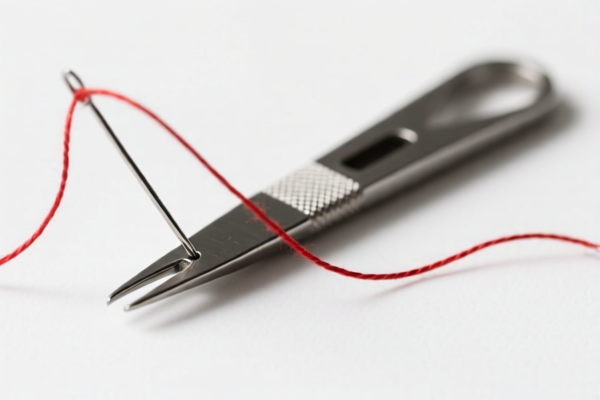

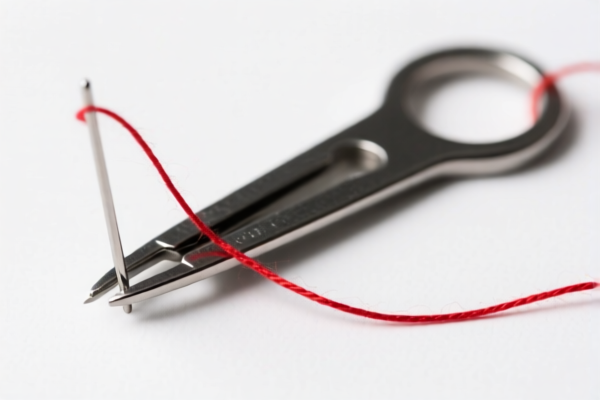
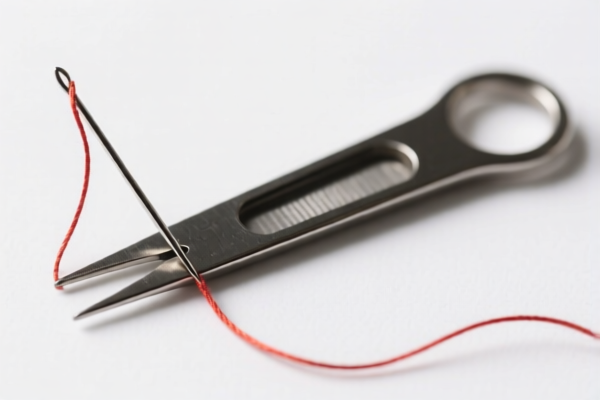
AI Analysis
💉 Needle Aspirator (Suction Devices for Medical Use)
🌐 HS Code Reference & Customs Clearance Guide | 2026 Latest Tariff Analysis | Professional Strategy
📌 I. Product Definition & Classification: What is a "Needle Aspirator"?
A Needle Aspirator is a medical device primarily used in surgical, dental, or diagnostic procedures to remove fluids, gases, or tissue samples from the body via negative pressure (suction). In international trade, its classification depends heavily on its material, specific application, and structural integration.
It is crucial to distinguish between: 1. Medical Instruments: If it is a functional part of a larger medical system or a standalone diagnostic tool. 2. Plastic Accessories/Components: If it is a disposable plastic part attached to a larger device. 3. Catheters/Drainage Tubes: If the "needle" is actually a flexible catheter or drainage tube used for continuous fluid removal.
⚠️ Key Classification Divergence:
- If it is a sterile, single-use plastic syringe-like device →9018.31.00.80or3926.90.21.00
- If it is a metal/plastic drainage catheter →9018.39.00.50
- Note: The distinction often lies in whether the item is considered a "syringe" (9018) or a "plastic article" (3926), or a "catheter" (9018.39).
📦 II. HS Code Classification Details (Based on Provided Data)
| HS Code | Product Description (Inferred) | Key Criteria | Total Tax Rate |
|---|---|---|---|
9018.31.00.80 |
Other Syringes (Medical Instruments) | Classifies as a medical injection/suction device; non-specific material requirement. | 110.0% |
3926.90.21.00 |
Other Plastic Articles (Medical Accessories) | Infers plastic material; used as a medical accessory/component; falls under medical plastic articles. | 21.7% |
9018.39.00.50 |
Other Medical Instruments (Catheters/Drainage) | Used as a medical instrument (needle-related); form logic matches catheters/drains; material is metal/plastic. | 10.0% |
🔍 Critical Analysis:
-9018.31.00.80: High risk if classified strictly as a "syringe" due to high additional duties.
-3926.90.21.00: Potential cost-saving classification if the item is clearly a plastic component rather than a standalone medical instrument, but still attracts significant duties.
-9018.39.00.50: Most favorable tariff (10%) if the device can be logically argued as a catheter or drainage tube (common for flexible aspirators) rather than a rigid syringe.
💰 III. Detailed Tariff Breakdown (2026 Latest Rates)
✅ Scope: Based on provided tax details (likely US Import from China, given "Section 301" and "122 Clause" references).
✅ Base Duty: Often 0% for medical instruments (9018), but Additional Duties apply.
🎯 1. 9018.31.00.80 —— Other Syringes (Medical Instrument)
| Item | Detail |
|---|---|
| Base Duty | 0.0% |
| Additional Duty (Section 301) | 100.0% |
| 122 Clause Duty | 10.0% |
| Total Effective Rate | 110.0% |
| Calculation | CIF Value × 110% |
| De Minimis Exemption | ❌ Not Eligible (High value/additional duties usually block de minimis) |
| Legal Basis | Medical Instrument Heading + High Section 301 Footnotes |
📌 Explanation:
- This classification treats the item as a standard medical syringe.
- The 100% additional duty is punitive, likely targeting specific Chinese medical supply chains under trade restrictions.
- Total 110% makes this classification prohibitively expensive unless exempted.
🎯 2. 3926.90.21.00 —— Other Plastic Articles (Medical Use)
| Item | Detail |
|---|---|
| Base Duty | 4.2% |
| Additional Duty (Section 301) | 7.5% |
| 122 Clause Duty | 10.0% |
| Total Effective Rate | 21.7% |
| Calculation | CIF Value × 21.7% |
| De Minimis Exemption | ❌ Not Eligible (Additional duties apply) |
| Legal Basis | Chapter 39 (Plastics) + Specific Medical Plastic Footnotes |
📌 Explanation:
- This classification assumes the item is primarily plastic.
- While cheaper than9018.31, the 4.2% base duty plus 7.5% additional duty still results in a moderate tax burden.
- Useful if the product is a disposable plastic tip or non-functional accessory.
🎯 3. 9018.39.00.50 —— Other Medical Instruments (Catheters/Drainage)
| Item | Detail |
|---|---|
| Base Duty | 0.0% |
| Additional Duty (Section 301) | 0.0% |
| 122 Clause Duty | 10.0% |
| Total Effective Rate | 10.0% |
| Calculation | CIF Value × 10% |
| De Minimis Exemption | ❌ Not Eligible (122 clause duty applies) |
| Legal Basis | Medical Instrument Heading + Lower Section 301 Footnotes |
📌 Explanation:
- This is the most cost-effective classification.
- It relies on arguing that the aspirator is a catheter, drainage tube, or similar device rather than a "syringe."
- Zero Base Duty and Zero Section 301 Additional Duty (only 10% for "122 Clause") make this highly attractive.
- Key Argument: "The device functions as a drainage/catheter system, not a simple injection syringe."
🛠️ IV. Customs Clearance Practical Advice (Strategic Recommendations)
✅ 1. Material & Functional Documentation (Crucial for Classification)
| Document | Purpose | Key Content |
|---|---|---|
| Product Specification Sheet | Prove Material | Explicitly state if the device is plastic, metal, or composite. |
| Technical Diagram | Prove Function | Show if the device is a rigid syringe (9018.31) or a flexible catheter/drainage tube (9018.39). |
| Intended Use Statement | Justify Category | "Used for surgical drainage/catheterization" supports 9018.39.00.50. |
| Third-Party Testing | Compliance | FDA 510(k) clearance, CE Mark, ISO 13485 certificates. |
✅ 2. Declaration Strategy (Best Practices)
🔥 Golden Rule: "Characterize as Drainage/Catheter, Not Syringe, to Avoid 110% Duty!"
| Scenario | Recommended HS Code | Reason |
|---|---|---|
| Rigid Plastic/Metal Syringe | 9018.31.00.80 |
High tax (110%), but accurate if no alternative exists. |
| Disposable Plastic Accessory | 3926.90.21.00 |
Moderate tax (21.7%), good for non-functional parts. |
| Flexible Tubing/Catheter Aspirator | 9018.39.00.50 |
Lowest tax (10%), best if product design allows. |
✅ 3. Special Considerations
| Issue | Solution |
|---|---|
| "122 Clause" Duty | Note: The 10% duty in 9018.39 and 3926.90 is likely a specific US trade remedy. Ensure origin documentation is precise. |
| FDA Compliance | All medical aspirators require FDA registration. Ensure your FDA Establishment Identifier is on the commercial invoice. |
| Plastic Origin | If using 3926.90.21.00, prove the plastic is not from a restricted source. |
| Misclassification Risk | Do not use 9018.39 for a rigid syringe. CBP may audit and assess penalties. Only use it if the device truly functions as a catheter/drainage tube. |
🌍 V. Global Market Comparison (2026 Context)
| Market | Recommended HS Code | Estimated Duty (CN Origin) | Notes |
|---|---|---|---|
| 🇺🇸 USA | 9018.39.00.50 |
10.0% (Lowest) | Leverage "Catheter" classification to avoid 301 duties. |
| 🇺🇸 USA | 9018.31.00.80 |
110.0% (Highest) | Avoid unless strictly a syringe with no other option. |
| 🇪🇺 EU | 9018.39 |
~0-6% | Generally lower duties for medical devices; no Section 301. |
| 🇨🇳 China | 9018.31 |
~0-6% | Import duties vary; check FTA benefits if re-exporting. |
📌 Conclusion:
- USA is the critical market with high tariffs.
- Strategic Classification: Argue for9018.39.00.50(Catheter/Drainage) to reduce duties from 110% to 10%.
- Documentation: Must support the "catheter/drainage" function over "syringe" function.
📌 VI. Common Mistakes & Pitfalls (Learn from Errors)
❌ Mistake 1: Calling a rigid syringe a "catheter" to get 10% tax
👉 Risk: CBP audit, penalties, and retroactive 110% duty.
✅ Fix: Only use 9018.39 if the device is flexible or functionally a drainage tube.
❌ Mistake 2: Ignoring the "122 Clause"
👉 Risk: Unexpected 10% tax even on "duty-free" base items.
✅ Fix: Budget for the 10% additional duty in all HS codes listed.
❌ Mistake 3: Misdeclaring plastic content
👉 Risk: Misclassification under 3926 vs 9018.
✅ Fix: Provide detailed material composition (e.g., "Polypropylene plastic body, metal needle").
🎯 VII. Final Verdict: Smart Clearance Strategy
🎯 Key Takeaway:
🔹 Aim for
9018.39.00.50(10% Total Duty) if your product can be reasonably described as a catheter, drainage tube, or flexible aspiration device.
🔹 Avoid9018.31.00.80(110% Total Duty) unless it is a standard rigid syringe with no other classification path.
🔹 Use3926.90.21.00(21.7% Total Duty) only for plastic accessories that are not standalone medical instruments.
📌 Pro Tip:
- Pre-classification Ruling: Apply for an HS Code Binding Ruling from US CBP if the product design is ambiguous.
- Supply Chain Audit: Ensure the "plastic" content in
3926is not from restricted sources.- FDA First: No customs clearance without FDA 510(k) or De Novo clearance for medical devices.
📣 Action Plan:
📞 1. Confirm Product Design: Is it rigid (syringe) or flexible (catheter)?
📄 2. Update Technical Docs: Highlight "drainage/catheter" functionality for9018.39.
🚀 3. File for Ruling: If uncertain, seek a CBP binding ruling to mitigate 110% risk.
✨ Precision in Classification Saves 100% in Duties!
💼 Smart Tariff Engineering for Medical Devices
Customer Reviews
About HS Code Classification
The Harmonized System (HS) is an internationally standardized nomenclature developed by the World Customs Organization (WCO) to classify traded products. Over 200 countries use the HS system as the basis for customs tariffs, trade statistics, and import/export regulations.
Each HS code follows a hierarchical structure:
- Chapter (2 digits) — Broad category of goods (e.g., Chapter 84: Machinery and Mechanical Appliances)
- Heading (4 digits) — More specific grouping within the chapter
- Subheading (6 digits) — Internationally standardized breakdown, used by all WCO member countries
- National subdivisions (8-10 digits) — Country-specific extensions for further classification, such as US HTSUS 10-digit codes
Correct HS code classification is essential for smooth customs clearance, accurate duty payment, and compliance with trade regulations. Misclassification can lead to customs delays, overpayment of duties, or penalties.
When importing from CN to US, the applicable tariff rates may include:
- Most-Favored-Nation (MFN) rate — The standard duty rate applied to WTO members
- General rate — Applied to countries without trade agreements
- Trade remedy duties — Additional tariffs such as Section 301 (anti-dumping), Section 232 (national security), or countervailing duties
The information provided on this page is for reference purposes only. For official classification, please consult with your local customs authority or a licensed customs broker.