Neoprene Latex
CN → US| HS编码 | 关税税率 | 原产国 | 目的国 | 文档 |
|---|---|---|---|---|
| 4002410000 | 35.0% | CN | US | 官方文档 |
| 4002490000 | 35.0% | CN | US | 官方文档 |
| 4008210000 | 35.0% | CN | US | 官方文档 |
| 4008292000 | 37.9% | CN | US | 官方文档 |
| 4016996050 | 37.5% | CN | US | 官方文档 |
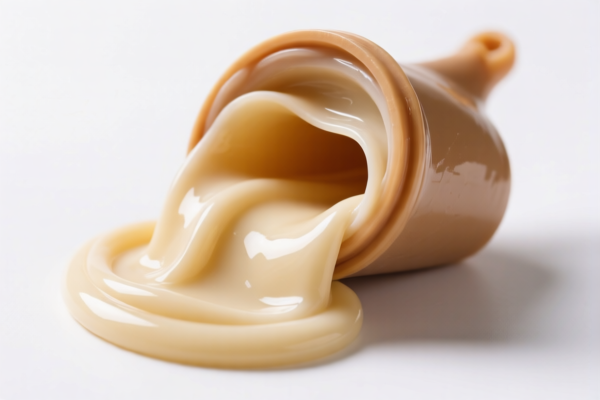
商品图片



AI分析
🧪 Neoprene Latex: Ultimate HS Code & Customs Clearance Guide (2026)
🌐 HS Code Reference & Customs Clearance Guide | 2026 Latest Tariff Analysis | Professional-Level Entry Strategy
📌 I. Product Definition & Classification: What Exactly is "Neoprene Latex"?
Neoprene Latex (Chloropene Rubber Latex) is a synthetic rubber emulsion derived from chloroprene. It is a critical raw material in the chemical and rubber industries. In international trade, its classification is strictly determined by its physical state and specific application.
Key Distinction for Classification: * Liquid/Emulsion Form (Latex): If the product is a liquid latex suitable for further processing (e.g., dipping, coating, foam production), it generally falls under Chapter 40, Heading 4002. * Solid/Processed Form (Sheets/Profiles): If the latex has been vulcanized and formed into solid shapes (sheets, strips, profiles), it falls under Chapter 40, Heading 4008. * Finished Articles: If it is a finished good like an inner tube, it falls under Chapter 40, Heading 4016.
⚠️ Critical Warning:
- "Neoprene Latex" usually refers to the raw emulsion. Misclassifying a liquid emulsion as a solid sheet (4008) or a finished article (4016) leads to severe customs penalties.
- Vulcanization Status: Unvulcanized latex → 4002. Vulcanized solid forms → 4008/4016.
📦 II. HS Code Classification Details (2026 Latest Tariff Authority)
Based on the provided data, here are the precise classifications for Neoprene-related products:
| HS Code | Product Description | Application / Physical State | Tax Rate (Total) |
|---|---|---|---|
4002.41.00.00 |
Neoprene Rubber (Raw/Emulsion) | Industrial use; Latex Form (Liquid Emulsion) inferred | 35.0% |
4002.49.00.00 |
Neoprene Rubber (Other) | Industrial use; Other Forms (Not specifically latex or standard blocks) | 35.0% |
4008.21.00.00 |
Vulcanized Neoprene Sheets/Strips | Industrial use; Vulcanized Rubber, Shape: Sheets, Plates, Strips | 35.0% |
4008.29.20.00 |
Other Vulcanized Neoprene Shapes | Industrial use; Vulcanized Rubber, Shape: Other Profiles/Sections | 37.9% |
4016.99.60.50 |
Neoprene Inner Tubes | Industrial use; Vulcanized Rubber, Use: Other Rubber Articles (Specifically Inner Tubes) | 37.5% |
🔍 Key Insight:
- If you are importing liquid Neoprene Latex, the correct code is likely4002.41.00.00(inferred latex form) or4002.49.00.00.
- Do NOT use 4008 or 4016 codes unless you are importing solid, vulcanized products or finished tubes.
💰 III. 2026 Latest Tariff Rate Breakdown (Including Surtaxes & Policy Add-ons)
✅ Applicable Country: United States (US)
✅ Origin: China (CN)
✅ Effective Date: 2025/2026 (Current Trade War Policies)
🎯 1. 4002.41.00.00 & 4002.49.00.00 —— Neoprene Rubber (Latex/Other Industrial)
| Item | Content |
|---|---|
| Base Tariff | 0.0% (Ad Valorem) |
| USITC Surtax (Section 301) | +25.0% |
| 122 Clause Tariff (IEEPA) | +10.0% |
| Total Tax Rate | 35.0% |
| Calculation Base | CIF Value × 35% |
| De Minimis Exemption? | ❌ NO (Denied) |
| Legal Basis Path | USITC:4002.41.00.00 → FOOTNOTE:301 → IEEPA:122 |
📌 Explanation:
- Base Rate 0%: Pure neoprene rubber (unvulcanized) often has a low base rate.
- 301 Tariff 25%: Standard Section 301 surtax on Chinese rubber products.
- 122 Clause 10%: Specific add-on for certain chemical/rubber materials under IEEPA.
- Total 35%: This is a high-cost import. Budget carefully!
🎯 2. 4008.29.20.00 —— Other Vulcanized Neoprene Shapes
| Item | Content |
|---|---|
| Base Tariff | 2.9% |
| USITC Surtax (Section 301) | +25.0% |
| 122 Clause Tariff (IEEPA) | +10.0% |
| Total Tax Rate | 37.9% |
| Calculation Base | CIF Value × 37.9% |
| De Minimis Exemption? | ❌ NO |
📌 Note:
- Solid vulcanized forms (profiles) have a slightly higher base rate (2.9%) compared to raw latex (0%), leading to a higher total duty (37.9%).
🎯 3. 4016.99.60.50 —— Neoprene Inner Tubes
| Item | Content |
|---|---|
| Base Tariff | 2.5% |
| USITC Surtax (Section 301) | +25.0% |
| 122 Clause Tariff (IEEPA) | +10.0% |
| Total Tax Rate | 37.5% |
| Calculation Base | CIF Value × 37.5% |
📌 Note:
- Finished articles like inner tubes are taxed at 37.5%. Ensure the product description explicitly states "Inner Tube" to avoid being misclassified as generic rubber parts.
🛠️ IV. Customs Clearance Practical Advice (Real-World Pitfall Guide)
✅ 1. Essential Documentation Checklist (None Can Be Missing)
| Document | Required? | Notes |
|---|---|---|
| ✅ Technical Data Sheet (TDS) | ✔️ | Must specify: Neoprene/Chloroprene, Latex Form, Solid Content %, Viscosity. |
| ✅ Certificate of Origin | ✔️ | Prove origin (China). If from Vietnam/Mexico, may reduce tariffs. |
| ✅ Commercial Invoice | ✔️ | Clearly state "Neoprene Rubber Latex" or "Vulcanized Neoprene Sheets" based on HS. |
| ✅ Bill of Lading | ✔️ | Match weight/volume with invoice. |
| ✅ Safety Data Sheet (SDS) | ✔️ | Required for chemical imports. |
| ✅ Product Photos | ✔️ | Show state (liquid bottle/drum for latex, solid roll for sheets). |
✅ 2. Declaration Strategy (Key Mantras)
🔥 “Form Dictates Code, Latex is 4002, Sheets are 4008.”
| Scenario | Correct HS Code | Wrong Declaration | Risk |
|---|---|---|---|
| Liquid Neoprene Latex | 4002.41.00.00 |
Declaring as "Rubber Sheets" (4008) | Penalty + Re-classification |
| Solid Neoprene Sheets | 4008.21.00.00 |
Declaring as "Latex" (4002) | Suspicion of Smuggling |
| Neoprene Inner Tubes | 4016.99.60.50 |
Declaring as "General Rubber Parts" | Higher Tax (37.9% vs 37.5%) + Delay |
| Mixed Container (Latex + Tubes) | Separate Lines | Mixing in one line | Customs Hold for Inspection |
✅ 3. Special Case Handling
| Situation | Recommendation |
|---|---|
| OEM Custom Latex | Provide contract + formula sheet (if allowed) to confirm it’s raw rubber, not a finished chemical. |
| Neoprene Foam | If it’s foam sheets, check if it falls under 4008.21 or 4008.29. Foam is often considered "profiles" or "sheets" depending on density and use. |
| Origin Diversion | If possible, source from non-China countries (e.g., Vietnam, Thailand) to potentially avoid 301 + 122 tariffs (0-5% total). |
| Pre-Ruling | Apply for an Advance Ruling from CBP if unsure between 4002 (raw) and 4008 (vulcanized). |
🌍 V. Global Market Comparison (2026)
| Country/Region | Recommended HS Code | Total Tariff (China Origin) | Certification Required | Notes |
|---|---|---|---|---|
| 🇺🇸 USA | 4002.41.00.00 (Latex) |
35.0% | None specific for raw rubber | High tariff due to 301+122 |
| 🇨🇳 China | 4002.41.00.00 |
0-5% | None | Low duty for raw imports |
| 🇪🇺 EU | 4002.41.00.00 |
0% (MFN) | REACH Registration | No Section 301 equivalent |
| 🇯🇵 Japan | 4002.41.00.00 |
0-1.5% | None | Low duty, friendly trade |
| 🇦🇺 Australia | 4002.41.00.00 |
0-5% | None | Free Trade Agreement applies |
📌 Conclusion:
- USA is the most expensive market for Neoprene imports due to叠加 tariffs (35-37.9%).
- EU/Japan/Australia are much more favorable for Chinese-origin Neoprene.
- Consider supply chain diversification if exporting primarily to the US.
📌 VI. Common Mistakes & Pitfalls (Lessons Learned)
❌ Mistake 1: Declaring Liquid Latex as "Rubber Compound" without specifying state.
👉 Result: CBP may classify as finished article → Higher Duty (37.9%) + Delay.
❌ Mistake 2: Ignoring the 122 Clause.
👉 Result: Underpayment of 10% tariff → Back taxes + Interest.
❌ Mistake 3: Confusing Unvulcanized (4002) with Vulcanized (4008/4016).
👉 Result: If you import raw latex but declare as sheets, customs will request proof of vulcanization. If you can’t provide it, goods may be seized.
✅ Correct Declaration Example:
"Neoprene Rubber Latex, Liquid Emulsion, Unvulcanized, 20% Solid Content, For Foam Production, HS Code 4002.41.00.00"
🎯 VII. Conclusion: Professional Declaration Saves Money!
🎯 Remember the Mantra:
🔹 "Latex is 4002, Sheets are 4008, Tubes are 4016."
🔹 "Total Tax = 35% (Latex) to 37.9% (Other)."
🔹 "Origin Matters: China = High Tariff, Vietnam/EU = Low Tariff."
📌 Pro Tip:
If your Neoprene Latex is processed in a third country (e.g., Vietnam) before shipping to the US, you may avoid the 301+122 tariffs. Consult a customs broker for Substantial Transformation analysis.
📣 Immediate Action:
📞 Contact a licensed customs broker + Provide Technical Data Sheet + Apply for Pre-Ruling if value > $10,000.
🚀 Ensure your Commercial Invoice matches the HS Code exactly to avoid 30-day holds.
✨ Precise Classification, Smooth Clearance, Maximized Profit!
💼 Every percentage point of tariff counts. Don’t guess—classify correctly.
用户评价
关于 HS 编码归类
协调制度(HS)是由世界海关组织(WCO)制定的国际贸易商品分类标准。全球 200 多个国家采用 HS 系统作为海关关税、贸易统计和进出口监管的基础。
每个 HS 编码遵循以下层级结构:
- 章(2 位)——商品大类(例如:第 84 章:机器和机械设备)
- 品目(4 位)——章内的更具体分类
- 子目(6 位)——国际通用细分,所有 WCO 成员国统一使用
- 本国细分(8-10 位)——各国自行扩展的细分编码,如美国 HTSUS 10 位编码
正确的 HS 编码归类对于顺利通关、准确缴纳关税和遵守贸易法规至关重要。错误归类可能导致海关延误、多缴关税或罚款。
从CN进口到US时,适用的关税税率可能包括:
- 最惠国(MFN)税率——适用于 WTO 成员国的标准关税税率
- 普通税率——适用于无贸易协定国家
- 贸易救济关税——附加关税,如 301 条款(反倾销)、232 条款(国家安全)或反补贴税
本页内容仅供参考。如需正式归类,请咨询当地海关或持牌报关代理。