Neoprene Latex
CN → US| HS Code | Tariff Rate | Origin | Destination | Doc |
|---|---|---|---|---|
| 4002410000 | 35.0% | CN | US | Official Doc |
| 4002490000 | 35.0% | CN | US | Official Doc |
| 4008210000 | 35.0% | CN | US | Official Doc |
| 4008292000 | 37.9% | CN | US | Official Doc |
| 4016996050 | 37.5% | CN | US | Official Doc |
Product Images
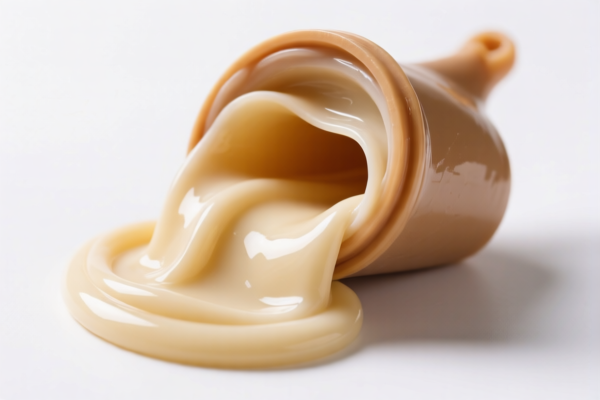



AI Analysis
🧪 Neoprene Latex: Ultimate HS Code & Customs Clearance Guide (2026)
🌐 HS Code Reference & Customs Clearance Guide | 2026 Latest Tariff Analysis | Professional-Level Entry Strategy
📌 I. Product Definition & Classification: What Exactly is "Neoprene Latex"?
Neoprene Latex (Chloropene Rubber Latex) is a synthetic rubber emulsion derived from chloroprene. It is a critical raw material in the chemical and rubber industries. In international trade, its classification is strictly determined by its physical state and specific application.
Key Distinction for Classification: * Liquid/Emulsion Form (Latex): If the product is a liquid latex suitable for further processing (e.g., dipping, coating, foam production), it generally falls under Chapter 40, Heading 4002. * Solid/Processed Form (Sheets/Profiles): If the latex has been vulcanized and formed into solid shapes (sheets, strips, profiles), it falls under Chapter 40, Heading 4008. * Finished Articles: If it is a finished good like an inner tube, it falls under Chapter 40, Heading 4016.
⚠️ Critical Warning:
- "Neoprene Latex" usually refers to the raw emulsion. Misclassifying a liquid emulsion as a solid sheet (4008) or a finished article (4016) leads to severe customs penalties.
- Vulcanization Status: Unvulcanized latex → 4002. Vulcanized solid forms → 4008/4016.
📦 II. HS Code Classification Details (2026 Latest Tariff Authority)
Based on the provided data, here are the precise classifications for Neoprene-related products:
| HS Code | Product Description | Application / Physical State | Tax Rate (Total) |
|---|---|---|---|
4002.41.00.00 |
Neoprene Rubber (Raw/Emulsion) | Industrial use; Latex Form (Liquid Emulsion) inferred | 35.0% |
4002.49.00.00 |
Neoprene Rubber (Other) | Industrial use; Other Forms (Not specifically latex or standard blocks) | 35.0% |
4008.21.00.00 |
Vulcanized Neoprene Sheets/Strips | Industrial use; Vulcanized Rubber, Shape: Sheets, Plates, Strips | 35.0% |
4008.29.20.00 |
Other Vulcanized Neoprene Shapes | Industrial use; Vulcanized Rubber, Shape: Other Profiles/Sections | 37.9% |
4016.99.60.50 |
Neoprene Inner Tubes | Industrial use; Vulcanized Rubber, Use: Other Rubber Articles (Specifically Inner Tubes) | 37.5% |
🔍 Key Insight:
- If you are importing liquid Neoprene Latex, the correct code is likely4002.41.00.00(inferred latex form) or4002.49.00.00.
- Do NOT use 4008 or 4016 codes unless you are importing solid, vulcanized products or finished tubes.
💰 III. 2026 Latest Tariff Rate Breakdown (Including Surtaxes & Policy Add-ons)
✅ Applicable Country: United States (US)
✅ Origin: China (CN)
✅ Effective Date: 2025/2026 (Current Trade War Policies)
🎯 1. 4002.41.00.00 & 4002.49.00.00 —— Neoprene Rubber (Latex/Other Industrial)
| Item | Content |
|---|---|
| Base Tariff | 0.0% (Ad Valorem) |
| USITC Surtax (Section 301) | +25.0% |
| 122 Clause Tariff (IEEPA) | +10.0% |
| Total Tax Rate | 35.0% |
| Calculation Base | CIF Value × 35% |
| De Minimis Exemption? | ❌ NO (Denied) |
| Legal Basis Path | USITC:4002.41.00.00 → FOOTNOTE:301 → IEEPA:122 |
📌 Explanation:
- Base Rate 0%: Pure neoprene rubber (unvulcanized) often has a low base rate.
- 301 Tariff 25%: Standard Section 301 surtax on Chinese rubber products.
- 122 Clause 10%: Specific add-on for certain chemical/rubber materials under IEEPA.
- Total 35%: This is a high-cost import. Budget carefully!
🎯 2. 4008.29.20.00 —— Other Vulcanized Neoprene Shapes
| Item | Content |
|---|---|
| Base Tariff | 2.9% |
| USITC Surtax (Section 301) | +25.0% |
| 122 Clause Tariff (IEEPA) | +10.0% |
| Total Tax Rate | 37.9% |
| Calculation Base | CIF Value × 37.9% |
| De Minimis Exemption? | ❌ NO |
📌 Note:
- Solid vulcanized forms (profiles) have a slightly higher base rate (2.9%) compared to raw latex (0%), leading to a higher total duty (37.9%).
🎯 3. 4016.99.60.50 —— Neoprene Inner Tubes
| Item | Content |
|---|---|
| Base Tariff | 2.5% |
| USITC Surtax (Section 301) | +25.0% |
| 122 Clause Tariff (IEEPA) | +10.0% |
| Total Tax Rate | 37.5% |
| Calculation Base | CIF Value × 37.5% |
📌 Note:
- Finished articles like inner tubes are taxed at 37.5%. Ensure the product description explicitly states "Inner Tube" to avoid being misclassified as generic rubber parts.
🛠️ IV. Customs Clearance Practical Advice (Real-World Pitfall Guide)
✅ 1. Essential Documentation Checklist (None Can Be Missing)
| Document | Required? | Notes |
|---|---|---|
| ✅ Technical Data Sheet (TDS) | ✔️ | Must specify: Neoprene/Chloroprene, Latex Form, Solid Content %, Viscosity. |
| ✅ Certificate of Origin | ✔️ | Prove origin (China). If from Vietnam/Mexico, may reduce tariffs. |
| ✅ Commercial Invoice | ✔️ | Clearly state "Neoprene Rubber Latex" or "Vulcanized Neoprene Sheets" based on HS. |
| ✅ Bill of Lading | ✔️ | Match weight/volume with invoice. |
| ✅ Safety Data Sheet (SDS) | ✔️ | Required for chemical imports. |
| ✅ Product Photos | ✔️ | Show state (liquid bottle/drum for latex, solid roll for sheets). |
✅ 2. Declaration Strategy (Key Mantras)
🔥 “Form Dictates Code, Latex is 4002, Sheets are 4008.”
| Scenario | Correct HS Code | Wrong Declaration | Risk |
|---|---|---|---|
| Liquid Neoprene Latex | 4002.41.00.00 |
Declaring as "Rubber Sheets" (4008) | Penalty + Re-classification |
| Solid Neoprene Sheets | 4008.21.00.00 |
Declaring as "Latex" (4002) | Suspicion of Smuggling |
| Neoprene Inner Tubes | 4016.99.60.50 |
Declaring as "General Rubber Parts" | Higher Tax (37.9% vs 37.5%) + Delay |
| Mixed Container (Latex + Tubes) | Separate Lines | Mixing in one line | Customs Hold for Inspection |
✅ 3. Special Case Handling
| Situation | Recommendation |
|---|---|
| OEM Custom Latex | Provide contract + formula sheet (if allowed) to confirm it’s raw rubber, not a finished chemical. |
| Neoprene Foam | If it’s foam sheets, check if it falls under 4008.21 or 4008.29. Foam is often considered "profiles" or "sheets" depending on density and use. |
| Origin Diversion | If possible, source from non-China countries (e.g., Vietnam, Thailand) to potentially avoid 301 + 122 tariffs (0-5% total). |
| Pre-Ruling | Apply for an Advance Ruling from CBP if unsure between 4002 (raw) and 4008 (vulcanized). |
🌍 V. Global Market Comparison (2026)
| Country/Region | Recommended HS Code | Total Tariff (China Origin) | Certification Required | Notes |
|---|---|---|---|---|
| 🇺🇸 USA | 4002.41.00.00 (Latex) |
35.0% | None specific for raw rubber | High tariff due to 301+122 |
| 🇨🇳 China | 4002.41.00.00 |
0-5% | None | Low duty for raw imports |
| 🇪🇺 EU | 4002.41.00.00 |
0% (MFN) | REACH Registration | No Section 301 equivalent |
| 🇯🇵 Japan | 4002.41.00.00 |
0-1.5% | None | Low duty, friendly trade |
| 🇦🇺 Australia | 4002.41.00.00 |
0-5% | None | Free Trade Agreement applies |
📌 Conclusion:
- USA is the most expensive market for Neoprene imports due to叠加 tariffs (35-37.9%).
- EU/Japan/Australia are much more favorable for Chinese-origin Neoprene.
- Consider supply chain diversification if exporting primarily to the US.
📌 VI. Common Mistakes & Pitfalls (Lessons Learned)
❌ Mistake 1: Declaring Liquid Latex as "Rubber Compound" without specifying state.
👉 Result: CBP may classify as finished article → Higher Duty (37.9%) + Delay.
❌ Mistake 2: Ignoring the 122 Clause.
👉 Result: Underpayment of 10% tariff → Back taxes + Interest.
❌ Mistake 3: Confusing Unvulcanized (4002) with Vulcanized (4008/4016).
👉 Result: If you import raw latex but declare as sheets, customs will request proof of vulcanization. If you can’t provide it, goods may be seized.
✅ Correct Declaration Example:
"Neoprene Rubber Latex, Liquid Emulsion, Unvulcanized, 20% Solid Content, For Foam Production, HS Code 4002.41.00.00"
🎯 VII. Conclusion: Professional Declaration Saves Money!
🎯 Remember the Mantra:
🔹 "Latex is 4002, Sheets are 4008, Tubes are 4016."
🔹 "Total Tax = 35% (Latex) to 37.9% (Other)."
🔹 "Origin Matters: China = High Tariff, Vietnam/EU = Low Tariff."
📌 Pro Tip:
If your Neoprene Latex is processed in a third country (e.g., Vietnam) before shipping to the US, you may avoid the 301+122 tariffs. Consult a customs broker for Substantial Transformation analysis.
📣 Immediate Action:
📞 Contact a licensed customs broker + Provide Technical Data Sheet + Apply for Pre-Ruling if value > $10,000.
🚀 Ensure your Commercial Invoice matches the HS Code exactly to avoid 30-day holds.
✨ Precise Classification, Smooth Clearance, Maximized Profit!
💼 Every percentage point of tariff counts. Don’t guess—classify correctly.
Customer Reviews
About HS Code Classification
The Harmonized System (HS) is an internationally standardized nomenclature developed by the World Customs Organization (WCO) to classify traded products. Over 200 countries use the HS system as the basis for customs tariffs, trade statistics, and import/export regulations.
Each HS code follows a hierarchical structure:
- Chapter (2 digits) — Broad category of goods (e.g., Chapter 84: Machinery and Mechanical Appliances)
- Heading (4 digits) — More specific grouping within the chapter
- Subheading (6 digits) — Internationally standardized breakdown, used by all WCO member countries
- National subdivisions (8-10 digits) — Country-specific extensions for further classification, such as US HTSUS 10-digit codes
Correct HS code classification is essential for smooth customs clearance, accurate duty payment, and compliance with trade regulations. Misclassification can lead to customs delays, overpayment of duties, or penalties.
When importing from CN to US, the applicable tariff rates may include:
- Most-Favored-Nation (MFN) rate — The standard duty rate applied to WTO members
- General rate — Applied to countries without trade agreements
- Trade remedy duties — Additional tariffs such as Section 301 (anti-dumping), Section 232 (national security), or countervailing duties
The information provided on this page is for reference purposes only. For official classification, please consult with your local customs authority or a licensed customs broker.