Network Cable
CN → US| HS编码 | 关税税率 | 原产国 | 目的国 | 文档 |
|---|---|---|---|---|
| 8536908585 | 85.0% | CN | US | 官方文档 |
| 8544493080 | 40.3% | CN | US | 官方文档 |
| 8544493040 | 40.3% | CN | US | 官方文档 |
| 8536904000 | 35.0% | CN | US | 官方文档 |
商品图片
AI分析
🌐 Network Cable (Transmission Lines & Electrical Conductors)
🌐 HS Code Reference & Customs Clearance Guide | 2026 Latest Tariff Analysis | Professional Strategy
📌 One, Product Definition & Classification: Do You Really Understand "Network Cable"?
Network cables, in the context of international trade, are primarily classified based on their function: either as electrical conductors (transmitting signals/data) or as connectors/accessories for electrical circuits. The distinction is critical because it determines the HS Code, the tariff base, and the total tax burden.
In the provided data, we see two main logical pathways: 1. As an Electrical Conductor (HS Chapter 85.44): The cable itself is viewed as a wire or conductor used for electric circuits. 2. As a Circuit Connecting Apparatus (HS Chapter 85.36): The cable is viewed as an apparatus or part thereof used for making connections in an electrical circuit (often implying specific connectorized ends or specific industrial applications).
⚠️ Key Distinction Point:
- If the product is primarily a wire/cable used to conduct electricity/data signals, it often falls under 85.44 (Electrical conductors).
- If the product is categorized as a connector assembly or specific circuit connection device (sometimes including specific terminal blocks or specialized plugs), it may fall under 85.36.
- Note: The "122 Clause" (Section 301) and additional tariffs apply heavily to Chinese-origin goods, significantly altering the final landed cost.
📦 Two, HS Code Classification Details (2026 Latest Tariff Authority Reference)
Based on the provided <DATA>, here are the four specific HS Codes identified for "Transmission Lines" (Network Cables), along with their logic and tax implications.
| HS Code | Product Description (Summary from Data) | Logic for Classification | Total Tax Rate (China Origin) |
|---|---|---|---|
8536.90.85.85 |
Transmission line belongs to electrical equipment for connecting circuits; matches "Other" category attributes. | Classified as Circuit Connection Equipment. Fits the "Other" sub-category for electrical connection apparatus. | 85.0% |
8544.49.30.80 |
Transmission line belongs to electrical conductors; matches the "Other" category matching principle. | Classified as Electrical Conductor. Fits "Other" conductors insulated with plastic or other insulating materials. | 40.3% |
8544.49.30.40 |
Transmission line is a conductor in form, meeting the conductor definition under this category. | Classified as Electrical Conductor. Specifically "Other" conductors, likely differing in voltage or specific insulation type from .80, but same tariff logic. | 40.3% |
8536.90.40.00 |
Transmission line belongs to electrical equipment for connecting circuits; matches usage logic. | Classified as Circuit Connection Equipment. Fits the "Other" sub-category for circuit connection devices. | 35.0% |
🔍 Key Insight:
- There is a massive tariff discrepancy between classifying a network cable as a Conductor (85.44) vs. Connection Equipment (85.36).
- Conductors (85.44): Total tax ~40.3%.
- Connection Equipment (85.36): Total tax ranges from 35.0% to 85.0%.
- Risk: Misclassifying a standard Ethernet cable as "Connection Equipment" when it should be a "Conductor" could lead to either under-declaration (penalty) or over-declaration (unnecessary cost). However, the data shows 85.36.90.85.85 has the highest tax (85%), likely due to specific "Steel/Aluminum/Copper"附加 tariffs mentioned in the detail.
💰 Three, 2026 Latest Tariff Rate Breakdown (Including Surcharges & Policy Add-ons)
✅ Applicable Country: USA (US)
✅ Origin: China (CN)
✅ Effective Time: Current (Post-2024 Trade War Measures)
🎯 1. 8536.90.85.85 —— Electrical Connection Equipment (Highest Risk/Highest Tax)
| Item | Content |
|---|---|
| Basic Tariff | 0.0% |
| Section 301 Surcharge | +25.0% |
| "122 Clause" Tariff | +10% (Specific Section 301 Add-on) |
| Steel/Aluminum/Copper Surcharge | +50% (Critical: This applies to copper conductors/wires in some interpretations) |
| Total Tax Rate | 85.0% |
| Tax Calculation | CIF Value × 85.0% |
| De Minimis Exemption | ❌ Not Applicable (High value threshold, standard de minimis ($800) often excludes Section 301 goods or specific HTS codes) |
| Legal Path | USITC:8536.90.85.85 → Section 301 → Steel/Aluminum/Copper Provision |
📌 Explanation:
- This is the most expensive classification in the dataset.
- The 50% surcharge for "Steel, Aluminum, Copper Products" under specific trade provisions is the main driver.
- Advice: Avoid this code for standard network cables unless they are specifically identified as industrial connection apparatus that must be classified here. It is financially disastrous for high-volume commodity cables.
🎯 2. 8544.49.30.80 —— Electrical Conductors (Other)
| Item | Content |
|---|---|
| Basic Tariff | 5.3% |
| Section 301 Surcharge | +25.0% |
| "122 Clause" Tariff | +10% |
| Steel/Aluminum/Copper Surcharge | Not explicitly listed as +50% in this row, but check copper rules. Data implies total 40.3%. |
| Total Tax Rate | 40.3% |
| Tax Calculation | CIF Value × 40.3% |
| De Minimis Exemption | ❌ Not Applicable |
| Legal Path | USITC:8544.49.30.80 → Section 301 |
📌 Explanation:
- This is a standard conductor classification.
- Total rate is 40.3%.
- Includes base duty (5.3%) + 301 (25%) + 122 Clause (10%).
🎯 3. 8544.49.30.40 —— Electrical Conductors (Other - Specific Sub-category)
| Item | Content |
|---|---|
| Basic Tariff | 5.3% |
| Section 301 Surcharge | +25.0% |
| "122 Clause" Tariff | +10% |
| Total Tax Rate | 40.3% |
| Tax Calculation | CIF Value × 40.3% |
| De Minimis Exemption | ❌ Not Applicable |
| Legal Path | USITC:8544.49.30.40 → Section 301 |
📌 Explanation:
- Identical tax rate to.80.
- The distinction between.40and.80usually lies in the voltage rating (e.g., <1000V vs others) or insulation material.
- Both are significantly cheaper than the 85.36.90.85.85 classification.
🎯 4. 8536.90.40.00 —— Electrical Connection Equipment (Lower End)
| Item | Content |
|---|---|
| Basic Tariff | 0.0% |
| Section 301 Surcharge | +25.0% |
| "122 Clause" Tariff | +10% |
| Steel/Aluminum/Copper Surcharge | Not applied (or already included/different logic) |
| Total Tax Rate | 35.0% |
| Tax Calculation | CIF Value × 35.0% |
| De Minimis Exemption | ❌ Not Applicable |
| Legal Path | USITC:8536.90.40.00 → Section 301 |
📌 Explanation:
- This is the cheapest classification in the dataset.
- It falls under "Connection Equipment" but with a 0% base duty.
- Total rate is 35.0%.
- Caution: Ensure the product truly fits the definition of this sub-heading to avoid misclassification audits.
🛠️ Four, Customs Clearance Practical Advice (Real-World Pitfall Guide)
✅ 1. Preparation Checklist (Non-Negotiable)
| Document | Must Provide | Description |
|---|---|---|
| ✅ Product Specification Sheet | ✔️ | Must specify: Voltage rating, conductor material (Copper/Aluminum), insulation type, number of cores, and application (Data/Power). |
| ✅ Technical Diagram | ✔️ | Show internal structure: Is it just wire? Does it have plugs/connector heads? This determines 85.44 vs 85.36. |
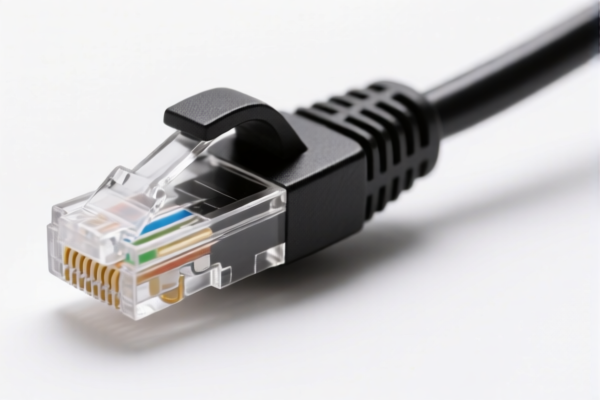
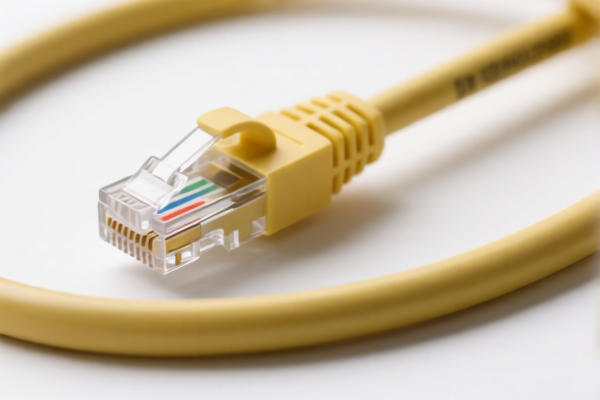
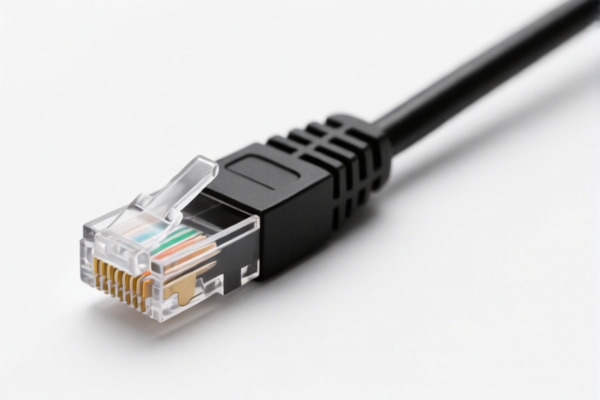
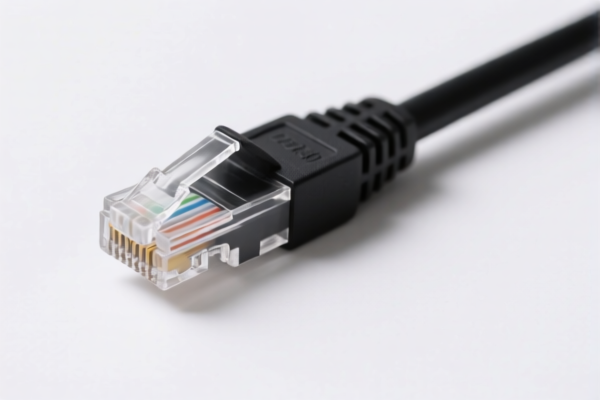
| ✅ Product Photos | ✔️ | Clear shots of ends (RJ45, Fiber, Bare wire) and labeling (AWG, Voltage, UL/CE Markings). |
| ✅ Commercial Invoice | ✔️ | Clearly state "Network Cable" or "Electrical Conductor," NOT "Computer Part" or generic "Cable." |
| ✅ Certificate of Origin (CO) | ✔️ | Essential for proving China origin to apply (or avoid) specific Section 301 rates. |
| ✅ FCC ID (if applicable) | ✔️ | Network cables often require FCC compliance for electromagnetic interference (EMI) standards. |
✅ 2. Declaration Tips (Key Mantra)
🔥 "Conductor vs. Connector: Know the Difference!"
| Scenario | Correct Declaration | Incorrect Approach | Consequence |
|---|---|---|---|
| Bare Cable / Coiled Cable (No plugs) | 8544.49.30.xx (Conductor) |
Claiming as "Connector" | Risk of Audit, but lower tax if correct. |
| Cable with RJ45 Plugs Pre-installed | Check 8536.90 (Connection Apparatus) OR 8544 (Conductor with fittings) depending on USCBP ruling. |
Misclassifying as simple wire | If classified as 8536.90.85.85 → 85% Tax. If 8544 → 40.3% Tax. Huge difference! |
| Fiber Optic Cable | Often 8544.60 or 8544.70 (Check specific fiber codes) |
Using Copper codes | Incorrect HS Code → Delay + Penalty. |
| Industrial Terminal Block | 8536.90.xx |
Claiming as Wire | May be correct, but ensure no "Connector" head is misleading. |
📌 Critical Warning:
- For pre-terminated Ethernet cables (e.g., Cat6 with RJ45 plugs), US Customs sometimes classifies them as 8544 (Conductor with fittings) if the fittings are incidental, or 8536 if the fitting is the essential character.
- Data Insight: The provided data shows8544codes have 40.3% total tax, while8536.90.85.85has 85.0%.
- Strategy: If your cable is a standard network cable with plugs, consult a customs broker to see if it can be justified under 8544 (Conductor) to save 44.7% in taxes. Do not automatically assume 85.36.
✅ 3. Special Case Handling
| Situation | Handling Advice |
|---|---|
| High-End Fiber Optic | Ensure it is not classified as copper wire. Use correct fiber HS codes. |
| Shipment Value < $800 (De Minimis) | Be Careful! Section 301 goods (China origin) are often excluded from de minimis exemption in the US. Even for small packages, 40-85% tax may apply. Do not rely on $800 exemption for CN-origin cables. |
| Mixed Shipments | Declare cables separately from electronics (routers, switches). Mixing items can trigger broader scrutiny. |
| "Other" Sub-codes (.40 vs .80) | Determine the exact voltage and insulation. .40 and .80 both show 40.3% in the data, but the legal basis differs. Use the one that matches technical specs exactly. |
🌍 Five, Global Market Comparison (2026 Snapshot)
| Country/Region | Recommended HS Code (Typical) | Est. Total Tax (CN Origin) | Notes |
|---|---|---|---|
| 🇺🇸 USA | 8544.49.30.xx (Preferred) |
40.3% | Avoid 8536.90.85.85 (85%) unless strictly required. |
| 🇺🇸 USA | 8536.90.40.00 (Alternative) |
35.0% | If qualifies as lower-end connection equipment. |
| 🇨🇳 China (Import) | 8544.42 / 8544.49 |
0% - 5% | Low duty, no Section 301. |
| 🇪🇺 EU | 8544.42 / 8544.49 |
0% - 2.7% | No retaliatory tariffs, but VAT applies. |
| 🇨🇦 Canada | 8544.49 |
0% - 5% | Check CUSMA eligibility. |
📌 Conclusion:
- The US market is the most challenging due to high Section 301 tariffs.
- Classification is everything: A difference between8544and8536can be a 45% tax difference.
- Always prioritize8544(Conductor) classification for network cables unless the product is specifically designed as a connector assembly without the conductor function being primary.
📌 Six, Common Mistakes & Pitfalls (Blood & Tears)
❌ Mistake 1: Assuming all cables with plugs are 8536.90.85.85 (85% Tax)
👉 Result: You pay 85% tax when you could have paid 40.3%.
👉 Fix: Argue for 8544.49 classification if the cable is the essential component.
❌ Mistake 2: Using "De Minimis" for small China-origin shipments
👉 Result: Customs blocks or back-charges 40-85% tax on small packages.
👉 Fix: Include duties in cost even for samples.
❌ Mistake 3: Vague Invoice Description ("Cable")
👉 Result: Customs assigns worst-case HS Code or holds shipment.
👉 Fix: Use "Category 6 Ethernet Cable, 25ft, Shielded, Copper Conductor."
✅ Correct Declaration Example:
"Cat6 Network Cable, Unshielded, 24 AWG, PVC Insulated, for Data Transmission, HS Code: 8544.49.30.80"
🎯 Seven, Conclusion: Professional Declaration, Cost Savings!
🎯 Remember the Mantra:
🔹 "Conductor (8544) = 40.3% | Connection (8536) = 35-85% | Don't Guess!"
🔹 "Pre-terminated cables? Argue for 8544 to save 44.7%!"
🔹 "China Origin? No De Minimis! Pay Tax!"
📌 Tips:
- If your network cables are originating from Vietnam, Mexico, or Thailand, you may avoid Section 301 tariffs, reducing total tax to 0-5%.
- Consider Pre-Ruling (US Customs & Border Protection) for high-volume cable imports to secure the 8544 classification legally.
📣 Take Action Now:
📞 Contact a licensed US Customs Broker.
📝 Provide technical specs.
🚀 Classify as8544.49.30.xxto minimize tax liability.
✨ Professional Customs Clearance Starts with Accurate Classification!
💼 Every percentage point saved is pure profit!
用户评价
关于 HS 编码归类
协调制度(HS)是由世界海关组织(WCO)制定的国际贸易商品分类标准。全球 200 多个国家采用 HS 系统作为海关关税、贸易统计和进出口监管的基础。
每个 HS 编码遵循以下层级结构:
- 章(2 位)——商品大类(例如:第 84 章:机器和机械设备)
- 品目(4 位)——章内的更具体分类
- 子目(6 位)——国际通用细分,所有 WCO 成员国统一使用
- 本国细分(8-10 位)——各国自行扩展的细分编码,如美国 HTSUS 10 位编码
正确的 HS 编码归类对于顺利通关、准确缴纳关税和遵守贸易法规至关重要。错误归类可能导致海关延误、多缴关税或罚款。
从CN进口到US时,适用的关税税率可能包括:
- 最惠国(MFN)税率——适用于 WTO 成员国的标准关税税率
- 普通税率——适用于无贸易协定国家
- 贸易救济关税——附加关税,如 301 条款(反倾销)、232 条款(国家安全)或反补贴税
本页内容仅供参考。如需正式归类,请咨询当地海关或持牌报关代理。