Network Cable
CN → US| HS Code | Tariff Rate | Origin | Destination | Doc |
|---|---|---|---|---|
| 8536908585 | 85.0% | CN | US | Official Doc |
| 8544493080 | 40.3% | CN | US | Official Doc |
| 8544493040 | 40.3% | CN | US | Official Doc |
| 8536904000 | 35.0% | CN | US | Official Doc |
Product Images
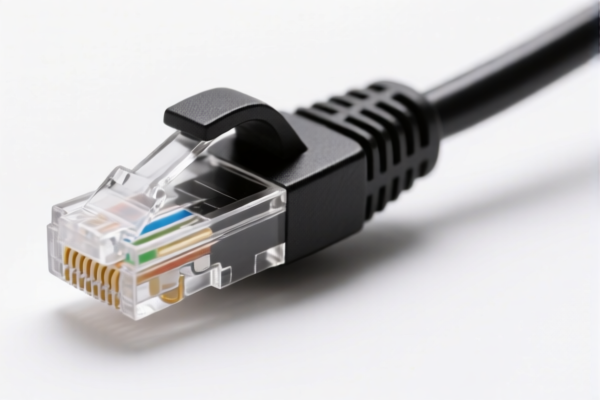
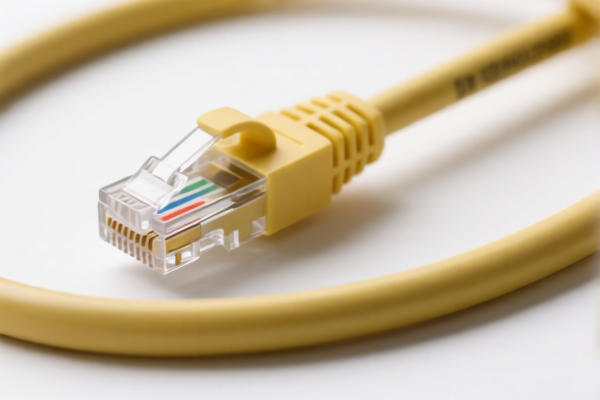
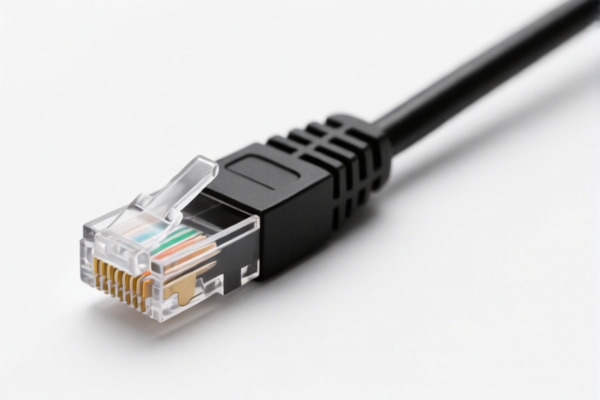
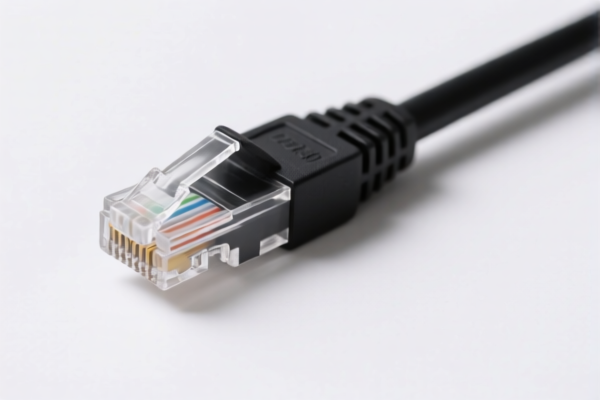
AI Analysis
🌐 Network Cable (Transmission Lines & Electrical Conductors)
🌐 HS Code Reference & Customs Clearance Guide | 2026 Latest Tariff Analysis | Professional Strategy
📌 One, Product Definition & Classification: Do You Really Understand "Network Cable"?
Network cables, in the context of international trade, are primarily classified based on their function: either as electrical conductors (transmitting signals/data) or as connectors/accessories for electrical circuits. The distinction is critical because it determines the HS Code, the tariff base, and the total tax burden.
In the provided data, we see two main logical pathways: 1. As an Electrical Conductor (HS Chapter 85.44): The cable itself is viewed as a wire or conductor used for electric circuits. 2. As a Circuit Connecting Apparatus (HS Chapter 85.36): The cable is viewed as an apparatus or part thereof used for making connections in an electrical circuit (often implying specific connectorized ends or specific industrial applications).
⚠️ Key Distinction Point:
- If the product is primarily a wire/cable used to conduct electricity/data signals, it often falls under 85.44 (Electrical conductors).
- If the product is categorized as a connector assembly or specific circuit connection device (sometimes including specific terminal blocks or specialized plugs), it may fall under 85.36.
- Note: The "122 Clause" (Section 301) and additional tariffs apply heavily to Chinese-origin goods, significantly altering the final landed cost.
📦 Two, HS Code Classification Details (2026 Latest Tariff Authority Reference)
Based on the provided <DATA>, here are the four specific HS Codes identified for "Transmission Lines" (Network Cables), along with their logic and tax implications.
| HS Code | Product Description (Summary from Data) | Logic for Classification | Total Tax Rate (China Origin) |
|---|---|---|---|
8536.90.85.85 |
Transmission line belongs to electrical equipment for connecting circuits; matches "Other" category attributes. | Classified as Circuit Connection Equipment. Fits the "Other" sub-category for electrical connection apparatus. | 85.0% |
8544.49.30.80 |
Transmission line belongs to electrical conductors; matches the "Other" category matching principle. | Classified as Electrical Conductor. Fits "Other" conductors insulated with plastic or other insulating materials. | 40.3% |
8544.49.30.40 |
Transmission line is a conductor in form, meeting the conductor definition under this category. | Classified as Electrical Conductor. Specifically "Other" conductors, likely differing in voltage or specific insulation type from .80, but same tariff logic. | 40.3% |
8536.90.40.00 |
Transmission line belongs to electrical equipment for connecting circuits; matches usage logic. | Classified as Circuit Connection Equipment. Fits the "Other" sub-category for circuit connection devices. | 35.0% |
🔍 Key Insight:
- There is a massive tariff discrepancy between classifying a network cable as a Conductor (85.44) vs. Connection Equipment (85.36).
- Conductors (85.44): Total tax ~40.3%.
- Connection Equipment (85.36): Total tax ranges from 35.0% to 85.0%.
- Risk: Misclassifying a standard Ethernet cable as "Connection Equipment" when it should be a "Conductor" could lead to either under-declaration (penalty) or over-declaration (unnecessary cost). However, the data shows 85.36.90.85.85 has the highest tax (85%), likely due to specific "Steel/Aluminum/Copper"附加 tariffs mentioned in the detail.
💰 Three, 2026 Latest Tariff Rate Breakdown (Including Surcharges & Policy Add-ons)
✅ Applicable Country: USA (US)
✅ Origin: China (CN)
✅ Effective Time: Current (Post-2024 Trade War Measures)
🎯 1. 8536.90.85.85 —— Electrical Connection Equipment (Highest Risk/Highest Tax)
| Item | Content |
|---|---|
| Basic Tariff | 0.0% |
| Section 301 Surcharge | +25.0% |
| "122 Clause" Tariff | +10% (Specific Section 301 Add-on) |
| Steel/Aluminum/Copper Surcharge | +50% (Critical: This applies to copper conductors/wires in some interpretations) |
| Total Tax Rate | 85.0% |
| Tax Calculation | CIF Value × 85.0% |
| De Minimis Exemption | ❌ Not Applicable (High value threshold, standard de minimis ($800) often excludes Section 301 goods or specific HTS codes) |
| Legal Path | USITC:8536.90.85.85 → Section 301 → Steel/Aluminum/Copper Provision |
📌 Explanation:
- This is the most expensive classification in the dataset.
- The 50% surcharge for "Steel, Aluminum, Copper Products" under specific trade provisions is the main driver.
- Advice: Avoid this code for standard network cables unless they are specifically identified as industrial connection apparatus that must be classified here. It is financially disastrous for high-volume commodity cables.
🎯 2. 8544.49.30.80 —— Electrical Conductors (Other)
| Item | Content |
|---|---|
| Basic Tariff | 5.3% |
| Section 301 Surcharge | +25.0% |
| "122 Clause" Tariff | +10% |
| Steel/Aluminum/Copper Surcharge | Not explicitly listed as +50% in this row, but check copper rules. Data implies total 40.3%. |
| Total Tax Rate | 40.3% |
| Tax Calculation | CIF Value × 40.3% |
| De Minimis Exemption | ❌ Not Applicable |
| Legal Path | USITC:8544.49.30.80 → Section 301 |
📌 Explanation:
- This is a standard conductor classification.
- Total rate is 40.3%.
- Includes base duty (5.3%) + 301 (25%) + 122 Clause (10%).
🎯 3. 8544.49.30.40 —— Electrical Conductors (Other - Specific Sub-category)
| Item | Content |
|---|---|
| Basic Tariff | 5.3% |
| Section 301 Surcharge | +25.0% |
| "122 Clause" Tariff | +10% |
| Total Tax Rate | 40.3% |
| Tax Calculation | CIF Value × 40.3% |
| De Minimis Exemption | ❌ Not Applicable |
| Legal Path | USITC:8544.49.30.40 → Section 301 |
📌 Explanation:
- Identical tax rate to.80.
- The distinction between.40and.80usually lies in the voltage rating (e.g., <1000V vs others) or insulation material.
- Both are significantly cheaper than the 85.36.90.85.85 classification.
🎯 4. 8536.90.40.00 —— Electrical Connection Equipment (Lower End)
| Item | Content |
|---|---|
| Basic Tariff | 0.0% |
| Section 301 Surcharge | +25.0% |
| "122 Clause" Tariff | +10% |
| Steel/Aluminum/Copper Surcharge | Not applied (or already included/different logic) |
| Total Tax Rate | 35.0% |
| Tax Calculation | CIF Value × 35.0% |
| De Minimis Exemption | ❌ Not Applicable |
| Legal Path | USITC:8536.90.40.00 → Section 301 |
📌 Explanation:
- This is the cheapest classification in the dataset.
- It falls under "Connection Equipment" but with a 0% base duty.
- Total rate is 35.0%.
- Caution: Ensure the product truly fits the definition of this sub-heading to avoid misclassification audits.
🛠️ Four, Customs Clearance Practical Advice (Real-World Pitfall Guide)
✅ 1. Preparation Checklist (Non-Negotiable)
| Document | Must Provide | Description |
|---|---|---|
| ✅ Product Specification Sheet | ✔️ | Must specify: Voltage rating, conductor material (Copper/Aluminum), insulation type, number of cores, and application (Data/Power). |
| ✅ Technical Diagram | ✔️ | Show internal structure: Is it just wire? Does it have plugs/connector heads? This determines 85.44 vs 85.36. |
| ✅ Product Photos | ✔️ | Clear shots of ends (RJ45, Fiber, Bare wire) and labeling (AWG, Voltage, UL/CE Markings). |
| ✅ Commercial Invoice | ✔️ | Clearly state "Network Cable" or "Electrical Conductor," NOT "Computer Part" or generic "Cable." |
| ✅ Certificate of Origin (CO) | ✔️ | Essential for proving China origin to apply (or avoid) specific Section 301 rates. |
| ✅ FCC ID (if applicable) | ✔️ | Network cables often require FCC compliance for electromagnetic interference (EMI) standards. |
✅ 2. Declaration Tips (Key Mantra)
🔥 "Conductor vs. Connector: Know the Difference!"
| Scenario | Correct Declaration | Incorrect Approach | Consequence |
|---|---|---|---|
| Bare Cable / Coiled Cable (No plugs) | 8544.49.30.xx (Conductor) |
Claiming as "Connector" | Risk of Audit, but lower tax if correct. |
| Cable with RJ45 Plugs Pre-installed | Check 8536.90 (Connection Apparatus) OR 8544 (Conductor with fittings) depending on USCBP ruling. |
Misclassifying as simple wire | If classified as 8536.90.85.85 → 85% Tax. If 8544 → 40.3% Tax. Huge difference! |
| Fiber Optic Cable | Often 8544.60 or 8544.70 (Check specific fiber codes) |
Using Copper codes | Incorrect HS Code → Delay + Penalty. |
| Industrial Terminal Block | 8536.90.xx |
Claiming as Wire | May be correct, but ensure no "Connector" head is misleading. |
📌 Critical Warning:
- For pre-terminated Ethernet cables (e.g., Cat6 with RJ45 plugs), US Customs sometimes classifies them as 8544 (Conductor with fittings) if the fittings are incidental, or 8536 if the fitting is the essential character.
- Data Insight: The provided data shows8544codes have 40.3% total tax, while8536.90.85.85has 85.0%.
- Strategy: If your cable is a standard network cable with plugs, consult a customs broker to see if it can be justified under 8544 (Conductor) to save 44.7% in taxes. Do not automatically assume 85.36.
✅ 3. Special Case Handling
| Situation | Handling Advice |
|---|---|
| High-End Fiber Optic | Ensure it is not classified as copper wire. Use correct fiber HS codes. |
| Shipment Value < $800 (De Minimis) | Be Careful! Section 301 goods (China origin) are often excluded from de minimis exemption in the US. Even for small packages, 40-85% tax may apply. Do not rely on $800 exemption for CN-origin cables. |
| Mixed Shipments | Declare cables separately from electronics (routers, switches). Mixing items can trigger broader scrutiny. |
| "Other" Sub-codes (.40 vs .80) | Determine the exact voltage and insulation. .40 and .80 both show 40.3% in the data, but the legal basis differs. Use the one that matches technical specs exactly. |
🌍 Five, Global Market Comparison (2026 Snapshot)
| Country/Region | Recommended HS Code (Typical) | Est. Total Tax (CN Origin) | Notes |
|---|---|---|---|
| 🇺🇸 USA | 8544.49.30.xx (Preferred) |
40.3% | Avoid 8536.90.85.85 (85%) unless strictly required. |
| 🇺🇸 USA | 8536.90.40.00 (Alternative) |
35.0% | If qualifies as lower-end connection equipment. |
| 🇨🇳 China (Import) | 8544.42 / 8544.49 |
0% - 5% | Low duty, no Section 301. |
| 🇪🇺 EU | 8544.42 / 8544.49 |
0% - 2.7% | No retaliatory tariffs, but VAT applies. |
| 🇨🇦 Canada | 8544.49 |
0% - 5% | Check CUSMA eligibility. |
📌 Conclusion:
- The US market is the most challenging due to high Section 301 tariffs.
- Classification is everything: A difference between8544and8536can be a 45% tax difference.
- Always prioritize8544(Conductor) classification for network cables unless the product is specifically designed as a connector assembly without the conductor function being primary.
📌 Six, Common Mistakes & Pitfalls (Blood & Tears)
❌ Mistake 1: Assuming all cables with plugs are 8536.90.85.85 (85% Tax)
👉 Result: You pay 85% tax when you could have paid 40.3%.
👉 Fix: Argue for 8544.49 classification if the cable is the essential component.
❌ Mistake 2: Using "De Minimis" for small China-origin shipments
👉 Result: Customs blocks or back-charges 40-85% tax on small packages.
👉 Fix: Include duties in cost even for samples.
❌ Mistake 3: Vague Invoice Description ("Cable")
👉 Result: Customs assigns worst-case HS Code or holds shipment.
👉 Fix: Use "Category 6 Ethernet Cable, 25ft, Shielded, Copper Conductor."
✅ Correct Declaration Example:
"Cat6 Network Cable, Unshielded, 24 AWG, PVC Insulated, for Data Transmission, HS Code: 8544.49.30.80"
🎯 Seven, Conclusion: Professional Declaration, Cost Savings!
🎯 Remember the Mantra:
🔹 "Conductor (8544) = 40.3% | Connection (8536) = 35-85% | Don't Guess!"
🔹 "Pre-terminated cables? Argue for 8544 to save 44.7%!"
🔹 "China Origin? No De Minimis! Pay Tax!"
📌 Tips:
- If your network cables are originating from Vietnam, Mexico, or Thailand, you may avoid Section 301 tariffs, reducing total tax to 0-5%.
- Consider Pre-Ruling (US Customs & Border Protection) for high-volume cable imports to secure the 8544 classification legally.
📣 Take Action Now:
📞 Contact a licensed US Customs Broker.
📝 Provide technical specs.
🚀 Classify as8544.49.30.xxto minimize tax liability.
✨ Professional Customs Clearance Starts with Accurate Classification!
💼 Every percentage point saved is pure profit!
Customer Reviews
About HS Code Classification
The Harmonized System (HS) is an internationally standardized nomenclature developed by the World Customs Organization (WCO) to classify traded products. Over 200 countries use the HS system as the basis for customs tariffs, trade statistics, and import/export regulations.
Each HS code follows a hierarchical structure:
- Chapter (2 digits) — Broad category of goods (e.g., Chapter 84: Machinery and Mechanical Appliances)
- Heading (4 digits) — More specific grouping within the chapter
- Subheading (6 digits) — Internationally standardized breakdown, used by all WCO member countries
- National subdivisions (8-10 digits) — Country-specific extensions for further classification, such as US HTSUS 10-digit codes
Correct HS code classification is essential for smooth customs clearance, accurate duty payment, and compliance with trade regulations. Misclassification can lead to customs delays, overpayment of duties, or penalties.
When importing from CN to US, the applicable tariff rates may include:
- Most-Favored-Nation (MFN) rate — The standard duty rate applied to WTO members
- General rate — Applied to countries without trade agreements
- Trade remedy duties — Additional tariffs such as Section 301 (anti-dumping), Section 232 (national security), or countervailing duties
The information provided on this page is for reference purposes only. For official classification, please consult with your local customs authority or a licensed customs broker.