Non Fancy Reptile Leather Industrial Grade
CN → US商品图片
AI分析
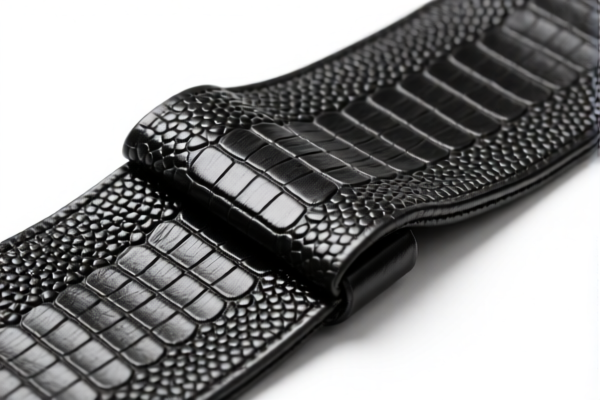
🐊 Industrial Grade Non-Fancy Reptile Leather (Synthetic/Artificial)
🌐 HS Code Reference & Customs Clearance Guide | 2026 Latest Tariff Analysis | Professional Clearance Strategy 📌 Part 1: Product Definition & Classification: Is It "Real" Leather?
"Non-Fancy Reptile Leather" in an Industrial Grade context almost always refers to Artificial/Synthetic Leather with a Reptile Embossment Pattern, rather than genuine exotic skin.
In international trade: * Genuine Exotic Skin (Real Crocodile/Alligator/Python) → Falls under Chapter 41 (Tanning) or Chapter 43 (Furs/Leather). * Artificial/Synthetic Leather (PVC, PU, Microfiber) → Falls under Chapter 59 (Impregnated Textiles/Leather Substitutes).
⚠️ Critical Distinction: - If the product is made from base fabric (non-woven, woven, or knit) coated with plastics (PVC/PU) to simulate reptile skin → Chapter 59. - If the product is genuine reptile hide (raw or tanned) without fancy tanning/dyeing → Chapter 41.
Note: "Non-Fancy" usually implies a functional, durable, mass-produced material, strongly pointing towards Synthetic/Artificial Leather used in automotive interiors, furniture, or heavy-duty cases.
📦 Part 2: HS Code Classification Matrix (2026 Latest Tariff Authority)
| HS Code | Product Description | Applicable Scenario | Material Basis |
|---|---|---|---|
| 5903.10.20.00 | Textile fabric impregnated with PVC, reinforced | Industrial belts, heavy-duty covers, artificial reptile leather sheets | ✅ Fabric Base + PVC Coating |
| 5903.20.00.00 | Textile fabric impregnated with Polyurethane (PU) | Upholstery, automotive seats, synthetic leather | ✅ Fabric Base + PU Coating |
| 5903.90.20.00 | Other textile fabrics impregnated/coated with plastics (e.g., Microfiber) | High-end synthetic leather, microfiber "reptile" leather | ✅ Fabric Base + Plastic Coating |
| 4117.10.00.00 | Raw hides and skins of reptiles (crocodiles, alligators, etc.) | Rare: Only if genuine exotic skin is used but not tanned | ❌ Genuine Skin |
| 4117.20.00.00 | Tanned/pickled reptile skins (non-fancy) | Rare: Genuine reptile leather, basic processing | ❌ Genuine Skin |
🔍 Key Reminder: - Most "Industrial Grade" reptile leather is synthetic. If it is synthetic, it MUST be classified under Chapter 59 (5903.xx). - If you declare synthetic leather as "Genuine Exotic Skin" (Chapter 41), you face severe fraud penalties and high duties. - If you declare genuine skin as synthetic to avoid high exotic skin duties, you face contraband/falsification charges.
💰 Part 3: 2026 Latest Tariff Rate Breakdown (US Market Focus)
✅ Applicable Country: United States (US)
✅ Origin: China (CN)
✅ Effective Date: November 10, 2025 (and ongoing)
🎯 1. 5903.10.20.00 – PVC-Coated Textile (Industrial Artificial Leather)
| Item | Content |
|---|---|
| Base Tariff Rate | 0% (ad valorem) for most PVC-coated textiles |
| USITC Surcharge | +25% (Under USITC Footnote 9903.88.01 for certain plastic-coated fabrics) |
| IEEPA Surcharge | +10% (China-specific surcharge, effective Nov 2025) |
| Total Tariff Rate | 35% |
| Calculation | CIF Value × 35% |
| De Minimis Eligibility | ❌ Not Eligible (Deny De Minimis) |
| Legal Path | IEEPA:9903.01.24 → USITC:5903.10.20.00 → FOOTNOTE:9903.88.01 |
📌 Explanation: - PVC-coated industrial leathers are subject to the 25% Section 301 tariff due to their plastic coating. - The 10% IEEPA surcharge is added for Chinese origin. - Total 35% is significant for low-margin industrial materials.
🎯 2. 5903.20.00.00 – PU-Coated Textile (Synthetic Leather)
| Item | Content |
|---|---|
| Base Tariff Rate | 0% |
| USITC Surcharge | +25% (Same footnote as PVC) |
| IEEPA Surcharge | +10% |
| Total Tariff Rate | 35% |
| Calculation | CIF Value × 35% |
| De Minimis Eligibility | ❌ Not Eligible |
| Legal Path | IEEPA:9903.01.24 → USITC:5903.20.00.00 → FOOTNOTE:9903.88.01 |
📌 Note: - PU leather (common in automotive upholstery) carries the same high tariff burden as PVC.
🎯 3. 5903.90.20.00 – Microfiber/Other Coated Textile
| Item | Content |
|---|---|
| Base Tariff Rate | 0% |
| USITC Surcharge | +25% |
| IEEPA Surcharge | +10% |
| Total Tariff Rate | 35% |
| Calculation | CIF Value × 35% |
📌 Note: - High-end microfiber "leather" (often used in luxury car interiors) is also subject to these rates.
🎯 4. 4117.10.00.00 / 4117.20.00.00 – Genuine Reptile Skins (If Applicable)
| Item | Content |
|---|---|
| Base Tariff Rate | 0% - 3.5% (varies by specific species and processing) |
| USITC Surcharge | +25% (If classified under specific plastic-treated categories) |
| IEEPA Surcharge | +10% |
| Total Tariff Rate | Up to 35% + CITES Fees |
| CITES Permit | ⚠️ REQUIRED for genuine exotic skins |
📌 Warning: - If you declare "Non-Fancy Reptile Leather" as genuine, you MUST provide CITES (Convention on International Trade in Endangered Species) permits. - Lack of CITES permits will result in confiscation, heavy fines, and criminal liability.
🛠️ Part 4: Customs Clearance Practical Advice
✅ 1. Documentation Checklist (Mandatory)
| Document | Required | Notes |
|---|---|---|
| ✅ Product Specification Sheet | ✔️ | Must clearly state: "Artificial Leather", "PU Coated", or "PVC Coated". Avoid "Genuine Reptile Skin". |
| ✅ Material Composition Certificate | ✔️ | Specify % of Fabric Base vs. Plastic Coating (e.g., 60% Polyester, 40% PU). |
| ✅ Commercial Invoice | ✔️ | Describe as: "Industrial Artificial Reptile Pattern Leather Sheets – PVC Coated". |
| ✅ Origin Certificate | ✔️ | For IEEPA determination. |
| ✅ CITES Permit | ⚠️ Only if Genuine | Critical: If the product is genuinely made from crocodile/alligator skin, you must have a valid CITES permit. If it’s synthetic, do not mention CITES. |
| ✅ FCC/CA65 (if applicable) | ✔️ | For chemical safety (California Prop 65) if sold in the US. |
✅ 2. Declaration Tips (Key Mantras)
🔥 "Declare Material, Not Pattern! 'Artificial' Saves You from CITES Traps!"
| Scenario | Correct Declaration | Wrong Declaration |
|---|---|---|
| Synthetic Leather | "Artificial Leather, PU Coated, 60x50cm Sheets" | "Reptile Leather" or "Exotic Skin" |
| Genuine Skin | "Tanned Crocodile Skin, Non-Fancy, for Handbags" | "Synthetic Leather" (Fraud!) |
| Industrial Use | "PVC Coated Textile for Automotive Interiors" | "Fashion Leather" |
✅ 3. Special Cases
| Case | Handling Advice |
|---|---|
| High-End Microfiber | Declare as 5903.90.20.00. Ensure material spec confirms microfiber base. |
| Embroidered Reptile Pattern | If the base is fabric and only the surface is printed/embossed, still Chapter 59. |
| Genuine Exotic Skin | Strict CITES Compliance Required. No de minimis exemption. High inspection risk. |
| Mixed Materials | If leather is bonded to another material, use the essential character rule. Usually, the leather/coating defines the classification. |
🌍 Part 5: Global Market Comparison (2026)
| Country/Region | Recommended HS Code | Tariff (China Origin) | Certification | Notes |
|---|---|---|---|---|
| 🇺🇸 USA | 5903.10.20.00 / 5903.20.00.00 |
35% | CA65, Prop 65 | High duties due to Section 301 & IEEPA. |
| 🇨🇳 China | 5903.10.20.00 |
0% | CCC (if electrical) | No import tariff for many plastic products. |
| 🇪🇺 EU | 5903.10.20 / 5903.20.00 |
0% | REACH, RoHS | No extra tariffs if compliant with chemical standards. |
| 🇬🇧 UK | 5903.10.20 |
0% | UKCA | Post-Brexit rules mirror EU for most goods. |
| 🇯🇵 Japan | 5903.10.20 |
0% | JIS | No extra tariffs. |
📌 Conclusion: - USA is the most expensive market due to 35% combined tariffs. - EU/UK/JP are favorable with 0% tariffs, but strict on chemical safety (REACH/RoHS). - Always prove it’s synthetic to avoid CITES issues. If it’s genuine, prepare for CITES paperwork and higher scrutiny.
📌 Part 6: Common Mistakes & Pitfalls
❌ Mistake 1: Declaring "Reptile Leather" without specifying "Artificial" or "Genuine"
👉 Result: Customs asks for clarification → Delay → Potential CITES investigation if they assume genuine.
❌ Mistake 2: Using CITES permits for synthetic leather
👉 Result: Suspicious red flag. Customs may suspect fraud or misdeclaration.
❌ Mistake 3: Misclassifying synthetic leather as "Genuine Exotic Skin"
👉 Result: Lower base tariff (sometimes), but CITES violation if no permit. If permit is fake, criminal charges.
❌ Mistake 4: Ignoring Section 301 for PVC/PU goods
👉 Result: Underpaying 25% duty → Back taxes + Penalties.
✅ Correct Approach:
"Artificial Reptile Pattern Leather, PVC Coated, 60% Polyester/40% PVC, Industrial Grade, Non-CITES"
🎯 Part 7: Conclusion: Precision Saves Money
🎯 Remember:
🔹 "If it’s plastic-coated, it’s Chapter 59, not Chapter 41."
🔹 "No CITES permit for synthetic? Good. No CITES permit for genuine? Disaster."
🔹 "USA Tariff = 35% for synthetic leather. Plan your pricing accordingly."
📌 Pro Tip:
If your synthetic leather is originating from Vietnam or Malaysia, you may qualify for IEEPA exemption or lower duties under free trade agreements (e.g., CPTPP, RCEP). Always check Origin Rules.
📣 Immediate Action:
📞 Consult a Customs Broker to verify Material Composition.
📄 Ensure Invoice Description explicitly states "Artificial" or "Synthetic".
🚀 Clear the CITES Trap by proving it’s not real exotic skin.
✨ Professional clearance starts with accurate classification!
💼 Every tariff point saved is profit earned!
用户评价
关于 HS 编码归类
协调制度(HS)是由世界海关组织(WCO)制定的国际贸易商品分类标准。全球 200 多个国家采用 HS 系统作为海关关税、贸易统计和进出口监管的基础。
每个 HS 编码遵循以下层级结构:
- 章(2 位)——商品大类(例如:第 84 章:机器和机械设备)
- 品目(4 位)——章内的更具体分类
- 子目(6 位)——国际通用细分,所有 WCO 成员国统一使用
- 本国细分(8-10 位)——各国自行扩展的细分编码,如美国 HTSUS 10 位编码
正确的 HS 编码归类对于顺利通关、准确缴纳关税和遵守贸易法规至关重要。错误归类可能导致海关延误、多缴关税或罚款。
从CN进口到US时,适用的关税税率可能包括:
- 最惠国(MFN)税率——适用于 WTO 成员国的标准关税税率
- 普通税率——适用于无贸易协定国家
- 贸易救济关税——附加关税,如 301 条款(反倾销)、232 条款(国家安全)或反补贴税
本页内容仅供参考。如需正式归类,请咨询当地海关或持牌报关代理。