Non Fancy Reptile Leather Industrial Grade
CN → USProduct Images
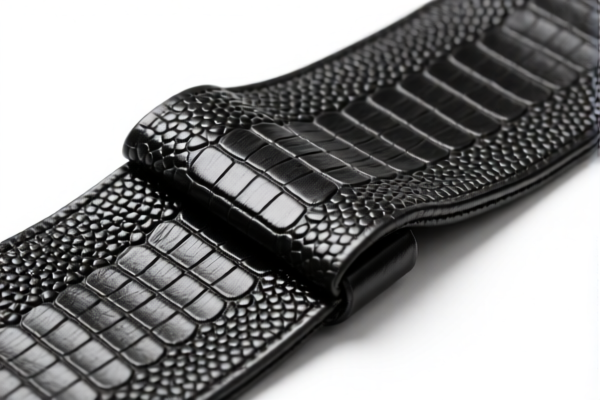
AI Analysis
🐊 Industrial Grade Non-Fancy Reptile Leather (Synthetic/Artificial)
🌐 HS Code Reference & Customs Clearance Guide | 2026 Latest Tariff Analysis | Professional Clearance Strategy 📌 Part 1: Product Definition & Classification: Is It "Real" Leather?
"Non-Fancy Reptile Leather" in an Industrial Grade context almost always refers to Artificial/Synthetic Leather with a Reptile Embossment Pattern, rather than genuine exotic skin.
In international trade: * Genuine Exotic Skin (Real Crocodile/Alligator/Python) → Falls under Chapter 41 (Tanning) or Chapter 43 (Furs/Leather). * Artificial/Synthetic Leather (PVC, PU, Microfiber) → Falls under Chapter 59 (Impregnated Textiles/Leather Substitutes).
⚠️ Critical Distinction: - If the product is made from base fabric (non-woven, woven, or knit) coated with plastics (PVC/PU) to simulate reptile skin → Chapter 59. - If the product is genuine reptile hide (raw or tanned) without fancy tanning/dyeing → Chapter 41.
Note: "Non-Fancy" usually implies a functional, durable, mass-produced material, strongly pointing towards Synthetic/Artificial Leather used in automotive interiors, furniture, or heavy-duty cases.
📦 Part 2: HS Code Classification Matrix (2026 Latest Tariff Authority)
| HS Code | Product Description | Applicable Scenario | Material Basis |
|---|---|---|---|
| 5903.10.20.00 | Textile fabric impregnated with PVC, reinforced | Industrial belts, heavy-duty covers, artificial reptile leather sheets | ✅ Fabric Base + PVC Coating |
| 5903.20.00.00 | Textile fabric impregnated with Polyurethane (PU) | Upholstery, automotive seats, synthetic leather | ✅ Fabric Base + PU Coating |
| 5903.90.20.00 | Other textile fabrics impregnated/coated with plastics (e.g., Microfiber) | High-end synthetic leather, microfiber "reptile" leather | ✅ Fabric Base + Plastic Coating |
| 4117.10.00.00 | Raw hides and skins of reptiles (crocodiles, alligators, etc.) | Rare: Only if genuine exotic skin is used but not tanned | ❌ Genuine Skin |
| 4117.20.00.00 | Tanned/pickled reptile skins (non-fancy) | Rare: Genuine reptile leather, basic processing | ❌ Genuine Skin |
🔍 Key Reminder: - Most "Industrial Grade" reptile leather is synthetic. If it is synthetic, it MUST be classified under Chapter 59 (5903.xx). - If you declare synthetic leather as "Genuine Exotic Skin" (Chapter 41), you face severe fraud penalties and high duties. - If you declare genuine skin as synthetic to avoid high exotic skin duties, you face contraband/falsification charges.
💰 Part 3: 2026 Latest Tariff Rate Breakdown (US Market Focus)
✅ Applicable Country: United States (US)
✅ Origin: China (CN)
✅ Effective Date: November 10, 2025 (and ongoing)
🎯 1. 5903.10.20.00 – PVC-Coated Textile (Industrial Artificial Leather)
| Item | Content |
|---|---|
| Base Tariff Rate | 0% (ad valorem) for most PVC-coated textiles |
| USITC Surcharge | +25% (Under USITC Footnote 9903.88.01 for certain plastic-coated fabrics) |
| IEEPA Surcharge | +10% (China-specific surcharge, effective Nov 2025) |
| Total Tariff Rate | 35% |
| Calculation | CIF Value × 35% |
| De Minimis Eligibility | ❌ Not Eligible (Deny De Minimis) |
| Legal Path | IEEPA:9903.01.24 → USITC:5903.10.20.00 → FOOTNOTE:9903.88.01 |
📌 Explanation: - PVC-coated industrial leathers are subject to the 25% Section 301 tariff due to their plastic coating. - The 10% IEEPA surcharge is added for Chinese origin. - Total 35% is significant for low-margin industrial materials.
🎯 2. 5903.20.00.00 – PU-Coated Textile (Synthetic Leather)
| Item | Content |
|---|---|
| Base Tariff Rate | 0% |
| USITC Surcharge | +25% (Same footnote as PVC) |
| IEEPA Surcharge | +10% |
| Total Tariff Rate | 35% |
| Calculation | CIF Value × 35% |
| De Minimis Eligibility | ❌ Not Eligible |
| Legal Path | IEEPA:9903.01.24 → USITC:5903.20.00.00 → FOOTNOTE:9903.88.01 |
📌 Note: - PU leather (common in automotive upholstery) carries the same high tariff burden as PVC.
🎯 3. 5903.90.20.00 – Microfiber/Other Coated Textile
| Item | Content |
|---|---|
| Base Tariff Rate | 0% |
| USITC Surcharge | +25% |
| IEEPA Surcharge | +10% |
| Total Tariff Rate | 35% |
| Calculation | CIF Value × 35% |
📌 Note: - High-end microfiber "leather" (often used in luxury car interiors) is also subject to these rates.
🎯 4. 4117.10.00.00 / 4117.20.00.00 – Genuine Reptile Skins (If Applicable)
| Item | Content |
|---|---|
| Base Tariff Rate | 0% - 3.5% (varies by specific species and processing) |
| USITC Surcharge | +25% (If classified under specific plastic-treated categories) |
| IEEPA Surcharge | +10% |
| Total Tariff Rate | Up to 35% + CITES Fees |
| CITES Permit | ⚠️ REQUIRED for genuine exotic skins |
📌 Warning: - If you declare "Non-Fancy Reptile Leather" as genuine, you MUST provide CITES (Convention on International Trade in Endangered Species) permits. - Lack of CITES permits will result in confiscation, heavy fines, and criminal liability.
🛠️ Part 4: Customs Clearance Practical Advice
✅ 1. Documentation Checklist (Mandatory)
| Document | Required | Notes |
|---|---|---|
| ✅ Product Specification Sheet | ✔️ | Must clearly state: "Artificial Leather", "PU Coated", or "PVC Coated". Avoid "Genuine Reptile Skin". |
| ✅ Material Composition Certificate | ✔️ | Specify % of Fabric Base vs. Plastic Coating (e.g., 60% Polyester, 40% PU). |
| ✅ Commercial Invoice | ✔️ | Describe as: "Industrial Artificial Reptile Pattern Leather Sheets – PVC Coated". |
| ✅ Origin Certificate | ✔️ | For IEEPA determination. |
| ✅ CITES Permit | ⚠️ Only if Genuine | Critical: If the product is genuinely made from crocodile/alligator skin, you must have a valid CITES permit. If it’s synthetic, do not mention CITES. |
| ✅ FCC/CA65 (if applicable) | ✔️ | For chemical safety (California Prop 65) if sold in the US. |
✅ 2. Declaration Tips (Key Mantras)
🔥 "Declare Material, Not Pattern! 'Artificial' Saves You from CITES Traps!"
| Scenario | Correct Declaration | Wrong Declaration |
|---|---|---|
| Synthetic Leather | "Artificial Leather, PU Coated, 60x50cm Sheets" | "Reptile Leather" or "Exotic Skin" |
| Genuine Skin | "Tanned Crocodile Skin, Non-Fancy, for Handbags" | "Synthetic Leather" (Fraud!) |
| Industrial Use | "PVC Coated Textile for Automotive Interiors" | "Fashion Leather" |
✅ 3. Special Cases
| Case | Handling Advice |
|---|---|
| High-End Microfiber | Declare as 5903.90.20.00. Ensure material spec confirms microfiber base. |
| Embroidered Reptile Pattern | If the base is fabric and only the surface is printed/embossed, still Chapter 59. |
| Genuine Exotic Skin | Strict CITES Compliance Required. No de minimis exemption. High inspection risk. |
| Mixed Materials | If leather is bonded to another material, use the essential character rule. Usually, the leather/coating defines the classification. |
🌍 Part 5: Global Market Comparison (2026)
| Country/Region | Recommended HS Code | Tariff (China Origin) | Certification | Notes |
|---|---|---|---|---|
| 🇺🇸 USA | 5903.10.20.00 / 5903.20.00.00 |
35% | CA65, Prop 65 | High duties due to Section 301 & IEEPA. |
| 🇨🇳 China | 5903.10.20.00 |
0% | CCC (if electrical) | No import tariff for many plastic products. |
| 🇪🇺 EU | 5903.10.20 / 5903.20.00 |
0% | REACH, RoHS | No extra tariffs if compliant with chemical standards. |
| 🇬🇧 UK | 5903.10.20 |
0% | UKCA | Post-Brexit rules mirror EU for most goods. |
| 🇯🇵 Japan | 5903.10.20 |
0% | JIS | No extra tariffs. |
📌 Conclusion: - USA is the most expensive market due to 35% combined tariffs. - EU/UK/JP are favorable with 0% tariffs, but strict on chemical safety (REACH/RoHS). - Always prove it’s synthetic to avoid CITES issues. If it’s genuine, prepare for CITES paperwork and higher scrutiny.
📌 Part 6: Common Mistakes & Pitfalls
❌ Mistake 1: Declaring "Reptile Leather" without specifying "Artificial" or "Genuine"
👉 Result: Customs asks for clarification → Delay → Potential CITES investigation if they assume genuine.
❌ Mistake 2: Using CITES permits for synthetic leather
👉 Result: Suspicious red flag. Customs may suspect fraud or misdeclaration.
❌ Mistake 3: Misclassifying synthetic leather as "Genuine Exotic Skin"
👉 Result: Lower base tariff (sometimes), but CITES violation if no permit. If permit is fake, criminal charges.
❌ Mistake 4: Ignoring Section 301 for PVC/PU goods
👉 Result: Underpaying 25% duty → Back taxes + Penalties.
✅ Correct Approach:
"Artificial Reptile Pattern Leather, PVC Coated, 60% Polyester/40% PVC, Industrial Grade, Non-CITES"
🎯 Part 7: Conclusion: Precision Saves Money
🎯 Remember:
🔹 "If it’s plastic-coated, it’s Chapter 59, not Chapter 41."
🔹 "No CITES permit for synthetic? Good. No CITES permit for genuine? Disaster."
🔹 "USA Tariff = 35% for synthetic leather. Plan your pricing accordingly."
📌 Pro Tip:
If your synthetic leather is originating from Vietnam or Malaysia, you may qualify for IEEPA exemption or lower duties under free trade agreements (e.g., CPTPP, RCEP). Always check Origin Rules.
📣 Immediate Action:
📞 Consult a Customs Broker to verify Material Composition.
📄 Ensure Invoice Description explicitly states "Artificial" or "Synthetic".
🚀 Clear the CITES Trap by proving it’s not real exotic skin.
✨ Professional clearance starts with accurate classification!
💼 Every tariff point saved is profit earned!
Customer Reviews
About HS Code Classification
The Harmonized System (HS) is an internationally standardized nomenclature developed by the World Customs Organization (WCO) to classify traded products. Over 200 countries use the HS system as the basis for customs tariffs, trade statistics, and import/export regulations.
Each HS code follows a hierarchical structure:
- Chapter (2 digits) — Broad category of goods (e.g., Chapter 84: Machinery and Mechanical Appliances)
- Heading (4 digits) — More specific grouping within the chapter
- Subheading (6 digits) — Internationally standardized breakdown, used by all WCO member countries
- National subdivisions (8-10 digits) — Country-specific extensions for further classification, such as US HTSUS 10-digit codes
Correct HS code classification is essential for smooth customs clearance, accurate duty payment, and compliance with trade regulations. Misclassification can lead to customs delays, overpayment of duties, or penalties.
When importing from CN to US, the applicable tariff rates may include:
- Most-Favored-Nation (MFN) rate — The standard duty rate applied to WTO members
- General rate — Applied to countries without trade agreements
- Trade remedy duties — Additional tariffs such as Section 301 (anti-dumping), Section 232 (national security), or countervailing duties
The information provided on this page is for reference purposes only. For official classification, please consult with your local customs authority or a licensed customs broker.