Non alloy Steel Bar
CN → US| HS编码 | 关税税率 | 原产国 | 目的国 | 文档 |
|---|---|---|---|---|
| 7214990016 | 10.0% | CN | US | 官方文档 |
| 7214990031 | 10.0% | CN | US | 官方文档 |
| 7206900000 | 35.0% | CN | US | 官方文档 |
| 7206100000 | 35.0% | CN | US | 官方文档 |
| 7214990016 | 10.0% | CN | US | 官方文档 |
商品图片
AI分析
🏗️ Non-Alloy Steel Bar (Ferrous Products)
🌐 HS Code Reference & Customs Clearance Guide | 2026 Latest Tariff Analysis | Professional Clearance Strategy
📌 I. Product Definition: What is "Non-Alloy Steel Bar"?
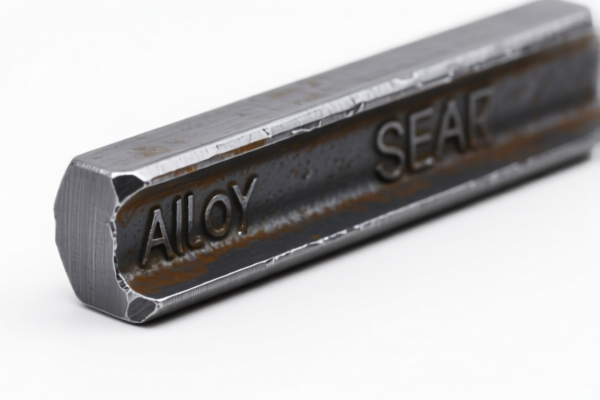
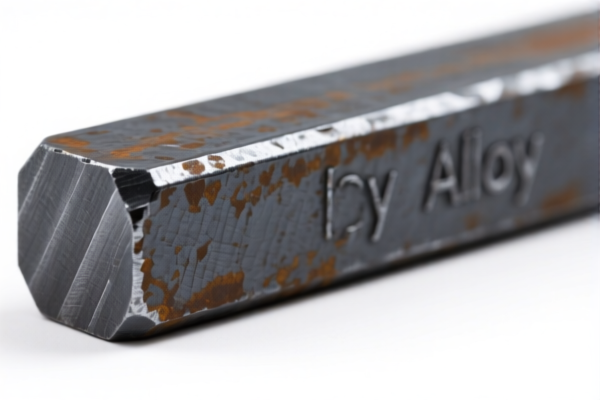
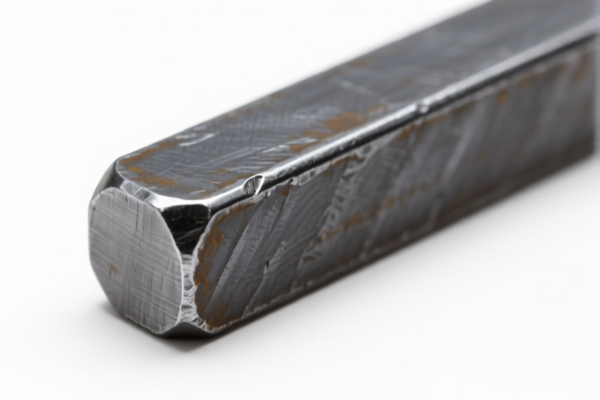
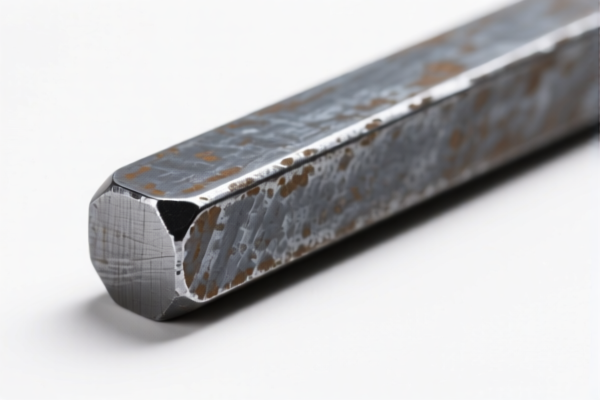
Non-alloy steel bars are semi-finished or finished iron products with a solid cross-section (circular, rectangular, square, or hexagonal) that have been rolled, forged, or drawn. The key distinction from "ingots" or "billets" is the form factor and dimensional precision.
- Steel Bars (Bars/Rods): Solid cross-sections, typically straight, with diameters/sides often greater than 10mm. They are ready for machining, construction, or further processing.
- Steel Ingots/Billets: Primary solidified forms from the furnace, irregular or semi-finished, intended for re-rolling.
⚠️ Critical Classification Point:
- If the product is a solid rod/bar with a diameter/side > 10mm → It is classified as "Bars" (Chapter 72, Heading 7214).
- If the product is a primary solidified mass (ingot/billet) not yet rolled into final bar shapes → It is classified as "Ingots" (Chapter 72, Heading 7206).
📦 II. HS Code Classification Details (2026 Latest Tariff Authority)
Based on the provided data, the products fall into two main categories: Bars (7214) and Ingots (7206).
| HS Code | Product Description | Form Factor | Material | Diameter/Size |
|---|---|---|---|---|
7214.99.00.16 |
Non-alloy steel bars, diameter > 10mm, < 76mm | ✅ Rod/Bar | Non-Alloy Steel | > 10mm, < 76mm |
7214.99.00.31 |
Non-alloy steel bars, diameter > 10mm, < 76mm | ✅ Rod/Bar | Non-Alloy Steel | > 10mm, < 76mm |
7206.90.00.00 |
Non-al alloy steel ingots | ✅ Ingots/Billets | Non-Alloy Steel | Primary Solid Form |
7206.10.00.00 |
Non-alloy steel ingots | ✅ Ingots/Billets | Non-Alloy Steel | Primary Solid Form |
🔍 Key Insight:
- 7214.99.00.16 and 7214.99.00.31 both refer to Steel Bars. The distinction between these two sub-codes is often based on specific manufacturing processes (e.g., cold-formed vs. hot-rolled) or specific diameter ranges not fully detailed in the summary, but both share the 10% total tax profile.
- 7206.90.00.00 and 7206.10.00.00 refer to Steel Ingots. These are classified as primary iron/steel products, leading to significantly higher tariffs.
💰 III. 2026 Latest Tariff Rate Breakdown (Including Additional Duties)
✅ Applicable Country: United States (US)
✅ Origin: China (CN)
✅ Effective Date: 2025/2026 (Current Trade Policies)
🎯 1. 7214.99.00.16 & 7214.99.00.31 —— Non-Alloy Steel Bars (Diameter > 10mm)
| Item | Content |
|---|---|
| Base Tariff Rate | 0% (Ad Valorem) |
| Section 232 Tariff (Steel) | 0% (Note: Section 232 applies to many steel products, but data shows 0% base + 122条款) |
| Section 301 Tariff (25%) | ❌ Not Applied (Data shows 0%) |
| Section 122 Tariff | +10% |
| Total Effective Rate | 10.0% |
| Tax Calculation | CIF Value × 10% |
| Legal Basis | Section 122 Tariff: 10% |
📌 Explanation:
- These HS codes apply to finished or semi-finished bars.
- The total tax is 10%, driven solely by the Section 122 tariff (often related to specific national security or trade imbalance measures on certain steel products).
- No 25% Section 301 tariff applies to these specific bar codes according to the provided data.
🎯 2. 7206.90.00.00 & 7206.10.00.00 —— Non-Alloy Steel Ingots
| Item | Content |
|---|---|
| Base Tariff Rate | 0% (Ad Valorem) |
| Section 301 Tariff (25%) | +25% (From USITC Footnote 9903.88.01 or equivalent) |
| Section 122 Tariff | +10% |
| Total Effective Rate | 35.0% |
| Tax Calculation | CIF Value × 35% |
| Legal Basis | Section 301: 25% + Section 122: 10% |
📌 Explanation:
- These HS codes apply to primary steel ingots.
- The total tax is 35%, comprising a 25% Section 301 tariff (major trade war tariff) and a 10% Section 122 tariff.
- High Tariff Warning: Ingots are heavily taxed due to their status as raw materials and strategic steel products.
🛠️ IV. Customs Clearance Practical Advice (Avoid Pitfalls)
✅ 1. Preparation Checklist (Essential Documents)
| Document | Mandatory? | Description |
|---|---|---|
| ✅ Commercial Invoice | ✔️ | Must clearly state: "Non-Alloy Steel Bar/Ingots", Material Grade (e.g., SAE 1018, 1045), Dimensions. |
| ✅ Packing List | ✔️ | Weight, dimensions, number of bundles/bundles. |
| ✅ Certificate of Origin | ✔️ | Proves origin (China) for tariff application. |
| ✅ Product Specification Sheet | ✔️ | Confirm non-alloy status (carbon content < 2%, no significant alloying elements). |
| ✅ Bill of Lading | ✔️ | Standard shipping document. |
| ✅ Section 301 Exclusion (if applicable) | ❓ | Check if the specific product code has any valid exclusions (rare for steel bars/ingots). |
✅ 2. Classification Strategy (Crucial for Cost Saving)
| Scenario | Correct Classification | Incorrect Classification | Consequence |
|---|---|---|---|
| Steel Rods (Diameter 12mm) | 7214.99.00.16 / .31 (10%) |
7206.10.00.00 (35%) |
Overpay 25%! |
| Steel Ingots/Billets | 7206.90.00.00 (35%) |
7214.99.00.16 (10%) |
Under-declaration → Fines + Back Taxes |
| Alloy Steel Bars (e.g., Stainless) | Different HS Code (e.g., 7222) | 7214.99.00.16 (10%) |
Wrong Code → Delayed Clearance |
🔥 Golden Rule:
"Bars have straight shapes, diameters >10mm; Ingots are raw, solid masses. Do not confuse them!"
- If it looks like a long, straight rod → 7214 (10%).
- If it looks like a block or ingot from a mold → 7206 (35%).
✅ 3. Special Considerations for Steel Imports
| Issue | Recommendation |
|---|---|
| Section 232 Tariffs | While not explicitly listed in the provided tax details for 7214, ensure the product is not subject to additional Section 232 safeguards if imported in large volumes. |
| Anti-Dumping (AD) / Countervailing Duties (CVD) | Some specific steel bars (e.g., round steel, rebar) may have high AD/CVD rates. Check if AD/CVD applies to your specific product type. The provided data only shows base + 301/122 tariffs. |
| Material Certification | Provide mill certificates to prove "Non-Alloy" status. If alloying elements (Cr, Ni, Mo) are present, it may fall under a different, potentially higher/tariffed heading. |
🌍 V. Global Market Comparison (2026)
| Market | Recommended HS Code | Estimated Total Tariff | Notes |
|---|---|---|---|
| 🇺🇸 USA | 7214.99.00.16 / .31 |
10% (Bars) | Low tariff for bars; 35% for ingots. |
| 🇺🇸 USA | 7206.90.00.00 |
35% (Ingots) | High tariff due to Section 301 + 122. |
| 🇪🇺 EU | 7214.99.00.00 |
~1-3% | Generally lower tariffs for steel bars; no major Section 301 equivalent. |
| 🇨🇳 China | 7214.99.00.00 |
~0-5% | Low import tariff for raw steel inputs. |
📌 Conclusion:
- USA is the most complex market for steel due to layered tariffs (Section 301, 122, 232).
- Bars (7214) are significantly cheaper to import into the US than Ingots (7206).
- Ensure accurate physical description to avoid misclassification.
📌 VI. Common Mistakes & Pitfalls (Lessons Learned)
❌ Mistake 1: Calling "Steel Ingots" as "Steel Bars" to get the 10% rate.
👉 Consequence: Customs audit → Back taxes (25%) + Penalties. Ingots are visually distinct and harder to disguise.
❌ Mistake 2: Assuming all steel products are subject to 25% Section 301.
👉 Consequence: Overpaying. The provided data shows Bars have 0% Section 301, only 10% Section 122.
❌ Mistake 3: Ignoring "Non-Alloy" status.
👉 Consequence: If the steel contains significant alloying elements, it may fall under Chapter 72, Headings 7225-7229, which have different tariff structures and potentially higher AD/CVD rates.
✅ Correct Action:
"Non-Alloy Steel Round Bar, Hot-Rolled, Diameter 20mm, Material: SAE 1020, Origin: China"
- Use 7214.99.00.16 or 7214.99.00.31 if diameter is >10mm and <76mm.
- Provide Mill Test Certificate to prove non-alloy status.
🎯 VII. Conclusion: Professional Classification Saves Money!
🎯 Remember the Rules:
🔹 "Bars > 10mm = 10% Tariff (122 Clause)"
🔹 "Ingots = 35% Tariff (301 + 122 Clause)"
🔹 "Alloy Steel = Check Other HS Codes"
📌 Tip:
If your steel bar is cold-drawn vs. hot-rolled, it may affect whether it falls under
.16or.31. Consult with a customs broker to ensure the most accurate sub-code within 7214.99.00 to avoid any potential disputes.
📣 Immediate Action:
📞 Confirm Product Shape: Is it a straight bar or an ingot?
📞 Check Alloy Content: Is it truly non-alloy?
📞 Apply for Advance Ruling: If the shipment is large, seek a CBP Advance Ruling to lock in the HS Code and tariff rate.
✨ Professional Clearance Starts with Accurate Classification!
💼 Your every dollar in tariffs is worth optimizing!
用户评价
关于 HS 编码归类
协调制度(HS)是由世界海关组织(WCO)制定的国际贸易商品分类标准。全球 200 多个国家采用 HS 系统作为海关关税、贸易统计和进出口监管的基础。
每个 HS 编码遵循以下层级结构:
- 章(2 位)——商品大类(例如:第 84 章:机器和机械设备)
- 品目(4 位)——章内的更具体分类
- 子目(6 位)——国际通用细分,所有 WCO 成员国统一使用
- 本国细分(8-10 位)——各国自行扩展的细分编码,如美国 HTSUS 10 位编码
正确的 HS 编码归类对于顺利通关、准确缴纳关税和遵守贸易法规至关重要。错误归类可能导致海关延误、多缴关税或罚款。
从CN进口到US时,适用的关税税率可能包括:
- 最惠国(MFN)税率——适用于 WTO 成员国的标准关税税率
- 普通税率——适用于无贸易协定国家
- 贸易救济关税——附加关税,如 301 条款(反倾销)、232 条款(国家安全)或反补贴税
本页内容仅供参考。如需正式归类,请咨询当地海关或持牌报关代理。