Non alloy Steel Bar
CN → US| HS Code | Tariff Rate | Origin | Destination | Doc |
|---|---|---|---|---|
| 7214990016 | 10.0% | CN | US | Official Doc |
| 7214990031 | 10.0% | CN | US | Official Doc |
| 7206900000 | 35.0% | CN | US | Official Doc |
| 7206100000 | 35.0% | CN | US | Official Doc |
| 7214990016 | 10.0% | CN | US | Official Doc |
Product Images
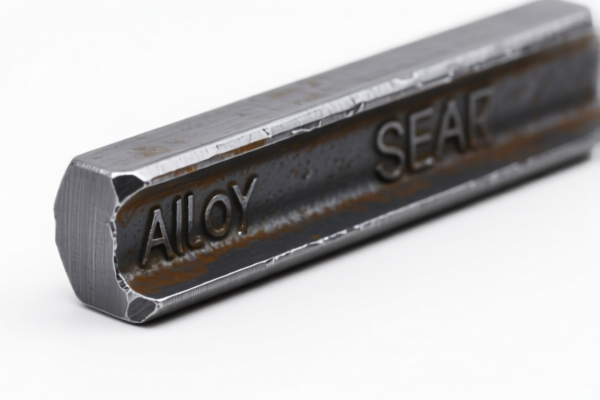
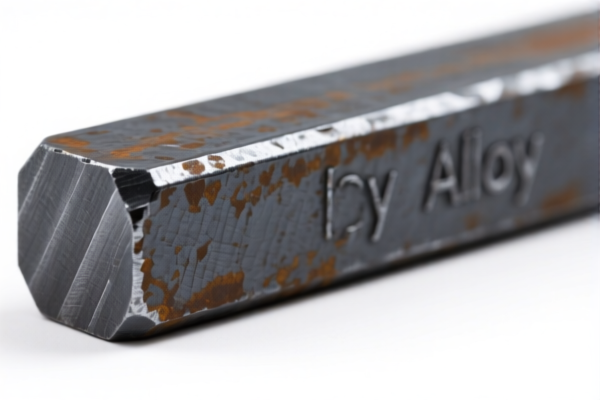
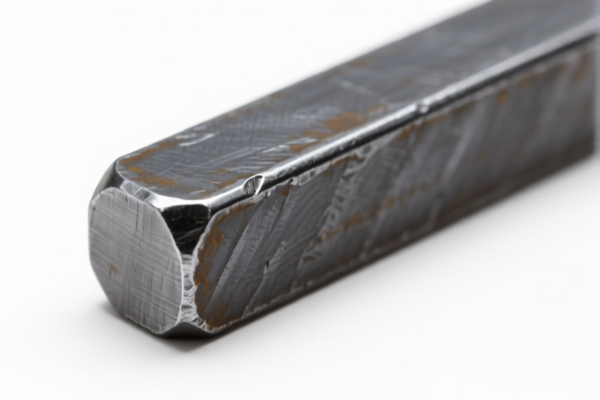
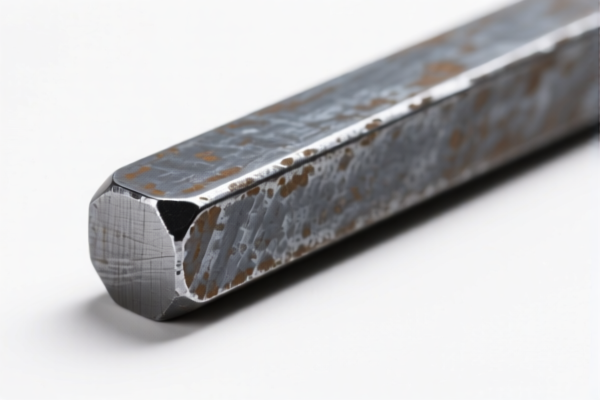
AI Analysis
🏗️ Non-Alloy Steel Bar (Ferrous Products)
🌐 HS Code Reference & Customs Clearance Guide | 2026 Latest Tariff Analysis | Professional Clearance Strategy
📌 I. Product Definition: What is "Non-Alloy Steel Bar"?
Non-alloy steel bars are semi-finished or finished iron products with a solid cross-section (circular, rectangular, square, or hexagonal) that have been rolled, forged, or drawn. The key distinction from "ingots" or "billets" is the form factor and dimensional precision.
- Steel Bars (Bars/Rods): Solid cross-sections, typically straight, with diameters/sides often greater than 10mm. They are ready for machining, construction, or further processing.
- Steel Ingots/Billets: Primary solidified forms from the furnace, irregular or semi-finished, intended for re-rolling.
⚠️ Critical Classification Point:
- If the product is a solid rod/bar with a diameter/side > 10mm → It is classified as "Bars" (Chapter 72, Heading 7214).
- If the product is a primary solidified mass (ingot/billet) not yet rolled into final bar shapes → It is classified as "Ingots" (Chapter 72, Heading 7206).
📦 II. HS Code Classification Details (2026 Latest Tariff Authority)
Based on the provided data, the products fall into two main categories: Bars (7214) and Ingots (7206).
| HS Code | Product Description | Form Factor | Material | Diameter/Size |
|---|---|---|---|---|
7214.99.00.16 |
Non-alloy steel bars, diameter > 10mm, < 76mm | ✅ Rod/Bar | Non-Alloy Steel | > 10mm, < 76mm |
7214.99.00.31 |
Non-alloy steel bars, diameter > 10mm, < 76mm | ✅ Rod/Bar | Non-Alloy Steel | > 10mm, < 76mm |
7206.90.00.00 |
Non-al alloy steel ingots | ✅ Ingots/Billets | Non-Alloy Steel | Primary Solid Form |
7206.10.00.00 |
Non-alloy steel ingots | ✅ Ingots/Billets | Non-Alloy Steel | Primary Solid Form |
🔍 Key Insight:
- 7214.99.00.16 and 7214.99.00.31 both refer to Steel Bars. The distinction between these two sub-codes is often based on specific manufacturing processes (e.g., cold-formed vs. hot-rolled) or specific diameter ranges not fully detailed in the summary, but both share the 10% total tax profile.
- 7206.90.00.00 and 7206.10.00.00 refer to Steel Ingots. These are classified as primary iron/steel products, leading to significantly higher tariffs.
💰 III. 2026 Latest Tariff Rate Breakdown (Including Additional Duties)
✅ Applicable Country: United States (US)
✅ Origin: China (CN)
✅ Effective Date: 2025/2026 (Current Trade Policies)
🎯 1. 7214.99.00.16 & 7214.99.00.31 —— Non-Alloy Steel Bars (Diameter > 10mm)
| Item | Content |
|---|---|
| Base Tariff Rate | 0% (Ad Valorem) |
| Section 232 Tariff (Steel) | 0% (Note: Section 232 applies to many steel products, but data shows 0% base + 122条款) |
| Section 301 Tariff (25%) | ❌ Not Applied (Data shows 0%) |
| Section 122 Tariff | +10% |
| Total Effective Rate | 10.0% |
| Tax Calculation | CIF Value × 10% |
| Legal Basis | Section 122 Tariff: 10% |
📌 Explanation:
- These HS codes apply to finished or semi-finished bars.
- The total tax is 10%, driven solely by the Section 122 tariff (often related to specific national security or trade imbalance measures on certain steel products).
- No 25% Section 301 tariff applies to these specific bar codes according to the provided data.
🎯 2. 7206.90.00.00 & 7206.10.00.00 —— Non-Alloy Steel Ingots
| Item | Content |
|---|---|
| Base Tariff Rate | 0% (Ad Valorem) |
| Section 301 Tariff (25%) | +25% (From USITC Footnote 9903.88.01 or equivalent) |
| Section 122 Tariff | +10% |
| Total Effective Rate | 35.0% |
| Tax Calculation | CIF Value × 35% |
| Legal Basis | Section 301: 25% + Section 122: 10% |
📌 Explanation:
- These HS codes apply to primary steel ingots.
- The total tax is 35%, comprising a 25% Section 301 tariff (major trade war tariff) and a 10% Section 122 tariff.
- High Tariff Warning: Ingots are heavily taxed due to their status as raw materials and strategic steel products.
🛠️ IV. Customs Clearance Practical Advice (Avoid Pitfalls)
✅ 1. Preparation Checklist (Essential Documents)
| Document | Mandatory? | Description |
|---|---|---|
| ✅ Commercial Invoice | ✔️ | Must clearly state: "Non-Alloy Steel Bar/Ingots", Material Grade (e.g., SAE 1018, 1045), Dimensions. |
| ✅ Packing List | ✔️ | Weight, dimensions, number of bundles/bundles. |
| ✅ Certificate of Origin | ✔️ | Proves origin (China) for tariff application. |
| ✅ Product Specification Sheet | ✔️ | Confirm non-alloy status (carbon content < 2%, no significant alloying elements). |
| ✅ Bill of Lading | ✔️ | Standard shipping document. |
| ✅ Section 301 Exclusion (if applicable) | ❓ | Check if the specific product code has any valid exclusions (rare for steel bars/ingots). |
✅ 2. Classification Strategy (Crucial for Cost Saving)
| Scenario | Correct Classification | Incorrect Classification | Consequence |
|---|---|---|---|
| Steel Rods (Diameter 12mm) | 7214.99.00.16 / .31 (10%) |
7206.10.00.00 (35%) |
Overpay 25%! |
| Steel Ingots/Billets | 7206.90.00.00 (35%) |
7214.99.00.16 (10%) |
Under-declaration → Fines + Back Taxes |
| Alloy Steel Bars (e.g., Stainless) | Different HS Code (e.g., 7222) | 7214.99.00.16 (10%) |
Wrong Code → Delayed Clearance |
🔥 Golden Rule:
"Bars have straight shapes, diameters >10mm; Ingots are raw, solid masses. Do not confuse them!"
- If it looks like a long, straight rod → 7214 (10%).
- If it looks like a block or ingot from a mold → 7206 (35%).
✅ 3. Special Considerations for Steel Imports
| Issue | Recommendation |
|---|---|
| Section 232 Tariffs | While not explicitly listed in the provided tax details for 7214, ensure the product is not subject to additional Section 232 safeguards if imported in large volumes. |
| Anti-Dumping (AD) / Countervailing Duties (CVD) | Some specific steel bars (e.g., round steel, rebar) may have high AD/CVD rates. Check if AD/CVD applies to your specific product type. The provided data only shows base + 301/122 tariffs. |
| Material Certification | Provide mill certificates to prove "Non-Alloy" status. If alloying elements (Cr, Ni, Mo) are present, it may fall under a different, potentially higher/tariffed heading. |
🌍 V. Global Market Comparison (2026)
| Market | Recommended HS Code | Estimated Total Tariff | Notes |
|---|---|---|---|
| 🇺🇸 USA | 7214.99.00.16 / .31 |
10% (Bars) | Low tariff for bars; 35% for ingots. |
| 🇺🇸 USA | 7206.90.00.00 |
35% (Ingots) | High tariff due to Section 301 + 122. |
| 🇪🇺 EU | 7214.99.00.00 |
~1-3% | Generally lower tariffs for steel bars; no major Section 301 equivalent. |
| 🇨🇳 China | 7214.99.00.00 |
~0-5% | Low import tariff for raw steel inputs. |
📌 Conclusion:
- USA is the most complex market for steel due to layered tariffs (Section 301, 122, 232).
- Bars (7214) are significantly cheaper to import into the US than Ingots (7206).
- Ensure accurate physical description to avoid misclassification.
📌 VI. Common Mistakes & Pitfalls (Lessons Learned)
❌ Mistake 1: Calling "Steel Ingots" as "Steel Bars" to get the 10% rate.
👉 Consequence: Customs audit → Back taxes (25%) + Penalties. Ingots are visually distinct and harder to disguise.
❌ Mistake 2: Assuming all steel products are subject to 25% Section 301.
👉 Consequence: Overpaying. The provided data shows Bars have 0% Section 301, only 10% Section 122.
❌ Mistake 3: Ignoring "Non-Alloy" status.
👉 Consequence: If the steel contains significant alloying elements, it may fall under Chapter 72, Headings 7225-7229, which have different tariff structures and potentially higher AD/CVD rates.
✅ Correct Action:
"Non-Alloy Steel Round Bar, Hot-Rolled, Diameter 20mm, Material: SAE 1020, Origin: China"
- Use 7214.99.00.16 or 7214.99.00.31 if diameter is >10mm and <76mm.
- Provide Mill Test Certificate to prove non-alloy status.
🎯 VII. Conclusion: Professional Classification Saves Money!
🎯 Remember the Rules:
🔹 "Bars > 10mm = 10% Tariff (122 Clause)"
🔹 "Ingots = 35% Tariff (301 + 122 Clause)"
🔹 "Alloy Steel = Check Other HS Codes"
📌 Tip:
If your steel bar is cold-drawn vs. hot-rolled, it may affect whether it falls under
.16or.31. Consult with a customs broker to ensure the most accurate sub-code within 7214.99.00 to avoid any potential disputes.
📣 Immediate Action:
📞 Confirm Product Shape: Is it a straight bar or an ingot?
📞 Check Alloy Content: Is it truly non-alloy?
📞 Apply for Advance Ruling: If the shipment is large, seek a CBP Advance Ruling to lock in the HS Code and tariff rate.
✨ Professional Clearance Starts with Accurate Classification!
💼 Your every dollar in tariffs is worth optimizing!
Customer Reviews
About HS Code Classification
The Harmonized System (HS) is an internationally standardized nomenclature developed by the World Customs Organization (WCO) to classify traded products. Over 200 countries use the HS system as the basis for customs tariffs, trade statistics, and import/export regulations.
Each HS code follows a hierarchical structure:
- Chapter (2 digits) — Broad category of goods (e.g., Chapter 84: Machinery and Mechanical Appliances)
- Heading (4 digits) — More specific grouping within the chapter
- Subheading (6 digits) — Internationally standardized breakdown, used by all WCO member countries
- National subdivisions (8-10 digits) — Country-specific extensions for further classification, such as US HTSUS 10-digit codes
Correct HS code classification is essential for smooth customs clearance, accurate duty payment, and compliance with trade regulations. Misclassification can lead to customs delays, overpayment of duties, or penalties.
When importing from CN to US, the applicable tariff rates may include:
- Most-Favored-Nation (MFN) rate — The standard duty rate applied to WTO members
- General rate — Applied to countries without trade agreements
- Trade remedy duties — Additional tariffs such as Section 301 (anti-dumping), Section 232 (national security), or countervailing duties
The information provided on this page is for reference purposes only. For official classification, please consult with your local customs authority or a licensed customs broker.