Non cellular Rubber Bumper Protection Strip
CN → US| HS编码 | 关税税率 | 原产国 | 目的国 | 文档 |
|---|---|---|---|---|
| 2930209020 | 38.7% | CN | US | 官方文档 |
| 2930909231 | 13.7% | CN | US | 官方文档 |
| 8708106050 | 87.5% | CN | US | 官方文档 |
| 8708995500 | 37.5% | CN | US | 官方文档 |
| 401693 | 0.0% | CN | US | 官方文档 |
| 401699 | 0.0% | CN | US | 官方文档 |
| 4016940000 | 39.2% | CN | US | 官方文档 |
| 4016990000 | 0.0% | CN | US | 官方文档 |
商品图片
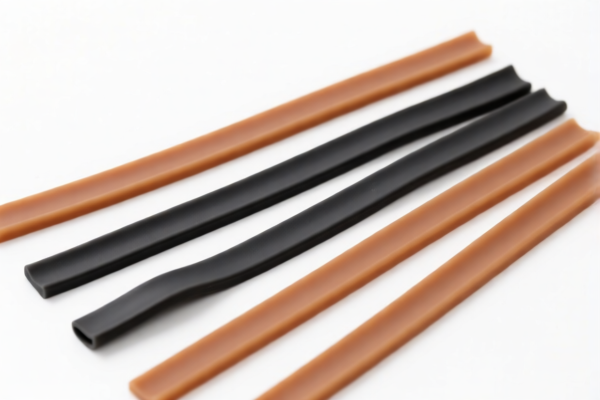
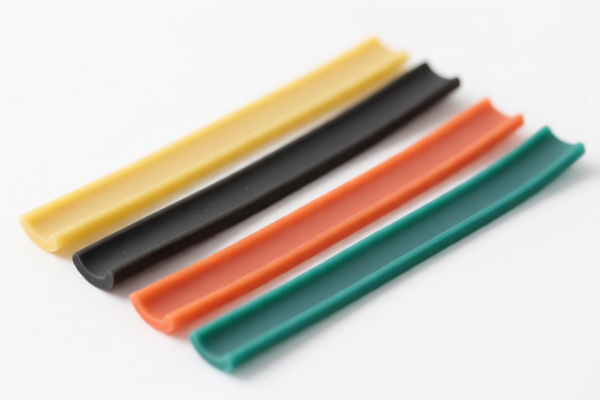
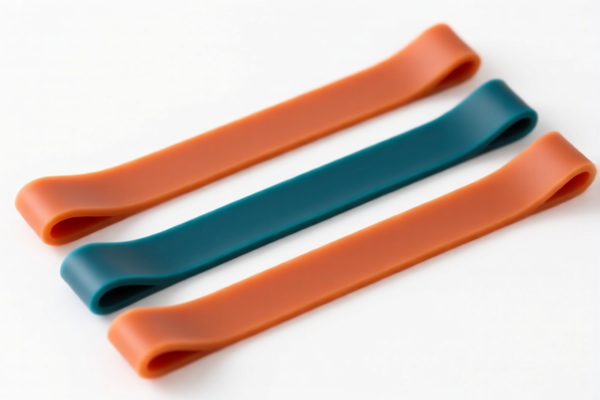
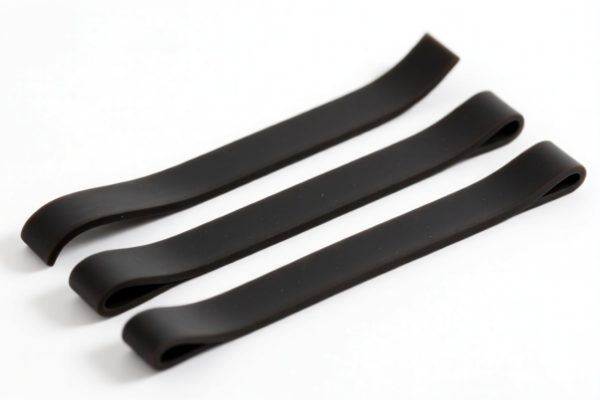
AI分析
🚗 Non-Cellular Rubber Bumper Protection Strip (Customizable Automotive Accessories)
🌐 HS Code Reference & Customs Clearance Guide | 2026 Latest Tariff Analysis | Professional Clearance Strategy
📌 I. Product Definition & Classification: What exactly is a "Bumper Protection Strip"?
A Non-Cellular Rubber Bumper Protection Strip is a rigid or semi-rigid rubber component used to absorb impact, prevent scratching, and protect vehicle bumpers or equipment surfaces. Unlike "cellular" foam rubber, non-cellular rubber is dense, durable, and resistant to abrasion and weathering.
In international trade, the classification depends heavily on material composition, state of vulcanization, and specific end-use. It is rarely classified simply as "rubber parts"; it often falls under Heading 4016 (Articles of vulcanized rubber other than hard rubber) or Heading 8708 (Parts and accessories of motor vehicles).
⚠️ Key Distinction:
- If it is a generic protective strip not specifically designed for a specific vehicle model’s bumper system → Likely 4016.93/4016.99.
- If it is a finished bumper or specific bumper part for vehicles (Headings 8701-8705) → Likely 8708.10/8708.99.
📦 II. HS Code Classification Details (2026 Latest Tariff Authority Comparison)
Based on the provided data, here are the relevant HS Codes and their specific applications:
| HS Code | Product Description | Application Scenario | Material State |
|---|---|---|---|
| 4016.94.00.00 | Boat or dock fenders, whether or not inflatable | Note: While this code is listed in the data, it is NOT suitable for vehicle bumper strips. It is for marine fenders. Do not use for automotive parts. | ✅ Vulcanized |
| 4016.93 | Non cellular rubber bumper protection strips, used for protective purposes on vehicles or equipment... not in sheet or strip form | Primary Fit: Non-cellular rubber strips used for impact protection and wear resistance on vehicles/equipment. | ❌ Not in sheet/strip form (Finished part) |
| 4016.99 | Other non cellular rubber products, including bumper protection strips, not elsewhere specified... not in sheet or strip form | Fallback Fit: If the specific "bumper strip" description doesn't meet 4016.93 criteria, this broader "Other" category applies. | ❌ Not in sheet/strip form (Finished part) |
| 8708.10.60.50 | Parts and accessories of motor vehicles (8701-8705): Bumpers and parts thereof: Parts of bumpers Other | Vehicle Specific: If the strip is an integral part of a bumper assembly for cars/trucks. | ✅ Likely Vulcanized |
| 8708.99.55.00 | Parts and accessories of motor vehicles: Other parts and accessories: Vibration control goods containing rubber | Secondary Fit: If the strip functions primarily as a vibration control or shock absorber component within the vehicle structure. | ✅ Contains Rubber |
| 2930.20.90.20 | Organo-sulfur compounds: Thiocarbamates... Products used principally for rubber processing | Raw Material: This is for chemical additives (e.g., accelerators) used to make the rubber, NOT the finished strip. | N/A |
| 2930.90.92.31 | Organo-sulfur compounds: Other... Products used principally for rubber processing | Raw Material: Similar to above, refers to processing chemicals, not the final product. | N/A |
🔍 Critical Analysis:
- Avoid 2930 Codes: These are for chemicals used in rubber processing, not the physical rubber strip. Using these for a finished rubber part will cause a major customs error.
- Avoid 4016.94: This is for marine fenders. Unless you are selling boat fenders, this is incorrect for automotive/industrial bumper strips.
- Primary Candidates: 4016.93 (if described specifically as non-cellular protective strips) or 8708.10.60.50 (if it is a specific part of a motor vehicle bumper).
💰 III. 2026 Latest Tariff Rate Breakdown (Detailed & Accurate)
✅ Applicable Country: United States (US)
✅ Origin: China (CN) (Inferred from the tax detail patterns in data)
✅ Effective Time: 2025/2026 Period
🎯 1. 4016.93 & 4016.99 – Non-Cellular Rubber Bumper Protection Strips
| Item | Content |
|---|---|
| Base Tariff | Error (Failed to retrieve tax information) |
| Additional Tariff | Error (Failed to retrieve tax information) |
| Total Tax | Error |
| Interpretation | ⚠️ High Risk: The provided data indicates that tax information for these specific subheadings could not be retrieved. This suggests either: 1. The code is incomplete (needs 10-digit US HTSUS extension). 2. There are complex, variable duties based on specific rubber composition. 3. Recommendation: Do not rely on this code for precise cost estimation without a Pre-Ruling. It may fall under general rubber articles (often 0-5% base + potential Section 301/IEEPA tariffs). |
🎯 2. 8708.10.60.50 – Parts of Bumpers (Other)
| Item | Content |
|---|---|
| Base Tariff | 0.0% |
| Additional Tariff | 50.0% (Steel, Aluminum, Copper products additional tariff) |
| Total Tax | 50.0% |
| Tax Detail | 基础关税: 0.0%, 加征关税: 0.0% 钢,铝铜制品加征关税: 50% |
| Interpretation | ⚠️ Complex Classification: This code seems to target metal parts (Steel/Aluminum) of bumpers. If your product is Pure Rubber, this code might be incorrect because the 50% tariff is explicitly for "Steel, Aluminum, Copper products." Using this for rubber could lead to audits. However, if the strip has a metal backing or is part of a mixed assembly, this applies. |
🎯 3. 8708.99.55.00 – Vibration Control Goods Containing Rubber
| Item | Content |
|---|---|
| Base Tariff | 2.5% |
| Additional Tariff | 25.0% |
| Total Tax | 27.5% |
| Tax Detail | 基础关税: 2.5%, 加征关税: 25.0% |
| Interpretation | ✅ Most Likely for Rubber Parts: If the bumper strip is classified as a vibration control or shock absorption part of the vehicle, this code is very common for rubber automotive parts. The 27.5% total (2.5% base + 25% Section 301) is a standard rate for many Chinese-made automotive rubber components. |
🎯 4. 2930.20.90.20 & 2930.90.92.31 – Rubber Processing Chemicals
| Item | Content |
|---|---|
| Base Tariff | 0.0% |
| Additional Tariff | 0.0% |
| Total Tax | 0.0% |
| Interpretation | Only applicable if you are importing the chemicals (thiocarbamates) used to make the rubber, not the strip itself. |
📌 Key Takeaway on Taxes:
- If classified as a generic rubber article (4016), tax info is missing/error → High uncertainty.
- If classified as a vehicle part (8708), expect 27.5% (for rubber vibration parts) or 0% (if mistakenly classified as metal-free generic).
- Do not use 8708.10.60.50 if you are 100% rubber, as it links to a 50% metal tariff.
🛠️ IV. Customs Clearance Practical Advice (Battle-Tested Pitfall Guide)
✅ 1. Required Documentation Checklist
| Document | Mandatory? | Description |
|---|---|---|
| ✅ Product Specifications | ✔️ | Must specify: "Non-Cellular Rubber," "Vulcanized Status," "Density," "Hardness (Shore A)." |
| ✅ Material Composition Statement | ✔️ | Declare 100% rubber content. If filled with carbon black or oils, list percentages. |
| ✅ Intended Use Declaration | ✔️ | Clearly state: "Used as a protective strip for vehicle bumpers" or "Industrial equipment wear strip." |
| ✅ Photos (Before/After Installation) | ✔️ | Show the strip in isolation and installed on a bumper to prove its function. |
| ✅ Invoice | ✔️ | Describe as: "Non-Cellular Rubber Bumper Protection Strip, Model XYZ." Avoid vague terms like "Rubber Part." |
✅ 2. Declaration Tips (Key Mantras)
🔥 "Specify Non-Cellular, Define End-Use, Avoid Chemical Codes, Match Rubber to 8708 or 4016!"
| Scenario | Correct Declaration | Incorrect Declaration |
|---|---|---|
| Pure Rubber Strip for Car | HS 8708.99.55.00 (Vibration Control/Rubber Part) or 4016.93 |
2930.xxxx (Chemicals) → Rejection Risk |
| Strip with Metal Core | HS 8708.10.60.50 (Bumper Part) |
4016.99 → Undervaluation Risk |
| Generic Industrial Protector | HS 4016.99 (Other Rubber Articles) |
8708.xxxx (Vehicle Part) → Wrong Headings |
| Boat Fender (Mistakenly Called Bumper Strip) | HS 4016.94.00.00 |
8708.xxxx → Major Discrepancy |
✅ 3. Special Handling Scenarios
| Scenario | Handling Advice |
|---|---|
| OEM Custom Strips | Provide the OEM Part Number and Vehicle Compatibility List. This strengthens the case for 8708 (Vehicle Parts) which may have better duty rates than generic rubber. |
| Vibration vs. Protection | If the strip's primary function is noise/vibration reduction, use 8708.99.55.00. If it is purely impact/wear protection, argue for 4016.93 or 4016.99. |
| Mixed Materials | If the strip has a fabric backing or metal clip, the customs officer may classify it by the essential character (usually rubber). Be prepared to justify why rubber dominates. |
| Uncertain Tax for 4016.93 | Since tax data is "Error," apply for an Advance Ruling from US CBP before shipping. Do not guess. |
🌍 V. Global Market Comparison (2026 Latest)
| Country/Region | Recommended HS Code | Est. Tariff | Certification Requirements | Notes |
|---|---|---|---|---|
| 🇺🇸 USA | 8708.99.55.00 |
27.5% (2.5% Base + 25% Sec 301) | DOT Compliance (if safety-critical) | High tariff risk. Avoid 2930. |
| 🇨🇳 China | 4016.99 |
5-10% (Typical) | CCC (if vehicle safety part) | Lower base rates. |
| 🇪🇺 EU | 4016.93 |
4.5% | REACH Compliance | Generally lower duties for rubber goods. |
| 🇲🇽 Mexico | 8708.99 |
0-5% (Under USMCA) | NOM Certifications | Potential for zero duty if USMCA criteria met. |
📌 Conclusion:
- USA is the most challenging market due to the 27.5% effective rate on rubber automotive parts and uncertainty around generic rubber codes.
- EU/Mexico offer better duty prospects if you can prove origin or use different classifications.
📌 VI. Common Mistakes & Pitfall Guide (Blood Lessons)
❌ Mistake 1: Classifying as 2930 (Chemicals)
👉 Consequence: Customs rejects the shipment. You are shipping physical rubber, not chemicals.
❌ Mistake 2: Using 4016.94 (Boat Fenders) for Car Bumpers
👉 Consequence: Penalty for misclassification. 4016.94 is strictly for marine use.
❌ Mistake 3: Ignoring the "Non-Cellular" Distinction
👉 Consequence: If you have cellular foam, 4016.93 is wrong. You must specify "Non-Cellular" in the description to support the code.
❌ Mistake 4: Assuming 0% Tariff for 8708.10.60.50
👉 Consequence: That code carries a 50% tariff for metal parts. If your product is rubber, using this code is dangerous and may trigger an audit for misclassification of material.
✅ Correct Practice:
"Non-Cellular Vulcanized Rubber Bumper Protection Strip, 25mm x 5m, Black, Shore A 60, for Model XYZ Vehicle, Intended for Impact Absorption."
🎯 VII. Conclusion: Professional Classification, Cost Optimization!
🎯 Remember the Mantra:
🔹 "Check Non-Cellular, Verify End-Use, Avoid Chemical Codes, Expect 27.5% in US!"
🔹 "4016 is risky (Error Tax), 8708 is safer (27.5%), 2930 is WRONG!"
📌 Pro Tip:
Since 4016.93 tax data is missing, and 8708.99.55.00 has a clear 27.5% rate, consider classifying your product as an Automotive Rubber Part (8708.99.55.00) if it fits the functional definition (vibration/impact control for vehicles). This provides tax certainty.
If it is a generic industrial strip, seek a Customs Ruling for 4016.93 to avoid the "Error" status.
📣 Immediate Action:
📞 Consult a US Customs Broker for Advance Ruling on
4016.93vs8708.99.55.00.
🚀 Ensure your invoice clearly states "Non-Cellular Rubber" and "Vehicle Protection" to support the classification.
✨ Professional Clearance Starts with Precise Classification!
💼 Your Cost Savings Depend on Getting the HS Code Right!
用户评价
关于 HS 编码归类
协调制度(HS)是由世界海关组织(WCO)制定的国际贸易商品分类标准。全球 200 多个国家采用 HS 系统作为海关关税、贸易统计和进出口监管的基础。
每个 HS 编码遵循以下层级结构:
- 章(2 位)——商品大类(例如:第 84 章:机器和机械设备)
- 品目(4 位)——章内的更具体分类
- 子目(6 位)——国际通用细分,所有 WCO 成员国统一使用
- 本国细分(8-10 位)——各国自行扩展的细分编码,如美国 HTSUS 10 位编码
正确的 HS 编码归类对于顺利通关、准确缴纳关税和遵守贸易法规至关重要。错误归类可能导致海关延误、多缴关税或罚款。
从CN进口到US时,适用的关税税率可能包括:
- 最惠国(MFN)税率——适用于 WTO 成员国的标准关税税率
- 普通税率——适用于无贸易协定国家
- 贸易救济关税——附加关税,如 301 条款(反倾销)、232 条款(国家安全)或反补贴税
本页内容仅供参考。如需正式归类,请咨询当地海关或持牌报关代理。