Non cellular Rubber Bumper Protection Strip
CN → US| HS Code | Tariff Rate | Origin | Destination | Doc |
|---|---|---|---|---|
| 2930209020 | 38.7% | CN | US | Official Doc |
| 2930909231 | 13.7% | CN | US | Official Doc |
| 8708106050 | 87.5% | CN | US | Official Doc |
| 8708995500 | 37.5% | CN | US | Official Doc |
| 401693 | 0.0% | CN | US | Official Doc |
| 401699 | 0.0% | CN | US | Official Doc |
| 4016940000 | 39.2% | CN | US | Official Doc |
| 4016990000 | 0.0% | CN | US | Official Doc |
Product Images
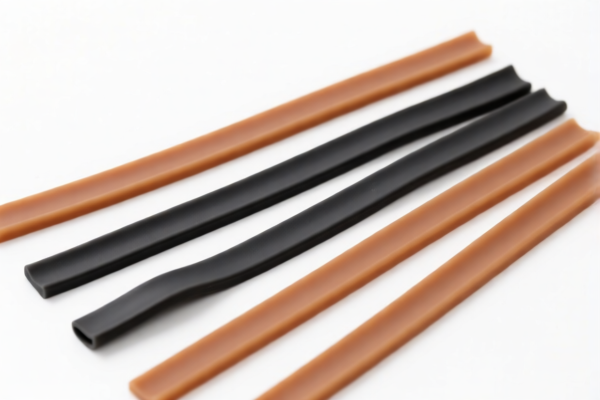
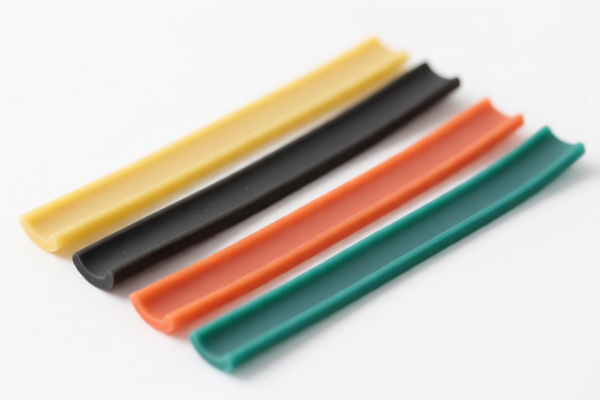
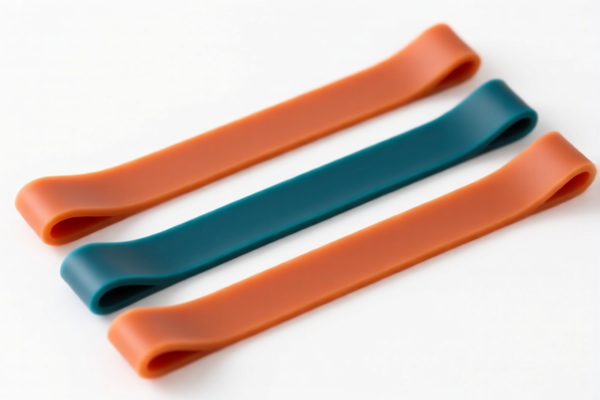
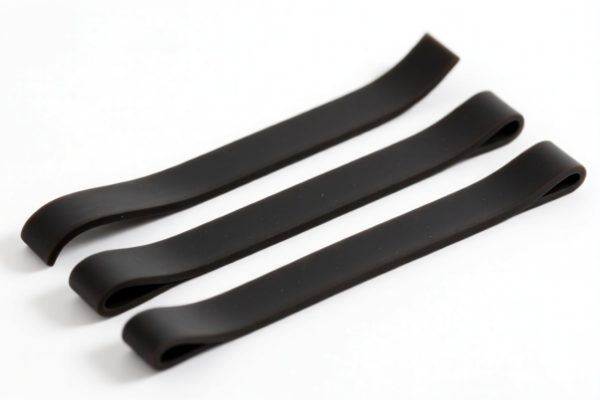
AI Analysis
🚗 Non-Cellular Rubber Bumper Protection Strip (Customizable Automotive Accessories)
🌐 HS Code Reference & Customs Clearance Guide | 2026 Latest Tariff Analysis | Professional Clearance Strategy
📌 I. Product Definition & Classification: What exactly is a "Bumper Protection Strip"?
A Non-Cellular Rubber Bumper Protection Strip is a rigid or semi-rigid rubber component used to absorb impact, prevent scratching, and protect vehicle bumpers or equipment surfaces. Unlike "cellular" foam rubber, non-cellular rubber is dense, durable, and resistant to abrasion and weathering.
In international trade, the classification depends heavily on material composition, state of vulcanization, and specific end-use. It is rarely classified simply as "rubber parts"; it often falls under Heading 4016 (Articles of vulcanized rubber other than hard rubber) or Heading 8708 (Parts and accessories of motor vehicles).
⚠️ Key Distinction:
- If it is a generic protective strip not specifically designed for a specific vehicle model’s bumper system → Likely 4016.93/4016.99.
- If it is a finished bumper or specific bumper part for vehicles (Headings 8701-8705) → Likely 8708.10/8708.99.
📦 II. HS Code Classification Details (2026 Latest Tariff Authority Comparison)
Based on the provided data, here are the relevant HS Codes and their specific applications:
| HS Code | Product Description | Application Scenario | Material State |
|---|---|---|---|
| 4016.94.00.00 | Boat or dock fenders, whether or not inflatable | Note: While this code is listed in the data, it is NOT suitable for vehicle bumper strips. It is for marine fenders. Do not use for automotive parts. | ✅ Vulcanized |
| 4016.93 | Non cellular rubber bumper protection strips, used for protective purposes on vehicles or equipment... not in sheet or strip form | Primary Fit: Non-cellular rubber strips used for impact protection and wear resistance on vehicles/equipment. | ❌ Not in sheet/strip form (Finished part) |
| 4016.99 | Other non cellular rubber products, including bumper protection strips, not elsewhere specified... not in sheet or strip form | Fallback Fit: If the specific "bumper strip" description doesn't meet 4016.93 criteria, this broader "Other" category applies. | ❌ Not in sheet/strip form (Finished part) |
| 8708.10.60.50 | Parts and accessories of motor vehicles (8701-8705): Bumpers and parts thereof: Parts of bumpers Other | Vehicle Specific: If the strip is an integral part of a bumper assembly for cars/trucks. | ✅ Likely Vulcanized |
| 8708.99.55.00 | Parts and accessories of motor vehicles: Other parts and accessories: Vibration control goods containing rubber | Secondary Fit: If the strip functions primarily as a vibration control or shock absorber component within the vehicle structure. | ✅ Contains Rubber |
| 2930.20.90.20 | Organo-sulfur compounds: Thiocarbamates... Products used principally for rubber processing | Raw Material: This is for chemical additives (e.g., accelerators) used to make the rubber, NOT the finished strip. | N/A |
| 2930.90.92.31 | Organo-sulfur compounds: Other... Products used principally for rubber processing | Raw Material: Similar to above, refers to processing chemicals, not the final product. | N/A |
🔍 Critical Analysis:
- Avoid 2930 Codes: These are for chemicals used in rubber processing, not the physical rubber strip. Using these for a finished rubber part will cause a major customs error.
- Avoid 4016.94: This is for marine fenders. Unless you are selling boat fenders, this is incorrect for automotive/industrial bumper strips.
- Primary Candidates: 4016.93 (if described specifically as non-cellular protective strips) or 8708.10.60.50 (if it is a specific part of a motor vehicle bumper).
💰 III. 2026 Latest Tariff Rate Breakdown (Detailed & Accurate)
✅ Applicable Country: United States (US)
✅ Origin: China (CN) (Inferred from the tax detail patterns in data)
✅ Effective Time: 2025/2026 Period
🎯 1. 4016.93 & 4016.99 – Non-Cellular Rubber Bumper Protection Strips
| Item | Content |
|---|---|
| Base Tariff | Error (Failed to retrieve tax information) |
| Additional Tariff | Error (Failed to retrieve tax information) |
| Total Tax | Error |
| Interpretation | ⚠️ High Risk: The provided data indicates that tax information for these specific subheadings could not be retrieved. This suggests either: 1. The code is incomplete (needs 10-digit US HTSUS extension). 2. There are complex, variable duties based on specific rubber composition. 3. Recommendation: Do not rely on this code for precise cost estimation without a Pre-Ruling. It may fall under general rubber articles (often 0-5% base + potential Section 301/IEEPA tariffs). |
🎯 2. 8708.10.60.50 – Parts of Bumpers (Other)
| Item | Content |
|---|---|
| Base Tariff | 0.0% |
| Additional Tariff | 50.0% (Steel, Aluminum, Copper products additional tariff) |
| Total Tax | 50.0% |
| Tax Detail | 基础关税: 0.0%, 加征关税: 0.0% 钢,铝铜制品加征关税: 50% |
| Interpretation | ⚠️ Complex Classification: This code seems to target metal parts (Steel/Aluminum) of bumpers. If your product is Pure Rubber, this code might be incorrect because the 50% tariff is explicitly for "Steel, Aluminum, Copper products." Using this for rubber could lead to audits. However, if the strip has a metal backing or is part of a mixed assembly, this applies. |
🎯 3. 8708.99.55.00 – Vibration Control Goods Containing Rubber
| Item | Content |
|---|---|
| Base Tariff | 2.5% |
| Additional Tariff | 25.0% |
| Total Tax | 27.5% |
| Tax Detail | 基础关税: 2.5%, 加征关税: 25.0% |
| Interpretation | ✅ Most Likely for Rubber Parts: If the bumper strip is classified as a vibration control or shock absorption part of the vehicle, this code is very common for rubber automotive parts. The 27.5% total (2.5% base + 25% Section 301) is a standard rate for many Chinese-made automotive rubber components. |
🎯 4. 2930.20.90.20 & 2930.90.92.31 – Rubber Processing Chemicals
| Item | Content |
|---|---|
| Base Tariff | 0.0% |
| Additional Tariff | 0.0% |
| Total Tax | 0.0% |
| Interpretation | Only applicable if you are importing the chemicals (thiocarbamates) used to make the rubber, not the strip itself. |
📌 Key Takeaway on Taxes:
- If classified as a generic rubber article (4016), tax info is missing/error → High uncertainty.
- If classified as a vehicle part (8708), expect 27.5% (for rubber vibration parts) or 0% (if mistakenly classified as metal-free generic).
- Do not use 8708.10.60.50 if you are 100% rubber, as it links to a 50% metal tariff.
🛠️ IV. Customs Clearance Practical Advice (Battle-Tested Pitfall Guide)
✅ 1. Required Documentation Checklist
| Document | Mandatory? | Description |
|---|---|---|
| ✅ Product Specifications | ✔️ | Must specify: "Non-Cellular Rubber," "Vulcanized Status," "Density," "Hardness (Shore A)." |
| ✅ Material Composition Statement | ✔️ | Declare 100% rubber content. If filled with carbon black or oils, list percentages. |
| ✅ Intended Use Declaration | ✔️ | Clearly state: "Used as a protective strip for vehicle bumpers" or "Industrial equipment wear strip." |
| ✅ Photos (Before/After Installation) | ✔️ | Show the strip in isolation and installed on a bumper to prove its function. |
| ✅ Invoice | ✔️ | Describe as: "Non-Cellular Rubber Bumper Protection Strip, Model XYZ." Avoid vague terms like "Rubber Part." |
✅ 2. Declaration Tips (Key Mantras)
🔥 "Specify Non-Cellular, Define End-Use, Avoid Chemical Codes, Match Rubber to 8708 or 4016!"
| Scenario | Correct Declaration | Incorrect Declaration |
|---|---|---|
| Pure Rubber Strip for Car | HS 8708.99.55.00 (Vibration Control/Rubber Part) or 4016.93 |
2930.xxxx (Chemicals) → Rejection Risk |
| Strip with Metal Core | HS 8708.10.60.50 (Bumper Part) |
4016.99 → Undervaluation Risk |
| Generic Industrial Protector | HS 4016.99 (Other Rubber Articles) |
8708.xxxx (Vehicle Part) → Wrong Headings |
| Boat Fender (Mistakenly Called Bumper Strip) | HS 4016.94.00.00 |
8708.xxxx → Major Discrepancy |
✅ 3. Special Handling Scenarios
| Scenario | Handling Advice |
|---|---|
| OEM Custom Strips | Provide the OEM Part Number and Vehicle Compatibility List. This strengthens the case for 8708 (Vehicle Parts) which may have better duty rates than generic rubber. |
| Vibration vs. Protection | If the strip's primary function is noise/vibration reduction, use 8708.99.55.00. If it is purely impact/wear protection, argue for 4016.93 or 4016.99. |
| Mixed Materials | If the strip has a fabric backing or metal clip, the customs officer may classify it by the essential character (usually rubber). Be prepared to justify why rubber dominates. |
| Uncertain Tax for 4016.93 | Since tax data is "Error," apply for an Advance Ruling from US CBP before shipping. Do not guess. |
🌍 V. Global Market Comparison (2026 Latest)
| Country/Region | Recommended HS Code | Est. Tariff | Certification Requirements | Notes |
|---|---|---|---|---|
| 🇺🇸 USA | 8708.99.55.00 |
27.5% (2.5% Base + 25% Sec 301) | DOT Compliance (if safety-critical) | High tariff risk. Avoid 2930. |
| 🇨🇳 China | 4016.99 |
5-10% (Typical) | CCC (if vehicle safety part) | Lower base rates. |
| 🇪🇺 EU | 4016.93 |
4.5% | REACH Compliance | Generally lower duties for rubber goods. |
| 🇲🇽 Mexico | 8708.99 |
0-5% (Under USMCA) | NOM Certifications | Potential for zero duty if USMCA criteria met. |
📌 Conclusion:
- USA is the most challenging market due to the 27.5% effective rate on rubber automotive parts and uncertainty around generic rubber codes.
- EU/Mexico offer better duty prospects if you can prove origin or use different classifications.
📌 VI. Common Mistakes & Pitfall Guide (Blood Lessons)
❌ Mistake 1: Classifying as 2930 (Chemicals)
👉 Consequence: Customs rejects the shipment. You are shipping physical rubber, not chemicals.
❌ Mistake 2: Using 4016.94 (Boat Fenders) for Car Bumpers
👉 Consequence: Penalty for misclassification. 4016.94 is strictly for marine use.
❌ Mistake 3: Ignoring the "Non-Cellular" Distinction
👉 Consequence: If you have cellular foam, 4016.93 is wrong. You must specify "Non-Cellular" in the description to support the code.
❌ Mistake 4: Assuming 0% Tariff for 8708.10.60.50
👉 Consequence: That code carries a 50% tariff for metal parts. If your product is rubber, using this code is dangerous and may trigger an audit for misclassification of material.
✅ Correct Practice:
"Non-Cellular Vulcanized Rubber Bumper Protection Strip, 25mm x 5m, Black, Shore A 60, for Model XYZ Vehicle, Intended for Impact Absorption."
🎯 VII. Conclusion: Professional Classification, Cost Optimization!
🎯 Remember the Mantra:
🔹 "Check Non-Cellular, Verify End-Use, Avoid Chemical Codes, Expect 27.5% in US!"
🔹 "4016 is risky (Error Tax), 8708 is safer (27.5%), 2930 is WRONG!"
📌 Pro Tip:
Since 4016.93 tax data is missing, and 8708.99.55.00 has a clear 27.5% rate, consider classifying your product as an Automotive Rubber Part (8708.99.55.00) if it fits the functional definition (vibration/impact control for vehicles). This provides tax certainty.
If it is a generic industrial strip, seek a Customs Ruling for 4016.93 to avoid the "Error" status.
📣 Immediate Action:
📞 Consult a US Customs Broker for Advance Ruling on
4016.93vs8708.99.55.00.
🚀 Ensure your invoice clearly states "Non-Cellular Rubber" and "Vehicle Protection" to support the classification.
✨ Professional Clearance Starts with Precise Classification!
💼 Your Cost Savings Depend on Getting the HS Code Right!
Customer Reviews
About HS Code Classification
The Harmonized System (HS) is an internationally standardized nomenclature developed by the World Customs Organization (WCO) to classify traded products. Over 200 countries use the HS system as the basis for customs tariffs, trade statistics, and import/export regulations.
Each HS code follows a hierarchical structure:
- Chapter (2 digits) — Broad category of goods (e.g., Chapter 84: Machinery and Mechanical Appliances)
- Heading (4 digits) — More specific grouping within the chapter
- Subheading (6 digits) — Internationally standardized breakdown, used by all WCO member countries
- National subdivisions (8-10 digits) — Country-specific extensions for further classification, such as US HTSUS 10-digit codes
Correct HS code classification is essential for smooth customs clearance, accurate duty payment, and compliance with trade regulations. Misclassification can lead to customs delays, overpayment of duties, or penalties.
When importing from CN to US, the applicable tariff rates may include:
- Most-Favored-Nation (MFN) rate — The standard duty rate applied to WTO members
- General rate — Applied to countries without trade agreements
- Trade remedy duties — Additional tariffs such as Section 301 (anti-dumping), Section 232 (national security), or countervailing duties
The information provided on this page is for reference purposes only. For official classification, please consult with your local customs authority or a licensed customs broker.