Non coniferous Splitting Wooden Poles
CN → US| HS编码 | 关税税率 | 原产国 | 目的国 | 文档 |
|---|---|---|---|---|
| 4403120050 | 35.0% | CN | US | 官方文档 |
| 4403990128 | 35.0% | CN | US | 官方文档 |
商品图片
AI分析
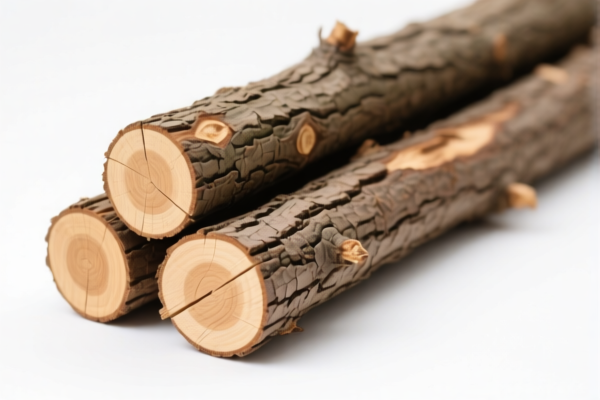
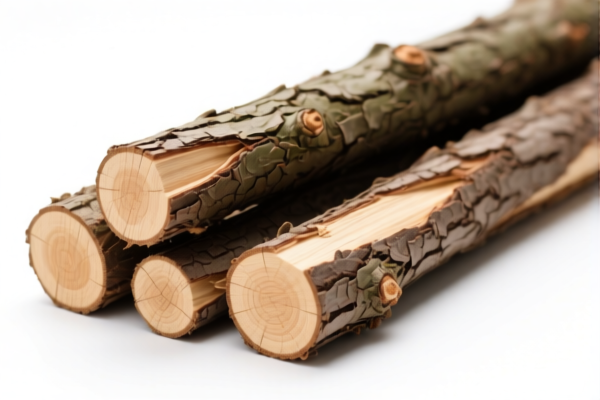
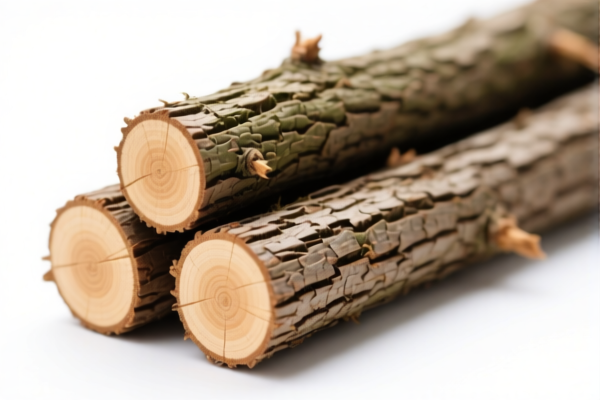
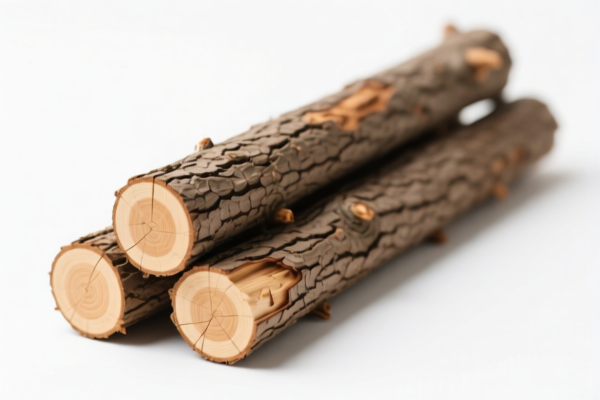
🌲 Non-Coniferous Splitting Wooden Poles (Raw Wood in the Rough)
🌐 HS Code Reference & Customs Clearance Guide | 2026 Latest Tariff Analysis | Professional Strategy
📌 I. Product Definition & Classification: What Exactly Are "Splitting Wooden Poles"?
Wooden poles, whether derived from coniferous (softwood) or non-coniferous (hardwood) trees, are essential for power transmission, telecommunications, and construction. The term "Non-coniferous" specifically refers to hardwoods (e.g., oak, teak, eucalyptus, acacia). "Splitting" or being "in the rough" means the wood has been processed only enough to be usable as a pole or pile, but not yet machined into finished lumber or construction timber.
These items fall under Chapter 44: Wood and Articles of Wood. The key distinction for classification is whether the wood is:
1. Treated (with paint, stain, creosote, etc.)
2. Source of Wood (Coniferous vs. Non-coniferous)
⚠️ Critical Distinction Point:
- If the pole is non-coniferous (hardwood) and treated → It falls under 4403.12.
- If the pole is non-coniferous (hardwood) and untreated (or simply "other") → It often falls under 4403.99 depending on specific regional sub-codes, but for US imports, specific "Other Poles, piles and posts" descriptions are used.
📦 II. HS Code Classification Details (2026 Official Tariff Data)
Based on the provided data, here are the specific HS Codes and descriptions for Non-Coniferous Wooden Poles:
| HS Code | Product Description | Key Characteristics |
|---|---|---|
4403.12.00.50 |
Treated Non-Coniferous Poles, Piles and Posts (Other) | - Material: Non-coniferous (Hardwood) - Processing: Treated with paint, stain, creosote, or other preservatives - Form: In the rough, stripped of bark/sapwood, or roughly squared |
4403.99.01.28 |
Other Non-Coniferous Poles, Piles and Posts | - Material: Non-coniferous (Hardwood) - Processing: Other (Untreated or treated differently than specified in 4403.12) - Form: Poles, piles, and posts not elsewhere specified |
🔍 Note on Classification:
-4403.12.00.50is specifically for treated hardwood poles. If your poles are creosote-treated (common for utility poles), this is likely your code.
-4403.99.01.28covers other hardwood poles. If they are not treated with the specific preservatives listed in 4403.12, or if they are untreated, this code may apply.
- Both codes represent "Wood in the rough", meaning they are not planed, tongued, grooved, or further machined.
💰 III. 2026 Tariff Rate Breakdown (Section 301 & IEEPA)
✅ Applicable Country: United States (US)
✅ Origin: China (CN)
✅ Effective Date: November 10, 2025 (and subsequent imports)
🎯 1. 4403.12.00.50 —— Treated Non-Coniferous Poles
| Item | Details |
|---|---|
| Base Tariff Rate | 0.0% (Ad Valorem) |
| Section 301 Additional Duty | +25.0% |
| Total Tax Rate | 25.0% |
| Tax Calculation | CIF Value × 25% |
| De Minimis Exemption | ❌ Not Applicable |
| Legal Authority | USITC Tariff Schedule 2026 |
📌 Explanation:
- The base duty is 0% for wood in the rough under this specific subheading.
- However, the 25% additional duty applies due to Section 301 tariffs on Chinese goods.
- Total cost impact: 25% of the declared value.
🎯 2. 4403.99.01.28 —— Other Non-Coniferous Poles
| Item | Details |
|---|---|
| Base Tariff Rate | 0.0% (Ad Valorem) |
| Section 301 Additional Duty | +25.0% |
| Total Tax Rate | 25.0% |
| Tax Calculation | CIF Value × 25% |
| De Minimis Exemption | ❌ Not Applicable |
| Legal Authority | USITC Tariff Schedule 2026 |
📌 Explanation:
- Similar to the treated category, the base duty is 0%.
- The 25% additional duty is applied.
- Total cost impact: 25% of the declared value.⚠️ Key Takeaway:
Both HS Codes result in a 25% total tax rate for Chinese-origin goods. There is no additional IEEPA 10% surcharge for these specific wood products in the provided data, unlike electronics or panels. The total burden is strictly the 25% Section 301 tariff.
🛠️ IV. Customs Clearance Operational Advice (Practical Pitfall Avoidance)
✅ 1. Essential Documentation Checklist
| Document | Required? | Notes |
|---|---|---|
| ✅ Commercial Invoice | ✔️ | Must clearly state "Wooden Poles, Non-Coniferous," material type (e.g., Oak, Teak), and treatment status. |
| ✅ Packing List | ✔️ | Detail dimensions (diameter, length) and weight. |
| ✅ Phytosanitary Certificate | ✔️ | CRITICAL: Required for all wood imports to confirm freedom from pests. Must be issued by the country of origin. |
| ✅ Fumigation Certificate | ✔️ | Often combined with Phytosanitary certificate. Must state treatment method (e.g., MB, HT). |
| ✅ Bill of Lading (B/L) | ✔️ | Ensure cargo description matches invoice exactly. |
| ✅ Treated Wood Declaration | ✔️ | If using 4403.12.00.50, provide proof of preservative treatment (e.g., creosote application report). |
✅ 2. Classification Strategy
🔥 Golden Rule: "Treatment Status Dictates Code, Origin Dictates Tax."
| Scenario | Recommended HS Code | Tax Rate | Why? |
|---|---|---|---|
| Hardwood poles + Creosote/Chemical Treatment | 4403.12.00.50 |
25% | Falls under "Treated" category. |
| Hardwood poles + Untreated / Natural Oil | 4403.99.01.28 |
25% | Falls under "Other" category. |
| Coniferous (Pine/Spruce) Poles | Not in Data | Varies | Data provided is for Non-Coniferous only. Do not misclassify. |
| Machined/Lumber (Planed/Grooved) | Not in Data | Varies | "Wood in the rough" is key. If planed, it moves to Chapter 44 Part II (e.g., 4407). |
✅ 3. Special Considerations for Wooden Poles
| Issue | Solution |
|---|---|
| Moisture Content | Ensure wood is dried to acceptable levels for transport to prevent mold/fungus rejection. |
| Pest Inspection | CBP and USDA APHIS may inspect for live insects. Ensure phytosanitary certificate is valid and matches cargo. |
| Dimensional Accuracy | "Roughly squared" must be evident. If too refined, it might be classified as timber (higher base duty). |
| Value Declaration | Declare FOB + Freight + Insurance. The 25% tax is calculated on the CIF value. |
🌍 V. Global Market Comparison (2026)
| Country/Region | Recommended HS Code | Tariff (China Origin) | Certification | Notes |
|---|---|---|---|---|
| 🇺🇸 USA | 4403.12.00.50 / 4403.99.01.28 |
25% | Phytosanitary Cert. | Section 301 applies. No de minimis. |
| 🇨🇳 China | 4403.12.00.50 / 4403.99.01.28 |
~5-10% | N/A | Lower base duties, no 301 tariffs. |
| 🇪🇺 EU | 4403.10.00 / 4403.90.00 |
~6.5% | ISPM 15 Compliance | FSC certification recommended. |
| 🇬🇧 UK | 4403.10.00 / 4403.90.00 |
~6.5% | UKCA / Phytosanitary | Post-Brexit rules apply. |
📌 Conclusion:
- The US market is the most challenging due to the 25% additional tariff.
- Phytosanitary compliance is non-negotiable. Failure to provide valid certificates will result in rejection or destruction of cargo.
📌 VI. Common Mistakes & Pitfalls (Lessons Learned)
❌ Mistake 1: Misclassifying treated poles as untreated (4403.99) to avoid scrutiny.
👉 Consequence: Customs audit may reclassify, leading to back taxes and penalties.
❌ Mistake 2: Ignoring Phytosanitary Certificates.
👉 Consequence: Cargo detained at port, demurrage charges, or return/shipment.
❌ Mistake 3: Declaring Coniferous poles as Non-Coniferous.
👉 Consequence: Misclassification penalty, incorrect duty calculation.
❌ Mistake 4: Assuming De Minimis applies.
👉 Consequence: Wooden products over $800 are NOT exempt if they fall under these HS codes with Section 301 tariffs.
✅ Correct Approach:
"Non-Coniferous Wooden Poles, Creosote-Treated, Roughly Squared, Origin: China, Phytosanitary Certificate Attached, HS: 4403.12.00.50"
🎯 VII. Conclusion: Precise Classification for Cost Control
🎯 Remember:
🔹 "Treated vs. Untreated Defines the Code."
🔹 "25% Tax is Fixed for Chinese Wood Poles."
🔹 "Phytosanitary Cert is Your Ticket to Entry."
📌 Pro Tip:
If you are importing large volumes, consider Advance Rulings from CBP to confirm classification and tax liability before shipment. This avoids surprise costs at the port.
📣 Immediate Action:
📞 Consult a licensed customs broker.
📄 Secure Phytosanitary Certificates from the origin country.
📊 Calculate landed cost with 25% tax included in your pricing model.
✨ Professional Clearance Starts with Accurate Classification!
💼 Every Percent Matters in Wood Trade!
用户评价
关于 HS 编码归类
协调制度(HS)是由世界海关组织(WCO)制定的国际贸易商品分类标准。全球 200 多个国家采用 HS 系统作为海关关税、贸易统计和进出口监管的基础。
每个 HS 编码遵循以下层级结构:
- 章(2 位)——商品大类(例如:第 84 章:机器和机械设备)
- 品目(4 位)——章内的更具体分类
- 子目(6 位)——国际通用细分,所有 WCO 成员国统一使用
- 本国细分(8-10 位)——各国自行扩展的细分编码,如美国 HTSUS 10 位编码
正确的 HS 编码归类对于顺利通关、准确缴纳关税和遵守贸易法规至关重要。错误归类可能导致海关延误、多缴关税或罚款。
从CN进口到US时,适用的关税税率可能包括:
- 最惠国(MFN)税率——适用于 WTO 成员国的标准关税税率
- 普通税率——适用于无贸易协定国家
- 贸易救济关税——附加关税,如 301 条款(反倾销)、232 条款(国家安全)或反补贴税
本页内容仅供参考。如需正式归类,请咨询当地海关或持牌报关代理。