Non coniferous Splitting Wooden Poles
CN → US| HS Code | Tariff Rate | Origin | Destination | Doc |
|---|---|---|---|---|
| 4403120050 | 35.0% | CN | US | Official Doc |
| 4403990128 | 35.0% | CN | US | Official Doc |
Product Images
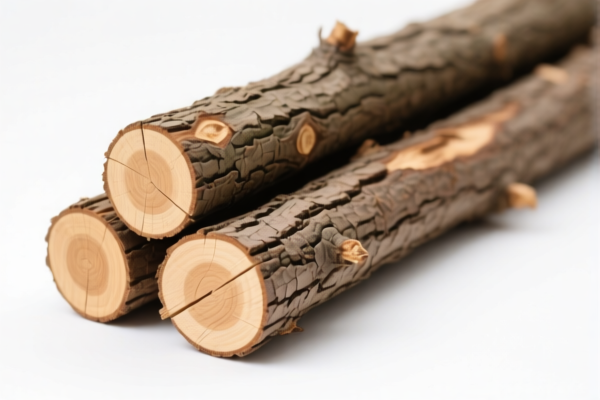
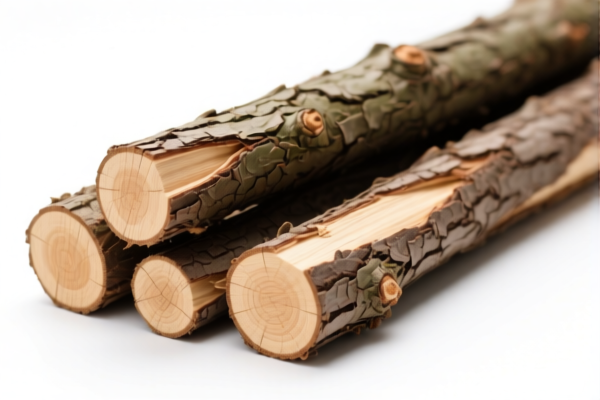
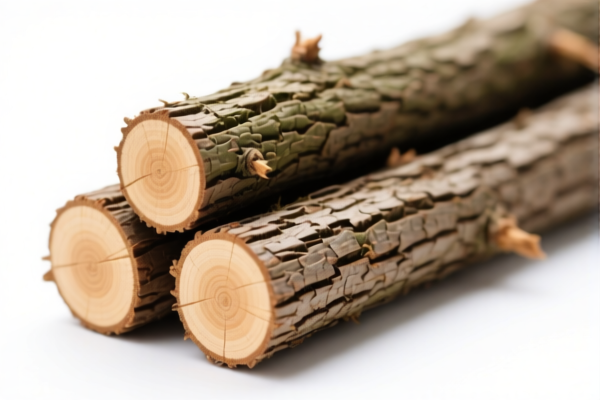
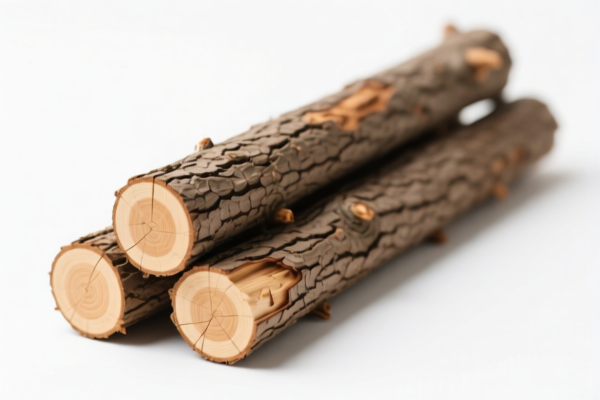
AI Analysis
🌲 Non-Coniferous Splitting Wooden Poles (Raw Wood in the Rough)
🌐 HS Code Reference & Customs Clearance Guide | 2026 Latest Tariff Analysis | Professional Strategy
📌 I. Product Definition & Classification: What Exactly Are "Splitting Wooden Poles"?
Wooden poles, whether derived from coniferous (softwood) or non-coniferous (hardwood) trees, are essential for power transmission, telecommunications, and construction. The term "Non-coniferous" specifically refers to hardwoods (e.g., oak, teak, eucalyptus, acacia). "Splitting" or being "in the rough" means the wood has been processed only enough to be usable as a pole or pile, but not yet machined into finished lumber or construction timber.
These items fall under Chapter 44: Wood and Articles of Wood. The key distinction for classification is whether the wood is:
1. Treated (with paint, stain, creosote, etc.)
2. Source of Wood (Coniferous vs. Non-coniferous)
⚠️ Critical Distinction Point:
- If the pole is non-coniferous (hardwood) and treated → It falls under 4403.12.
- If the pole is non-coniferous (hardwood) and untreated (or simply "other") → It often falls under 4403.99 depending on specific regional sub-codes, but for US imports, specific "Other Poles, piles and posts" descriptions are used.
📦 II. HS Code Classification Details (2026 Official Tariff Data)
Based on the provided data, here are the specific HS Codes and descriptions for Non-Coniferous Wooden Poles:
| HS Code | Product Description | Key Characteristics |
|---|---|---|
4403.12.00.50 |
Treated Non-Coniferous Poles, Piles and Posts (Other) | - Material: Non-coniferous (Hardwood) - Processing: Treated with paint, stain, creosote, or other preservatives - Form: In the rough, stripped of bark/sapwood, or roughly squared |
4403.99.01.28 |
Other Non-Coniferous Poles, Piles and Posts | - Material: Non-coniferous (Hardwood) - Processing: Other (Untreated or treated differently than specified in 4403.12) - Form: Poles, piles, and posts not elsewhere specified |
🔍 Note on Classification:
-4403.12.00.50is specifically for treated hardwood poles. If your poles are creosote-treated (common for utility poles), this is likely your code.
-4403.99.01.28covers other hardwood poles. If they are not treated with the specific preservatives listed in 4403.12, or if they are untreated, this code may apply.
- Both codes represent "Wood in the rough", meaning they are not planed, tongued, grooved, or further machined.
💰 III. 2026 Tariff Rate Breakdown (Section 301 & IEEPA)
✅ Applicable Country: United States (US)
✅ Origin: China (CN)
✅ Effective Date: November 10, 2025 (and subsequent imports)
🎯 1. 4403.12.00.50 —— Treated Non-Coniferous Poles
| Item | Details |
|---|---|
| Base Tariff Rate | 0.0% (Ad Valorem) |
| Section 301 Additional Duty | +25.0% |
| Total Tax Rate | 25.0% |
| Tax Calculation | CIF Value × 25% |
| De Minimis Exemption | ❌ Not Applicable |
| Legal Authority | USITC Tariff Schedule 2026 |
📌 Explanation:
- The base duty is 0% for wood in the rough under this specific subheading.
- However, the 25% additional duty applies due to Section 301 tariffs on Chinese goods.
- Total cost impact: 25% of the declared value.
🎯 2. 4403.99.01.28 —— Other Non-Coniferous Poles
| Item | Details |
|---|---|
| Base Tariff Rate | 0.0% (Ad Valorem) |
| Section 301 Additional Duty | +25.0% |
| Total Tax Rate | 25.0% |
| Tax Calculation | CIF Value × 25% |
| De Minimis Exemption | ❌ Not Applicable |
| Legal Authority | USITC Tariff Schedule 2026 |
📌 Explanation:
- Similar to the treated category, the base duty is 0%.
- The 25% additional duty is applied.
- Total cost impact: 25% of the declared value.⚠️ Key Takeaway:
Both HS Codes result in a 25% total tax rate for Chinese-origin goods. There is no additional IEEPA 10% surcharge for these specific wood products in the provided data, unlike electronics or panels. The total burden is strictly the 25% Section 301 tariff.
🛠️ IV. Customs Clearance Operational Advice (Practical Pitfall Avoidance)
✅ 1. Essential Documentation Checklist
| Document | Required? | Notes |
|---|---|---|
| ✅ Commercial Invoice | ✔️ | Must clearly state "Wooden Poles, Non-Coniferous," material type (e.g., Oak, Teak), and treatment status. |
| ✅ Packing List | ✔️ | Detail dimensions (diameter, length) and weight. |
| ✅ Phytosanitary Certificate | ✔️ | CRITICAL: Required for all wood imports to confirm freedom from pests. Must be issued by the country of origin. |
| ✅ Fumigation Certificate | ✔️ | Often combined with Phytosanitary certificate. Must state treatment method (e.g., MB, HT). |
| ✅ Bill of Lading (B/L) | ✔️ | Ensure cargo description matches invoice exactly. |
| ✅ Treated Wood Declaration | ✔️ | If using 4403.12.00.50, provide proof of preservative treatment (e.g., creosote application report). |
✅ 2. Classification Strategy
🔥 Golden Rule: "Treatment Status Dictates Code, Origin Dictates Tax."
| Scenario | Recommended HS Code | Tax Rate | Why? |
|---|---|---|---|
| Hardwood poles + Creosote/Chemical Treatment | 4403.12.00.50 |
25% | Falls under "Treated" category. |
| Hardwood poles + Untreated / Natural Oil | 4403.99.01.28 |
25% | Falls under "Other" category. |
| Coniferous (Pine/Spruce) Poles | Not in Data | Varies | Data provided is for Non-Coniferous only. Do not misclassify. |
| Machined/Lumber (Planed/Grooved) | Not in Data | Varies | "Wood in the rough" is key. If planed, it moves to Chapter 44 Part II (e.g., 4407). |
✅ 3. Special Considerations for Wooden Poles
| Issue | Solution |
|---|---|
| Moisture Content | Ensure wood is dried to acceptable levels for transport to prevent mold/fungus rejection. |
| Pest Inspection | CBP and USDA APHIS may inspect for live insects. Ensure phytosanitary certificate is valid and matches cargo. |
| Dimensional Accuracy | "Roughly squared" must be evident. If too refined, it might be classified as timber (higher base duty). |
| Value Declaration | Declare FOB + Freight + Insurance. The 25% tax is calculated on the CIF value. |
🌍 V. Global Market Comparison (2026)
| Country/Region | Recommended HS Code | Tariff (China Origin) | Certification | Notes |
|---|---|---|---|---|
| 🇺🇸 USA | 4403.12.00.50 / 4403.99.01.28 |
25% | Phytosanitary Cert. | Section 301 applies. No de minimis. |
| 🇨🇳 China | 4403.12.00.50 / 4403.99.01.28 |
~5-10% | N/A | Lower base duties, no 301 tariffs. |
| 🇪🇺 EU | 4403.10.00 / 4403.90.00 |
~6.5% | ISPM 15 Compliance | FSC certification recommended. |
| 🇬🇧 UK | 4403.10.00 / 4403.90.00 |
~6.5% | UKCA / Phytosanitary | Post-Brexit rules apply. |
📌 Conclusion:
- The US market is the most challenging due to the 25% additional tariff.
- Phytosanitary compliance is non-negotiable. Failure to provide valid certificates will result in rejection or destruction of cargo.
📌 VI. Common Mistakes & Pitfalls (Lessons Learned)
❌ Mistake 1: Misclassifying treated poles as untreated (4403.99) to avoid scrutiny.
👉 Consequence: Customs audit may reclassify, leading to back taxes and penalties.
❌ Mistake 2: Ignoring Phytosanitary Certificates.
👉 Consequence: Cargo detained at port, demurrage charges, or return/shipment.
❌ Mistake 3: Declaring Coniferous poles as Non-Coniferous.
👉 Consequence: Misclassification penalty, incorrect duty calculation.
❌ Mistake 4: Assuming De Minimis applies.
👉 Consequence: Wooden products over $800 are NOT exempt if they fall under these HS codes with Section 301 tariffs.
✅ Correct Approach:
"Non-Coniferous Wooden Poles, Creosote-Treated, Roughly Squared, Origin: China, Phytosanitary Certificate Attached, HS: 4403.12.00.50"
🎯 VII. Conclusion: Precise Classification for Cost Control
🎯 Remember:
🔹 "Treated vs. Untreated Defines the Code."
🔹 "25% Tax is Fixed for Chinese Wood Poles."
🔹 "Phytosanitary Cert is Your Ticket to Entry."
📌 Pro Tip:
If you are importing large volumes, consider Advance Rulings from CBP to confirm classification and tax liability before shipment. This avoids surprise costs at the port.
📣 Immediate Action:
📞 Consult a licensed customs broker.
📄 Secure Phytosanitary Certificates from the origin country.
📊 Calculate landed cost with 25% tax included in your pricing model.
✨ Professional Clearance Starts with Accurate Classification!
💼 Every Percent Matters in Wood Trade!
Customer Reviews
About HS Code Classification
The Harmonized System (HS) is an internationally standardized nomenclature developed by the World Customs Organization (WCO) to classify traded products. Over 200 countries use the HS system as the basis for customs tariffs, trade statistics, and import/export regulations.
Each HS code follows a hierarchical structure:
- Chapter (2 digits) — Broad category of goods (e.g., Chapter 84: Machinery and Mechanical Appliances)
- Heading (4 digits) — More specific grouping within the chapter
- Subheading (6 digits) — Internationally standardized breakdown, used by all WCO member countries
- National subdivisions (8-10 digits) — Country-specific extensions for further classification, such as US HTSUS 10-digit codes
Correct HS code classification is essential for smooth customs clearance, accurate duty payment, and compliance with trade regulations. Misclassification can lead to customs delays, overpayment of duties, or penalties.
When importing from CN to US, the applicable tariff rates may include:
- Most-Favored-Nation (MFN) rate — The standard duty rate applied to WTO members
- General rate — Applied to countries without trade agreements
- Trade remedy duties — Additional tariffs such as Section 301 (anti-dumping), Section 232 (national security), or countervailing duties
The information provided on this page is for reference purposes only. For official classification, please consult with your local customs authority or a licensed customs broker.