Non coniferous Wood Materials
CN → US| HS编码 | 关税税率 | 原产国 | 目的国 | 文档 |
|---|---|---|---|---|
| 4407990295 | 35.0% | CN | US | 官方文档 |
| 4407990242 | 35.0% | CN | US | 官方文档 |
| 4404200040 | 35.0% | CN | US | 官方文档 |
| 4403990128 | 35.0% | CN | US | 官方文档 |
| 4404200080 | 35.0% | CN | US | 官方文档 |
| 4401120000 | 35.0% | CN | US | 官方文档 |
商品图片
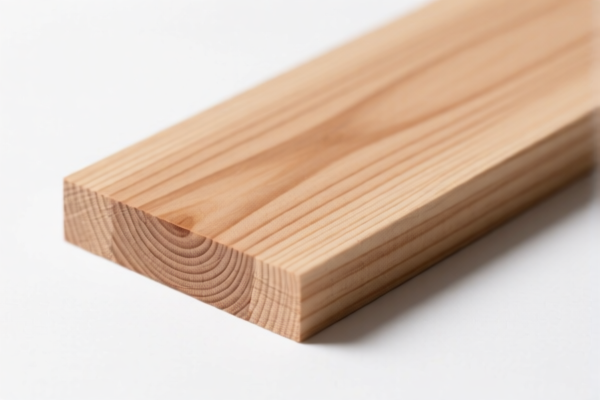
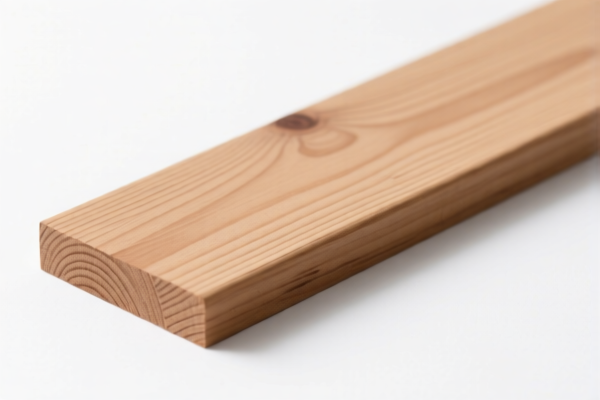
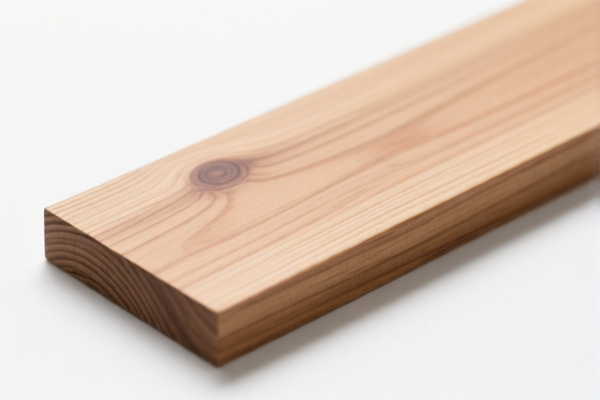
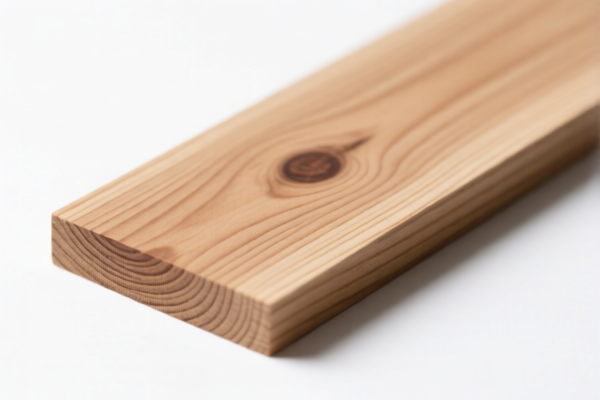
AI分析
🌲 Non-Coniferous Wood Materials (Hardwoods)
🌐 HS Code Reference & Customs Clearance Guide | 2026 Latest Tariff Analysis | Professional Clearance Strategy
📌 I. Product Definition & Classification: Understanding "Non-Coniferous Wood"
Non-coniferous wood (commonly known as Hardwoods) refers to timber derived from angiosperm trees (broad-leaved trees) such as oak, maple, cherry, walnut, and birch. In international trade, these materials are categorized based on their processing level:
- Raw/Semi-Processed Logs & Poles: Unconverted or simply converted wood, often used for structural support, landscaping, or further milling.
- Sawn/Lathed Timber: Wood sliced or peeled for construction, furniture, or flooring applications.
⚠️ Key Distinction Point:
- If the wood is round, un-sawn, or merely debarked (e.g., piles, logs) → It falls under Chapter 44 headings like 4403 or 4404.
- If the wood is sawn or chipped to specific dimensions for construction/building purposes → It falls under 4407.
📦 II. HS Code Classification Details (2026 Latest Tariff Authority Match)
Based on the provided dataset, here are the specific HS Codes for Non-Coniferous Wood Materials:
| HS Code | Product Description | Application Scenario | Processing State |
|---|---|---|---|
4407.99.02.95 |
Other Non-Coniferous Wood for Building | Construction beams, structural framing, specialized building components | Sawn/Lathed timber |
4407.99.02.42 |
Other Non-Coniferous Wood for Building | Same as above, specific sub-category for building materials | Sawn/Lathed timber |
4404.20.00.40 |
Non-Coniferous Wood Piles | Landscaping, fencing, retaining walls, marine pilings | Shaped/Profiled (but not sawn lengthwise like beams) |
4403.99.01.28 |
Non-Coniferous Wood Piles | Raw timber poles, untreated wood posts | Raw/Debarked/Preserved |
4404.20.00.80 |
Non-Coniferous Wood Piles | General purpose wooden poles/piles | Shaped/Profiled |
4401.12.00.00 |
Non-Coniferous Wood Piles | Raw logs or rough-sawn timber for energy or industrial use | Raw/Biomass grade |
🔍 Key Reminder:
- "Piles" (Poles) in this context refer to cylindrical or roughly shaped wood sections used for support, distinct from flat-sawn planks. - "For Building" (Heading 4407) refers to wood processed to specific dimensions (sawn, chipped, etc.) intended for construction. - All listed items are subject to the same tariff structure in the provided data.
💰 III. 2026 Latest Tariff Rate Details (Including Surcharges & Policy Add-ons)
✅ Applicable Country: USA (US)
✅ Origin: China (CN) (Implied by "122 Clause" and typical surcharge patterns)
✅ Effective Time: 2025–2026 Period
✅ Total Tariff Rate: 35.0%
🎯 Breakdown of the 35% Total Tax
The total tax burden for these wood products is composed of three distinct layers:
| Component | Rate | Source/Explanation |
|---|---|---|
| 1. Basic Customs Duty | 0.0% | Most non-coniferous wood products enter the US with a 0% MFN (Most Favored Nation) base rate. |
| 2. Section 301 Surcharge | +25.0% | Imposed under US Trade Law Section 301 against China. Applies to a wide range of Chinese wood products. |
| 3. Section 122 Tariff | +10.0% | CRITICAL: This is a specific surcharge often linked to National Security or Reciprocal Trade actions (sometimes referred to as "Section 122" in shorthand for specific trade remedies or Section 232/301 variations depending on the specific trade action year). In this dataset, it is explicitly listed as a 10% additive. |
📌 Calculation Example:
If the CIF (Cost, Insurance, and Freight) value of a shipment of Non-Coniferous Wood Poles is $10,000:
- Basic Duty: $0
- Section 301 Duty: $10,000 × 25% = $2,500
- Section 122 Tariff: $10,000 × 10% = $1,000
- Total Tax Payable: $3,500 (35% of CIF value)🚨 High Alert:
- This 35% effective rate is significantly higher than the base duty.
- No De Minimis Exemption: Small shipments do not escape these tariffs.
- Documentation is Critical: Misclassification can lead to penalties or audits.
🛠️ IV. Customs Clearance Practical Advice (Avoiding Pitfalls)
✅ 1. Required Documentation Checklist (Mandatory)
| Document | Must Provide | Explanation |
|---|---|---|
| ✅ Commercial Invoice | ✔️ | Must clearly state "Non-Coniferous Wood" and the specific use (e.g., "Building Material" vs. "Piles"). |
| ✅ Packing List | ✔️ | Detail the quantity, weight, and dimensions of each piece. |
| ✅ Phytosanitary Certificate | ✔️ | CRITICAL for all wood products. Issued by the exporting country’s plant protection agency to prove freedom from pests/diseases. |
| ✅ ISPM 15 Marking Proof | ✔️ | If wood is packaged in pallets or crates, they must be heat-treated or fumigated and marked with the ISPM 15 logo. Raw wood itself must be declared as untreated or treated. |
| ✅ Bill of Lading/Air Waybill | ✔️ | Standard transport document. |
| ✅ Country of Origin Certificate | ✔️ | To confirm origin for tariff calculation (especially for 301/122 clauses). |
| ✅ Product Specification Sheet | ✔️ | Specify if it is "Sawn" (4407) or "Piled/Unconverted" (4403/4404). |
✅ 2. Declaration Tips (Key Mantras)
🔥 “Accurate Description, Proper ISPM15, Clear Origin!”
| Scenario | Correct Declaration | Common Mistake |
|---|---|---|
| Wood for Construction | Use 4407.99.02.xx. Describe as "Sawn Non-Coniferous Timber for Building." | Declaring as "Wood Chips" (4401) to evade tariffs → Audit Risk! |
| Wood Poles/Piles | Use 4404.20.00.xx or 4403.99.01.xx. Describe as "Non-Coniferous Wood Poles." | Confusing "Piles" with "Sawn Timber" → Potential reclassification. |
| Packaging Wood | Ensure pallets have ISPM 15 mark. Declare pallets separately if required. | Ignoring ISPM 15 → Detention & Destruction of packaging at port! |
| Origin | Clearly state "Made in China." | Ambiguous origin → Delays for verification. |
✅ 3. Special Cases
| Case | Handling Advice |
|---|---|
| Treated Wood | If wood is chemically treated (e.g., for marine use), declare treatment type. May require additional MSDS. |
| Mixed Consignment | If a shipment contains both Coniferous and Non-Coniferous wood, separate declarations are required. Do not combine. |
| Sample Shipments | Even samples of wood are subject to phytosanitary inspection and full duties. No exemption. |
| Furniture Parts | If the wood is part of a finished furniture item, it may be classified under furniture HS codes, not raw wood. Do not misclassify parts as raw material. |
🌍 V. Global Market Comparison (2026)
| Country/Region | Recommended HS Code (Example) | Tariff Rate (CN Origin) | Certification | Note |
|---|---|---|---|---|
| 🇺🇸 USA | 4407.99.02.xx / 4403.99.01.xx |
35% (Base 0% + 301 25% + 122 10%) | Phytosanitary + ISPM 15 | Highest cost due to multiple surcharges. |
| 🇨🇳 China | 4407.99.02.xx |
~10-15% (Import Duty) | Phytosanitary | Domestic market has lower barriers for local wood. |
| 🇪🇺 EU | 4407.99.02.xx |
0-4% (FLEGT/Customs) | FLEGT License | Strict legality documentation required. No 301/122 equivalents. |
| 🇬🇧 UK | 4407.99.02.xx |
0-4% | FLEGT Equivalent | Post-Brexit rules apply. |
| 🇯🇵 Japan | 4407.99.02.xx |
0-10% | Phytosanitary | Generally lower tariffs than US. |
📌 Conclusion:
- USA is the most expensive market for Chinese non-coniferous wood due to the cumulative 35% tariff.
- EU and Japan have lower duty rates but stricter legality and phytosanitary requirements.
- Profit Margins: Must account for the 35% tax when pricing for the US market. Consider sourcing from non-China origins if possible to avoid Section 301/122 clauses.
📌 VI. Common Errors & Pitfalls (Blood Lessons)
❌ Error 1: Using "Wood Chips" or "Firewood" (4401) for sawn timber to reduce tariffs.
👉 Consequence: Customs will reclassify under 4407/4403 → Back-taxes + 25% Penalty!
❌ Error 2: Ignoring ISPM 15 on pallets.
👉 Consequence: Entire shipment detained at port for fumigation or destruction. High storage fees!
❌ Error 3: Confusing "Coniferous" (Softwood) with "Non-Coniferous" (Hardwood).
👉 Consequence: While tariffs might be similar in this dataset, phytosanitary rules and market demand differ. Wrong HS code triggers manual inspection.
❌ Error 4: Not declaring the Specific Sub-Category (e.g., 4407.99.02.95 vs 4407.99.02.42).
👉 Consequence: In the US, some sub-categories may have different duty rate nuances or restrictions. Precision is key.
✅ Correct Practice:
"Non-Coniferous Sawn Timber for Building, Hardwood Species (e.g., Oak), Treated per ISPM 15, Origin: China, HS Code: 4407.99.02.95"
🎯 VII. Conclusion: Professional Clearance, Cost Control, Efficiency!
🎯 Remember the Mantra:
🔹 "35% is the Price: 0% Base, 25% 301, 10% 122."
🔹 "Phytosanitary + ISPM 15 = No Detention."
🔹 "Accurate HS = No Audits."
📌 Pro Tip:
- If your wood is sourced from Vietnam, Thailand, or Malaysia, you may avoid the Section 301 (25%) and Section 122 (10%) surcharges entirely, reducing your total tax to 0-5% (depending on basic duty).
- Consider Supply Chain Diversification: For US-bound hardwoods, non-China origins are significantly more cost-effective.
- Apply for Advance Ruling: For large volumes, get a Binding Tariff Information (BTI) or US Advance Ruling to confirm the exact HS sub-code.
📣 Immediate Action:
📞 Contact a Licensed Customs Broker
📄 Prepare Phytosanitary Certificates in Advance
📊 Verify ISPM 15 Marking on All Packaging
🚀 Ensure Smooth Clearance, Lower Costs, and Faster Turnaround!
✨ Professional Clearance Starts with Accurate Classification!
💼 Every Percent of Tariff Saved is Pure Profit!
用户评价
关于 HS 编码归类
协调制度(HS)是由世界海关组织(WCO)制定的国际贸易商品分类标准。全球 200 多个国家采用 HS 系统作为海关关税、贸易统计和进出口监管的基础。
每个 HS 编码遵循以下层级结构:
- 章(2 位)——商品大类(例如:第 84 章:机器和机械设备)
- 品目(4 位)——章内的更具体分类
- 子目(6 位)——国际通用细分,所有 WCO 成员国统一使用
- 本国细分(8-10 位)——各国自行扩展的细分编码,如美国 HTSUS 10 位编码
正确的 HS 编码归类对于顺利通关、准确缴纳关税和遵守贸易法规至关重要。错误归类可能导致海关延误、多缴关税或罚款。
从CN进口到US时,适用的关税税率可能包括:
- 最惠国(MFN)税率——适用于 WTO 成员国的标准关税税率
- 普通税率——适用于无贸易协定国家
- 贸易救济关税——附加关税,如 301 条款(反倾销)、232 条款(国家安全)或反补贴税
本页内容仅供参考。如需正式归类,请咨询当地海关或持牌报关代理。