Non coniferous Wood Materials
CN → US| HS Code | Tariff Rate | Origin | Destination | Doc |
|---|---|---|---|---|
| 4407990295 | 35.0% | CN | US | Official Doc |
| 4407990242 | 35.0% | CN | US | Official Doc |
| 4404200040 | 35.0% | CN | US | Official Doc |
| 4403990128 | 35.0% | CN | US | Official Doc |
| 4404200080 | 35.0% | CN | US | Official Doc |
| 4401120000 | 35.0% | CN | US | Official Doc |
Product Images
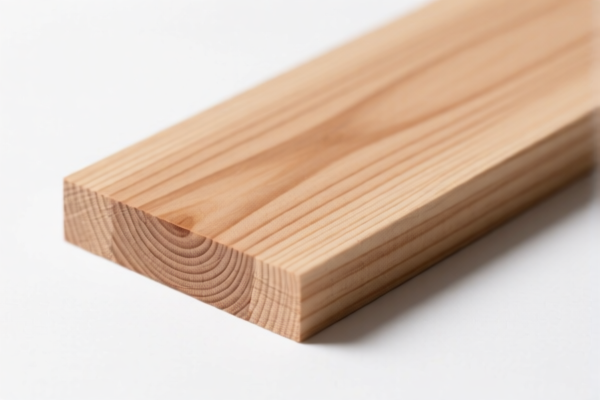
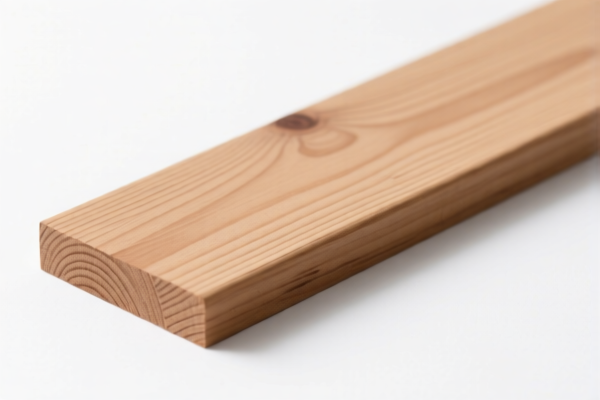
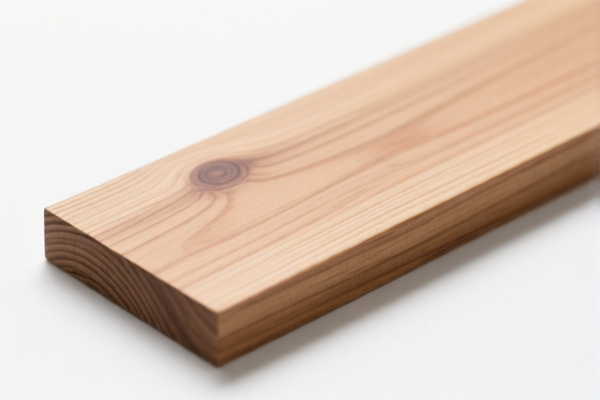
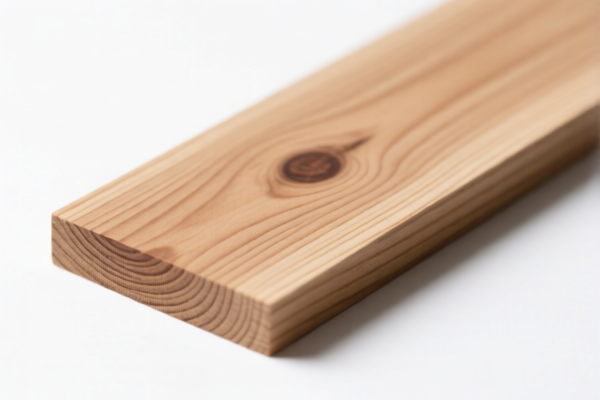
AI Analysis
🌲 Non-Coniferous Wood Materials (Hardwoods)
🌐 HS Code Reference & Customs Clearance Guide | 2026 Latest Tariff Analysis | Professional Clearance Strategy
📌 I. Product Definition & Classification: Understanding "Non-Coniferous Wood"
Non-coniferous wood (commonly known as Hardwoods) refers to timber derived from angiosperm trees (broad-leaved trees) such as oak, maple, cherry, walnut, and birch. In international trade, these materials are categorized based on their processing level:
- Raw/Semi-Processed Logs & Poles: Unconverted or simply converted wood, often used for structural support, landscaping, or further milling.
- Sawn/Lathed Timber: Wood sliced or peeled for construction, furniture, or flooring applications.
⚠️ Key Distinction Point:
- If the wood is round, un-sawn, or merely debarked (e.g., piles, logs) → It falls under Chapter 44 headings like 4403 or 4404.
- If the wood is sawn or chipped to specific dimensions for construction/building purposes → It falls under 4407.
📦 II. HS Code Classification Details (2026 Latest Tariff Authority Match)
Based on the provided dataset, here are the specific HS Codes for Non-Coniferous Wood Materials:
| HS Code | Product Description | Application Scenario | Processing State |
|---|---|---|---|
4407.99.02.95 |
Other Non-Coniferous Wood for Building | Construction beams, structural framing, specialized building components | Sawn/Lathed timber |
4407.99.02.42 |
Other Non-Coniferous Wood for Building | Same as above, specific sub-category for building materials | Sawn/Lathed timber |
4404.20.00.40 |
Non-Coniferous Wood Piles | Landscaping, fencing, retaining walls, marine pilings | Shaped/Profiled (but not sawn lengthwise like beams) |
4403.99.01.28 |
Non-Coniferous Wood Piles | Raw timber poles, untreated wood posts | Raw/Debarked/Preserved |
4404.20.00.80 |
Non-Coniferous Wood Piles | General purpose wooden poles/piles | Shaped/Profiled |
4401.12.00.00 |
Non-Coniferous Wood Piles | Raw logs or rough-sawn timber for energy or industrial use | Raw/Biomass grade |
🔍 Key Reminder:
- "Piles" (Poles) in this context refer to cylindrical or roughly shaped wood sections used for support, distinct from flat-sawn planks. - "For Building" (Heading 4407) refers to wood processed to specific dimensions (sawn, chipped, etc.) intended for construction. - All listed items are subject to the same tariff structure in the provided data.
💰 III. 2026 Latest Tariff Rate Details (Including Surcharges & Policy Add-ons)
✅ Applicable Country: USA (US)
✅ Origin: China (CN) (Implied by "122 Clause" and typical surcharge patterns)
✅ Effective Time: 2025–2026 Period
✅ Total Tariff Rate: 35.0%
🎯 Breakdown of the 35% Total Tax
The total tax burden for these wood products is composed of three distinct layers:
| Component | Rate | Source/Explanation |
|---|---|---|
| 1. Basic Customs Duty | 0.0% | Most non-coniferous wood products enter the US with a 0% MFN (Most Favored Nation) base rate. |
| 2. Section 301 Surcharge | +25.0% | Imposed under US Trade Law Section 301 against China. Applies to a wide range of Chinese wood products. |
| 3. Section 122 Tariff | +10.0% | CRITICAL: This is a specific surcharge often linked to National Security or Reciprocal Trade actions (sometimes referred to as "Section 122" in shorthand for specific trade remedies or Section 232/301 variations depending on the specific trade action year). In this dataset, it is explicitly listed as a 10% additive. |
📌 Calculation Example:
If the CIF (Cost, Insurance, and Freight) value of a shipment of Non-Coniferous Wood Poles is $10,000:
- Basic Duty: $0
- Section 301 Duty: $10,000 × 25% = $2,500
- Section 122 Tariff: $10,000 × 10% = $1,000
- Total Tax Payable: $3,500 (35% of CIF value)🚨 High Alert:
- This 35% effective rate is significantly higher than the base duty.
- No De Minimis Exemption: Small shipments do not escape these tariffs.
- Documentation is Critical: Misclassification can lead to penalties or audits.
🛠️ IV. Customs Clearance Practical Advice (Avoiding Pitfalls)
✅ 1. Required Documentation Checklist (Mandatory)
| Document | Must Provide | Explanation |
|---|---|---|
| ✅ Commercial Invoice | ✔️ | Must clearly state "Non-Coniferous Wood" and the specific use (e.g., "Building Material" vs. "Piles"). |
| ✅ Packing List | ✔️ | Detail the quantity, weight, and dimensions of each piece. |
| ✅ Phytosanitary Certificate | ✔️ | CRITICAL for all wood products. Issued by the exporting country’s plant protection agency to prove freedom from pests/diseases. |
| ✅ ISPM 15 Marking Proof | ✔️ | If wood is packaged in pallets or crates, they must be heat-treated or fumigated and marked with the ISPM 15 logo. Raw wood itself must be declared as untreated or treated. |
| ✅ Bill of Lading/Air Waybill | ✔️ | Standard transport document. |
| ✅ Country of Origin Certificate | ✔️ | To confirm origin for tariff calculation (especially for 301/122 clauses). |
| ✅ Product Specification Sheet | ✔️ | Specify if it is "Sawn" (4407) or "Piled/Unconverted" (4403/4404). |
✅ 2. Declaration Tips (Key Mantras)
🔥 “Accurate Description, Proper ISPM15, Clear Origin!”
| Scenario | Correct Declaration | Common Mistake |
|---|---|---|
| Wood for Construction | Use 4407.99.02.xx. Describe as "Sawn Non-Coniferous Timber for Building." | Declaring as "Wood Chips" (4401) to evade tariffs → Audit Risk! |
| Wood Poles/Piles | Use 4404.20.00.xx or 4403.99.01.xx. Describe as "Non-Coniferous Wood Poles." | Confusing "Piles" with "Sawn Timber" → Potential reclassification. |
| Packaging Wood | Ensure pallets have ISPM 15 mark. Declare pallets separately if required. | Ignoring ISPM 15 → Detention & Destruction of packaging at port! |
| Origin | Clearly state "Made in China." | Ambiguous origin → Delays for verification. |
✅ 3. Special Cases
| Case | Handling Advice |
|---|---|
| Treated Wood | If wood is chemically treated (e.g., for marine use), declare treatment type. May require additional MSDS. |
| Mixed Consignment | If a shipment contains both Coniferous and Non-Coniferous wood, separate declarations are required. Do not combine. |
| Sample Shipments | Even samples of wood are subject to phytosanitary inspection and full duties. No exemption. |
| Furniture Parts | If the wood is part of a finished furniture item, it may be classified under furniture HS codes, not raw wood. Do not misclassify parts as raw material. |
🌍 V. Global Market Comparison (2026)
| Country/Region | Recommended HS Code (Example) | Tariff Rate (CN Origin) | Certification | Note |
|---|---|---|---|---|
| 🇺🇸 USA | 4407.99.02.xx / 4403.99.01.xx |
35% (Base 0% + 301 25% + 122 10%) | Phytosanitary + ISPM 15 | Highest cost due to multiple surcharges. |
| 🇨🇳 China | 4407.99.02.xx |
~10-15% (Import Duty) | Phytosanitary | Domestic market has lower barriers for local wood. |
| 🇪🇺 EU | 4407.99.02.xx |
0-4% (FLEGT/Customs) | FLEGT License | Strict legality documentation required. No 301/122 equivalents. |
| 🇬🇧 UK | 4407.99.02.xx |
0-4% | FLEGT Equivalent | Post-Brexit rules apply. |
| 🇯🇵 Japan | 4407.99.02.xx |
0-10% | Phytosanitary | Generally lower tariffs than US. |
📌 Conclusion:
- USA is the most expensive market for Chinese non-coniferous wood due to the cumulative 35% tariff.
- EU and Japan have lower duty rates but stricter legality and phytosanitary requirements.
- Profit Margins: Must account for the 35% tax when pricing for the US market. Consider sourcing from non-China origins if possible to avoid Section 301/122 clauses.
📌 VI. Common Errors & Pitfalls (Blood Lessons)
❌ Error 1: Using "Wood Chips" or "Firewood" (4401) for sawn timber to reduce tariffs.
👉 Consequence: Customs will reclassify under 4407/4403 → Back-taxes + 25% Penalty!
❌ Error 2: Ignoring ISPM 15 on pallets.
👉 Consequence: Entire shipment detained at port for fumigation or destruction. High storage fees!
❌ Error 3: Confusing "Coniferous" (Softwood) with "Non-Coniferous" (Hardwood).
👉 Consequence: While tariffs might be similar in this dataset, phytosanitary rules and market demand differ. Wrong HS code triggers manual inspection.
❌ Error 4: Not declaring the Specific Sub-Category (e.g., 4407.99.02.95 vs 4407.99.02.42).
👉 Consequence: In the US, some sub-categories may have different duty rate nuances or restrictions. Precision is key.
✅ Correct Practice:
"Non-Coniferous Sawn Timber for Building, Hardwood Species (e.g., Oak), Treated per ISPM 15, Origin: China, HS Code: 4407.99.02.95"
🎯 VII. Conclusion: Professional Clearance, Cost Control, Efficiency!
🎯 Remember the Mantra:
🔹 "35% is the Price: 0% Base, 25% 301, 10% 122."
🔹 "Phytosanitary + ISPM 15 = No Detention."
🔹 "Accurate HS = No Audits."
📌 Pro Tip:
- If your wood is sourced from Vietnam, Thailand, or Malaysia, you may avoid the Section 301 (25%) and Section 122 (10%) surcharges entirely, reducing your total tax to 0-5% (depending on basic duty).
- Consider Supply Chain Diversification: For US-bound hardwoods, non-China origins are significantly more cost-effective.
- Apply for Advance Ruling: For large volumes, get a Binding Tariff Information (BTI) or US Advance Ruling to confirm the exact HS sub-code.
📣 Immediate Action:
📞 Contact a Licensed Customs Broker
📄 Prepare Phytosanitary Certificates in Advance
📊 Verify ISPM 15 Marking on All Packaging
🚀 Ensure Smooth Clearance, Lower Costs, and Faster Turnaround!
✨ Professional Clearance Starts with Accurate Classification!
💼 Every Percent of Tariff Saved is Pure Profit!
Customer Reviews
About HS Code Classification
The Harmonized System (HS) is an internationally standardized nomenclature developed by the World Customs Organization (WCO) to classify traded products. Over 200 countries use the HS system as the basis for customs tariffs, trade statistics, and import/export regulations.
Each HS code follows a hierarchical structure:
- Chapter (2 digits) — Broad category of goods (e.g., Chapter 84: Machinery and Mechanical Appliances)
- Heading (4 digits) — More specific grouping within the chapter
- Subheading (6 digits) — Internationally standardized breakdown, used by all WCO member countries
- National subdivisions (8-10 digits) — Country-specific extensions for further classification, such as US HTSUS 10-digit codes
Correct HS code classification is essential for smooth customs clearance, accurate duty payment, and compliance with trade regulations. Misclassification can lead to customs delays, overpayment of duties, or penalties.
When importing from CN to US, the applicable tariff rates may include:
- Most-Favored-Nation (MFN) rate — The standard duty rate applied to WTO members
- General rate — Applied to countries without trade agreements
- Trade remedy duties — Additional tariffs such as Section 301 (anti-dumping), Section 232 (national security), or countervailing duties
The information provided on this page is for reference purposes only. For official classification, please consult with your local customs authority or a licensed customs broker.