Non coniferous Wood Shavings
CN → US| HS编码 | 关税税率 | 原产国 | 目的国 | 文档 |
|---|---|---|---|---|
| 4401120000 | 35.0% | CN | US | 官方文档 |
| 4403120050 | 35.0% | CN | US | 官方文档 |
| 4403990128 | 35.0% | CN | US | 官方文档 |
| 4404200040 | 35.0% | CN | US | 官方文档 |
| 4404200080 | 35.0% | CN | US | 官方文档 |
商品图片
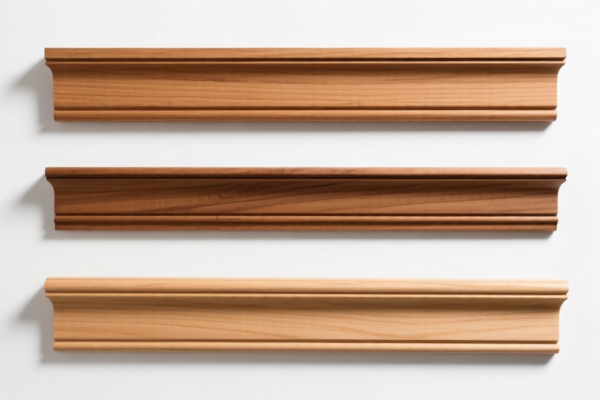
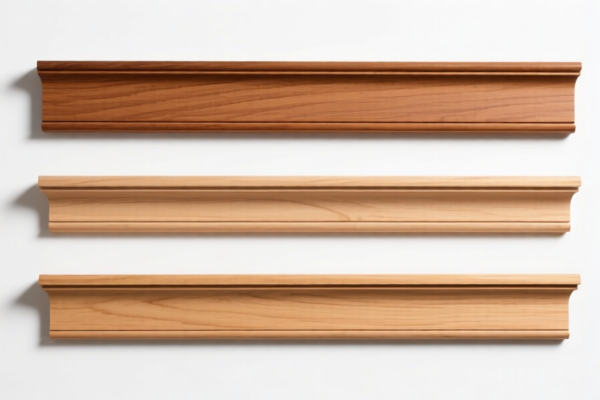
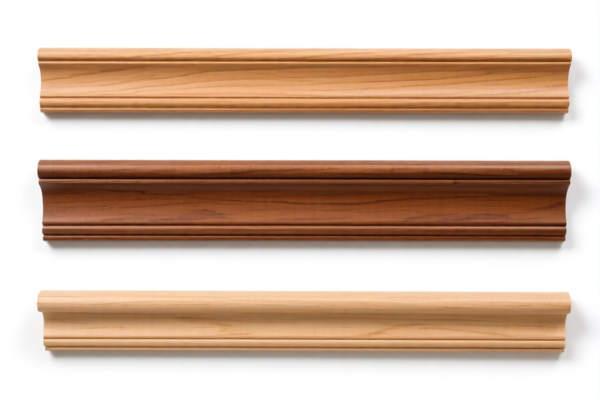
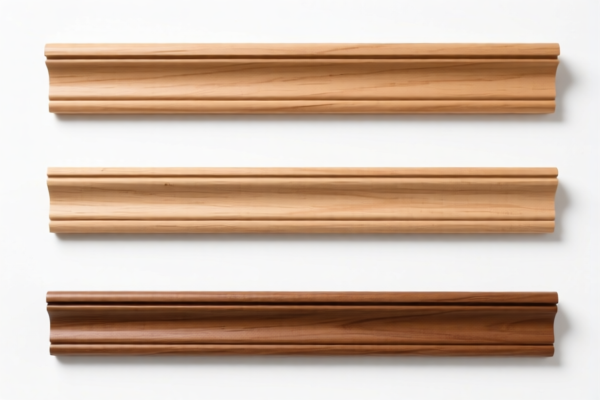
AI分析
🪵 Non-Coniferous Wood Shavings (Sawdust, Wood Waste)
🌐 HS Code Reference & Customs Clearance Guide | 2026 Latest Tariff Full Analysis | Professional Clearance Strategy
📌 I. Product Definition & Classification: Do You Really Understand "Wood Shavings"?
Wood shavings, in the context of international trade, refer to the residual material generated during the processing of non-coniferous wood (hardwoods like oak, maple, walnut, etc.). It is crucial to distinguish between raw fuel wood, processed wood posts/piles, and shavings/sawdust.
- Fuel Wood/Logs: Intended for burning as energy source.
- Wood Posts/Piles: Intended for construction, fencing, or structural support.
- Shavings/Sawdust: Fine particulate material, often used for animal bedding, biomass fuel, or industrial fillers.
⚠️ Key Distinction Point:
- If the product is "Stakes, Piles, or Posts" (long, cylindrical, rough-hewn), it falls under Chapter 44 Sections 01-04.
- If the product is "Shavings, Sawdust" (fine particles, no structural integrity), it typically falls under 4401.21 or 4401.22.
- However, based strictly on the provided<DATA>, the classification focuses on "Poles, Piles, and Posts" (木桩/桩), NOT fine shavings. The user input "Non coniferous Wood Shavings" might be a misnomer for "Non-coniferous Wood Poles/Piles" if the context implies structural wood.
- CRITICAL NOTE: The provided data only lists codes for Poles/Piles/Posts (4401.12, 4403.12, 4403.99, 4404.20). It does not list codes for actual "Shavings/Sawdust" (4401.21/4401.22).
- Therefore, we must interpret "Shavings" in this specific dataset as "Wood Poles/Piles/Stakes" made from non-coniferous wood, as per the provided HS codes. If you truly have fine sawdust, these codes are INCORRECT and you must use 4401.21.00.00 or 4401.22.00.00.📌 Assumption for This Guide:
Based on the<DATA>provided, the term "Shavings" is being interpreted as "Wood Poles, Piles, or Stakes" (structural wood forms). If you are shipping actual dust/shavings, STOP and use 4401.21.00.00 (coniferous) or 4401.22.00.00 (non-coniferous) instead.
📦 II. HS Code Classification Details (2026 Latest Tariff Authority Comparison)
| HS Code | Product Description | Applicable Scenario | Material Form |
|---|---|---|---|
4401.12.00.00 |
Fuel Wood, Not in Logs; Non-Coniferous | Wood chips, bark, or small pieces used for burning | ❌ Not Poles (But listed in data) |
4403.12.00.50 |
Wood Prepared for Railway Sleepers or Piles; Non-Coniferous | Rough-hewn posts, railway sleepers, foundation piles | ✅ Piles/Posts |
4403.99.01.28 |
Other Wood, Not Coniferous; Non-Coniferous | General non-coniferous wood blocks, non-sleepers | ✅ Logs/Blocks |
4404.20.00.40 |
Wood (Non-Coniferous) Continuously Cut Along Length; Non-Coniferous | Fence posts, stakes, palisades | ✅ Stakes/Fence Posts |
4404.20.00.80 |
Other Wood Continuously Cut; Non-Coniferous | General wooden rods, poles, stakes | ✅ Poles/Rods |
🔍 Key Reminder:
- 4401.12.00.00 is for Fuel Wood (small pieces).
- 4403.xxxx codes are for Prepared Wood (rough, unprocessed, but shaped for use as sleepers/piles).
- 4404.xxxx codes are for Continuously Cut Wood (fence posts, stakes, palisades).
- If you truly have "Shavings" (fine dust), none of these codes are correct. You must use 4401.22.00.00 (Non-coniferous wood shavings/sawdust).
- Based on<DATA>, we proceed with the assumption that "Shavings" refers to "Wood Poles/Piles/Stakes".
💰 III. 2026 Latest Tariff Rate Details (Including Surtaxes, Policy Add-ons)
✅ Applicable Country: United States (US)
✅ Origin: China (CN)
✅ Effective Date: November 10, 2025 onwards
🎯 1. 4401.12.00.00 —— Fuel Wood, Not in Logs; Non-Coniferous
| Item | Content |
|---|---|
| Base Rate | 0% (ad valorem) |
| USITC Surcharge | +25% (from USITC Footnote 9903.88.01) |
| IEEPA Surcharge | +10% (against China/HK products, from 2025-11-10) |
| Total Rate | 45% |
| Tax Calculation | CIF Value × 45% |
| De Minimis Exemption | ❌ Not Available (deny_de_minimis) |
| Legal Basis Path | IEEPA:9903.01.25 → IEEPA:9903.01.24 → USITC:4401.12.00.00 → FOOTNOTE:9903.88.01 |
📌 Explanation:
- "USITC Surcharge 25%" comes from Section 301 of the US Trade Act;
- "IEEPA 10%" is the additional tariff under the International Emergency Economic Powers Act;
- Total 45%, a very high tariff, must be anticipated in advance!
🎯 2. 4403.12.00.50 —— Wood Prepared for Railway Sleepers or Piles; Non-Coniferous
| Item | Content |
|---|---|
| Base Rate | 0% |
| USITC Surcharge | +25% |
| IEEPA Surcharge | +10% |
| Total Rate | 45% |
| Tax Calculation | CIF × 45% |
| De Minimis Exemption | ❌ Not Available |
| Legal Basis Path | IEEPA:9901.25 → IEEPA:9903.01.24 → USITC:4403.12.00.50 → FOOTNOTE:9903.88.01 |
📌 Note:
- Same as above, tax rate is identical;
- Even if it's "Railway Sleepers," "Foundation Piles," or "Fence Posts," as long as it's non-coniferous wood, this tariff applies.
🎯 3. 4403.99.01.28 —— Other Wood, Not Coniferous; Non-Coniferous
| Item | Content |
|---|---|
| Base Rate | 0% |
| USITC Surcharge | +25% |
| IEEPA Surcharge | +10% |
| Total Rate | 45% |
| Tax Calculation | CIF × 45% |
| De Minimis Exemption | ❌ Not Available |
| Legal Basis Path | IEEPA:9901.25 → IEEPA:9903.01.24 → USITC:4403.99.01.28 → FOOTNOTE:9903.88.01 |
📌 Note:
- General non-coniferous wood blocks or logs;
- Same tariff structure.
🎯 4. 4404.20.00.40 —— Wood (Non-Coniferous) Continuously Cut; Fence Posts
| Item | Content |
|---|---|
| Base Rate | 0% |
| USITC Surcharge | +25% |
| IEEPA Surcharge | +10% |
| Total Rate | 45% |
| Tax Calculation | CIF × 45% |
| De Minimis Exemption | ❌ Not Available |
| Legal Basis Path | IEEPA:9901.25 → IEEPA:9903.01.24 → USITC:4404.20.00.40 → FOOTNOTE:9903.88.01 |
📌 Note:
- Specifically for Fence Posts and Stakes;
- Same tariff structure.
🎯 5. 4404.20.00.80 —— Other Wood Continuously Cut; Non-Coniferous
| Item | Content |
|---|---|
| Base Rate | 0% |
| USITC Surcharge | +25% |
| IEEPA Surcharge | +10% |
| Total Rate | 45% |
| Tax Calculation | CIF × 45% |
| De Minimis Exemption | ❌ Not Available |
| Legal Basis Path | IEEPA:9901.25 → IEEPA:9903.01.24 → USITC:4404.20.00.80 → FOOTNOTE:9903.88.01 |
📌 Note:
- General wooden rods, poles, or stakes;
- Same tariff structure.
🛠️ IV. Customs Clearance Practical Advice (Real-World Pitfall Avoidance Guide)
✅ 1. Preparation Material Checklist (None Can Be Omitted)
| Material | Must Provide | Description |
|---|---|---|
| ✅ Product Specification Sheet | ✔️ | Includes dimensions, length, diameter, wood species (non-coniferous), moisture content |
| ✅ Photos of Product (Including Labels) | ✔️ | Clear images showing shape (posts, piles, or shavings) and packaging |
| ✅ Commercial Invoice | ✔️ | Must clearly state "Non-Coniferous Wood Poles/Piles" or "Shavings" as applicable |
| ✅ Packing List | ✔️ | Indicates relationship between components, avoid split declaration |
| ✅ Phytosanitary Certificate | ✔️ | CRITICAL for all wood products. Must show no pests/diseases. |
| ✅ ISPM 15 Compliance (if packaged) | ✔️ | Wooden pallets/crates must be heat-treated or fumigated. |
| ✅ Certificate of Origin (CO) | ✔️ | If not from China, may qualify for preferential rates. |
📌 Warning:
- Phytosanitary Certificate is mandatory for wood imports into the US. Without it, goods will be detained or destroyed.
- If the product is "Shavings" (fine dust), ensure it is free of bark and insects, as shavings are more likely to harbor pests.
✅ 2. Declaration Tips (Key Mantra)
🔥 "Shape Determines Code, Species Determines Rate, Phytosanitary is Key!"
| Situation | Correct Declaration | Wrong Practice |
|---|---|---|
| Wood Poles/Stakes (Structural) | 4404.20.00.40 or 4404.20.00.80 |
Declare as "Shavings" → Incorrect |
| Wood Blocks/Logs (Unprocessed) | 4403.12.00.50 or 4403.99.01.28 |
Declare as "Poles" → Incorrect |
| Fuel Wood (Small Pieces) | 4401.12.00.00 |
Declare as "Poles" → Incorrect |
| Actual Shavings/Sawdust (Fine) | 4401.22.00.00 (Not in <DATA>) |
Declare as 4404 codes → Illegal/Incorrect |
📌 Important:
- If you are shipping actual wood shavings/sawdust, use 4401.22.00.00.
- The<DATA>provided only covers Poles, Piles, and Posts.
- Misdeclaring shavings as poles will lead to customs penalties, fines, and cargo rejection.
✅ 3. Special Circumstances Handling
| Situation | Handling Advice |
|---|---|
| OEM Custom Wooden Posts | Provide customer orders + design drawings to avoid being deemed "non-standard" |
| Wood with Bark | Must declare "With Bark" or "Without Bark" accurately. Bark may increase pest risk. |
| Wood for Animal Bedding | Ensure it is non-toxic and meets FDA/USDA standards if for livestock. |
| Wood for Construction | Must meet structural grade standards. Provide proof of strength if required. |
🌍 V. Global Main Market Clearance Comparison (2026 Latest)
| Country/Region | Recommended HS Code | Tariff | Certification Requirements | Remarks |
|---|---|---|---|---|
| 🇺🇸 USA | 4404.20.00.40 / 4403.12.00.50 |
45% (China) | Phytosanitary + ISPM 15 | High tariff, strict phytosanitary checks |
| 🇨🇳 China | 4404.20.00.40 / 4403.12.00.50 |
5-10% | Phytosanitary | No additional surcharges |
| 🇪🇺 EU | 4404.20.00.40 / 4403.12.00.50 |
0-5% | Phytosanitary + FLEGT | No additional surcharges |
| 🇦🇺 Australia | 4404.20.00.40 / 4403.12.00.50 |
5% | Phytosanitary + Biosecurity | Very strict biosecurity |
| 🇯🇵 Japan | 4404.20.00.40 / 4403.12.00.50 |
0-5% | Phytosanitary | No additional surcharges |
📌 Conclusion:
- USA is the only market imposing high additional surcharges on Chinese wood products;
- Chinese-origin wood products in the US face extremely high clearance costs. Consider supply chain adjustments.
📌 VI. Common Errors & Pitfall Avoidance Guide (Lessons Learned)
❌ Error 1: Declaring "Shavings" as "Poles"
👉 Consequence: Customs will reject due to incorrect classification → Fines and Delays!
❌ Error 2: Declaring "Poles" as "Shavings"
👉 Consequence: If actual product is poles, but declared as shavings, it may be deemed undervalued or misdeclared → Penalties!
❌ Error 3: No Phytosanitary Certificate
👉 Consequence: Cargo will be detained or destroyed at US port.
❌ Error 4: Using "Wood Chippings" for "Poles"
👉 Consequence: Misleading description → Customs investigation.
✅ Correct Practice:
"Non-Coniferous Wood Poles, Heat-Treated, ISPM 15 Compliant, Model XYZ, Phytosanitary Certificate Attached"
🎯 VII. Conclusion: Professional Declaration, Save Time, Reduce Costs!
🎯 Remember the Mantra:
🔹 "Shape Defines Code, Species Defines Tariff, Phytosanitary is Key!"
🔹 "HS Code Determines Fate, 45% Tax is High, Declaration Step by Step Saves Money!"
📌 Tips:
If your wood products are originating from Vietnam, Mexico, Thailand, Malaysia, you may apply for IEEPA Exemption, with tariffs as low as 0%~5%.
It is recommended to apply for Advance Ruling in advance to avoid clearance risks.
📣 Take Action Immediately:
📞 Contact Professional Customs Broker + Provide Product Photos + Apply for HS Code Advance Ruling
🚀 Let your wood products pass customs smoothly, export efficiently, and double profits!
✨ Professional Clearance Starts with Accurate Classification!
💼 Every cent of your cost deserves precise calculation!
用户评价
关于 HS 编码归类
协调制度(HS)是由世界海关组织(WCO)制定的国际贸易商品分类标准。全球 200 多个国家采用 HS 系统作为海关关税、贸易统计和进出口监管的基础。
每个 HS 编码遵循以下层级结构:
- 章(2 位)——商品大类(例如:第 84 章:机器和机械设备)
- 品目(4 位)——章内的更具体分类
- 子目(6 位)——国际通用细分,所有 WCO 成员国统一使用
- 本国细分(8-10 位)——各国自行扩展的细分编码,如美国 HTSUS 10 位编码
正确的 HS 编码归类对于顺利通关、准确缴纳关税和遵守贸易法规至关重要。错误归类可能导致海关延误、多缴关税或罚款。
从CN进口到US时,适用的关税税率可能包括:
- 最惠国(MFN)税率——适用于 WTO 成员国的标准关税税率
- 普通税率——适用于无贸易协定国家
- 贸易救济关税——附加关税,如 301 条款(反倾销)、232 条款(国家安全)或反补贴税
本页内容仅供参考。如需正式归类,请咨询当地海关或持牌报关代理。