Non coniferous Wood Shavings
CN → US| HS Code | Tariff Rate | Origin | Destination | Doc |
|---|---|---|---|---|
| 4401120000 | 35.0% | CN | US | Official Doc |
| 4403120050 | 35.0% | CN | US | Official Doc |
| 4403990128 | 35.0% | CN | US | Official Doc |
| 4404200040 | 35.0% | CN | US | Official Doc |
| 4404200080 | 35.0% | CN | US | Official Doc |
Product Images
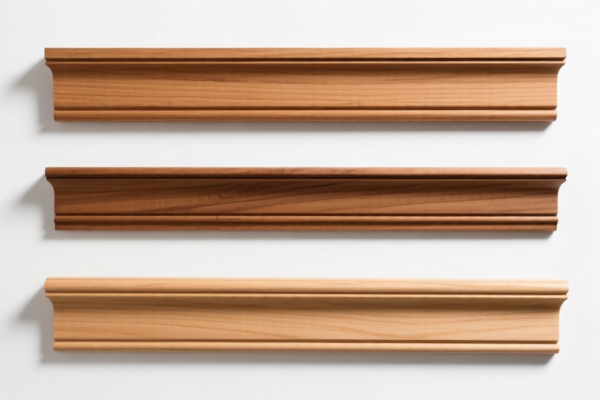
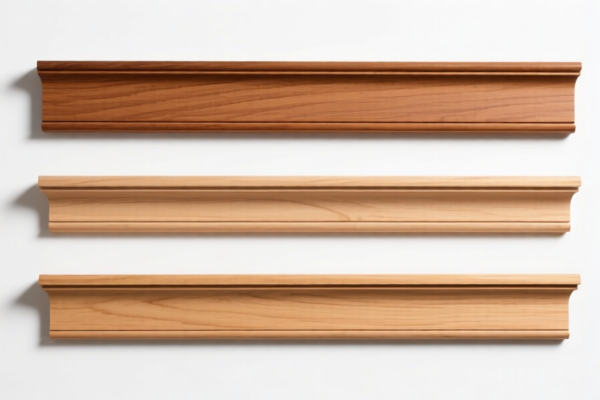
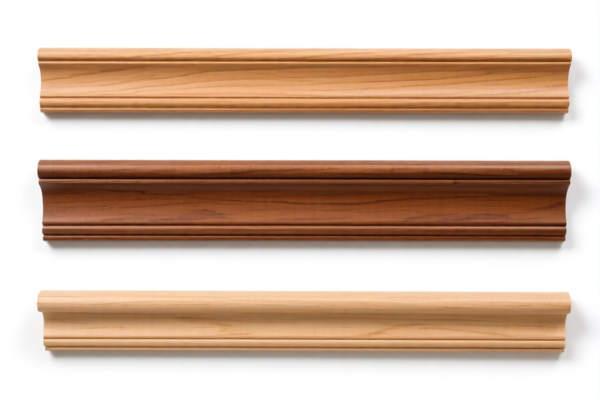
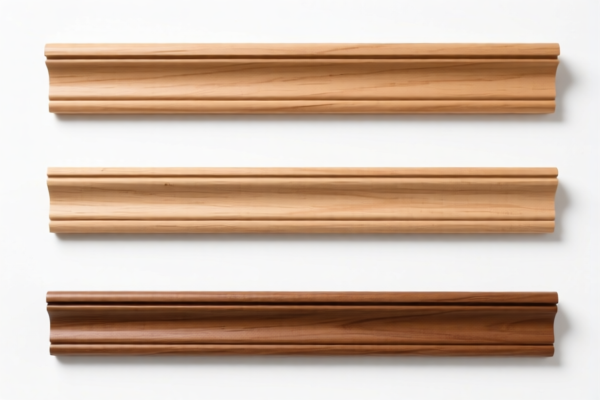
AI Analysis
🪵 Non-Coniferous Wood Shavings (Sawdust, Wood Waste)
🌐 HS Code Reference & Customs Clearance Guide | 2026 Latest Tariff Full Analysis | Professional Clearance Strategy
📌 I. Product Definition & Classification: Do You Really Understand "Wood Shavings"?
Wood shavings, in the context of international trade, refer to the residual material generated during the processing of non-coniferous wood (hardwoods like oak, maple, walnut, etc.). It is crucial to distinguish between raw fuel wood, processed wood posts/piles, and shavings/sawdust.
- Fuel Wood/Logs: Intended for burning as energy source.
- Wood Posts/Piles: Intended for construction, fencing, or structural support.
- Shavings/Sawdust: Fine particulate material, often used for animal bedding, biomass fuel, or industrial fillers.
⚠️ Key Distinction Point:
- If the product is "Stakes, Piles, or Posts" (long, cylindrical, rough-hewn), it falls under Chapter 44 Sections 01-04.
- If the product is "Shavings, Sawdust" (fine particles, no structural integrity), it typically falls under 4401.21 or 4401.22.
- However, based strictly on the provided<DATA>, the classification focuses on "Poles, Piles, and Posts" (木桩/桩), NOT fine shavings. The user input "Non coniferous Wood Shavings" might be a misnomer for "Non-coniferous Wood Poles/Piles" if the context implies structural wood.
- CRITICAL NOTE: The provided data only lists codes for Poles/Piles/Posts (4401.12, 4403.12, 4403.99, 4404.20). It does not list codes for actual "Shavings/Sawdust" (4401.21/4401.22).
- Therefore, we must interpret "Shavings" in this specific dataset as "Wood Poles/Piles/Stakes" made from non-coniferous wood, as per the provided HS codes. If you truly have fine sawdust, these codes are INCORRECT and you must use 4401.21.00.00 or 4401.22.00.00.📌 Assumption for This Guide:
Based on the<DATA>provided, the term "Shavings" is being interpreted as "Wood Poles, Piles, or Stakes" (structural wood forms). If you are shipping actual dust/shavings, STOP and use 4401.21.00.00 (coniferous) or 4401.22.00.00 (non-coniferous) instead.
📦 II. HS Code Classification Details (2026 Latest Tariff Authority Comparison)
| HS Code | Product Description | Applicable Scenario | Material Form |
|---|---|---|---|
4401.12.00.00 |
Fuel Wood, Not in Logs; Non-Coniferous | Wood chips, bark, or small pieces used for burning | ❌ Not Poles (But listed in data) |
4403.12.00.50 |
Wood Prepared for Railway Sleepers or Piles; Non-Coniferous | Rough-hewn posts, railway sleepers, foundation piles | ✅ Piles/Posts |
4403.99.01.28 |
Other Wood, Not Coniferous; Non-Coniferous | General non-coniferous wood blocks, non-sleepers | ✅ Logs/Blocks |
4404.20.00.40 |
Wood (Non-Coniferous) Continuously Cut Along Length; Non-Coniferous | Fence posts, stakes, palisades | ✅ Stakes/Fence Posts |
4404.20.00.80 |
Other Wood Continuously Cut; Non-Coniferous | General wooden rods, poles, stakes | ✅ Poles/Rods |
🔍 Key Reminder:
- 4401.12.00.00 is for Fuel Wood (small pieces).
- 4403.xxxx codes are for Prepared Wood (rough, unprocessed, but shaped for use as sleepers/piles).
- 4404.xxxx codes are for Continuously Cut Wood (fence posts, stakes, palisades).
- If you truly have "Shavings" (fine dust), none of these codes are correct. You must use 4401.22.00.00 (Non-coniferous wood shavings/sawdust).
- Based on<DATA>, we proceed with the assumption that "Shavings" refers to "Wood Poles/Piles/Stakes".
💰 III. 2026 Latest Tariff Rate Details (Including Surtaxes, Policy Add-ons)
✅ Applicable Country: United States (US)
✅ Origin: China (CN)
✅ Effective Date: November 10, 2025 onwards
🎯 1. 4401.12.00.00 —— Fuel Wood, Not in Logs; Non-Coniferous
| Item | Content |
|---|---|
| Base Rate | 0% (ad valorem) |
| USITC Surcharge | +25% (from USITC Footnote 9903.88.01) |
| IEEPA Surcharge | +10% (against China/HK products, from 2025-11-10) |
| Total Rate | 45% |
| Tax Calculation | CIF Value × 45% |
| De Minimis Exemption | ❌ Not Available (deny_de_minimis) |
| Legal Basis Path | IEEPA:9903.01.25 → IEEPA:9903.01.24 → USITC:4401.12.00.00 → FOOTNOTE:9903.88.01 |
📌 Explanation:
- "USITC Surcharge 25%" comes from Section 301 of the US Trade Act;
- "IEEPA 10%" is the additional tariff under the International Emergency Economic Powers Act;
- Total 45%, a very high tariff, must be anticipated in advance!
🎯 2. 4403.12.00.50 —— Wood Prepared for Railway Sleepers or Piles; Non-Coniferous
| Item | Content |
|---|---|
| Base Rate | 0% |
| USITC Surcharge | +25% |
| IEEPA Surcharge | +10% |
| Total Rate | 45% |
| Tax Calculation | CIF × 45% |
| De Minimis Exemption | ❌ Not Available |
| Legal Basis Path | IEEPA:9901.25 → IEEPA:9903.01.24 → USITC:4403.12.00.50 → FOOTNOTE:9903.88.01 |
📌 Note:
- Same as above, tax rate is identical;
- Even if it's "Railway Sleepers," "Foundation Piles," or "Fence Posts," as long as it's non-coniferous wood, this tariff applies.
🎯 3. 4403.99.01.28 —— Other Wood, Not Coniferous; Non-Coniferous
| Item | Content |
|---|---|
| Base Rate | 0% |
| USITC Surcharge | +25% |
| IEEPA Surcharge | +10% |
| Total Rate | 45% |
| Tax Calculation | CIF × 45% |
| De Minimis Exemption | ❌ Not Available |
| Legal Basis Path | IEEPA:9901.25 → IEEPA:9903.01.24 → USITC:4403.99.01.28 → FOOTNOTE:9903.88.01 |
📌 Note:
- General non-coniferous wood blocks or logs;
- Same tariff structure.
🎯 4. 4404.20.00.40 —— Wood (Non-Coniferous) Continuously Cut; Fence Posts
| Item | Content |
|---|---|
| Base Rate | 0% |
| USITC Surcharge | +25% |
| IEEPA Surcharge | +10% |
| Total Rate | 45% |
| Tax Calculation | CIF × 45% |
| De Minimis Exemption | ❌ Not Available |
| Legal Basis Path | IEEPA:9901.25 → IEEPA:9903.01.24 → USITC:4404.20.00.40 → FOOTNOTE:9903.88.01 |
📌 Note:
- Specifically for Fence Posts and Stakes;
- Same tariff structure.
🎯 5. 4404.20.00.80 —— Other Wood Continuously Cut; Non-Coniferous
| Item | Content |
|---|---|
| Base Rate | 0% |
| USITC Surcharge | +25% |
| IEEPA Surcharge | +10% |
| Total Rate | 45% |
| Tax Calculation | CIF × 45% |
| De Minimis Exemption | ❌ Not Available |
| Legal Basis Path | IEEPA:9901.25 → IEEPA:9903.01.24 → USITC:4404.20.00.80 → FOOTNOTE:9903.88.01 |
📌 Note:
- General wooden rods, poles, or stakes;
- Same tariff structure.
🛠️ IV. Customs Clearance Practical Advice (Real-World Pitfall Avoidance Guide)
✅ 1. Preparation Material Checklist (None Can Be Omitted)
| Material | Must Provide | Description |
|---|---|---|
| ✅ Product Specification Sheet | ✔️ | Includes dimensions, length, diameter, wood species (non-coniferous), moisture content |
| ✅ Photos of Product (Including Labels) | ✔️ | Clear images showing shape (posts, piles, or shavings) and packaging |
| ✅ Commercial Invoice | ✔️ | Must clearly state "Non-Coniferous Wood Poles/Piles" or "Shavings" as applicable |
| ✅ Packing List | ✔️ | Indicates relationship between components, avoid split declaration |
| ✅ Phytosanitary Certificate | ✔️ | CRITICAL for all wood products. Must show no pests/diseases. |
| ✅ ISPM 15 Compliance (if packaged) | ✔️ | Wooden pallets/crates must be heat-treated or fumigated. |
| ✅ Certificate of Origin (CO) | ✔️ | If not from China, may qualify for preferential rates. |
📌 Warning:
- Phytosanitary Certificate is mandatory for wood imports into the US. Without it, goods will be detained or destroyed.
- If the product is "Shavings" (fine dust), ensure it is free of bark and insects, as shavings are more likely to harbor pests.
✅ 2. Declaration Tips (Key Mantra)
🔥 "Shape Determines Code, Species Determines Rate, Phytosanitary is Key!"
| Situation | Correct Declaration | Wrong Practice |
|---|---|---|
| Wood Poles/Stakes (Structural) | 4404.20.00.40 or 4404.20.00.80 |
Declare as "Shavings" → Incorrect |
| Wood Blocks/Logs (Unprocessed) | 4403.12.00.50 or 4403.99.01.28 |
Declare as "Poles" → Incorrect |
| Fuel Wood (Small Pieces) | 4401.12.00.00 |
Declare as "Poles" → Incorrect |
| Actual Shavings/Sawdust (Fine) | 4401.22.00.00 (Not in <DATA>) |
Declare as 4404 codes → Illegal/Incorrect |
📌 Important:
- If you are shipping actual wood shavings/sawdust, use 4401.22.00.00.
- The<DATA>provided only covers Poles, Piles, and Posts.
- Misdeclaring shavings as poles will lead to customs penalties, fines, and cargo rejection.
✅ 3. Special Circumstances Handling
| Situation | Handling Advice |
|---|---|
| OEM Custom Wooden Posts | Provide customer orders + design drawings to avoid being deemed "non-standard" |
| Wood with Bark | Must declare "With Bark" or "Without Bark" accurately. Bark may increase pest risk. |
| Wood for Animal Bedding | Ensure it is non-toxic and meets FDA/USDA standards if for livestock. |
| Wood for Construction | Must meet structural grade standards. Provide proof of strength if required. |
🌍 V. Global Main Market Clearance Comparison (2026 Latest)
| Country/Region | Recommended HS Code | Tariff | Certification Requirements | Remarks |
|---|---|---|---|---|
| 🇺🇸 USA | 4404.20.00.40 / 4403.12.00.50 |
45% (China) | Phytosanitary + ISPM 15 | High tariff, strict phytosanitary checks |
| 🇨🇳 China | 4404.20.00.40 / 4403.12.00.50 |
5-10% | Phytosanitary | No additional surcharges |
| 🇪🇺 EU | 4404.20.00.40 / 4403.12.00.50 |
0-5% | Phytosanitary + FLEGT | No additional surcharges |
| 🇦🇺 Australia | 4404.20.00.40 / 4403.12.00.50 |
5% | Phytosanitary + Biosecurity | Very strict biosecurity |
| 🇯🇵 Japan | 4404.20.00.40 / 4403.12.00.50 |
0-5% | Phytosanitary | No additional surcharges |
📌 Conclusion:
- USA is the only market imposing high additional surcharges on Chinese wood products;
- Chinese-origin wood products in the US face extremely high clearance costs. Consider supply chain adjustments.
📌 VI. Common Errors & Pitfall Avoidance Guide (Lessons Learned)
❌ Error 1: Declaring "Shavings" as "Poles"
👉 Consequence: Customs will reject due to incorrect classification → Fines and Delays!
❌ Error 2: Declaring "Poles" as "Shavings"
👉 Consequence: If actual product is poles, but declared as shavings, it may be deemed undervalued or misdeclared → Penalties!
❌ Error 3: No Phytosanitary Certificate
👉 Consequence: Cargo will be detained or destroyed at US port.
❌ Error 4: Using "Wood Chippings" for "Poles"
👉 Consequence: Misleading description → Customs investigation.
✅ Correct Practice:
"Non-Coniferous Wood Poles, Heat-Treated, ISPM 15 Compliant, Model XYZ, Phytosanitary Certificate Attached"
🎯 VII. Conclusion: Professional Declaration, Save Time, Reduce Costs!
🎯 Remember the Mantra:
🔹 "Shape Defines Code, Species Defines Tariff, Phytosanitary is Key!"
🔹 "HS Code Determines Fate, 45% Tax is High, Declaration Step by Step Saves Money!"
📌 Tips:
If your wood products are originating from Vietnam, Mexico, Thailand, Malaysia, you may apply for IEEPA Exemption, with tariffs as low as 0%~5%.
It is recommended to apply for Advance Ruling in advance to avoid clearance risks.
📣 Take Action Immediately:
📞 Contact Professional Customs Broker + Provide Product Photos + Apply for HS Code Advance Ruling
🚀 Let your wood products pass customs smoothly, export efficiently, and double profits!
✨ Professional Clearance Starts with Accurate Classification!
💼 Every cent of your cost deserves precise calculation!
Customer Reviews
About HS Code Classification
The Harmonized System (HS) is an internationally standardized nomenclature developed by the World Customs Organization (WCO) to classify traded products. Over 200 countries use the HS system as the basis for customs tariffs, trade statistics, and import/export regulations.
Each HS code follows a hierarchical structure:
- Chapter (2 digits) — Broad category of goods (e.g., Chapter 84: Machinery and Mechanical Appliances)
- Heading (4 digits) — More specific grouping within the chapter
- Subheading (6 digits) — Internationally standardized breakdown, used by all WCO member countries
- National subdivisions (8-10 digits) — Country-specific extensions for further classification, such as US HTSUS 10-digit codes
Correct HS code classification is essential for smooth customs clearance, accurate duty payment, and compliance with trade regulations. Misclassification can lead to customs delays, overpayment of duties, or penalties.
When importing from CN to US, the applicable tariff rates may include:
- Most-Favored-Nation (MFN) rate — The standard duty rate applied to WTO members
- General rate — Applied to countries without trade agreements
- Trade remedy duties — Additional tariffs such as Section 301 (anti-dumping), Section 232 (national security), or countervailing duties
The information provided on this page is for reference purposes only. For official classification, please consult with your local customs authority or a licensed customs broker.