Non foam PVC Plastic Sheet Commercial
CN → US| HS编码 | 关税税率 | 原产国 | 目的国 | 文档 |
|---|---|---|---|---|
| 3920435000 | 39.2% | CN | US | 官方文档 |
| 3921125000 | 41.5% | CN | US | 官方文档 |
| 3919905040 | 40.8% | CN | US | 官方文档 |
| 3919905060 | 40.8% | CN | US | 官方文档 |
| 3920490000 | 40.8% | CN | US | 官方文档 |
商品图片
AI分析
🛡️ Non-Foam PVC Plastic Sheets (Commercial Grade)
🌐 HS Code Reference & Customs Clearance Guide | 2026 Latest Tariff Analysis | Professional Clearance Strategy
📌 I. Product Definition & Classification: Understanding "Non-Foam PVC Sheets"
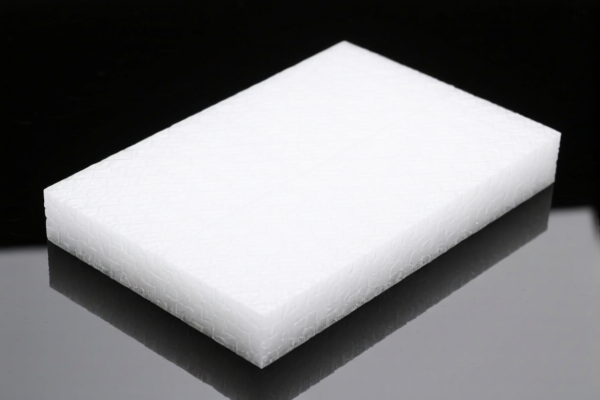
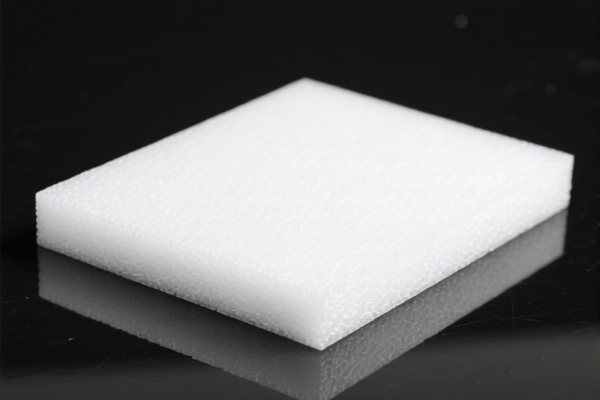
Non-foam Polyvinyl Chloride (PVC) plastic sheets are rigid, solid sheets made from PVC resin. Unlike foam PVC (which has a cellular structure and is lighter), non-foam PVC is dense, solid, and often used for signage, chemical resistance, laboratory surfaces, or industrial lining.
Key Characteristics: * Material: 100% Polyvinyl Chloride (PVC). * Structure: Non-cellular / Solid (No foam/air bubbles). * Form: Flat sheets, plates, or films. * Status: Not reinforced, not laminated (unless specified, but here treated as basic sheets).
⚠️ Critical Distinction:
- Non-Foam (Solid/Dense): Classified under Heading 3920 (Plates, sheets, film, foil and strip, of plastics) if not self-adhesive.
- Self-Adhesive: If it has an adhesive backing, it falls under Heading 3919 (Self-adhesive plates, sheets, film, foil, tape, strip and other flat shapes).
- Foam PVC: Would fall under different subheadings within 3920/3921 depending on density and structure. Our data focuses on NON-FOAM.
📦 II. HS Code Classification Details (2026 Latest Tariff Matrix)
Based on the provided data, here are the valid HS Codes for Non-Foam PVC Plastic Sheets:
| HS Code | Product Description | Key Classification Logic | Tax Profile |
|---|---|---|---|
3920.43.50.00 |
Non-foam PVC Plates/Sheets | Material: PVC. Form: Sheet. Structure: Non-foam. Exact match for solid PVC sheets. | Total Tax: 39.2% |
3921.12.50.00 |
Non-foam PVC Sheets (Other) | Material: PVC. Form: Sheet. Classified as "Other" plastic plates/sheets not elsewhere specified. | Total Tax: 41.5% |
3919.90.50.40 |
Non-foam PVC Sheets (Other) | Category: Self-adhesive or other flat shapes. Note: If NOT self-adhesive, this code may be risky. Use only if adhesive properties are present or if customs accepts "other flat shapes" under 3919. | Total Tax: 40.8% |
3919.90.50.60 |
Non-foam PVC Sheets (Other) | Category: Other self-adhesive/flat shapes. Similar to above. Risk if no adhesive. | Total Tax: 40.8% |
3920.49.00.00 |
Other PVC Plates/Sheets | Material: PVC. Subheading: Other (not 3920.43). Used for non-cellular PVC sheets that don't fit the specific "3920.43" niche. | Total Tax: 40.8% |
🔍 Clarification on 3920 vs. 3921 vs. 3919:
- 3920 is the primary heading for non-self-adhesive plastic plates/sheets.
- 3919 is strictly for self-adhesive products. If your commercial sheet is not self-adhesive, using 3919 codes (3919.90...) is a high-risk classification error.
- 3921 is a catch-all for "Other plates, sheets, film, foil and strip" of plastics. It is often used when a more specific subheading (like 3920.43) doesn't perfectly fit, or for laminated products.
💰 III. 2026 Tariff Rate Breakdown (Detailed Tax Analysis)
✅ Applicable Country: United States (US)
✅ Origin: China (CN)
✅ Effective Time: Post-2025 Trade Policies (Includes Section 301 & IEEPA)
🎯 1. 3920.43.50.00 – Non-Foam PVC Sheets (Most Accurate Fit)
This is the most technically accurate code for solid PVC sheets.
| Item | Detail |
|---|---|
| Base Tariff | 4.2% |
| Section 301 Tariff (25%) | +25% (Trade War Tariff) |
| 122 Clause Tariff (10%) | +10% (Additional punitive tariff) |
| Total Tariff | 39.2% |
| De Minimis Exemption? | ❌ NO (All Section 301/122 tariffs apply; de minimis does not waive these) |
| Legal Basis | HTSUS: 3920.43.50.00 + USITC Footnote 9903.01.24 + IEEPA: 9903.01.25 |
📌 Why this is best: It correctly identifies the material (PVC) and structure (Non-foam/Cellular exclusion).
🎯 2. 3921.12.50.00 – Other PVC Sheets (Higher Risk/Less Specific)
Used if the sheet has specific laminations or doesn't fit 3920.43.
| Item | Detail |
|---|---|
| Base Tariff | 6.5% |
| Section 301 Tariff (25%) | +25% |
| 122 Clause Tariff (10%) | +10% |
| Total Tariff | 41.5% |
| De Minimis Exemption? | ❌ NO |
📌 Caution: This is $2.3% higher than the 3920 code. Only use if 3920.43 is rejected by customs due to specific physical properties (e.g., extreme thickness or lamination).
🎯 3. 3919.90.50.40 / 3919.90.50.60 – Self-Adhesive Category (HIGH RISK)
⚠️ WARNING: These codes apply to self-adhesive PVC sheets.
If your product is a plain commercial sheet without adhesive, classifying it under 3919 is incorrect and may lead to:
1. Classification Dispute: Customs will reclassify to 3920.
2. Penalties: For misdeclaration.
3. Delay: While reclassification is processed.
| Item | Detail |
|---|---|
| Base Tariff | 5.8% |
| Section 301 Tariff (25%) | +25% |
| 122 Clause Tariff (10%) | +10% |
| Total Tariff | 40.8% |
| Risk Level | 🔴 HIGH if non-adhesive. |
📌 Note: If your product IS self-adhesive (e.g., PVC vinyl for stickers/wrap), use this code. The tariff (40.8%) is slightly lower than 3921 but higher than 3920.
🎯 4. 3920.49.00.00 – Other PVC Sheets (General Catch-All)
| Item | Detail |
|---|---|
| Base Tariff | 5.8% |
| Section 301 Tariff (25%) | +25% |
| 122 Clause Tariff (10%) | +10% |
| Total Tariff | 40.8% |
| Usage | Use only if 3920.43 is technically incorrect (e.g., mixed materials or specific additives). |
🛠️ IV. Customs Clearance Practical Advice
✅ 1. Documentation Checklist (Must-Have)
| Document | Requirement | Purpose |
|---|---|---|
| Product Specification Sheet | Clearly state: "PVC Resin", "Non-Foam/Solid Structure", "No Adhesive" (if true). | Proves HS Code 3920 over 3919. |
| Material Safety Data Sheet (MSDS) | Required for chemical compliance. | Confirms PVC composition. |
| Commercial Invoice | Description: "Non-Foam PVC Plastic Sheet, Commercial Grade, Solid, 2mm Thick". | Avoids vague terms like "Plastic Part". |
| Packing List | Weight and dimensions. | Helps verify density if audited. |
| Bill of Lading | Consistent with invoice. | Standard requirement. |
| Certificate of Origin | To verify Chinese origin (for tariff calculation). | Critical for Section 301/122 application. |
✅ 2. Classification Strategy (How to Declare)
| Scenario | Recommended HS Code | Declaration Text |
|---|---|---|
| Standard Solid PVC Sheet (No adhesive, no lamination) | 3920.43.50.00 |
"Non-foam PVC plastic sheet, solid, commercial grade" |
| PVC Sheet with Adhesive Backing | 3919.90.50.40 or 50.60 |
"Self-adhesive PVC sheet" |
| PVC Sheet with Lamination/Film | 3921.12.50.00 |
"Laminated PVC sheet, non-foam" |
| PVC Sheet with Additives/Fillers | 3920.49.00.00 |
"PVC sheet with mineral filler, non-foam" |
🔥 Golden Rule:
"No Adhesive = 3920. Adhesive = 3919. Solid = 3920.43 or .49. Foamed = Different Code."
Misclassifying a solid sheet as self-adhesive (3919) or vice versa is the #1 reason for customs holds.
✅ 3. Special Considerations for 2026
- Section 122 Tariff (10%): This is a new/additional punitive tariff on many Chinese goods. It applies to all PVC sheets listed above. There is no exemption for commercial grade.
- De Minimis (Section 321):
- Does NOT apply. Even for shipments under $800, Section 301 (25%) and Section 122 (10%) tariffs cannot be bypassed via de minimis.
- Result: Every single sheet, regardless of value, is subject to ~39-41% total duty.
- Pre-Ruling Recommendation:
- If you are importing large volumes, file a Binding Ruling with CBP. This locks in the HS Code and prevents surprise audits or reclassifications at the port.
🌍 V. Global Market Comparison (2026)
| Market | Recommended HS Code | Base Duty | US Additional (Section 301/122) | Total Effective Rate | Notes |
|---|---|---|---|---|---|
| 🇺🇸 USA | 3920.43.50.00 |
4.2% | +35% (25% + 10%) | 39.2% | Highest cost due to dual punitive tariffs. |
| 🇨🇳 China | 3920.43.50.00 |
6.5% | N/A | 6.5% | Import duty to China. |
| 🇪🇺 EU | 3920.43.50.00 |
6.5% | N/A (General) | 6.5% | No Section 301/122. Standard MFN rate applies. |
| 🇬🇧 UK | 3920.43.50.00 |
6.5% | N/A | 6.5% | Post-Brexit, aligned with EU in many cases. |
| 🇯🇵 Japan | 3920.43.50.00 |
5.0% | N/A | 5.0% | FTA benefits may apply if certified. |
📌 Key Insight:
The US market is the most expensive due to the 35% additional punitive tariffs (25% Section 301 + 10% Section 122).
- Total duty burden: 39.2% vs. ~6.5% in EU/UK/JP.
- Strategy: Consider sourcing from Vietnam/Mexico (subject to different rules of origin) to mitigate US tariffs, or absorb the cost if margins allow.
📌 VI. Common Pitfalls & How to Avoid Them
❌ Pitfall 1: Calling it "PVC Lumber" or "PVC Foam"
👉 Risk: If it's non-foam, calling it "foam" leads to immediate rejection and fines.
✅ Fix: Use exact terminology: "Non-foam PVC sheet" or "Solid PVC plate."
❌ Pitfall 2: Ignoring the Adhesive
👉 Risk: If it has adhesive and you use 3920, customs will classify it as 3919 (often with different penalty structures) and issue a notice of treatment.
✅ Fix: Always state "Self-Adhesive" or "Non-Adhesive" clearly in the description.
❌ Pitfall 3: Underestimating Total Landed Cost
👉 Risk: Calculating only the base duty (4.2%).
✅ Fix: Plan for 39.2% total duty + ocean freight + insurance + demurrage. The margin is significantly squeezed.
🎯 VII. Conclusion: Smart Customs Strategy for PVC Sheets
🎯 Action Plan:
1. Confirm Structure: Is it solid (non-foam)? Yes → Use 3920.
2. Confirm Adhesive: Is it sticky? No → Stick with 3920. Yes → Use 3919.
3. Calculate Cost: Base Duty (4.2-6.5%) + 25% (Sec 301) + 10% (Sec 122) = 39.2-41.5% Total.
4. Declare Precisely: "Non-Foam PVC Plastic Sheet, Commercial Grade, 100% PVC, Non-Adhesive."
5. Apply for Ruling: Get a Binding Ruling from CBP to secure the 3920.43.50.00 classification.
💼 Pro Tip:
If your product is thin film (<0.1mm), it might fall under3920.42. If it's thick plate (>4mm), it might still be3920.43. Check thickness!
For most commercial sheets (1mm-5mm),3920.43.50.00is the safest and most accurate code.
✨ Accurate Classification Saves 35% in Duties! Don't Let PVC Sheets Sink Your Margins!
💼 Work with a Licensed Customs Broker to File a Pre-Ruling Today!
用户评价
关于 HS 编码归类
协调制度(HS)是由世界海关组织(WCO)制定的国际贸易商品分类标准。全球 200 多个国家采用 HS 系统作为海关关税、贸易统计和进出口监管的基础。
每个 HS 编码遵循以下层级结构:
- 章(2 位)——商品大类(例如:第 84 章:机器和机械设备)
- 品目(4 位)——章内的更具体分类
- 子目(6 位)——国际通用细分,所有 WCO 成员国统一使用
- 本国细分(8-10 位)——各国自行扩展的细分编码,如美国 HTSUS 10 位编码
正确的 HS 编码归类对于顺利通关、准确缴纳关税和遵守贸易法规至关重要。错误归类可能导致海关延误、多缴关税或罚款。
从CN进口到US时,适用的关税税率可能包括:
- 最惠国(MFN)税率——适用于 WTO 成员国的标准关税税率
- 普通税率——适用于无贸易协定国家
- 贸易救济关税——附加关税,如 301 条款(反倾销)、232 条款(国家安全)或反补贴税
本页内容仅供参考。如需正式归类,请咨询当地海关或持牌报关代理。