Non foam PVC Plastic Sheet Commercial
CN → US| HS Code | Tariff Rate | Origin | Destination | Doc |
|---|---|---|---|---|
| 3920435000 | 39.2% | CN | US | Official Doc |
| 3921125000 | 41.5% | CN | US | Official Doc |
| 3919905040 | 40.8% | CN | US | Official Doc |
| 3919905060 | 40.8% | CN | US | Official Doc |
| 3920490000 | 40.8% | CN | US | Official Doc |
Product Images
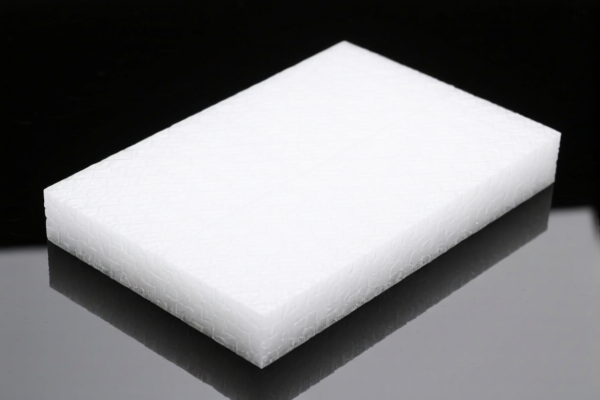
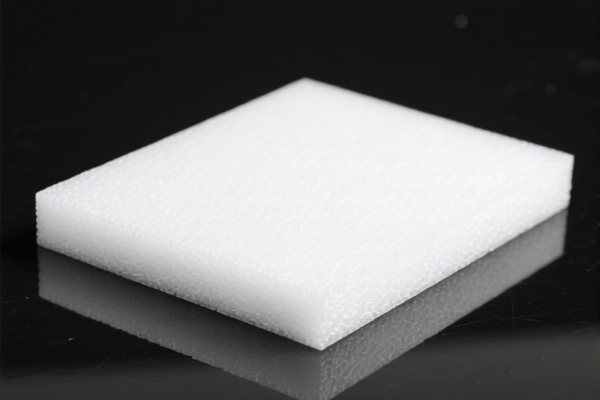
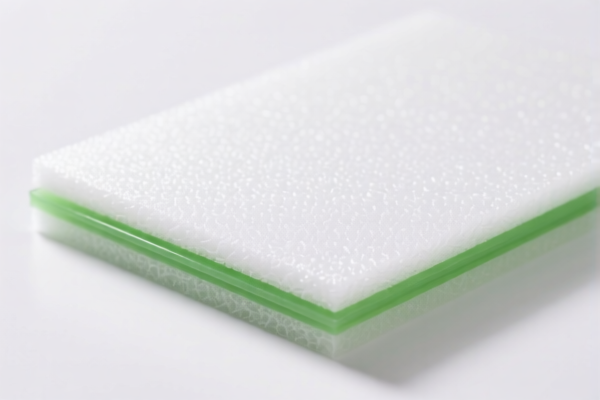
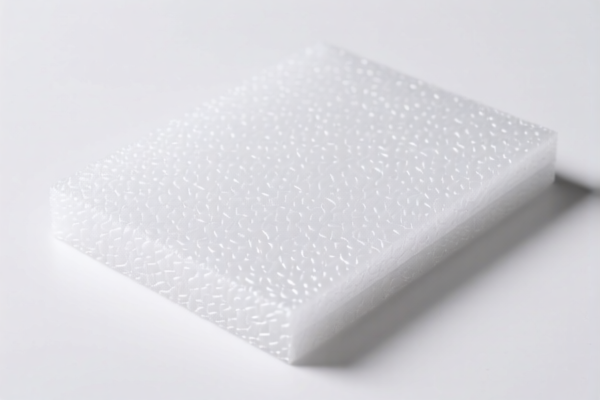
AI Analysis
🛡️ Non-Foam PVC Plastic Sheets (Commercial Grade)
🌐 HS Code Reference & Customs Clearance Guide | 2026 Latest Tariff Analysis | Professional Clearance Strategy
📌 I. Product Definition & Classification: Understanding "Non-Foam PVC Sheets"
Non-foam Polyvinyl Chloride (PVC) plastic sheets are rigid, solid sheets made from PVC resin. Unlike foam PVC (which has a cellular structure and is lighter), non-foam PVC is dense, solid, and often used for signage, chemical resistance, laboratory surfaces, or industrial lining.
Key Characteristics: * Material: 100% Polyvinyl Chloride (PVC). * Structure: Non-cellular / Solid (No foam/air bubbles). * Form: Flat sheets, plates, or films. * Status: Not reinforced, not laminated (unless specified, but here treated as basic sheets).
⚠️ Critical Distinction:
- Non-Foam (Solid/Dense): Classified under Heading 3920 (Plates, sheets, film, foil and strip, of plastics) if not self-adhesive.
- Self-Adhesive: If it has an adhesive backing, it falls under Heading 3919 (Self-adhesive plates, sheets, film, foil, tape, strip and other flat shapes).
- Foam PVC: Would fall under different subheadings within 3920/3921 depending on density and structure. Our data focuses on NON-FOAM.
📦 II. HS Code Classification Details (2026 Latest Tariff Matrix)
Based on the provided data, here are the valid HS Codes for Non-Foam PVC Plastic Sheets:
| HS Code | Product Description | Key Classification Logic | Tax Profile |
|---|---|---|---|
3920.43.50.00 |
Non-foam PVC Plates/Sheets | Material: PVC. Form: Sheet. Structure: Non-foam. Exact match for solid PVC sheets. | Total Tax: 39.2% |
3921.12.50.00 |
Non-foam PVC Sheets (Other) | Material: PVC. Form: Sheet. Classified as "Other" plastic plates/sheets not elsewhere specified. | Total Tax: 41.5% |
3919.90.50.40 |
Non-foam PVC Sheets (Other) | Category: Self-adhesive or other flat shapes. Note: If NOT self-adhesive, this code may be risky. Use only if adhesive properties are present or if customs accepts "other flat shapes" under 3919. | Total Tax: 40.8% |
3919.90.50.60 |
Non-foam PVC Sheets (Other) | Category: Other self-adhesive/flat shapes. Similar to above. Risk if no adhesive. | Total Tax: 40.8% |
3920.49.00.00 |
Other PVC Plates/Sheets | Material: PVC. Subheading: Other (not 3920.43). Used for non-cellular PVC sheets that don't fit the specific "3920.43" niche. | Total Tax: 40.8% |
🔍 Clarification on 3920 vs. 3921 vs. 3919:
- 3920 is the primary heading for non-self-adhesive plastic plates/sheets.
- 3919 is strictly for self-adhesive products. If your commercial sheet is not self-adhesive, using 3919 codes (3919.90...) is a high-risk classification error.
- 3921 is a catch-all for "Other plates, sheets, film, foil and strip" of plastics. It is often used when a more specific subheading (like 3920.43) doesn't perfectly fit, or for laminated products.
💰 III. 2026 Tariff Rate Breakdown (Detailed Tax Analysis)
✅ Applicable Country: United States (US)
✅ Origin: China (CN)
✅ Effective Time: Post-2025 Trade Policies (Includes Section 301 & IEEPA)
🎯 1. 3920.43.50.00 – Non-Foam PVC Sheets (Most Accurate Fit)
This is the most technically accurate code for solid PVC sheets.
| Item | Detail |
|---|---|
| Base Tariff | 4.2% |
| Section 301 Tariff (25%) | +25% (Trade War Tariff) |
| 122 Clause Tariff (10%) | +10% (Additional punitive tariff) |
| Total Tariff | 39.2% |
| De Minimis Exemption? | ❌ NO (All Section 301/122 tariffs apply; de minimis does not waive these) |
| Legal Basis | HTSUS: 3920.43.50.00 + USITC Footnote 9903.01.24 + IEEPA: 9903.01.25 |
📌 Why this is best: It correctly identifies the material (PVC) and structure (Non-foam/Cellular exclusion).
🎯 2. 3921.12.50.00 – Other PVC Sheets (Higher Risk/Less Specific)
Used if the sheet has specific laminations or doesn't fit 3920.43.
| Item | Detail |
|---|---|
| Base Tariff | 6.5% |
| Section 301 Tariff (25%) | +25% |
| 122 Clause Tariff (10%) | +10% |
| Total Tariff | 41.5% |
| De Minimis Exemption? | ❌ NO |
📌 Caution: This is $2.3% higher than the 3920 code. Only use if 3920.43 is rejected by customs due to specific physical properties (e.g., extreme thickness or lamination).
🎯 3. 3919.90.50.40 / 3919.90.50.60 – Self-Adhesive Category (HIGH RISK)
⚠️ WARNING: These codes apply to self-adhesive PVC sheets.
If your product is a plain commercial sheet without adhesive, classifying it under 3919 is incorrect and may lead to:
1. Classification Dispute: Customs will reclassify to 3920.
2. Penalties: For misdeclaration.
3. Delay: While reclassification is processed.
| Item | Detail |
|---|---|
| Base Tariff | 5.8% |
| Section 301 Tariff (25%) | +25% |
| 122 Clause Tariff (10%) | +10% |
| Total Tariff | 40.8% |
| Risk Level | 🔴 HIGH if non-adhesive. |
📌 Note: If your product IS self-adhesive (e.g., PVC vinyl for stickers/wrap), use this code. The tariff (40.8%) is slightly lower than 3921 but higher than 3920.
🎯 4. 3920.49.00.00 – Other PVC Sheets (General Catch-All)
| Item | Detail |
|---|---|
| Base Tariff | 5.8% |
| Section 301 Tariff (25%) | +25% |
| 122 Clause Tariff (10%) | +10% |
| Total Tariff | 40.8% |
| Usage | Use only if 3920.43 is technically incorrect (e.g., mixed materials or specific additives). |
🛠️ IV. Customs Clearance Practical Advice
✅ 1. Documentation Checklist (Must-Have)
| Document | Requirement | Purpose |
|---|---|---|
| Product Specification Sheet | Clearly state: "PVC Resin", "Non-Foam/Solid Structure", "No Adhesive" (if true). | Proves HS Code 3920 over 3919. |
| Material Safety Data Sheet (MSDS) | Required for chemical compliance. | Confirms PVC composition. |
| Commercial Invoice | Description: "Non-Foam PVC Plastic Sheet, Commercial Grade, Solid, 2mm Thick". | Avoids vague terms like "Plastic Part". |
| Packing List | Weight and dimensions. | Helps verify density if audited. |
| Bill of Lading | Consistent with invoice. | Standard requirement. |
| Certificate of Origin | To verify Chinese origin (for tariff calculation). | Critical for Section 301/122 application. |
✅ 2. Classification Strategy (How to Declare)
| Scenario | Recommended HS Code | Declaration Text |
|---|---|---|
| Standard Solid PVC Sheet (No adhesive, no lamination) | 3920.43.50.00 |
"Non-foam PVC plastic sheet, solid, commercial grade" |
| PVC Sheet with Adhesive Backing | 3919.90.50.40 or 50.60 |
"Self-adhesive PVC sheet" |
| PVC Sheet with Lamination/Film | 3921.12.50.00 |
"Laminated PVC sheet, non-foam" |
| PVC Sheet with Additives/Fillers | 3920.49.00.00 |
"PVC sheet with mineral filler, non-foam" |
🔥 Golden Rule:
"No Adhesive = 3920. Adhesive = 3919. Solid = 3920.43 or .49. Foamed = Different Code."
Misclassifying a solid sheet as self-adhesive (3919) or vice versa is the #1 reason for customs holds.
✅ 3. Special Considerations for 2026
- Section 122 Tariff (10%): This is a new/additional punitive tariff on many Chinese goods. It applies to all PVC sheets listed above. There is no exemption for commercial grade.
- De Minimis (Section 321):
- Does NOT apply. Even for shipments under $800, Section 301 (25%) and Section 122 (10%) tariffs cannot be bypassed via de minimis.
- Result: Every single sheet, regardless of value, is subject to ~39-41% total duty.
- Pre-Ruling Recommendation:
- If you are importing large volumes, file a Binding Ruling with CBP. This locks in the HS Code and prevents surprise audits or reclassifications at the port.
🌍 V. Global Market Comparison (2026)
| Market | Recommended HS Code | Base Duty | US Additional (Section 301/122) | Total Effective Rate | Notes |
|---|---|---|---|---|---|
| 🇺🇸 USA | 3920.43.50.00 |
4.2% | +35% (25% + 10%) | 39.2% | Highest cost due to dual punitive tariffs. |
| 🇨🇳 China | 3920.43.50.00 |
6.5% | N/A | 6.5% | Import duty to China. |
| 🇪🇺 EU | 3920.43.50.00 |
6.5% | N/A (General) | 6.5% | No Section 301/122. Standard MFN rate applies. |
| 🇬🇧 UK | 3920.43.50.00 |
6.5% | N/A | 6.5% | Post-Brexit, aligned with EU in many cases. |
| 🇯🇵 Japan | 3920.43.50.00 |
5.0% | N/A | 5.0% | FTA benefits may apply if certified. |
📌 Key Insight:
The US market is the most expensive due to the 35% additional punitive tariffs (25% Section 301 + 10% Section 122).
- Total duty burden: 39.2% vs. ~6.5% in EU/UK/JP.
- Strategy: Consider sourcing from Vietnam/Mexico (subject to different rules of origin) to mitigate US tariffs, or absorb the cost if margins allow.
📌 VI. Common Pitfalls & How to Avoid Them
❌ Pitfall 1: Calling it "PVC Lumber" or "PVC Foam"
👉 Risk: If it's non-foam, calling it "foam" leads to immediate rejection and fines.
✅ Fix: Use exact terminology: "Non-foam PVC sheet" or "Solid PVC plate."
❌ Pitfall 2: Ignoring the Adhesive
👉 Risk: If it has adhesive and you use 3920, customs will classify it as 3919 (often with different penalty structures) and issue a notice of treatment.
✅ Fix: Always state "Self-Adhesive" or "Non-Adhesive" clearly in the description.
❌ Pitfall 3: Underestimating Total Landed Cost
👉 Risk: Calculating only the base duty (4.2%).
✅ Fix: Plan for 39.2% total duty + ocean freight + insurance + demurrage. The margin is significantly squeezed.
🎯 VII. Conclusion: Smart Customs Strategy for PVC Sheets
🎯 Action Plan:
1. Confirm Structure: Is it solid (non-foam)? Yes → Use 3920.
2. Confirm Adhesive: Is it sticky? No → Stick with 3920. Yes → Use 3919.
3. Calculate Cost: Base Duty (4.2-6.5%) + 25% (Sec 301) + 10% (Sec 122) = 39.2-41.5% Total.
4. Declare Precisely: "Non-Foam PVC Plastic Sheet, Commercial Grade, 100% PVC, Non-Adhesive."
5. Apply for Ruling: Get a Binding Ruling from CBP to secure the 3920.43.50.00 classification.
💼 Pro Tip:
If your product is thin film (<0.1mm), it might fall under3920.42. If it's thick plate (>4mm), it might still be3920.43. Check thickness!
For most commercial sheets (1mm-5mm),3920.43.50.00is the safest and most accurate code.
✨ Accurate Classification Saves 35% in Duties! Don't Let PVC Sheets Sink Your Margins!
💼 Work with a Licensed Customs Broker to File a Pre-Ruling Today!
Customer Reviews
About HS Code Classification
The Harmonized System (HS) is an internationally standardized nomenclature developed by the World Customs Organization (WCO) to classify traded products. Over 200 countries use the HS system as the basis for customs tariffs, trade statistics, and import/export regulations.
Each HS code follows a hierarchical structure:
- Chapter (2 digits) — Broad category of goods (e.g., Chapter 84: Machinery and Mechanical Appliances)
- Heading (4 digits) — More specific grouping within the chapter
- Subheading (6 digits) — Internationally standardized breakdown, used by all WCO member countries
- National subdivisions (8-10 digits) — Country-specific extensions for further classification, such as US HTSUS 10-digit codes
Correct HS code classification is essential for smooth customs clearance, accurate duty payment, and compliance with trade regulations. Misclassification can lead to customs delays, overpayment of duties, or penalties.
When importing from CN to US, the applicable tariff rates may include:
- Most-Favored-Nation (MFN) rate — The standard duty rate applied to WTO members
- General rate — Applied to countries without trade agreements
- Trade remedy duties — Additional tariffs such as Section 301 (anti-dumping), Section 232 (national security), or countervailing duties
The information provided on this page is for reference purposes only. For official classification, please consult with your local customs authority or a licensed customs broker.