Non foamed Rubber Sheet (Food Grade)
CN → US| HS编码 | 关税税率 | 原产国 | 目的国 | 文档 |
|---|---|---|---|---|
| 4016991500 | 20.2% | CN | US | 官方文档 |
| 4016990500 | 20.9% | CN | US | 官方文档 |
| 4008210000 | 35.0% | CN | US | 官方文档 |
| 4008292000 | 37.9% | CN | US | 官方文档 |
| 4008210000 | 35.0% | CN | US | 官方文档 |
商品图片
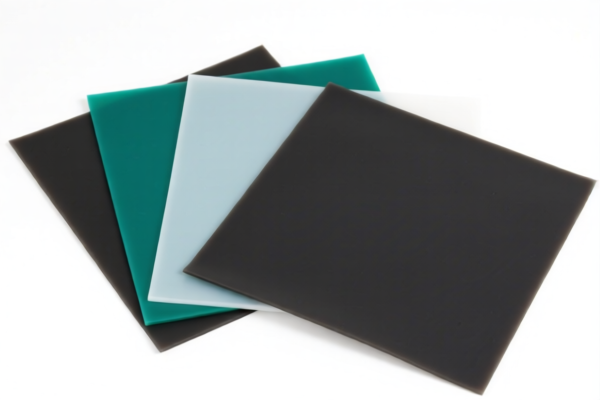
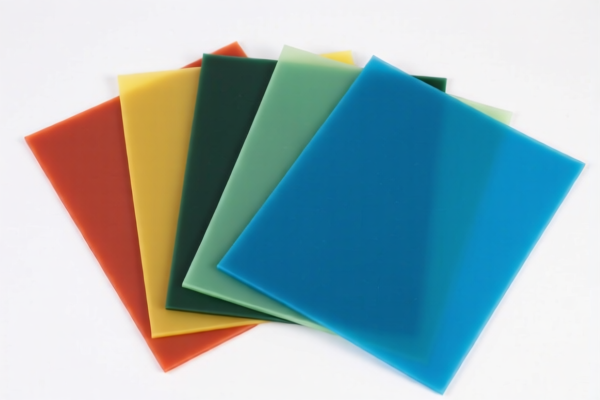
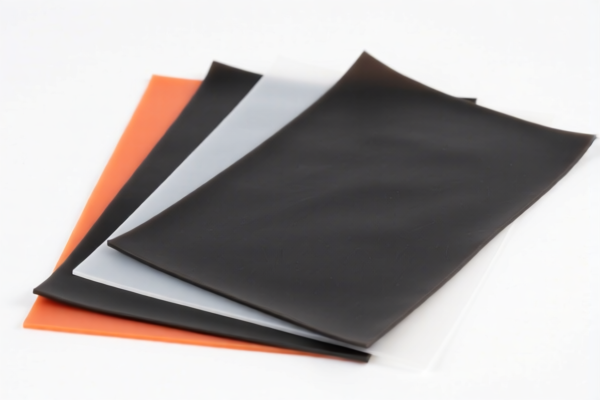
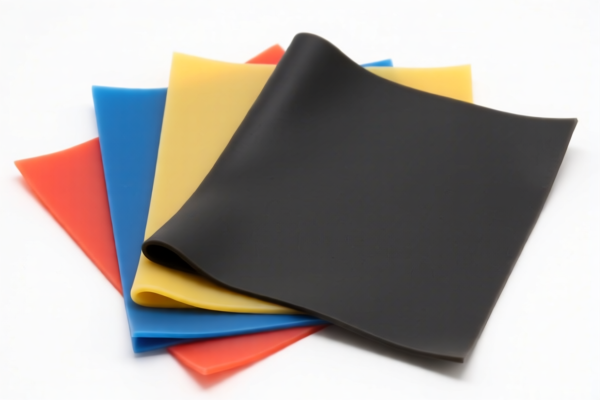
AI分析
🛡️ Non-Foamed Rubber Sheet (Food Grade)
🌐 HS Code Reference & Clearance Guide | 2026 Latest Tariff Analysis | Professional Entry Strategy
📌 I. Product Definition & Classification: What Exactly is "Non-Foamed Rubber Sheet"?
Non-foamed rubber sheets are solid, dense vulcanized rubber products. In international trade, despite being labeled as "Food Grade," they remain classified under Chapter 40 (Rubber and Articles Thereof) because their primary identity is "rubber," not "food ingredient." The "Food Grade" attribute only affects specific safety certifications (like FDA/EFSA) but does not change the HS Code classification to Chapter 19 (Foodstuffs) or Chapter 39 (Plastics).
Key Distinction: * Vulcanized Rubber: Rubber that has been cured (hardened) via heat/chemicals. → Chapter 40 * Non-Vulcanized Rubber: Raw, uncured rubber. → Chapter 40 (Different Subheading) * Food Grade: Refers to material safety compliance, not the tariff category.
⚠️ Critical Classification Point:
- If the sheet is vulcanized (hardened) and not hard rubber (e.g., ebonite), it falls under 4016.99.
- The specific sub-code depends on whether it is a generic "article" or a specific "closure."
📦 II. HS Code Classification Details (2026 Latest Tariff Authority)
Based on the provided data, here are the exact HS Codes applicable to Non-Foamed Rubber Sheets:
| HS Code | Product Description | Application Scenario | Is it an "Article"? |
|---|---|---|---|
4016.99.05.00 |
Other articles of vulcanized rubber other than hard rubber: Other: Household articles not elsewhere specified or included | Generic rubber sheets, gaskets, mats, sealing strips for household or general industrial use | ✅ Yes |
4016.99.15.00 |
Other articles of vulcanized rubber other than hard rubber: Other: Caps, lids, seals, stoppers and other closures | Specifically used as seals, gaskets, stoppers, or caps | ✅ Yes (Specific Purpose) |
🔍 重点提醒 (Key Reminder):
- "Food Grade" does not trigger a separate HS Code. It is a compliance attribute, not a classification rule.
- If your rubber sheet is intended to be used as a gasket or seal in a food processing machine,4016.99.15.00is more precise.
- If it is a general-purpose mat or sheet (even if food-safe),4016.99.05.00is the standard classification.
- Do not misclassify as "Plastic Sheet" (Chapter 39) unless it is non-rubber polymer.
💰 III. 2026 Latest Tariff Rate Breakdown (Including Surtaxes)
✅ Applicable Country: United States (US)
✅ Origin: China (CN) (Assumed based on common export context; verify if different)
✅ Effective Time: Current rates apply
🎯 1. 4016.99.05.00 —— Other Household/General Rubber Articles
| Item | Content |
|---|---|
| Basic Duty | 0.0% (ad valorem) |
| Section 301 Surcharge | 0.0% |
| IEEPA Surcharge | 0.0% |
| Total Tax Rate | 0.0% |
| Tax Calculation | CIF Value × 0% = $0 |
| De Minimis Eligibility | ✅ Yes (Usually eligible if value is low, but subject to inspection) |
| Legal Basis | HTSUS 4016.99.05.00 |
📌 Explanation:
- Rubber articles of vulcanized rubber (other than hard rubber) often enjoy zero basic duty.
- Unlike electronics or steel, general rubber sheets are not currently subject to the aggressive 25% or 10% Section 301/IEEPA surcharges in the provided data.
- Result: Very low tax burden, making this a cost-efficient import category.
🎯 2. 4016.99.15.00 —— Caps, Lids, Seals, Stoppers, Closures
| Item | Content |
|---|---|
| Basic Duty | 0.0% (ad valorem) |
| Section 301 Surcharge | 0.0% |
| IEEPA Surcharge | 0.0% |
| Total Tax Rate | 0.0% |
| Tax Calculation | CIF Value × 0% = $0 |
| De Minimis Eligibility | ✅ Yes |
| Legal Basis | HTSUS 4016.99.15.00 |
📌 Explanation:
- Specific rubber seals and closures also enjoy 0% total tax.
- This makes rubber food-grade seals highly competitive for food packaging and processing equipment importers.
🛠️ IV. Clearance Practical Advice (Real-World Pitfall Guide)
✅ 1. Required Documentation Checklist (Must-Have)
| Document | Required | Explanation |
|---|---|---|
| ✅ FDA Compliance Statement | ✔️ | Since it's "Food Grade," you must prove compliance with 21 CFR 177.2600 (Rubber articles intended for repeated use) or similar standards. |
| ✅ Material Safety Data Sheet (MSDS) | ✔️ | Standard for chemical products. |
| ✅ Certificate of Origin (CO) | ✔️ | To verify origin for duty calculation. |
| ✅ Commercial Invoice | ✔️ | Must clearly state: "Vulcanized Rubber Sheet, Non-Foamed, Food Grade Compliant" |
| ✅ Packing List | ✔️ | Detail weight, dimensions, and quantity. |
| ✅ Photos of Product & Label | ✔️ | Show "Food Grade" marking or FDA logo if applicable. |
✅ 2. Declaration Tips (Key Mnemonics)
🔥 “Rubber Sheet, Food Grade, HS 4016, Zero Duty!”
| Scenario | Correct Declaration | Wrong Approach |
|---|---|---|
| General Rubber Sheet | 4016.99.05.00Description: "Vulcanized rubber sheet, non-foamed, for food processing mat use" |
Mislabel as "Plastic Sheet" → Higher duty + Penalty |
| Rubber Gasket/Seal | 4016.99.15.00Description: "Vulcanized rubber seal, food grade, for bottle cap" |
Mislabel as "Hardware" → Potential duty + Delay |
| Raw (Non-Vulcanized) Rubber | Different HS Code (e.g., 4002/4003) | ❌ Do Not Use 4016 for raw rubber! |
| Hard Rubber (Ebonite) | HS 4002/4003 | ❌ Do Not Use 4016 for hard rubber! |
✅ 3. Special Considerations for "Food Grade"
| Issue | Handling Advice |
|---|---|
| FDA Inspection Risk | US Customs (CBP) may request FDA prior notice. Ensure your supplier has provided Prior Notice if applicable. |
| "Food Grade" Claim | Only use this term if you have valid lab tests (migration tests, heavy metal tests). False claims lead to seizure. |
| Packaging | Ensure packaging is clean and food-safe. Contaminated packaging can lead to refusal of entry. |
| Customs Bond | A continuous bond is recommended for regular imports to handle any potential FDA holdups smoothly. |
🌍 V. Global Market Clearance Comparison (2026 Latest)
| Country/Region | Recommended HS Code | Duty Rate | Certification Required | Remarks |
|---|---|---|---|---|
| 🇺🇸 USA | 4016.99.05.00 |
0% | FDA Compliance (21 CFR 177.2600) | Low tax, high safety scrutiny |
| 🇨🇳 China | 4016.99.05.00 |
~5-10% | CCC (if applicable) | Import duty applies |
| 🇪🇺 EU | 4016.99.05.00 |
0% (under GSP/Tariff Quotas) | LFGB (Germany), FDA Equivalent | Food contact materials strictly regulated |
| 🇯🇵 Japan | 4016.99.05.00 |
0% | Japan Food Safety Standards | Strict migration testing |
📌 Conclusion:
- USA offers 0% duty, but FDA compliance is mandatory.
- Failure to provide FDA documentation can result in detention and return, not just fines.
📌 VI. Common Mistakes & Pitfalls (Blood Lessons)
❌ Mistake 1: Classifying as "Plastic Sheet" (3920)
👉 Consequence: If it’s rubber, it’s misclassification → Penalty + Back Duties. Rubber and plastic have different chemical structures and duty rates.
❌ Mistake 2: Ignoring "Food Grade" Documentation
👉 Consequence: CBP may hold the shipment for FDA review → Demurrage Charges accrue daily at the port.
❌ Mistake 3: Using "Uncured Rubber" HS Code for "Vulcanized" Product
👉 Consequence: HS Code 4016 is for vulcanized rubber. If it’s uncured, it’s 4001 or 4002. Misclassification leads to corrected duty + interest.
❌ Mistake 4: Not specifying "Non-Foamed"
👉 Consequence: "Foamed" vs. "Non-Foamed" can affect density and usage. Be precise in description to avoid ambiguity.
✅ Correct Practice:
"Vulcanized Non-Foamed Rubber Sheet, Food Grade (FDA Compliant), For Use as Processing Mat, Model XYZ, Batch No. 123"
🎯 VII. Conclusion: Professional Clearance, Zero Tax, Safe Entry!
🎯 Remember the Mantra:
🔹 "Rubber Sheet, Vulcanized, HS 4016, Zero Tax!"
🔹 "Food Grade Means FDA, Not Different HS!"
🔹 "Declare Accurately, Clear Fast, Save Cost!"
📌 Pro Tip:
- Always keep lab test reports ready. US Customs may ask for proof of "Food Grade" status at random inspections.
- If importing in large volumes, consider applying for an Advance Ruling from CBP to lock in the HS Code and 0% duty status.
📣 Immediate Action:
📞 Contact your customs broker + Provide FDA Compliance Doc + Ship with Clear Labeling
🚀 Ensure Smooth Customs Clearance, Avoid FDA Holds, Maximize Profit!
✨ Professional clearance starts with accurate classification!
💼 Your cost savings are calculated to the cent!
用户评价
关于 HS 编码归类
协调制度(HS)是由世界海关组织(WCO)制定的国际贸易商品分类标准。全球 200 多个国家采用 HS 系统作为海关关税、贸易统计和进出口监管的基础。
每个 HS 编码遵循以下层级结构:
- 章(2 位)——商品大类(例如:第 84 章:机器和机械设备)
- 品目(4 位)——章内的更具体分类
- 子目(6 位)——国际通用细分,所有 WCO 成员国统一使用
- 本国细分(8-10 位)——各国自行扩展的细分编码,如美国 HTSUS 10 位编码
正确的 HS 编码归类对于顺利通关、准确缴纳关税和遵守贸易法规至关重要。错误归类可能导致海关延误、多缴关税或罚款。
从CN进口到US时,适用的关税税率可能包括:
- 最惠国(MFN)税率——适用于 WTO 成员国的标准关税税率
- 普通税率——适用于无贸易协定国家
- 贸易救济关税——附加关税,如 301 条款(反倾销)、232 条款(国家安全)或反补贴税
本页内容仅供参考。如需正式归类,请咨询当地海关或持牌报关代理。