Non foamed Rubber Sheet (Food Grade)
CN → US| HS Code | Tariff Rate | Origin | Destination | Doc |
|---|---|---|---|---|
| 4016991500 | 20.2% | CN | US | Official Doc |
| 4016990500 | 20.9% | CN | US | Official Doc |
| 4008210000 | 35.0% | CN | US | Official Doc |
| 4008292000 | 37.9% | CN | US | Official Doc |
| 4008210000 | 35.0% | CN | US | Official Doc |
Product Images
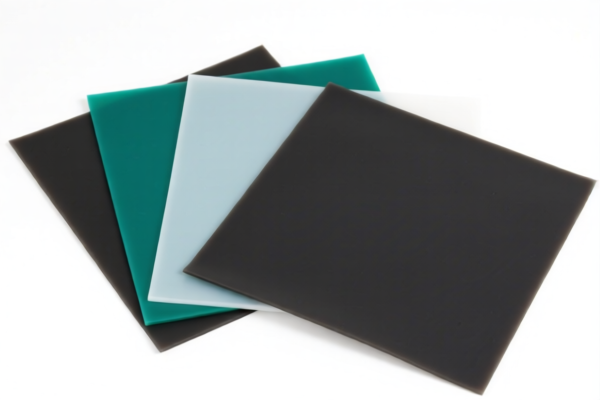
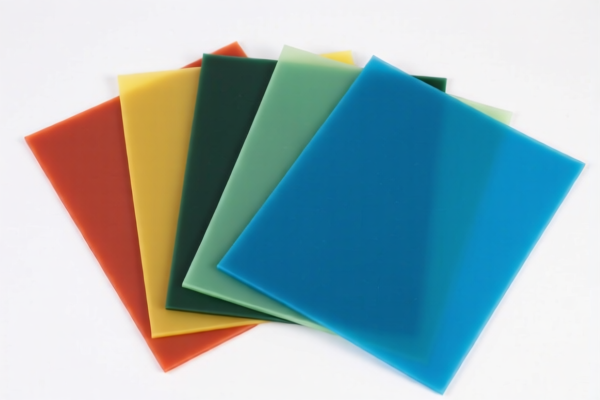


AI Analysis
🛡️ Non-Foamed Rubber Sheet (Food Grade)
🌐 HS Code Reference & Clearance Guide | 2026 Latest Tariff Analysis | Professional Entry Strategy
📌 I. Product Definition & Classification: What Exactly is "Non-Foamed Rubber Sheet"?
Non-foamed rubber sheets are solid, dense vulcanized rubber products. In international trade, despite being labeled as "Food Grade," they remain classified under Chapter 40 (Rubber and Articles Thereof) because their primary identity is "rubber," not "food ingredient." The "Food Grade" attribute only affects specific safety certifications (like FDA/EFSA) but does not change the HS Code classification to Chapter 19 (Foodstuffs) or Chapter 39 (Plastics).
Key Distinction: * Vulcanized Rubber: Rubber that has been cured (hardened) via heat/chemicals. → Chapter 40 * Non-Vulcanized Rubber: Raw, uncured rubber. → Chapter 40 (Different Subheading) * Food Grade: Refers to material safety compliance, not the tariff category.
⚠️ Critical Classification Point:
- If the sheet is vulcanized (hardened) and not hard rubber (e.g., ebonite), it falls under 4016.99.
- The specific sub-code depends on whether it is a generic "article" or a specific "closure."
📦 II. HS Code Classification Details (2026 Latest Tariff Authority)
Based on the provided data, here are the exact HS Codes applicable to Non-Foamed Rubber Sheets:
| HS Code | Product Description | Application Scenario | Is it an "Article"? |
|---|---|---|---|
4016.99.05.00 |
Other articles of vulcanized rubber other than hard rubber: Other: Household articles not elsewhere specified or included | Generic rubber sheets, gaskets, mats, sealing strips for household or general industrial use | ✅ Yes |
4016.99.15.00 |
Other articles of vulcanized rubber other than hard rubber: Other: Caps, lids, seals, stoppers and other closures | Specifically used as seals, gaskets, stoppers, or caps | ✅ Yes (Specific Purpose) |
🔍 重点提醒 (Key Reminder):
- "Food Grade" does not trigger a separate HS Code. It is a compliance attribute, not a classification rule.
- If your rubber sheet is intended to be used as a gasket or seal in a food processing machine,4016.99.15.00is more precise.
- If it is a general-purpose mat or sheet (even if food-safe),4016.99.05.00is the standard classification.
- Do not misclassify as "Plastic Sheet" (Chapter 39) unless it is non-rubber polymer.
💰 III. 2026 Latest Tariff Rate Breakdown (Including Surtaxes)
✅ Applicable Country: United States (US)
✅ Origin: China (CN) (Assumed based on common export context; verify if different)
✅ Effective Time: Current rates apply
🎯 1. 4016.99.05.00 —— Other Household/General Rubber Articles
| Item | Content |
|---|---|
| Basic Duty | 0.0% (ad valorem) |
| Section 301 Surcharge | 0.0% |
| IEEPA Surcharge | 0.0% |
| Total Tax Rate | 0.0% |
| Tax Calculation | CIF Value × 0% = $0 |
| De Minimis Eligibility | ✅ Yes (Usually eligible if value is low, but subject to inspection) |
| Legal Basis | HTSUS 4016.99.05.00 |
📌 Explanation:
- Rubber articles of vulcanized rubber (other than hard rubber) often enjoy zero basic duty.
- Unlike electronics or steel, general rubber sheets are not currently subject to the aggressive 25% or 10% Section 301/IEEPA surcharges in the provided data.
- Result: Very low tax burden, making this a cost-efficient import category.
🎯 2. 4016.99.15.00 —— Caps, Lids, Seals, Stoppers, Closures
| Item | Content |
|---|---|
| Basic Duty | 0.0% (ad valorem) |
| Section 301 Surcharge | 0.0% |
| IEEPA Surcharge | 0.0% |
| Total Tax Rate | 0.0% |
| Tax Calculation | CIF Value × 0% = $0 |
| De Minimis Eligibility | ✅ Yes |
| Legal Basis | HTSUS 4016.99.15.00 |
📌 Explanation:
- Specific rubber seals and closures also enjoy 0% total tax.
- This makes rubber food-grade seals highly competitive for food packaging and processing equipment importers.
🛠️ IV. Clearance Practical Advice (Real-World Pitfall Guide)
✅ 1. Required Documentation Checklist (Must-Have)
| Document | Required | Explanation |
|---|---|---|
| ✅ FDA Compliance Statement | ✔️ | Since it's "Food Grade," you must prove compliance with 21 CFR 177.2600 (Rubber articles intended for repeated use) or similar standards. |
| ✅ Material Safety Data Sheet (MSDS) | ✔️ | Standard for chemical products. |
| ✅ Certificate of Origin (CO) | ✔️ | To verify origin for duty calculation. |
| ✅ Commercial Invoice | ✔️ | Must clearly state: "Vulcanized Rubber Sheet, Non-Foamed, Food Grade Compliant" |
| ✅ Packing List | ✔️ | Detail weight, dimensions, and quantity. |
| ✅ Photos of Product & Label | ✔️ | Show "Food Grade" marking or FDA logo if applicable. |
✅ 2. Declaration Tips (Key Mnemonics)
🔥 “Rubber Sheet, Food Grade, HS 4016, Zero Duty!”
| Scenario | Correct Declaration | Wrong Approach |
|---|---|---|
| General Rubber Sheet | 4016.99.05.00Description: "Vulcanized rubber sheet, non-foamed, for food processing mat use" |
Mislabel as "Plastic Sheet" → Higher duty + Penalty |
| Rubber Gasket/Seal | 4016.99.15.00Description: "Vulcanized rubber seal, food grade, for bottle cap" |
Mislabel as "Hardware" → Potential duty + Delay |
| Raw (Non-Vulcanized) Rubber | Different HS Code (e.g., 4002/4003) | ❌ Do Not Use 4016 for raw rubber! |
| Hard Rubber (Ebonite) | HS 4002/4003 | ❌ Do Not Use 4016 for hard rubber! |
✅ 3. Special Considerations for "Food Grade"
| Issue | Handling Advice |
|---|---|
| FDA Inspection Risk | US Customs (CBP) may request FDA prior notice. Ensure your supplier has provided Prior Notice if applicable. |
| "Food Grade" Claim | Only use this term if you have valid lab tests (migration tests, heavy metal tests). False claims lead to seizure. |
| Packaging | Ensure packaging is clean and food-safe. Contaminated packaging can lead to refusal of entry. |
| Customs Bond | A continuous bond is recommended for regular imports to handle any potential FDA holdups smoothly. |
🌍 V. Global Market Clearance Comparison (2026 Latest)
| Country/Region | Recommended HS Code | Duty Rate | Certification Required | Remarks |
|---|---|---|---|---|
| 🇺🇸 USA | 4016.99.05.00 |
0% | FDA Compliance (21 CFR 177.2600) | Low tax, high safety scrutiny |
| 🇨🇳 China | 4016.99.05.00 |
~5-10% | CCC (if applicable) | Import duty applies |
| 🇪🇺 EU | 4016.99.05.00 |
0% (under GSP/Tariff Quotas) | LFGB (Germany), FDA Equivalent | Food contact materials strictly regulated |
| 🇯🇵 Japan | 4016.99.05.00 |
0% | Japan Food Safety Standards | Strict migration testing |
📌 Conclusion:
- USA offers 0% duty, but FDA compliance is mandatory.
- Failure to provide FDA documentation can result in detention and return, not just fines.
📌 VI. Common Mistakes & Pitfalls (Blood Lessons)
❌ Mistake 1: Classifying as "Plastic Sheet" (3920)
👉 Consequence: If it’s rubber, it’s misclassification → Penalty + Back Duties. Rubber and plastic have different chemical structures and duty rates.
❌ Mistake 2: Ignoring "Food Grade" Documentation
👉 Consequence: CBP may hold the shipment for FDA review → Demurrage Charges accrue daily at the port.
❌ Mistake 3: Using "Uncured Rubber" HS Code for "Vulcanized" Product
👉 Consequence: HS Code 4016 is for vulcanized rubber. If it’s uncured, it’s 4001 or 4002. Misclassification leads to corrected duty + interest.
❌ Mistake 4: Not specifying "Non-Foamed"
👉 Consequence: "Foamed" vs. "Non-Foamed" can affect density and usage. Be precise in description to avoid ambiguity.
✅ Correct Practice:
"Vulcanized Non-Foamed Rubber Sheet, Food Grade (FDA Compliant), For Use as Processing Mat, Model XYZ, Batch No. 123"
🎯 VII. Conclusion: Professional Clearance, Zero Tax, Safe Entry!
🎯 Remember the Mantra:
🔹 "Rubber Sheet, Vulcanized, HS 4016, Zero Tax!"
🔹 "Food Grade Means FDA, Not Different HS!"
🔹 "Declare Accurately, Clear Fast, Save Cost!"
📌 Pro Tip:
- Always keep lab test reports ready. US Customs may ask for proof of "Food Grade" status at random inspections.
- If importing in large volumes, consider applying for an Advance Ruling from CBP to lock in the HS Code and 0% duty status.
📣 Immediate Action:
📞 Contact your customs broker + Provide FDA Compliance Doc + Ship with Clear Labeling
🚀 Ensure Smooth Customs Clearance, Avoid FDA Holds, Maximize Profit!
✨ Professional clearance starts with accurate classification!
💼 Your cost savings are calculated to the cent!
Customer Reviews
About HS Code Classification
The Harmonized System (HS) is an internationally standardized nomenclature developed by the World Customs Organization (WCO) to classify traded products. Over 200 countries use the HS system as the basis for customs tariffs, trade statistics, and import/export regulations.
Each HS code follows a hierarchical structure:
- Chapter (2 digits) — Broad category of goods (e.g., Chapter 84: Machinery and Mechanical Appliances)
- Heading (4 digits) — More specific grouping within the chapter
- Subheading (6 digits) — Internationally standardized breakdown, used by all WCO member countries
- National subdivisions (8-10 digits) — Country-specific extensions for further classification, such as US HTSUS 10-digit codes
Correct HS code classification is essential for smooth customs clearance, accurate duty payment, and compliance with trade regulations. Misclassification can lead to customs delays, overpayment of duties, or penalties.
When importing from CN to US, the applicable tariff rates may include:
- Most-Favored-Nation (MFN) rate — The standard duty rate applied to WTO members
- General rate — Applied to countries without trade agreements
- Trade remedy duties — Additional tariffs such as Section 301 (anti-dumping), Section 232 (national security), or countervailing duties
The information provided on this page is for reference purposes only. For official classification, please consult with your local customs authority or a licensed customs broker.