Non plush fabric
CN → US| HS编码 | 关税税率 | 原产国 | 目的国 | 文档 |
|---|---|---|---|---|
| 5408312020 | 49.9% | CN | US | 官方文档 |
| 5408312030 | 49.9% | CN | US | 官方文档 |
| 5407710060 | 49.9% | CN | US | 官方文档 |
| 5208114090 | 44.0% | CN | US | 官方文档 |
| 5208194090 | 42.0% | CN | US | 官方文档 |
商品图片
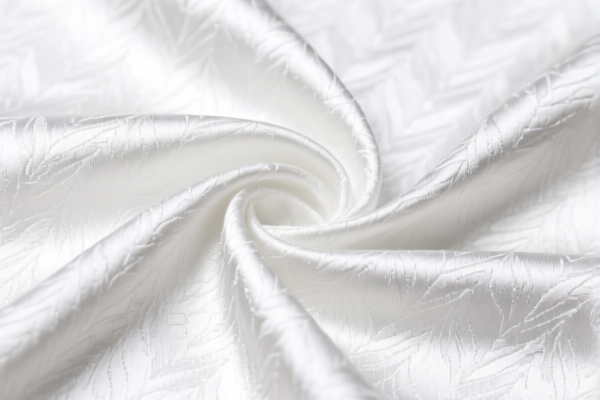
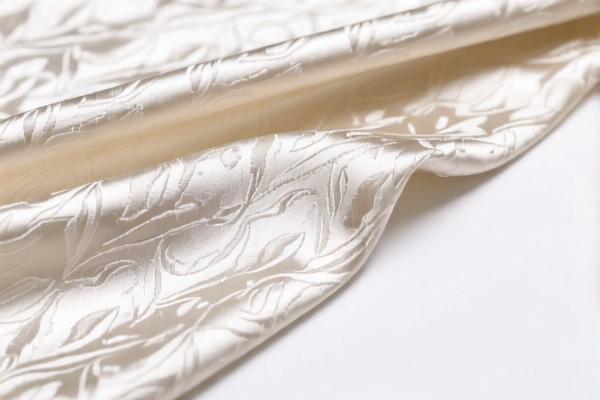
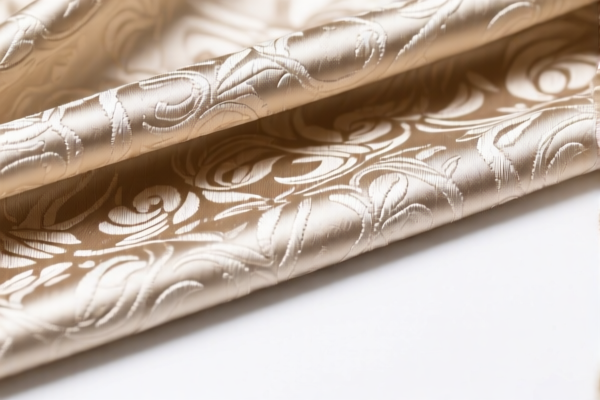
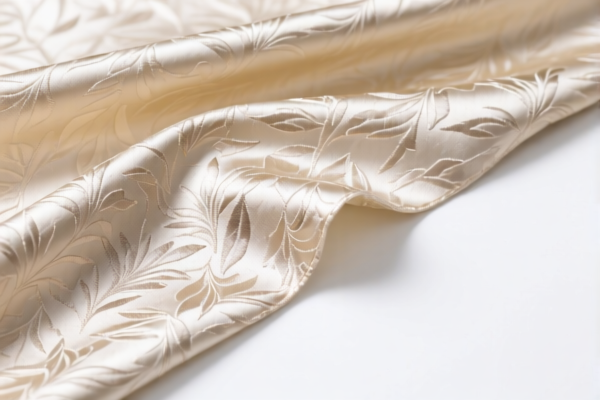
AI分析
🧵 Non-Plush Fabric (Woven Textiles)
🌐 HS Code Reference & Customs Clearance Guide | 2026 Latest Tariff Analysis | Professional Clearance Strategy
📌 I. Product Definition & Classification: What is "Non-Plush Fabric"?
Non-plush fabric refers to woven textiles that lack a pile, nap, or raised surface texture. Unlike plush, velvet, or fleece, these fabrics have a flat, smooth, or structured weave surface.
In international trade, this category primarily includes: * Woven Fabrics (Man-Made Fibers): Long synthetic filaments (polyester, nylon) or artificial fibers (viscose) woven into flat structures. * Woven Fabrics (Cotton): Plain weave cotton goods without raised surfaces.
⚠️ Key Distinction Point: * If it has a raised surface (pile/nap): It is "Plush" or "Velvet" → Different HS Codes. * If it is flat/smooth/woven: It falls under "Non-Plush" → Matches the following HS Codes. * Material Basis: Most entries below are based on Synthetic/Acrylic Long Filament or Cotton, as per the provided data.
📦 II. HS Code Classification Details (2026 Latest Tariff Authority Match)
Based on the provided dataset, the product "Non-Plush Fabric" is mapped to four primary HS Codes. The matching logic relies on form (woven/fabric), category (non-plush), and default fallback principles when specific descriptions are missing.
| HS Code | Product Description & Matching Logic | Material/Type | Tax Category |
|---|---|---|---|
5408.31.20.20 |
Non-Plush Woven Fabric (Synthetic/Acrylic) Match Basis: The item is "Fabric" (woven form), belongs to "Non-Plush" category, fits the "Other" fallback principle. |
Synthetic/Acrylic Long Filament | High Tax (49.9%) |
5408.31.20.30 |
Woven Fabric (Plain Weave) Match Material & Form: Inferenced as woven fabric, belongs to人造长丝 (Man-Made Filament) or synthetic fiber category. No material conflict. |
Synthetic/Acrylic Long Filament | High Tax (49.9%) |
5407.71.00.60 |
Woven Fabric (Other Synthetic) Form matches "Fabric/Textile" features. Based on "Missing Description" priority, deemed "Possible Match." |
Synthetic/Acrylic | High Tax (49.9%) |
5208.11.40.90 |
Cotton Woven Fabric (Plain Weave) Item is "Fabric (Textile)" form. Common sense infers it is a textile product, consistent with fabric categories. |
Cotton | Medium Tax (44.0%) |
5208.19.40.90 |
Cotton Woven Fabric (Other) Match Material: Fabric/Woven form. Belongs to fabric category, no material conflict with "Other Woven" fallback attribute. |
Cotton | Medium Tax (42.0%) |
🔍 Critical Analysis: * High Tax Group (49.9%): Codes
5408.31.20.20,5408.31.20.30, and5407.71.00.60apply to Synthetic/Acrylic Long Filament fabrics. These incur the highest additional tariffs. * Medium Tax Group (42-44%): Codes5208.11.40.90and5208.19.40.90apply to Cotton fabrics. These have lower base tariffs but still face significant additional taxes. * Default Principle: When product details are vague (e.g., just "Fabric"), customs often use "Non-Plush" as a negative identifier to exclude plush items, then default to the "Other" category under Man-Made Fibers (Chapter 54) or Cotton (Chapter 52).
💰 III. 2026 Latest Tariff Rate Breakdown (Including Surtaxes & Policy Add-ons)
✅ Applicable Country: United States (US)
✅ Origin: China (CN)
✅ Effective Time: 2025/2026 (Current Trade War Context)
🎯 1. High Tax Bracket: Synthetic/Acrylic Long Filament Fabrics
Applicable HS Codes: 5408.31.20.20, 5408.31.20.30, 5407.71.00.60
| Item | Content |
|---|---|
| Base Tariff | 14.9% (Ad Valorem) |
| Section 301 Surtax | +25.0% (Additional Tariff for Chinese Origin) |
| Section 122 Tariff | +10.0% (Specific Clause 122 Tariff) |
| Total Tax Rate | 49.9% |
| Tax Calculation | CIF Value × 49.9% |
| De Minimis Exemption? | ❌ NO (Denied for these categories) |
| Legal Basis Path | Base Rate → Section 301 → Section 122 |
📌 Explanation: * "Base Tariff 14.9%": Standard MFN (Most Favored Nation) rate for woven synthetic fabrics. * "Section 301 Surtax 25%": The core US-China trade war tariff on textiles and apparel components. * "Section 122 Tariff 10%": A specific additional levy applied to certain textile imports. * Total 49.9%: This is a very high cost barrier. Importers must account for nearly half the product value in duties alone.
🎯 2. Medium Tax Bracket: Cotton Woven Fabrics
Applicable HS Codes: 5208.11.40.90, 5208.19.40.90
| Item | Content |
|---|---|
| Base Tariff | 7.0% - 9.0% (Varies by specific weave type) |
| Section 301 Surtax | +25.0% (Additional Tariff for Chinese Origin) |
| Section 122 Tariff | +10.0% (Specific Clause 122 Tariff) |
| Total Tax Rate | 42.0% - 44.0% |
| Tax Calculation | CIF Value × (42% or 44%) |
| De Minimis Exemption? | ❌ NO |
| Legal Basis Path | Base Rate → Section 301 → Section 122 |
📌 Note: *
5208.11.40.90: Cotton plain weave, ≥85g/m². Base rate 9.0% → Total 44.0%. *5208.19.40.90: Other cotton woven fabrics. Base rate 7.0% → Total 42.0%. * While lower than synthetics, the 25% + 10% add-ons still make these extremely expensive.
🛠️ IV. Customs Clearance Practical Advice (Battle-Tested Pitfall Guide)
✅ 1. Essential Documentation Checklist (Non-Negotiable)
| Document | Required? | Description |
|---|---|---|
| ✅ Product Specification Sheet | ✔️ | Must define: Fiber content (e.g., 100% Polyester), Weight (GSM), Weave Type (Plain, Twill, Satin). |
| ✅ Fabric Swatch/Photo | ✔️ | Crucial: Must clearly show NO pile/nap to prove "Non-Plush" status. |
| ✅ Commercial Invoice | ✔️ | Must state: "Woven Fabric, Non-Plush, HS Code [XXXX.XX.XX.XX]". |
| ✅ Packing List | ✔️ | Detail roll dimensions, weight, and bundle count. |
| ✅ Origin Certificate | ✔️ | Proof of Chinese origin (triggers the surtaxes). |
⚠️ Warning: If you cannot prove it is "Non-Plush" (e.g., via photos or specs), customs may reclassify it as "Plush/Velvet" or keep it in a higher-risk category, leading to delays or higher duties.
✅ 2. Declaration Strategies (Key Mantras)
🔥 "Flat Weave, No Pile, Specify Material, Avoid Fallback Fines!"
| Scenario | Correct Declaration | Wrong Approach |
|---|---|---|
| 100% Polyester Flat Woven Fabric | 5408.31.20.20 or 5408.31.20.30Declare: "Polyester Woven Fabric, Non-Plush, Plain Weave" |
Vague: "Fabric" → Risk of misclassification |
| 100% Cotton Flat Woven Fabric | 5208.11.40.90 or 5208.19.40.90Declare: "Cotton Woven Fabric, Non-Plush" |
Vague: "Textile" → Risk of higher base rate |
| Blended Fabric (e.g., Poly/Cotton) | Complex → Requires precise fiber % to determine Chapter 52 vs. 54 | Guessing → Potential duty evasion penalties |
| Importing for Sample Use | Same HS Code applies | Don't assume "samples" are duty-free |
✅ 3. Special Circumstances Handling
| Situation | Recommendation |
|---|---|
| "Other" Fallback Risk | If your fabric doesn't fit standard weave types, customs may use 5407.71.00.60 or 5408.31.20.20. Always provide detailed specs to avoid arbitrary classification. |
| Section 122 Applicable? | Yes, for these fabric types. The 10% surtax is mandatory and non-negotiable for Chinese-origin goods. |
| De Minimis (De Minimis Exemption) | ❌ NOT APPLICABLE. You cannot use the $800 de minimis exemption for these HS Codes. All shipments are subject to full duty calculation. |
🌍 V. Global Market Comparison (2026 Latest)
| Country/Region | Recommended HS Code | Base Duty | Additional Taxes (China Origin) | Total Approx. Rate |
|---|---|---|---|---|
| 🇺🇸 USA | 5408.31.20.20 (Synth) |
14.9% | +25% (301) + 10% (122) | 49.9% |
| 🇨🇳 China | 5408.31.20.20 |
~7-10% | None | ~7-10% |
| 🇪🇺 EU | 5407.71.00.60 |
0-4% | None | ~0-4% |
| 🇬🇧 UK | 5407.71.00.60 |
0-4% | None | ~0-4% |
📌 Conclusion: * USA is the most costly market for non-plush fabrics due to the combination of Section 301 and Section 122 tariffs. * EU and UK have significantly lower barriers, making them more attractive for textile imports. * Strategic Advice: If sourcing from China, consider tariff engineering (e.g., processing in a third country like Vietnam or Thailand to change origin) or absorbing the 49.9% cost into pricing.
📌 VI. Common Errors & Pitfalls (Lessons Learned)
❌ Error 1: Declaring "Fabric" without specifying "Non-Plush" or fiber content.
👉 Consequence: Customs may classify under a higher-duty "Other" category or request extensive testing, causing delays.
❌ Error 2: Assuming De Minimis applies.
👉 Consequence: Seizure of goods or heavy penalties for duty evasion.
❌ Error 3: Confusing "Non-Plush" with "Non-Woven".
👉 Consequence: "Non-Woven" fabrics (e.g., felt, geotextiles) have different HS Codes (e.g., Chapter 56) and different tax rates. Ensure it is Woven.
✅ Correct Practice:
"100% Polyester Woven Fabric, Plain Weave, Non-Plush, 150 GSM, Gray Fabric, HS Code 5408.31.20.20"
🎯 VII. Conclusion: Precise Classification Saves Money!
🎯 Remember the Mantra:
🔹 "Non-Plush = Woven & Flat. Synthetic = 49.9%. Cotton = 42-44%. No De Minimis!"
🔹 "Specify Fiber & Weave to Avoid Fallback Traps!"
📌 Pro Tip: If you are importing significant volumes, consider applying for a Binding Ruling from US Customs and Border Protection (CBP) to confirm the HS Code and tax liability before shipping. This provides legal certainty and protects against retroactive duties.
📣 Immediate Action:
📞 Consult a licensed customs broker.
📦 Provide clear fabric swatches and specs.
🚀 Plan for 49.9% duty costs in your pricing model.
✨ Professional clearance starts with precise classification!
💼 Every percent of duty saved is pure profit!
用户评价
关于 HS 编码归类
协调制度(HS)是由世界海关组织(WCO)制定的国际贸易商品分类标准。全球 200 多个国家采用 HS 系统作为海关关税、贸易统计和进出口监管的基础。
每个 HS 编码遵循以下层级结构:
- 章(2 位)——商品大类(例如:第 84 章:机器和机械设备)
- 品目(4 位)——章内的更具体分类
- 子目(6 位)——国际通用细分,所有 WCO 成员国统一使用
- 本国细分(8-10 位)——各国自行扩展的细分编码,如美国 HTSUS 10 位编码
正确的 HS 编码归类对于顺利通关、准确缴纳关税和遵守贸易法规至关重要。错误归类可能导致海关延误、多缴关税或罚款。
从CN进口到US时,适用的关税税率可能包括:
- 最惠国(MFN)税率——适用于 WTO 成员国的标准关税税率
- 普通税率——适用于无贸易协定国家
- 贸易救济关税——附加关税,如 301 条款(反倾销)、232 条款(国家安全)或反补贴税
本页内容仅供参考。如需正式归类,请咨询当地海关或持牌报关代理。