Non plush fabric
CN → US| HS Code | Tariff Rate | Origin | Destination | Doc |
|---|---|---|---|---|
| 5408312020 | 49.9% | CN | US | Official Doc |
| 5408312030 | 49.9% | CN | US | Official Doc |
| 5407710060 | 49.9% | CN | US | Official Doc |
| 5208114090 | 44.0% | CN | US | Official Doc |
| 5208194090 | 42.0% | CN | US | Official Doc |
Product Images
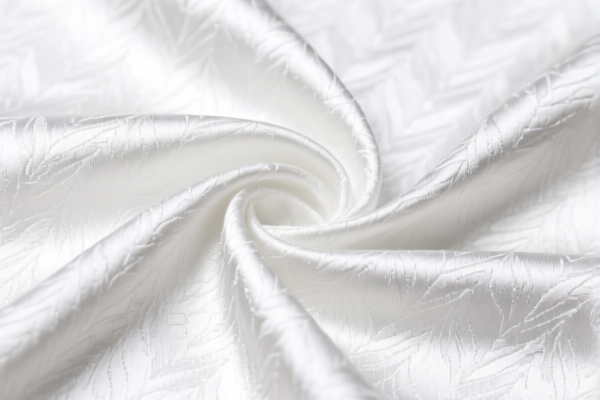
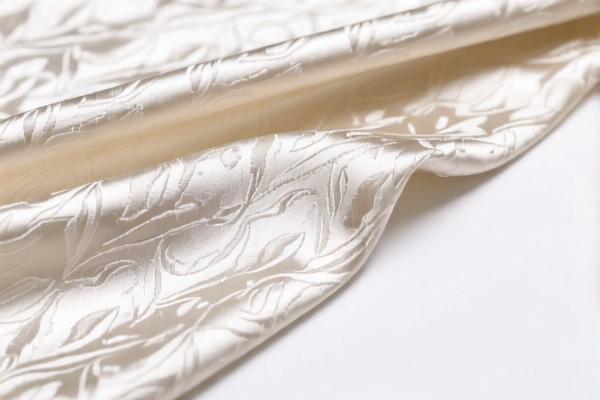
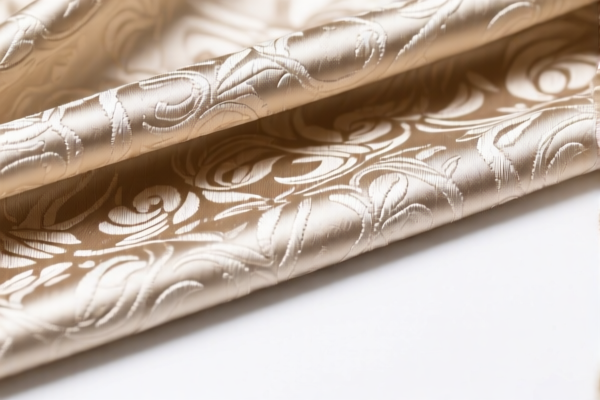
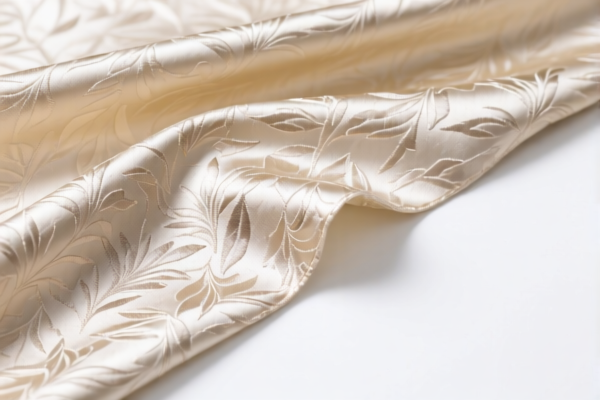
AI Analysis
🧵 Non-Plush Fabric (Woven Textiles)
🌐 HS Code Reference & Customs Clearance Guide | 2026 Latest Tariff Analysis | Professional Clearance Strategy
📌 I. Product Definition & Classification: What is "Non-Plush Fabric"?
Non-plush fabric refers to woven textiles that lack a pile, nap, or raised surface texture. Unlike plush, velvet, or fleece, these fabrics have a flat, smooth, or structured weave surface.
In international trade, this category primarily includes: * Woven Fabrics (Man-Made Fibers): Long synthetic filaments (polyester, nylon) or artificial fibers (viscose) woven into flat structures. * Woven Fabrics (Cotton): Plain weave cotton goods without raised surfaces.
⚠️ Key Distinction Point: * If it has a raised surface (pile/nap): It is "Plush" or "Velvet" → Different HS Codes. * If it is flat/smooth/woven: It falls under "Non-Plush" → Matches the following HS Codes. * Material Basis: Most entries below are based on Synthetic/Acrylic Long Filament or Cotton, as per the provided data.
📦 II. HS Code Classification Details (2026 Latest Tariff Authority Match)
Based on the provided dataset, the product "Non-Plush Fabric" is mapped to four primary HS Codes. The matching logic relies on form (woven/fabric), category (non-plush), and default fallback principles when specific descriptions are missing.
| HS Code | Product Description & Matching Logic | Material/Type | Tax Category |
|---|---|---|---|
5408.31.20.20 |
Non-Plush Woven Fabric (Synthetic/Acrylic) Match Basis: The item is "Fabric" (woven form), belongs to "Non-Plush" category, fits the "Other" fallback principle. |
Synthetic/Acrylic Long Filament | High Tax (49.9%) |
5408.31.20.30 |
Woven Fabric (Plain Weave) Match Material & Form: Inferenced as woven fabric, belongs to人造长丝 (Man-Made Filament) or synthetic fiber category. No material conflict. |
Synthetic/Acrylic Long Filament | High Tax (49.9%) |
5407.71.00.60 |
Woven Fabric (Other Synthetic) Form matches "Fabric/Textile" features. Based on "Missing Description" priority, deemed "Possible Match." |
Synthetic/Acrylic | High Tax (49.9%) |
5208.11.40.90 |
Cotton Woven Fabric (Plain Weave) Item is "Fabric (Textile)" form. Common sense infers it is a textile product, consistent with fabric categories. |
Cotton | Medium Tax (44.0%) |
5208.19.40.90 |
Cotton Woven Fabric (Other) Match Material: Fabric/Woven form. Belongs to fabric category, no material conflict with "Other Woven" fallback attribute. |
Cotton | Medium Tax (42.0%) |
🔍 Critical Analysis: * High Tax Group (49.9%): Codes
5408.31.20.20,5408.31.20.30, and5407.71.00.60apply to Synthetic/Acrylic Long Filament fabrics. These incur the highest additional tariffs. * Medium Tax Group (42-44%): Codes5208.11.40.90and5208.19.40.90apply to Cotton fabrics. These have lower base tariffs but still face significant additional taxes. * Default Principle: When product details are vague (e.g., just "Fabric"), customs often use "Non-Plush" as a negative identifier to exclude plush items, then default to the "Other" category under Man-Made Fibers (Chapter 54) or Cotton (Chapter 52).
💰 III. 2026 Latest Tariff Rate Breakdown (Including Surtaxes & Policy Add-ons)
✅ Applicable Country: United States (US)
✅ Origin: China (CN)
✅ Effective Time: 2025/2026 (Current Trade War Context)
🎯 1. High Tax Bracket: Synthetic/Acrylic Long Filament Fabrics
Applicable HS Codes: 5408.31.20.20, 5408.31.20.30, 5407.71.00.60
| Item | Content |
|---|---|
| Base Tariff | 14.9% (Ad Valorem) |
| Section 301 Surtax | +25.0% (Additional Tariff for Chinese Origin) |
| Section 122 Tariff | +10.0% (Specific Clause 122 Tariff) |
| Total Tax Rate | 49.9% |
| Tax Calculation | CIF Value × 49.9% |
| De Minimis Exemption? | ❌ NO (Denied for these categories) |
| Legal Basis Path | Base Rate → Section 301 → Section 122 |
📌 Explanation: * "Base Tariff 14.9%": Standard MFN (Most Favored Nation) rate for woven synthetic fabrics. * "Section 301 Surtax 25%": The core US-China trade war tariff on textiles and apparel components. * "Section 122 Tariff 10%": A specific additional levy applied to certain textile imports. * Total 49.9%: This is a very high cost barrier. Importers must account for nearly half the product value in duties alone.
🎯 2. Medium Tax Bracket: Cotton Woven Fabrics
Applicable HS Codes: 5208.11.40.90, 5208.19.40.90
| Item | Content |
|---|---|
| Base Tariff | 7.0% - 9.0% (Varies by specific weave type) |
| Section 301 Surtax | +25.0% (Additional Tariff for Chinese Origin) |
| Section 122 Tariff | +10.0% (Specific Clause 122 Tariff) |
| Total Tax Rate | 42.0% - 44.0% |
| Tax Calculation | CIF Value × (42% or 44%) |
| De Minimis Exemption? | ❌ NO |
| Legal Basis Path | Base Rate → Section 301 → Section 122 |
📌 Note: *
5208.11.40.90: Cotton plain weave, ≥85g/m². Base rate 9.0% → Total 44.0%. *5208.19.40.90: Other cotton woven fabrics. Base rate 7.0% → Total 42.0%. * While lower than synthetics, the 25% + 10% add-ons still make these extremely expensive.
🛠️ IV. Customs Clearance Practical Advice (Battle-Tested Pitfall Guide)
✅ 1. Essential Documentation Checklist (Non-Negotiable)
| Document | Required? | Description |
|---|---|---|
| ✅ Product Specification Sheet | ✔️ | Must define: Fiber content (e.g., 100% Polyester), Weight (GSM), Weave Type (Plain, Twill, Satin). |
| ✅ Fabric Swatch/Photo | ✔️ | Crucial: Must clearly show NO pile/nap to prove "Non-Plush" status. |
| ✅ Commercial Invoice | ✔️ | Must state: "Woven Fabric, Non-Plush, HS Code [XXXX.XX.XX.XX]". |
| ✅ Packing List | ✔️ | Detail roll dimensions, weight, and bundle count. |
| ✅ Origin Certificate | ✔️ | Proof of Chinese origin (triggers the surtaxes). |
⚠️ Warning: If you cannot prove it is "Non-Plush" (e.g., via photos or specs), customs may reclassify it as "Plush/Velvet" or keep it in a higher-risk category, leading to delays or higher duties.
✅ 2. Declaration Strategies (Key Mantras)
🔥 "Flat Weave, No Pile, Specify Material, Avoid Fallback Fines!"
| Scenario | Correct Declaration | Wrong Approach |
|---|---|---|
| 100% Polyester Flat Woven Fabric | 5408.31.20.20 or 5408.31.20.30Declare: "Polyester Woven Fabric, Non-Plush, Plain Weave" |
Vague: "Fabric" → Risk of misclassification |
| 100% Cotton Flat Woven Fabric | 5208.11.40.90 or 5208.19.40.90Declare: "Cotton Woven Fabric, Non-Plush" |
Vague: "Textile" → Risk of higher base rate |
| Blended Fabric (e.g., Poly/Cotton) | Complex → Requires precise fiber % to determine Chapter 52 vs. 54 | Guessing → Potential duty evasion penalties |
| Importing for Sample Use | Same HS Code applies | Don't assume "samples" are duty-free |
✅ 3. Special Circumstances Handling
| Situation | Recommendation |
|---|---|
| "Other" Fallback Risk | If your fabric doesn't fit standard weave types, customs may use 5407.71.00.60 or 5408.31.20.20. Always provide detailed specs to avoid arbitrary classification. |
| Section 122 Applicable? | Yes, for these fabric types. The 10% surtax is mandatory and non-negotiable for Chinese-origin goods. |
| De Minimis (De Minimis Exemption) | ❌ NOT APPLICABLE. You cannot use the $800 de minimis exemption for these HS Codes. All shipments are subject to full duty calculation. |
🌍 V. Global Market Comparison (2026 Latest)
| Country/Region | Recommended HS Code | Base Duty | Additional Taxes (China Origin) | Total Approx. Rate |
|---|---|---|---|---|
| 🇺🇸 USA | 5408.31.20.20 (Synth) |
14.9% | +25% (301) + 10% (122) | 49.9% |
| 🇨🇳 China | 5408.31.20.20 |
~7-10% | None | ~7-10% |
| 🇪🇺 EU | 5407.71.00.60 |
0-4% | None | ~0-4% |
| 🇬🇧 UK | 5407.71.00.60 |
0-4% | None | ~0-4% |
📌 Conclusion: * USA is the most costly market for non-plush fabrics due to the combination of Section 301 and Section 122 tariffs. * EU and UK have significantly lower barriers, making them more attractive for textile imports. * Strategic Advice: If sourcing from China, consider tariff engineering (e.g., processing in a third country like Vietnam or Thailand to change origin) or absorbing the 49.9% cost into pricing.
📌 VI. Common Errors & Pitfalls (Lessons Learned)
❌ Error 1: Declaring "Fabric" without specifying "Non-Plush" or fiber content.
👉 Consequence: Customs may classify under a higher-duty "Other" category or request extensive testing, causing delays.
❌ Error 2: Assuming De Minimis applies.
👉 Consequence: Seizure of goods or heavy penalties for duty evasion.
❌ Error 3: Confusing "Non-Plush" with "Non-Woven".
👉 Consequence: "Non-Woven" fabrics (e.g., felt, geotextiles) have different HS Codes (e.g., Chapter 56) and different tax rates. Ensure it is Woven.
✅ Correct Practice:
"100% Polyester Woven Fabric, Plain Weave, Non-Plush, 150 GSM, Gray Fabric, HS Code 5408.31.20.20"
🎯 VII. Conclusion: Precise Classification Saves Money!
🎯 Remember the Mantra:
🔹 "Non-Plush = Woven & Flat. Synthetic = 49.9%. Cotton = 42-44%. No De Minimis!"
🔹 "Specify Fiber & Weave to Avoid Fallback Traps!"
📌 Pro Tip: If you are importing significant volumes, consider applying for a Binding Ruling from US Customs and Border Protection (CBP) to confirm the HS Code and tax liability before shipping. This provides legal certainty and protects against retroactive duties.
📣 Immediate Action:
📞 Consult a licensed customs broker.
📦 Provide clear fabric swatches and specs.
🚀 Plan for 49.9% duty costs in your pricing model.
✨ Professional clearance starts with precise classification!
💼 Every percent of duty saved is pure profit!
Customer Reviews
About HS Code Classification
The Harmonized System (HS) is an internationally standardized nomenclature developed by the World Customs Organization (WCO) to classify traded products. Over 200 countries use the HS system as the basis for customs tariffs, trade statistics, and import/export regulations.
Each HS code follows a hierarchical structure:
- Chapter (2 digits) — Broad category of goods (e.g., Chapter 84: Machinery and Mechanical Appliances)
- Heading (4 digits) — More specific grouping within the chapter
- Subheading (6 digits) — Internationally standardized breakdown, used by all WCO member countries
- National subdivisions (8-10 digits) — Country-specific extensions for further classification, such as US HTSUS 10-digit codes
Correct HS code classification is essential for smooth customs clearance, accurate duty payment, and compliance with trade regulations. Misclassification can lead to customs delays, overpayment of duties, or penalties.
When importing from CN to US, the applicable tariff rates may include:
- Most-Favored-Nation (MFN) rate — The standard duty rate applied to WTO members
- General rate — Applied to countries without trade agreements
- Trade remedy duties — Additional tariffs such as Section 301 (anti-dumping), Section 232 (national security), or countervailing duties
The information provided on this page is for reference purposes only. For official classification, please consult with your local customs authority or a licensed customs broker.