Nylon Blended Fabric (High Count and High Density)
CN → US| HS编码 | 关税税率 | 原产国 | 目的国 | 文档 |
|---|---|---|---|---|
| 5407431000 | 0.0% | CN | US | 官方文档 |
| 5407731000 | 35.0% | CN | US | 官方文档 |
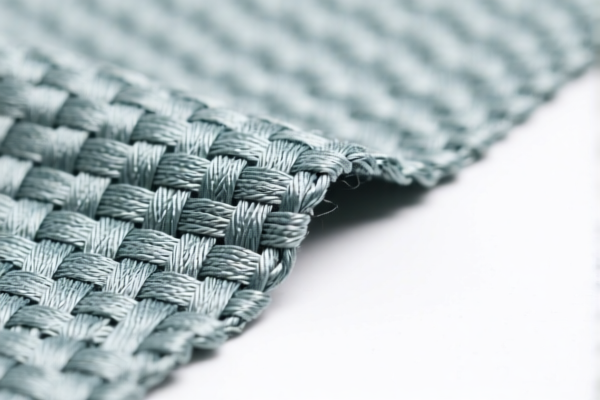
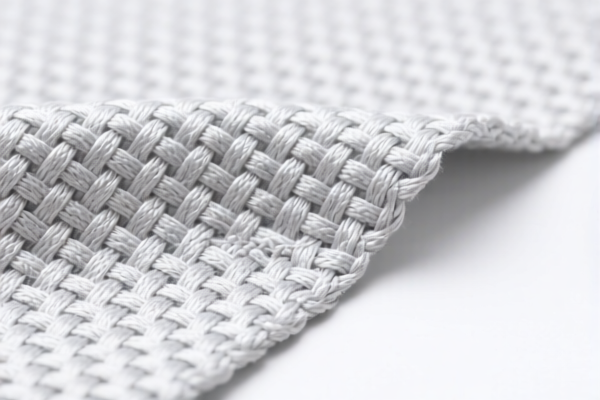
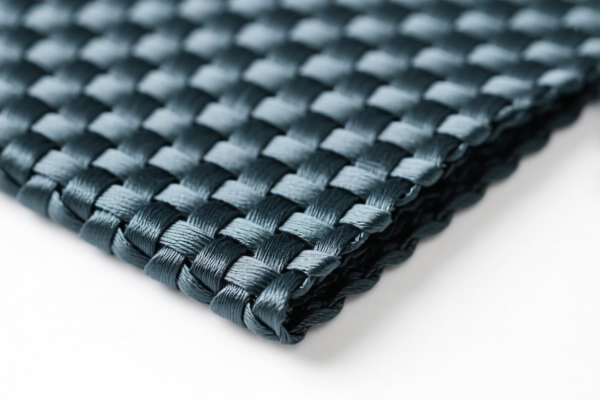
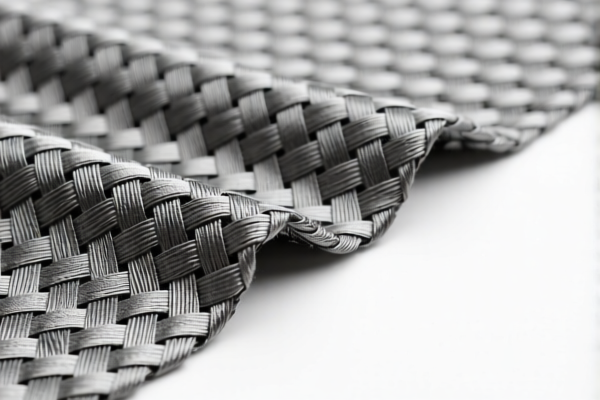
商品图片
AI分析
🧵 Nylon Blended Fabric (High Count & High Density) – Woven Synthetic Filament Yarns
🌐 HS Code Reference & Customs Clearance Guide | 2026 Latest Tariff Analysis | Professional Clearance Strategy
📌 I. Product Definition & Classification: Do You Really Understand "Nylon Blended Fabric"?
Nylon Blended Fabric, specifically referring to woven fabrics of synthetic filament yarn with high thread count and density, is widely used in apparel, sportswear, outdoor gear, and technical textiles. In international trade, classification depends on two critical factors:
1. Composition: Percentage of nylon/polyamide filaments vs. other synthetics.
2. Thread Count: Warp and filling threads per cm.
⚠️ Key Distinction:
- If ≥85% nylon/polyamide filaments + specific thread count ranges →归入 5407.43.10.00 or 5407.73.10.00
- If <85% nylon but still synthetic filament dominant → Different HS codes (not covered in )
📦 II. HS Code Classification Details (2026 Latest Tariff Authority Comparison)
| HS Code | Product Description | Applicable Scenario | Nylon/Polyamide Content | Thread Count (Warp x Filling per cm) |
|---|---|---|---|---|
5407.43.10.00 |
Woven fabrics of synthetic filament yarn, containing ≥85% by weight of nylon/polyamide filaments: Of yarns of different colors, thread count >69 but ≤142 warp, >31 but ≤71 filling | High-density nylon fabrics, colored yarns, technical textiles | ✅ ≥85% | Warp: 70–142 |
5407.73.10.00 |
Woven fabrics of synthetic filament yarn, containing ≥85% by weight of other synthetic filaments (non-nylon/polyamide): Of yarns of different colors, same thread count range | Synthetic fabrics dominated by polyester, acrylic, etc., not nylon/polyamide | ❌ <85% nylon/polyamide | Warp: 70–142 |
🔍 Critical Reminder:
- Both codes require yarns of different colors (multi-color woven patterns).
- Thread count must be calculated treating multiple/folded/cabled yarns as single threads.
- If the fabric contains <85% synthetic filaments or uses solid-colored yarns, it falls under different HS codes (e.g., 5407.51, 5407.61), which are not included in .
💰 III. 2026 Latest Tariff Rate Breakdown (Including Additional Taxes & Policy Surcharges)
✅ Applicable Country: United States (US)
✅ Origin: China (CN)
✅ Effective Date: From November 10, 2025 (and subsequent imports)
🎯 1. 5407.43.10.00 —— Nylon/Polyamide-Dominated Woven Fabric (Colored Yarns)
| Item | Detail |
|---|---|
| Base Tariff Rate | 0% (ad valorem) |
| Section 301 Additional Tariff | 0% |
| IEEPA Additional Tariff | 0% |
| Total Tariff Rate | 0.0% |
| Tax Calculation | CIF Value × 0.0% |
| De Minimis Exemption Eligible | ✅ Yes (if under $800 per shipment) |
| Legal Basis Path | HTSUS:5407.43.10.00 → No Section 301 or IEEPA surcharge applies |
📌 Explanation:
- This specific subheading does not attract the 25% Section 301 tariff or 10% IEEPA surcharge typically applied to Chinese synthetic fabrics.
- Zero total tax makes it highly favorable for importers.
- Eligible for de minimis clearance under $800, simplifying small-shipment logistics.
🎯 2. 5407.73.10.00 —— Other Synthetic Filament Woven Fabric (Colored Yarns)
| Item | Detail |
|---|---|
| Base Tariff Rate | 0% (ad valorem) |
| Section 301 Additional Tariff | +25% |
| IEEPA Additional Tariff | +0% |
| Total Tariff Rate | 25.0% |
| Tax Calculation | CIF Value × 25% |
| De Minimis Exemption Eligible | ❌ No (denied under current policy) |
| Legal Basis Path | HTSUS:5407.73.10.00 → Footnote 9903.08.01 (Section 301) |
📌 Note:
- Despite having 0% base tariff, this code attracts a 25% Section 301 additional tariff for goods originating from China.
- Total cost impact: 25% on CIF value.
- Not eligible for de minimis exemption, meaning even small shipments require formal customs declaration and tax payment.
🛠️ IV. Customs Clearance Practical Advice (Battle-Tested Pitfall Avoidance Guide)
✅ 1. Required Documentation Checklist (None Can Be Omitted)
| Document | Mandatory | Description |
|---|---|---|
| ✅ Product Specification Sheet | ✔️ | Includes fabric weight (gsm), thread count, weave type, fiber composition breakdown (%) |
| ✅ Laboratory Test Report | ✔️ | Verified fiber content (e.g., nylon 90%, polyester 10%) via accredited lab (SGS, Intertek) |
| ✅ Product Photos | ✔️ | Clear images showing woven pattern, color variations, selvedge info |
| ✅ Commercial Invoice | ✔️ | Must explicitly state “Woven Fabric of Synthetic Filament Yarn, HS Code XXXX” |
| ✅ Packing List | ✔️ | Shows quantity, weight, dimensions per roll/bale |
| ✅ Certificate of Origin (CO) | ✔️ | If applicable for preferential treatment (not applicable for CN origin here) |
✅ 2. Declaration Tips (Key Mantras)
🔥 “Accurate Composition + Correct Thread Count = Right HS Code = Lower Tax!”
| Scenario | Correct Declaration | Mistake to Avoid |
|---|---|---|
| Fabric is ≥85% nylon/polyamide, colored yarns, thread count in range | 5407.43.10.00 → 0% tax |
Misreporting as 5407.73.10.00 → 25% tax |
| Fabric is <85% nylon, but still synthetic filament | Not in ; use correct HTSUS (e.g., 5407.51/5407.61) | Forcing into 5407.73.10.00 → Incorrect classification |
| Solid-colored yarns | Not in ; different HS code | Applying colored-yarn HS codes → Delay & penalty |
| Mixed fibers (e.g., nylon/cotton) | Not covered; separate classification | Assuming “synthetic filament” covers blends |
✅ 3. Special Circumstances Handling
| Situation | Recommendation |
|---|---|
| OEM Custom Fabric | Provide customer order + design specs to prove intended use and composition |
| Fabric with Coating/Lamination | Still classified under 5407 if base fabric meets criteria; declare coating separately if significant |
| Multiple Rolls with Different Compositions | Must split shipments or declare each batch accurately; mixed declarations lead to audits |
| Small Shipments (<$800) | Use 5407.43.10.00 for de minimis clearance; avoid 5407.73.10.00 due to no de minimis eligibility |
🌍 V. Global Market Comparison (2026 Latest)
| Country/Region | Recommended HS Code | Tariff (CN Origin) | Certification Required | Notes |
|---|---|---|---|---|
| 🇺🇸 United States | 5407.43.10.00 |
0% | None | 5407.73.10.00 = 25% |
| 🇨🇳 China | 5407.43.10.00 |
0% | None | No additional surcharges |
| 🇪🇺 European Union | 5512.21 (approx.) |
0–4% | REACH | Different classification system |
| 🇬🇧 United Kingdom | 5512.21 (approx.) |
0–4% | UKCA | Post-Brexit rules apply |
| 🇯🇵 Japan | 5512.21 (approx.) |
0–4% | JIS | No Section 301 equivalent |
📌 Conclusion:
- The US is the only major market imposing extra tariffs on specific Chinese textile HS codes;
-5407.43.10.00is the optimal choice for nylon-polyamide fabrics due to 0% total tax;
- Misclassification risks severe financial penalties and shipment delays.
📌 VI. Common Errors & Pitfall Avoidance (Lessons Learned)
❌ Mistake 1: Using 5407.73.10.00 for a fabric that is ≥85% nylon/polyamide
👉 Consequence: Paying 25% unnecessary tax → Profit erosion!
❌ Mistake 2: Declaring “nylon fabric” without specifying fiber composition %
👉 Consequence: Customs may downgrade to 5407.73.10.00 → 25% surcharge applied
❌ Mistake 3: Assuming all synthetic filament fabrics qualify for de minimis
👉 Consequence: 5407.73.10.00 shipments rejected → Formal entry required → Delays & storage fees
❌ Mistake 4: Ignoring thread count requirements
👉 Consequence: If thread count is outside 69–142 (warp) / 31–71 (filling), HS code is invalid → Reclassification & penalties
✅ Correct Approach:
“Woven Fabric, Synthetic Filament Yarn, 90% Nylon/10% Polyester, Colored Yarns, Warp Count 100/cm, Filling Count 50/cm, HS Code 5407.43.10.00”
🎯 VII. Conclusion: Precision Classification Saves Money!
🎯 Remember the Mantra:
🔹 “Nylon ≥85% + Colored Yarns + Right Thread Count = 5407.43.10.00 = 0% Tax!”
🔹 “Wrong Code = 25% Tax + No De Minimis = Painful Clearance!”
📌 Pro Tip:
If your fabric is ≥85% nylon/polyamide, always declare under 5407.43.10.00 to benefit from zero tariffs and de minimis eligibility.
For other synthetics (<85% nylon), expect 25% Section 301 tariff and no de minimis relief.
📣 Immediate Action Required:
📞 Consult licensed customs brokers + Provide lab test reports + Verify thread counts
🚀 Ensure accurate HS Code classification to minimize costs, accelerate clearance, and maximize profits!
✨ Professional Customs Clearance Starts with Accurate Classification!
💼 Every percentage point in tax affects your bottom line!
用户评价
关于 HS 编码归类
协调制度(HS)是由世界海关组织(WCO)制定的国际贸易商品分类标准。全球 200 多个国家采用 HS 系统作为海关关税、贸易统计和进出口监管的基础。
每个 HS 编码遵循以下层级结构:
- 章(2 位)——商品大类(例如:第 84 章:机器和机械设备)
- 品目(4 位)——章内的更具体分类
- 子目(6 位)——国际通用细分,所有 WCO 成员国统一使用
- 本国细分(8-10 位)——各国自行扩展的细分编码,如美国 HTSUS 10 位编码
正确的 HS 编码归类对于顺利通关、准确缴纳关税和遵守贸易法规至关重要。错误归类可能导致海关延误、多缴关税或罚款。
从CN进口到US时,适用的关税税率可能包括:
- 最惠国(MFN)税率——适用于 WTO 成员国的标准关税税率
- 普通税率——适用于无贸易协定国家
- 贸易救济关税——附加关税,如 301 条款(反倾销)、232 条款(国家安全)或反补贴税
本页内容仅供参考。如需正式归类,请咨询当地海关或持牌报关代理。