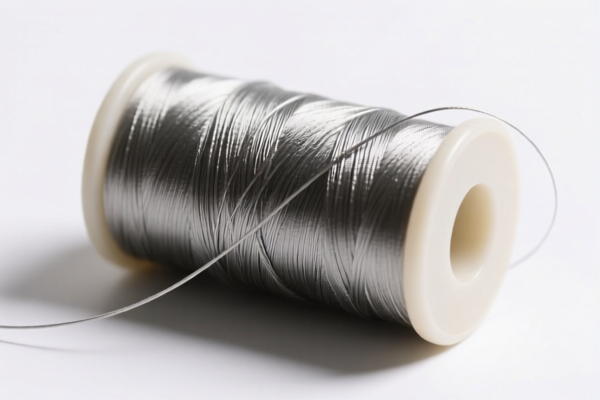
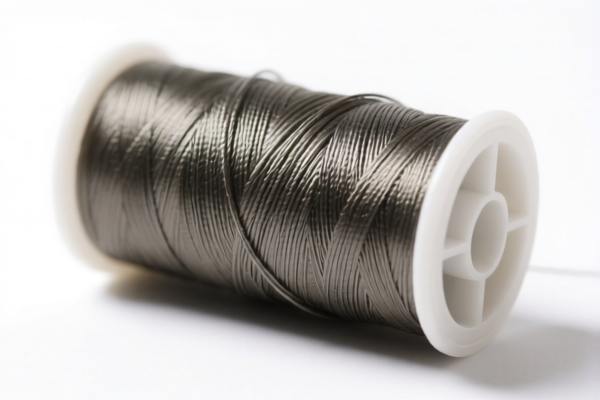
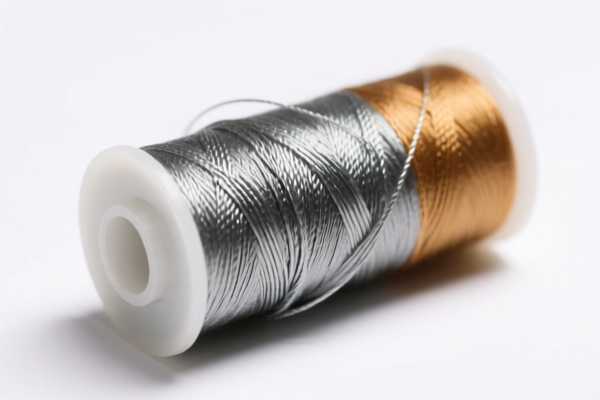
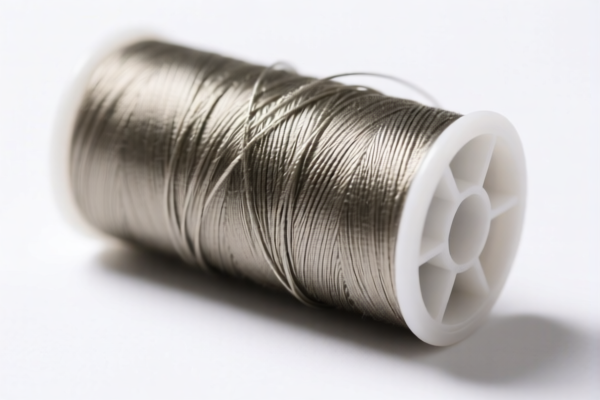
Nylon fishing line
CN → US| HS编码 | 关税税率 | 原产国 | 目的国 | 文档 |
|---|---|---|---|---|
| 5402459030 | 43.0% | CN | US | 官方文档 |
| 5402459010 | 43.0% | CN | US | 官方文档 |
| 9507902000 | 21.2% | CN | US | 官方文档 |
| 9507908000 | 19.0% | CN | US | 官方文档 |
| 5402113010 | 43.8% | CN | US | 官方文档 |
| 3916902000 | 38.1% | CN | US | 官方文档 |
商品图片
AI分析
🎣 Nylon Fishing Line
🌐 HS Code Classification & Tariff Guide | 2026 Updated Customs Rules | Expert Clearance Strategy
📌 One Product, Multiple Classifications — Know the Right HS Code to Avoid 45% Tariffs!
📦 I. Product Definition & Classification: Why Is Nylon Fishing Line So Hard to Classify?
Nylon fishing line is a synthetic fiber monofilament made from polyamide (nylon), widely used in recreational and commercial fishing. Its classification depends heavily on form, function, packaging, and intended use — not just material.
⚠️ Key Insight:
- If sold as raw synthetic fiber → classified under textile (HS 5402)
- If sold as fishing gear component → classified under fishing equipment (HS 9507)
- If sold in retail packaging → may qualify for lower tariff under consumer goods
- If misclassified → tariffs can jump from 19% to 45%!
🧩 II. HS Code Breakdown (2026 Official Tariff List) – All 6 Possible Codes Explained
| HS Code | Product Description | Classification Reason | Tax Rate |
|---|---|---|---|
5402.45.90.30 |
Nylon fishing line, synthetic filament, monofilament form, made of nylon (polyamide) | Classified as synthetic filament yarn, fits "monofilament" definition | 43.0% |
5402.45.90.10 |
Nylon fishing line, polyamide material, single filament or oriented multifilament | Falls under partially oriented multifilament, still textile-based | 43.0% |
9507.90.20.00 |
Nylon fishing line, retail-packaged, sold as part of fishing gear | Treated as retail fishing line — consumer product | 21.2% |
9507.90.80.00 |
Nylon fishing line, used for fishing, not conflicting with material/usage | Classified as fishing equipment accessory, not textile | 19.0% |
5402.11.30.10 |
Nylon fishing line, monofilament form, synthetic filament | Matches synthetic filament yarn definition exactly | 43.8% |
3916.90.20.00 |
Nylon fishing line, plastic material, single filament/rod-like shape | Treated as plastic monofilament or rod, not textile | 38.1% |
🔍 Critical Note:
- Same product, different HS codes, wildly different tariffs
- The only difference is how it’s packaged, labeled, and marketed
💰 III. 2026 Tariff Breakdown – What’s Behind the Numbers?
✅ Applicable Country: United States (US)
✅ Origin: China (CN)
✅ Effective Date: November 10, 2025 (and onward)
🎯 1. 5402.45.90.30 — Synthetic Filament, Monofilament Nylon
| Item | Detail |
|---|---|
| Base Duty | 8.0% (ad valorem) |
| Section 301 (USITC) Additional Duty | +25.0% |
| Section 122 (IEEPA) Additional Duty | +10.0% |
| Total Duty | 43.0% |
| Tax Calculation | CIF × 43.0% |
| De Minimis Exemption? | ❌ No (denied under 9903.88.01) |
| Legal Basis Path | IEEPA:9903.01.25 → IEEPA:9903.01.24 → USITC:5402.45.90.30 → FOOTNOTE:9903.88.01 |
📌 Why This Applies:
- The line is not sold as fishing gear, but as raw synthetic fiber
- No fishing-specific branding, no reel, no instructions
- Treated as textile input, not consumer product
🎯 2. 5402.45.90.10 — Partially Oriented Multifilament Nylon
| Item | Detail |
|---|---|
| Base Duty | 8.0% |
| USITC (301) Additional Duty | +25.0% |
| IEEPA (122) Additional Duty | +10.0% |
| Total Duty | 43.0% |
| Tax Calculation | CIF × 43.0% |
| De Minimis? | ❌ No |
| Legal Path | Same as above: IEEPA:9903.01.24 → USITC:5402.45.90.10 → FOOTNOTE:9903.88.01 |
📌 Why This Applies:
- The line is partially oriented, meaning it’s pre-stretched but not fully processed
- Still fits textile filament definition under Harmonized System
- No functional use claimed — just raw material
🎯 3. 9507.90.20.00 — Retail-Packaged Fishing Line (Consumer Product)
| Item | Detail |
|---|---|
| Base Duty | 3.7% |
| USITC (301) Additional Duty | +7.5% |
| IEEPA (122) Additional Duty | +10.0% |
| Total Duty | 21.2% |
| Tax Calculation | CIF × 21.2% |
| De Minimis? | ✅ Yes (if value < $800) |
| Legal Basis Path | IEEPA:9903.01.24 → USITC:9507.90.20.00 → FOOTNOTE:9903.88.01 |
📌 Why This Applies:
- Sold in retail packaging (e.g., 100m spool, branded, with fishing instructions)
- Marketed as fishing line for anglers
- Not raw material — consumer product
- Lower tariff due to retail classification
🎯 4. 9507.90.80.00 — Fishing Equipment Accessory (Lowest Tariff)
| Item | Detail |
|---|---|
| Base Duty | 9.0% |
| USITC (301) Additional Duty | 0.0% |
| IEEPA (122) Additional Duty | +10.0% |
| Total Duty | 19.0% |
| Tax Calculation | CIF × 19.0% |
| De Minimis? | ✅ Yes |
| Legal Path | IEEPA:9903.01.24 → 9507.90.80.00 → FOOTNOTE:9903.88.01 |
📌 Why This Applies:
- Used exclusively for fishing
- No conflict with material or purpose
- Not sold as textile — clearly as fishing gear
- Lowest possible tariff under current rules
🎯 5. 5402.11.30.10 — Synthetic Filament (Monofilament), Nylon
| Item | Detail |
|---|---|
| Base Duty | 8.8% |
| USITC (301) Additional Duty | +25.0% |
| IEEPA (122) Additional Duty | +10.0% |
| Total Duty | 43.8% |
| Tax Calculation | CIF × 43.8% |
| De Minimis? | ❌ No |
| Legal Path | IEEPA:9903.01.24 → USITC:5402.11.30.10 → FOOTNOTE:9903.88.01 |
📌 Why This Applies:
- Matches exact definition of synthetic filament yarn
- Higher base duty (8.8%) than other textile codes
- Most punitive — avoid unless no other option
🎯 6. 3916.90.20.00 — Plastic Monofilament / Rod-Like Shape
| Item | Detail |
|---|---|
| Base Duty | 3.1% |
| USITC (301) Additional Duty | +25.0% |
| IEEPA (122) Additional Duty | +10.0% |
| Total Duty | 38.1% |
| Tax Calculation | CIF × 38.1% |
| De Minimis? | ❌ No |
| Legal Path | IEEPA:9903.01.24 → 3916.90.20.00 → FOOTNOTE:9903.88.01 |
📌 Why This Applies:
- If the line is not labeled as textile, but as plastic filament, it may fall here
- Common in industrial or technical applications
- Lower base duty, but still high total due to 25% + 10%
🛠️ IV. Customs Clearance Strategy – 5 Pro Tips to Save Thousands
✅ 1. Packaging is King
🔥 Do this:
- Use retail packaging with fishing instructions, branding, reel-compatible spool
- Label clearly: “Fishing Line for Anglers – 100m, 20lb Test”
✅ Result: Qualify for 9507.90.20.00 (21.2%) or 9507.90.80.00 (19.0%)❌ Don’t do this:
- Ship in bulk, unbranded, in plastic bags
❌ Result: Auto-classified as textile (5402) → 43%+ tariff
✅ 2. Use the Right Product Name in Invoice
🔥 Correct:
"Nylon Fishing Line, 100m Spool, 20lb Test, Retail Pack, for Recreational Fishing"
✅ Triggers9507.90.80.00or9507.90.20.00❌ Wrong:
"Polyamide Monofilament, Synthetic Fiber, 500m Bulk"
❌ Triggers5402.45.90.30→ 43% tariff
✅ 3. Avoid Textile Classification if Possible
- Do not use terms like:
- "Synthetic filament"
- "Polyamide yarn"
- "Monofilament fiber"
- Use fishing-specific terms:
- "Fishing line"
- "Fishing tackle"
- "Angling accessory"
✅ 4. Document Everything
Required for clearance: - ✅ Commercial Invoice (with correct product name & description)
- ✅ Packing List (showing retail packaging)
- ✅ Product Photos (showing branding, spool, packaging)
- ✅ Test Report (if claiming "fishing use")
- ✅ Certificate of Origin (CO) – crucial for de minimis
- ✅ Declaration of Use (if claiming fishing gear status)
✅ 5. Apply for Advance Ruling (Pre-Approval)
📌 Why?
- Avoid costly disputes, delays, or retroactive tariffs
- Get binding HS code decision from U.S. Customs before shipment
- Especially useful for new or complex products📞 How: Submit Form 19 (Request for Ruling) via USCBP Portal
🌍 V. Global Market Comparison (2026)
| Country | Recommended HS Code | Duty Rate | Certification | Notes |
|---|---|---|---|---|
| 🇺🇸 USA | 9507.90.80.00 |
19.0% | None (but CO needed) | De minimis applies |
| 🇨🇳 China | 9507.90.80.00 |
5% | CCC | No extra tariffs |
| 🇪🇺 EU | 9507.90.80.00 |
0% (if CE) | CE | No 301/IEEPA |
| 🇦🇺 Australia | 9507.90.80.00 |
5% | RCM | No additional duties |
| 🇯🇵 Japan | 9507.90.80.00 |
0% | PSE | No extra taxes |
📌 Takeaway:
- Only the U.S. applies 301 + IEEPA tariffs
- All other markets are much friendlier — consider diversifying logistics
🚨 VI. Common Mistakes & How to Avoid Them (Real Cases)
❌ Mistake 1: Ship bulk nylon line as "polyamide filament"
👉 Result: 43% tariff → $10,000+ extra cost
✅ Fix: Repackage as retail fishing line → 19% tariff
❌ Mistake 2: Use "synthetic fiber" in invoice description
👉 Result: Auto-classified as textile → 43.8%
✅ Fix: Use "fishing line" + "for anglers" + "retail packaging"
❌ Mistake 3: No CO or de minimis proof
👉 Result: Denied de minimis → pay full 19%+
✅ Fix: Always attach CO and invoice value < $800
❌ Mistake 4: No product photos or instructions
👉 Result: Customs delays or reclassification
✅ Fix: Include clear images of packaging, branding, and use
🎯 VII. Final Verdict: How to Pay the Least Tax
🔥 Best Strategy:
Package as retail fishing line, use fishing-specific language, attach CO, and declare as9507.90.80.00
✅ Only 19.0% tariff
✅ De minimis applies
✅ No 301/IEEPA penalties❌ Worst Case:
Ship as "raw nylon filament" → 43.8% tariff
→ $20,000+ in extra cost for a $100k shipment
📌 VIII. Pro Tips & Final Advice
🔹 "Name, Packaging, Purpose" — the three pillars of correct classification
🔹 Never assume — same product, different label = different tax
🔹 Use a customs broker with U.S. pre-ruling experience
🔹 Apply for Advance Ruling if selling in volume
📣 Ready to Export?
📞 Contact a U.S. Customs Broker + Submit product photos + Request HS Code Pre-Approval
🚀 Save 25%+ in tariffs — and avoid penalties!
✨ Your Product. Your Profit. Your Precision.
💼 One wrong code = thousands in extra cost. One right code = massive savings.
🎯 Classify Right. Pay Less. Ship Faster.
用户评价
关于 HS 编码归类
协调制度(HS)是由世界海关组织(WCO)制定的国际贸易商品分类标准。全球 200 多个国家采用 HS 系统作为海关关税、贸易统计和进出口监管的基础。
每个 HS 编码遵循以下层级结构:
- 章(2 位)——商品大类(例如:第 84 章:机器和机械设备)
- 品目(4 位)——章内的更具体分类
- 子目(6 位)——国际通用细分,所有 WCO 成员国统一使用
- 本国细分(8-10 位)——各国自行扩展的细分编码,如美国 HTSUS 10 位编码
正确的 HS 编码归类对于顺利通关、准确缴纳关税和遵守贸易法规至关重要。错误归类可能导致海关延误、多缴关税或罚款。
从CN进口到US时,适用的关税税率可能包括:
- 最惠国(MFN)税率——适用于 WTO 成员国的标准关税税率
- 普通税率——适用于无贸易协定国家
- 贸易救济关税——附加关税,如 301 条款(反倾销)、232 条款(国家安全)或反补贴税
本页内容仅供参考。如需正式归类,请咨询当地海关或持牌报关代理。