Nylon fishing line
CN → US| HS Code | Tariff Rate | Origin | Destination | Doc |
|---|---|---|---|---|
| 5402459030 | 43.0% | CN | US | Official Doc |
| 5402459010 | 43.0% | CN | US | Official Doc |
| 9507902000 | 21.2% | CN | US | Official Doc |
| 9507908000 | 19.0% | CN | US | Official Doc |
| 5402113010 | 43.8% | CN | US | Official Doc |
| 3916902000 | 38.1% | CN | US | Official Doc |
Product Images
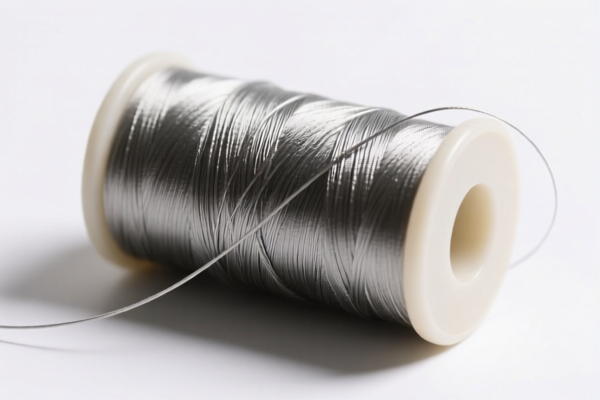
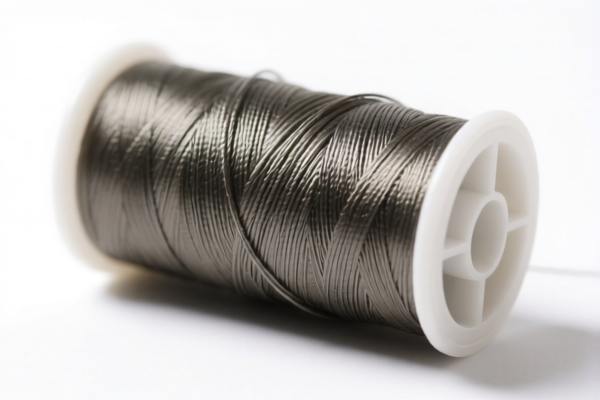
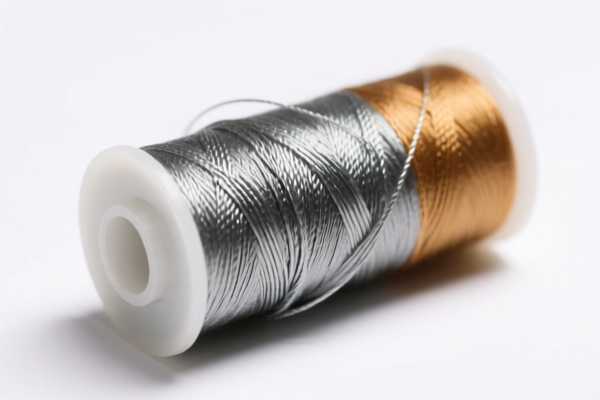
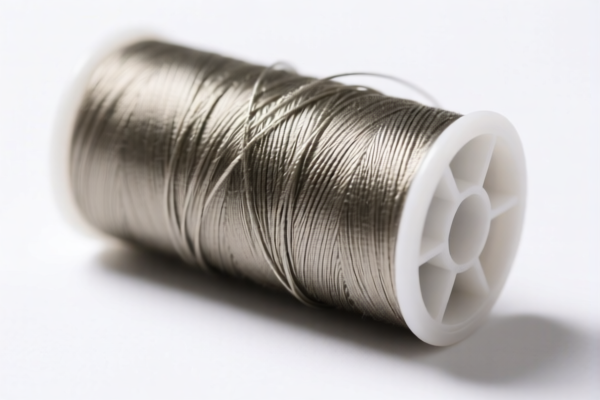
AI Analysis
🎣 Nylon Fishing Line
🌐 HS Code Classification & Tariff Guide | 2026 Updated Customs Rules | Expert Clearance Strategy
📌 One Product, Multiple Classifications — Know the Right HS Code to Avoid 45% Tariffs!
📦 I. Product Definition & Classification: Why Is Nylon Fishing Line So Hard to Classify?
Nylon fishing line is a synthetic fiber monofilament made from polyamide (nylon), widely used in recreational and commercial fishing. Its classification depends heavily on form, function, packaging, and intended use — not just material.
⚠️ Key Insight:
- If sold as raw synthetic fiber → classified under textile (HS 5402)
- If sold as fishing gear component → classified under fishing equipment (HS 9507)
- If sold in retail packaging → may qualify for lower tariff under consumer goods
- If misclassified → tariffs can jump from 19% to 45%!
🧩 II. HS Code Breakdown (2026 Official Tariff List) – All 6 Possible Codes Explained
| HS Code | Product Description | Classification Reason | Tax Rate |
|---|---|---|---|
5402.45.90.30 |
Nylon fishing line, synthetic filament, monofilament form, made of nylon (polyamide) | Classified as synthetic filament yarn, fits "monofilament" definition | 43.0% |
5402.45.90.10 |
Nylon fishing line, polyamide material, single filament or oriented multifilament | Falls under partially oriented multifilament, still textile-based | 43.0% |
9507.90.20.00 |
Nylon fishing line, retail-packaged, sold as part of fishing gear | Treated as retail fishing line — consumer product | 21.2% |
9507.90.80.00 |
Nylon fishing line, used for fishing, not conflicting with material/usage | Classified as fishing equipment accessory, not textile | 19.0% |
5402.11.30.10 |
Nylon fishing line, monofilament form, synthetic filament | Matches synthetic filament yarn definition exactly | 43.8% |
3916.90.20.00 |
Nylon fishing line, plastic material, single filament/rod-like shape | Treated as plastic monofilament or rod, not textile | 38.1% |
🔍 Critical Note:
- Same product, different HS codes, wildly different tariffs
- The only difference is how it’s packaged, labeled, and marketed
💰 III. 2026 Tariff Breakdown – What’s Behind the Numbers?
✅ Applicable Country: United States (US)
✅ Origin: China (CN)
✅ Effective Date: November 10, 2025 (and onward)
🎯 1. 5402.45.90.30 — Synthetic Filament, Monofilament Nylon
| Item | Detail |
|---|---|
| Base Duty | 8.0% (ad valorem) |
| Section 301 (USITC) Additional Duty | +25.0% |
| Section 122 (IEEPA) Additional Duty | +10.0% |
| Total Duty | 43.0% |
| Tax Calculation | CIF × 43.0% |
| De Minimis Exemption? | ❌ No (denied under 9903.88.01) |
| Legal Basis Path | IEEPA:9903.01.25 → IEEPA:9903.01.24 → USITC:5402.45.90.30 → FOOTNOTE:9903.88.01 |
📌 Why This Applies:
- The line is not sold as fishing gear, but as raw synthetic fiber
- No fishing-specific branding, no reel, no instructions
- Treated as textile input, not consumer product
🎯 2. 5402.45.90.10 — Partially Oriented Multifilament Nylon
| Item | Detail |
|---|---|
| Base Duty | 8.0% |
| USITC (301) Additional Duty | +25.0% |
| IEEPA (122) Additional Duty | +10.0% |
| Total Duty | 43.0% |
| Tax Calculation | CIF × 43.0% |
| De Minimis? | ❌ No |
| Legal Path | Same as above: IEEPA:9903.01.24 → USITC:5402.45.90.10 → FOOTNOTE:9903.88.01 |
📌 Why This Applies:
- The line is partially oriented, meaning it’s pre-stretched but not fully processed
- Still fits textile filament definition under Harmonized System
- No functional use claimed — just raw material
🎯 3. 9507.90.20.00 — Retail-Packaged Fishing Line (Consumer Product)
| Item | Detail |
|---|---|
| Base Duty | 3.7% |
| USITC (301) Additional Duty | +7.5% |
| IEEPA (122) Additional Duty | +10.0% |
| Total Duty | 21.2% |
| Tax Calculation | CIF × 21.2% |
| De Minimis? | ✅ Yes (if value < $800) |
| Legal Basis Path | IEEPA:9903.01.24 → USITC:9507.90.20.00 → FOOTNOTE:9903.88.01 |
📌 Why This Applies:
- Sold in retail packaging (e.g., 100m spool, branded, with fishing instructions)
- Marketed as fishing line for anglers
- Not raw material — consumer product
- Lower tariff due to retail classification
🎯 4. 9507.90.80.00 — Fishing Equipment Accessory (Lowest Tariff)
| Item | Detail |
|---|---|
| Base Duty | 9.0% |
| USITC (301) Additional Duty | 0.0% |
| IEEPA (122) Additional Duty | +10.0% |
| Total Duty | 19.0% |
| Tax Calculation | CIF × 19.0% |
| De Minimis? | ✅ Yes |
| Legal Path | IEEPA:9903.01.24 → 9507.90.80.00 → FOOTNOTE:9903.88.01 |
📌 Why This Applies:
- Used exclusively for fishing
- No conflict with material or purpose
- Not sold as textile — clearly as fishing gear
- Lowest possible tariff under current rules
🎯 5. 5402.11.30.10 — Synthetic Filament (Monofilament), Nylon
| Item | Detail |
|---|---|
| Base Duty | 8.8% |
| USITC (301) Additional Duty | +25.0% |
| IEEPA (122) Additional Duty | +10.0% |
| Total Duty | 43.8% |
| Tax Calculation | CIF × 43.8% |
| De Minimis? | ❌ No |
| Legal Path | IEEPA:9903.01.24 → USITC:5402.11.30.10 → FOOTNOTE:9903.88.01 |
📌 Why This Applies:
- Matches exact definition of synthetic filament yarn
- Higher base duty (8.8%) than other textile codes
- Most punitive — avoid unless no other option
🎯 6. 3916.90.20.00 — Plastic Monofilament / Rod-Like Shape
| Item | Detail |
|---|---|
| Base Duty | 3.1% |
| USITC (301) Additional Duty | +25.0% |
| IEEPA (122) Additional Duty | +10.0% |
| Total Duty | 38.1% |
| Tax Calculation | CIF × 38.1% |
| De Minimis? | ❌ No |
| Legal Path | IEEPA:9903.01.24 → 3916.90.20.00 → FOOTNOTE:9903.88.01 |
📌 Why This Applies:
- If the line is not labeled as textile, but as plastic filament, it may fall here
- Common in industrial or technical applications
- Lower base duty, but still high total due to 25% + 10%
🛠️ IV. Customs Clearance Strategy – 5 Pro Tips to Save Thousands
✅ 1. Packaging is King
🔥 Do this:
- Use retail packaging with fishing instructions, branding, reel-compatible spool
- Label clearly: “Fishing Line for Anglers – 100m, 20lb Test”
✅ Result: Qualify for 9507.90.20.00 (21.2%) or 9507.90.80.00 (19.0%)❌ Don’t do this:
- Ship in bulk, unbranded, in plastic bags
❌ Result: Auto-classified as textile (5402) → 43%+ tariff
✅ 2. Use the Right Product Name in Invoice
🔥 Correct:
"Nylon Fishing Line, 100m Spool, 20lb Test, Retail Pack, for Recreational Fishing"
✅ Triggers9507.90.80.00or9507.90.20.00❌ Wrong:
"Polyamide Monofilament, Synthetic Fiber, 500m Bulk"
❌ Triggers5402.45.90.30→ 43% tariff
✅ 3. Avoid Textile Classification if Possible
- Do not use terms like:
- "Synthetic filament"
- "Polyamide yarn"
- "Monofilament fiber"
- Use fishing-specific terms:
- "Fishing line"
- "Fishing tackle"
- "Angling accessory"
✅ 4. Document Everything
Required for clearance: - ✅ Commercial Invoice (with correct product name & description)
- ✅ Packing List (showing retail packaging)
- ✅ Product Photos (showing branding, spool, packaging)
- ✅ Test Report (if claiming "fishing use")
- ✅ Certificate of Origin (CO) – crucial for de minimis
- ✅ Declaration of Use (if claiming fishing gear status)
✅ 5. Apply for Advance Ruling (Pre-Approval)
📌 Why?
- Avoid costly disputes, delays, or retroactive tariffs
- Get binding HS code decision from U.S. Customs before shipment
- Especially useful for new or complex products📞 How: Submit Form 19 (Request for Ruling) via USCBP Portal
🌍 V. Global Market Comparison (2026)
| Country | Recommended HS Code | Duty Rate | Certification | Notes |
|---|---|---|---|---|
| 🇺🇸 USA | 9507.90.80.00 |
19.0% | None (but CO needed) | De minimis applies |
| 🇨🇳 China | 9507.90.80.00 |
5% | CCC | No extra tariffs |
| 🇪🇺 EU | 9507.90.80.00 |
0% (if CE) | CE | No 301/IEEPA |
| 🇦🇺 Australia | 9507.90.80.00 |
5% | RCM | No additional duties |
| 🇯🇵 Japan | 9507.90.80.00 |
0% | PSE | No extra taxes |
📌 Takeaway:
- Only the U.S. applies 301 + IEEPA tariffs
- All other markets are much friendlier — consider diversifying logistics
🚨 VI. Common Mistakes & How to Avoid Them (Real Cases)
❌ Mistake 1: Ship bulk nylon line as "polyamide filament"
👉 Result: 43% tariff → $10,000+ extra cost
✅ Fix: Repackage as retail fishing line → 19% tariff
❌ Mistake 2: Use "synthetic fiber" in invoice description
👉 Result: Auto-classified as textile → 43.8%
✅ Fix: Use "fishing line" + "for anglers" + "retail packaging"
❌ Mistake 3: No CO or de minimis proof
👉 Result: Denied de minimis → pay full 19%+
✅ Fix: Always attach CO and invoice value < $800
❌ Mistake 4: No product photos or instructions
👉 Result: Customs delays or reclassification
✅ Fix: Include clear images of packaging, branding, and use
🎯 VII. Final Verdict: How to Pay the Least Tax
🔥 Best Strategy:
Package as retail fishing line, use fishing-specific language, attach CO, and declare as9507.90.80.00
✅ Only 19.0% tariff
✅ De minimis applies
✅ No 301/IEEPA penalties❌ Worst Case:
Ship as "raw nylon filament" → 43.8% tariff
→ $20,000+ in extra cost for a $100k shipment
📌 VIII. Pro Tips & Final Advice
🔹 "Name, Packaging, Purpose" — the three pillars of correct classification
🔹 Never assume — same product, different label = different tax
🔹 Use a customs broker with U.S. pre-ruling experience
🔹 Apply for Advance Ruling if selling in volume
📣 Ready to Export?
📞 Contact a U.S. Customs Broker + Submit product photos + Request HS Code Pre-Approval
🚀 Save 25%+ in tariffs — and avoid penalties!
✨ Your Product. Your Profit. Your Precision.
💼 One wrong code = thousands in extra cost. One right code = massive savings.
🎯 Classify Right. Pay Less. Ship Faster.
Customer Reviews
About HS Code Classification
The Harmonized System (HS) is an internationally standardized nomenclature developed by the World Customs Organization (WCO) to classify traded products. Over 200 countries use the HS system as the basis for customs tariffs, trade statistics, and import/export regulations.
Each HS code follows a hierarchical structure:
- Chapter (2 digits) — Broad category of goods (e.g., Chapter 84: Machinery and Mechanical Appliances)
- Heading (4 digits) — More specific grouping within the chapter
- Subheading (6 digits) — Internationally standardized breakdown, used by all WCO member countries
- National subdivisions (8-10 digits) — Country-specific extensions for further classification, such as US HTSUS 10-digit codes
Correct HS code classification is essential for smooth customs clearance, accurate duty payment, and compliance with trade regulations. Misclassification can lead to customs delays, overpayment of duties, or penalties.
When importing from CN to US, the applicable tariff rates may include:
- Most-Favored-Nation (MFN) rate — The standard duty rate applied to WTO members
- General rate — Applied to countries without trade agreements
- Trade remedy duties — Additional tariffs such as Section 301 (anti-dumping), Section 232 (national security), or countervailing duties
The information provided on this page is for reference purposes only. For official classification, please consult with your local customs authority or a licensed customs broker.