OBD Scanner
CN → US| HS编码 | 关税税率 | 原产国 | 目的国 | 文档 |
|---|---|---|---|---|
| 9029204080 | 35.0% | CN | US | 官方文档 |
| 9029908040 | 35.0% | CN | US | 官方文档 |
| 8543706000 | 35.0% | CN | US | 官方文档 |
| 9031808060 | 35.0% | CN | US | 官方文档 |
| 9031808070 | 35.0% | CN | US | 官方文档 |
商品图片
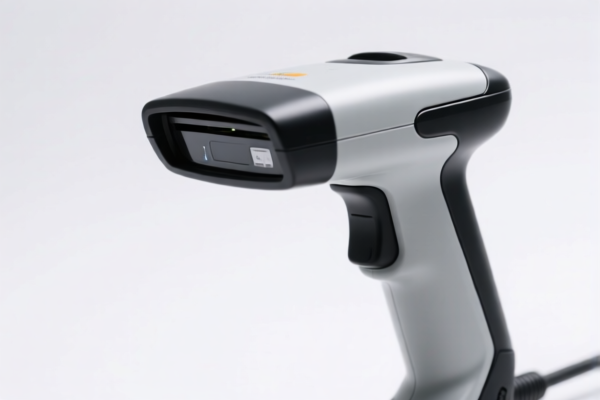
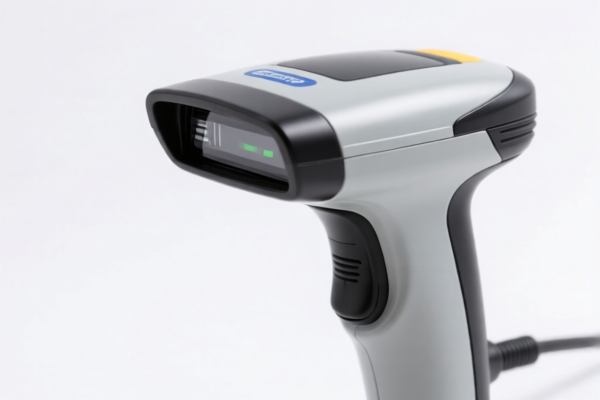
AI分析
🔌 OBD Scanner (On-Board Diagnostics Scanner)
🌐 HS Code Reference & Customs Clearance Guide | 2026 Latest Tariff Analysis | Professional Clearance Strategy
📌 I. Product Definition: What Exactly is an "OBD Scanner"?
An OBD Scanner is a specialized electronic diagnostic device used to retrieve data from a vehicle's internal computer system. In international trade, its classification is often debated because it sits at the intersection of measurement instruments, electronic testing equipment, and accessories for automobiles.
Key Characteristics: * Function: Reads error codes, monitors live data streams (RPM, speed, temperature), and performs vehicle health checks. * Nature: It is an electronic detection instrument. * Confusion Point: It is not a standard speedometer or tachometer (which are vehicle-mounted), but a handheld or dongle device that interrogates them. Therefore, it often falls under "Other" (catch-all) categories for instruments or electronic testing apparatuses.
⚠️ Critical Distinction:
- If it acts as a simple measurement/calibration tool for vehicle parameters (like speed/RPM), it aligns with Heading 9029.
- If it is viewed as a general electronic testing device connecting to networks, it may align with Heading 8543.
- If it is strictly for testing electrical/operating characteristics of engines, it may align with Heading 9031.
📦 II. HS Code Classification Details (2026 Latest Tariff Authority Comparison)
Based on the provided data, here are the five most probable HS Codes for OBD Scanners, categorized by their functional logic.
| HS Code | Product Description | Functional Logic | Key Attribute |
|---|---|---|---|
9029.20.40.80 |
Other instruments for measuring/moniting speed/rpm | Viewed as a "catch-all" for vehicle diagnostic/monitoring equipment that functions like speedometers or tachometers. | Measurement/Instrument |
9029.90.80.40 |
Parts/Accessories to speedometers/tachometers | Seen as an associated device for measuring speed and vehicle status, linked to the function of speedometers/tachometers. | Associated Instrument |
8543.70.60.00 |
Electronic signaling/testing apparatus | Classified as an electronic detection device that connects to vehicle networks/instruments. | Electronic Network Connector |
9031.80.80.60 |
Other testing instruments | Matches the logic of testing electrical/operating characteristics of internal combustion engines. | Engine Electrical Tester |
9031.80.80.70 |
Other testing instruments (Material Match) | Classified as electronic testing equipment; material composition does not conflict with engine characteristic testers. | General Electronic Tester |
🔍 Key Insight:
- All five codes share the same total tax rate (35%) in this specific dataset context.
- The choice of HS Code depends on how you describe the primary function in your customs declaration:
- Emphasize "Measurement of Speed/RPM" → Use 9029.xxxx.
- Emphasize "Electronic Testing/Network Connection" → Use 8543.70.60.00.
- Emphasize "Engine Electrical Testing" → Use 9031.80.80.xxxx.
💰 III. 2026 Latest Tariff Rate Breakdown (Detailed Tax Clauses)
✅ Applicable Country: United States (US)
✅ Origin: China (CN)
✅ Total Tax Rate: 35.0%
✅ Effective Time: Current active rates
🎯 Tax Structure Analysis (Uniform for all listed HS Codes)
For all the HS Codes listed in <DATA> (9029.20.40.80, 9029.90.80.40, 8543.70.60.00, 9031.80.80.60, 9031.80.80.70), the tax structure is identical:
| Tax Component | Rate | Legal/Policy Basis | Explanation |
|---|---|---|---|
| Base Duty (MFN) | 0.0% | US Harmonized Tariff Schedule (HTS) | Most electronic/measuring instruments from non-retaliated contexts have 0% base duty. |
| Section 301 Duty (Add-on) | 25.0% | USITC Footnote / Section 301 | Standard "Trade Facilitation and Trade Enforcement Act" surcharge on Chinese goods. |
| Section 1221 / IEEPA Surcharge | 10.0% | IEEPA (International Emergency Economic Powers Act) | Specific surcharge applied to certain Chinese products under the 1221 clause/trading with the enemy provisions. |
| TOTAL TAX RATE | 35.0% | Sum of above | Base (0) + 301 (25) + 1221 (10) = 35% |
📌 Important Note on "1221 Clause":
The term "1221条款关税10%" refers to a specific additional tariff provision often linked to Section 301 enforcement or specific IEEPA orders targeting Chinese imports. This 10% is on top of the standard 25% Section 301 duty.
🛠️ IV. Customs Clearance Operational Advice
✅ 1. Declaration Strategy: How to Justify Your HS Code?
Since the tax rate is identical (35%) across all five codes, the primary goal is compliance accuracy to avoid audits or delays. Choose the description that best matches your product's marketing and technical manual.
| Recommended HS Code | Best For... | Description for Customs |
|---|---|---|
9029.20.40.80 |
General Purpose | "Electronic Vehicle Diagnostic Tool for Monitoring Speed and Engine Parameters" |
8543.70.60.00 |
Tech-Focused | "Electronic Device for Connecting to and Testing Vehicle Network Systems (OBD-II)" |
9031.80.80.60 |
Professional/Garage | "Apparatus for Testing Electrical Characteristics of Internal Combustion Engines" |
💡 Pro Tip: If the product comes with software, ensure the declaration mentions "Hardware Only" or clearly separates software if possible, though OBD scanners are usually classified as hardware instruments.
✅ 2. Required Documentation Checklist
| Document | Requirement | Reason |
|---|---|---|
| Commercial Invoice | Must list "OBD Scanner" or "Vehicle Diagnostic Tool" | Clear product name helps CBP (Customs and Border Protection) match descriptions. |
| Product Photos | Clear images of the device, ports (OBD-II connector), and screen | Proves it is an electronic device, not a simple cable. |
| Technical Spec Sheet | Highlight "OBD-II Protocol Support" and "Diagnostic Functions" | Justifies classification under 9029 (measurement) or 9031 (testing). |
| FCC ID | Mandatory for electronic devices in the US | Ensures compliance with electromagnetic interference regulations. |
| Country of Origin | Must state "Made in China" | Triggers the 35% tax calculation. |
✅ 3. Common Pitfalls & Avoidance Strategies
❌ Mistake 1: Misclassifying as "Automobile Parts" (Chapter 87)
👉 Risk: Automobile parts often have 0% base duty but may be subject to other restrictions. However, CBP may reject this because an OBD scanner is an instrument, not a part of the car itself.
👉 Solution: Do not declare as "Car Part" or "Automotive Accessory" without strong technical justification. Stick to Chapter 90 or 85.
❌ Mistake 2: Under-declaring Value
👉 Risk: With a 35% total tax, even small value discrepancies lead to significant duties. CBP is strict on low-value shipments.
👉 Solution: Declare the transaction value (cost + insurance + freight) accurately.
❌ Mistake 3: Ignoring FCC Certification
👉 Risk: Electronic devices without FCC ID will be detained or destroyed at US ports.
👉 Solution: Ensure the product has a valid FCC ID and label.
🌍 V. Global Market Comparison (2026 Context)
| Country/Region | Recommended HS Code | Est. Duty Rate | Certification | Notes |
|---|---|---|---|---|
| 🇺🇸 USA | 9029.20.40.80 / 8543.70.60.00 |
35.0% (incl. 301 & 1221) | FCC, RoHS | High duty burden; 1221 clause adds 10%. |
| 🇪🇺 EU | 9031.80 |
~0% - 4% | CE, RoHS | Lower duties, but VAT applies (19-27%). |
| 🇨🇳 China | 9031.80 |
~0% - 5% | CCC (if applicable) | Low duty, no major surcharges for domestic imports. |
| 🇨🇦 Canada | 9031.80 |
0% (under CUSMA) | ICES | Preferential treatment for US-origin goods. |
📌 Conclusion for US Importers:
The 35% total duty is a significant cost factor. To mitigate risks:
1. Pre-classify with a licensed customs broker.
2. Verify FCC compliance before shipping.
3. Use the correct HS Code (9029or9031are most defensible for OBD tools) to ensure smooth clearance.
📌 VI. Summary & Action Plan
- Select HS Code: Based on your technical documentation, choose between
9029.20.40.80(Measurement focus) or9031.80.80.60(Testing focus). Both incur 35% tax. - Calculate Landed Cost: Add 35% to your CIF value.
- Prepare Docs: Invoice, Packing List, FCC ID, Product Photos.
- Declare Accurately: Use terms like "Electronic Vehicle Diagnostic Scanner" rather than vague terms like "Car Tool."
📣 Final Advice:
🔹 "Don't guess the HS Code; justify it."
🔹 "35% is non-negotiable for Chinese-origin OBD scanners in the US."
🔹 "FCC Compliance is the gatekeeper to entry."
✨ Professional clearance starts with precise classification!
💼 Minimize risk, maximize speed!
用户评价
关于 HS 编码归类
协调制度(HS)是由世界海关组织(WCO)制定的国际贸易商品分类标准。全球 200 多个国家采用 HS 系统作为海关关税、贸易统计和进出口监管的基础。
每个 HS 编码遵循以下层级结构:
- 章(2 位)——商品大类(例如:第 84 章:机器和机械设备)
- 品目(4 位)——章内的更具体分类
- 子目(6 位)——国际通用细分,所有 WCO 成员国统一使用
- 本国细分(8-10 位)——各国自行扩展的细分编码,如美国 HTSUS 10 位编码
正确的 HS 编码归类对于顺利通关、准确缴纳关税和遵守贸易法规至关重要。错误归类可能导致海关延误、多缴关税或罚款。
从CN进口到US时,适用的关税税率可能包括:
- 最惠国(MFN)税率——适用于 WTO 成员国的标准关税税率
- 普通税率——适用于无贸易协定国家
- 贸易救济关税——附加关税,如 301 条款(反倾销)、232 条款(国家安全)或反补贴税
本页内容仅供参考。如需正式归类,请咨询当地海关或持牌报关代理。