OBD Scanner
CN → US| HS Code | Tariff Rate | Origin | Destination | Doc |
|---|---|---|---|---|
| 9029204080 | 35.0% | CN | US | Official Doc |
| 9029908040 | 35.0% | CN | US | Official Doc |
| 8543706000 | 35.0% | CN | US | Official Doc |
| 9031808060 | 35.0% | CN | US | Official Doc |
| 9031808070 | 35.0% | CN | US | Official Doc |
Product Images
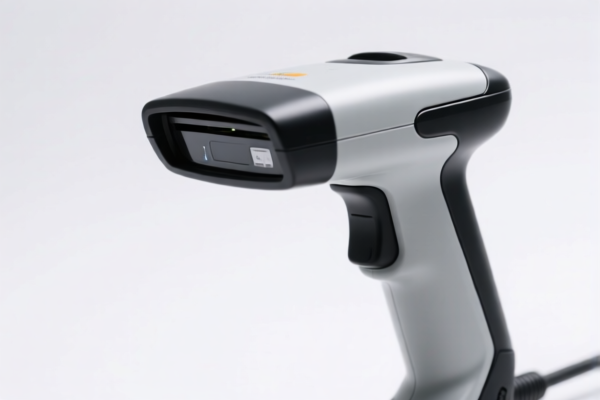
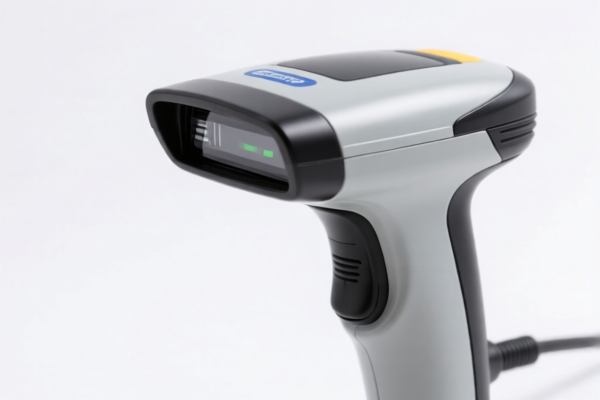
AI Analysis
🔌 OBD Scanner (On-Board Diagnostics Scanner)
🌐 HS Code Reference & Customs Clearance Guide | 2026 Latest Tariff Analysis | Professional Clearance Strategy
📌 I. Product Definition: What Exactly is an "OBD Scanner"?
An OBD Scanner is a specialized electronic diagnostic device used to retrieve data from a vehicle's internal computer system. In international trade, its classification is often debated because it sits at the intersection of measurement instruments, electronic testing equipment, and accessories for automobiles.
Key Characteristics: * Function: Reads error codes, monitors live data streams (RPM, speed, temperature), and performs vehicle health checks. * Nature: It is an electronic detection instrument. * Confusion Point: It is not a standard speedometer or tachometer (which are vehicle-mounted), but a handheld or dongle device that interrogates them. Therefore, it often falls under "Other" (catch-all) categories for instruments or electronic testing apparatuses.
⚠️ Critical Distinction:
- If it acts as a simple measurement/calibration tool for vehicle parameters (like speed/RPM), it aligns with Heading 9029.
- If it is viewed as a general electronic testing device connecting to networks, it may align with Heading 8543.
- If it is strictly for testing electrical/operating characteristics of engines, it may align with Heading 9031.
📦 II. HS Code Classification Details (2026 Latest Tariff Authority Comparison)
Based on the provided data, here are the five most probable HS Codes for OBD Scanners, categorized by their functional logic.
| HS Code | Product Description | Functional Logic | Key Attribute |
|---|---|---|---|
9029.20.40.80 |
Other instruments for measuring/moniting speed/rpm | Viewed as a "catch-all" for vehicle diagnostic/monitoring equipment that functions like speedometers or tachometers. | Measurement/Instrument |
9029.90.80.40 |
Parts/Accessories to speedometers/tachometers | Seen as an associated device for measuring speed and vehicle status, linked to the function of speedometers/tachometers. | Associated Instrument |
8543.70.60.00 |
Electronic signaling/testing apparatus | Classified as an electronic detection device that connects to vehicle networks/instruments. | Electronic Network Connector |
9031.80.80.60 |
Other testing instruments | Matches the logic of testing electrical/operating characteristics of internal combustion engines. | Engine Electrical Tester |
9031.80.80.70 |
Other testing instruments (Material Match) | Classified as electronic testing equipment; material composition does not conflict with engine characteristic testers. | General Electronic Tester |
🔍 Key Insight:
- All five codes share the same total tax rate (35%) in this specific dataset context.
- The choice of HS Code depends on how you describe the primary function in your customs declaration:
- Emphasize "Measurement of Speed/RPM" → Use 9029.xxxx.
- Emphasize "Electronic Testing/Network Connection" → Use 8543.70.60.00.
- Emphasize "Engine Electrical Testing" → Use 9031.80.80.xxxx.
💰 III. 2026 Latest Tariff Rate Breakdown (Detailed Tax Clauses)
✅ Applicable Country: United States (US)
✅ Origin: China (CN)
✅ Total Tax Rate: 35.0%
✅ Effective Time: Current active rates
🎯 Tax Structure Analysis (Uniform for all listed HS Codes)
For all the HS Codes listed in <DATA> (9029.20.40.80, 9029.90.80.40, 8543.70.60.00, 9031.80.80.60, 9031.80.80.70), the tax structure is identical:
| Tax Component | Rate | Legal/Policy Basis | Explanation |
|---|---|---|---|
| Base Duty (MFN) | 0.0% | US Harmonized Tariff Schedule (HTS) | Most electronic/measuring instruments from non-retaliated contexts have 0% base duty. |
| Section 301 Duty (Add-on) | 25.0% | USITC Footnote / Section 301 | Standard "Trade Facilitation and Trade Enforcement Act" surcharge on Chinese goods. |
| Section 1221 / IEEPA Surcharge | 10.0% | IEEPA (International Emergency Economic Powers Act) | Specific surcharge applied to certain Chinese products under the 1221 clause/trading with the enemy provisions. |
| TOTAL TAX RATE | 35.0% | Sum of above | Base (0) + 301 (25) + 1221 (10) = 35% |
📌 Important Note on "1221 Clause":
The term "1221条款关税10%" refers to a specific additional tariff provision often linked to Section 301 enforcement or specific IEEPA orders targeting Chinese imports. This 10% is on top of the standard 25% Section 301 duty.
🛠️ IV. Customs Clearance Operational Advice
✅ 1. Declaration Strategy: How to Justify Your HS Code?
Since the tax rate is identical (35%) across all five codes, the primary goal is compliance accuracy to avoid audits or delays. Choose the description that best matches your product's marketing and technical manual.
| Recommended HS Code | Best For... | Description for Customs |
|---|---|---|
9029.20.40.80 |
General Purpose | "Electronic Vehicle Diagnostic Tool for Monitoring Speed and Engine Parameters" |
8543.70.60.00 |
Tech-Focused | "Electronic Device for Connecting to and Testing Vehicle Network Systems (OBD-II)" |
9031.80.80.60 |
Professional/Garage | "Apparatus for Testing Electrical Characteristics of Internal Combustion Engines" |
💡 Pro Tip: If the product comes with software, ensure the declaration mentions "Hardware Only" or clearly separates software if possible, though OBD scanners are usually classified as hardware instruments.
✅ 2. Required Documentation Checklist
| Document | Requirement | Reason |
|---|---|---|
| Commercial Invoice | Must list "OBD Scanner" or "Vehicle Diagnostic Tool" | Clear product name helps CBP (Customs and Border Protection) match descriptions. |
| Product Photos | Clear images of the device, ports (OBD-II connector), and screen | Proves it is an electronic device, not a simple cable. |
| Technical Spec Sheet | Highlight "OBD-II Protocol Support" and "Diagnostic Functions" | Justifies classification under 9029 (measurement) or 9031 (testing). |
| FCC ID | Mandatory for electronic devices in the US | Ensures compliance with electromagnetic interference regulations. |
| Country of Origin | Must state "Made in China" | Triggers the 35% tax calculation. |
✅ 3. Common Pitfalls & Avoidance Strategies
❌ Mistake 1: Misclassifying as "Automobile Parts" (Chapter 87)
👉 Risk: Automobile parts often have 0% base duty but may be subject to other restrictions. However, CBP may reject this because an OBD scanner is an instrument, not a part of the car itself.
👉 Solution: Do not declare as "Car Part" or "Automotive Accessory" without strong technical justification. Stick to Chapter 90 or 85.
❌ Mistake 2: Under-declaring Value
👉 Risk: With a 35% total tax, even small value discrepancies lead to significant duties. CBP is strict on low-value shipments.
👉 Solution: Declare the transaction value (cost + insurance + freight) accurately.
❌ Mistake 3: Ignoring FCC Certification
👉 Risk: Electronic devices without FCC ID will be detained or destroyed at US ports.
👉 Solution: Ensure the product has a valid FCC ID and label.
🌍 V. Global Market Comparison (2026 Context)
| Country/Region | Recommended HS Code | Est. Duty Rate | Certification | Notes |
|---|---|---|---|---|
| 🇺🇸 USA | 9029.20.40.80 / 8543.70.60.00 |
35.0% (incl. 301 & 1221) | FCC, RoHS | High duty burden; 1221 clause adds 10%. |
| 🇪🇺 EU | 9031.80 |
~0% - 4% | CE, RoHS | Lower duties, but VAT applies (19-27%). |
| 🇨🇳 China | 9031.80 |
~0% - 5% | CCC (if applicable) | Low duty, no major surcharges for domestic imports. |
| 🇨🇦 Canada | 9031.80 |
0% (under CUSMA) | ICES | Preferential treatment for US-origin goods. |
📌 Conclusion for US Importers:
The 35% total duty is a significant cost factor. To mitigate risks:
1. Pre-classify with a licensed customs broker.
2. Verify FCC compliance before shipping.
3. Use the correct HS Code (9029or9031are most defensible for OBD tools) to ensure smooth clearance.
📌 VI. Summary & Action Plan
- Select HS Code: Based on your technical documentation, choose between
9029.20.40.80(Measurement focus) or9031.80.80.60(Testing focus). Both incur 35% tax. - Calculate Landed Cost: Add 35% to your CIF value.
- Prepare Docs: Invoice, Packing List, FCC ID, Product Photos.
- Declare Accurately: Use terms like "Electronic Vehicle Diagnostic Scanner" rather than vague terms like "Car Tool."
📣 Final Advice:
🔹 "Don't guess the HS Code; justify it."
🔹 "35% is non-negotiable for Chinese-origin OBD scanners in the US."
🔹 "FCC Compliance is the gatekeeper to entry."
✨ Professional clearance starts with precise classification!
💼 Minimize risk, maximize speed!
Customer Reviews
About HS Code Classification
The Harmonized System (HS) is an internationally standardized nomenclature developed by the World Customs Organization (WCO) to classify traded products. Over 200 countries use the HS system as the basis for customs tariffs, trade statistics, and import/export regulations.
Each HS code follows a hierarchical structure:
- Chapter (2 digits) — Broad category of goods (e.g., Chapter 84: Machinery and Mechanical Appliances)
- Heading (4 digits) — More specific grouping within the chapter
- Subheading (6 digits) — Internationally standardized breakdown, used by all WCO member countries
- National subdivisions (8-10 digits) — Country-specific extensions for further classification, such as US HTSUS 10-digit codes
Correct HS code classification is essential for smooth customs clearance, accurate duty payment, and compliance with trade regulations. Misclassification can lead to customs delays, overpayment of duties, or penalties.
When importing from CN to US, the applicable tariff rates may include:
- Most-Favored-Nation (MFN) rate — The standard duty rate applied to WTO members
- General rate — Applied to countries without trade agreements
- Trade remedy duties — Additional tariffs such as Section 301 (anti-dumping), Section 232 (national security), or countervailing duties
The information provided on this page is for reference purposes only. For official classification, please consult with your local customs authority or a licensed customs broker.