Office Desk Partition
CN → US| HS编码 | 关税税率 | 原产国 | 目的国 | 文档 |
|---|---|---|---|---|
| 9403200078 | 85.0% | CN | US | 官方文档 |
| 9403100040 | 85.0% | CN | US | 官方文档 |
| 9403308090 | 35.0% | CN | US | 官方文档 |
商品图片
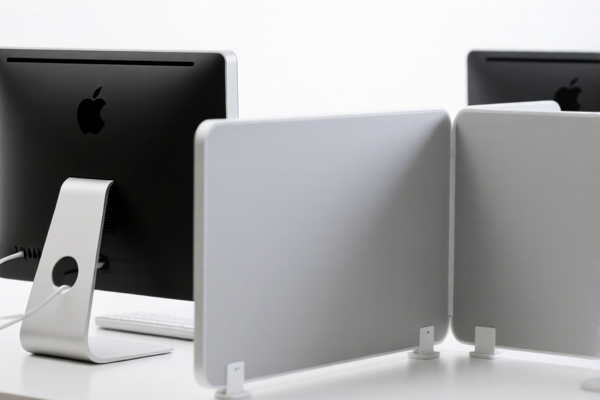
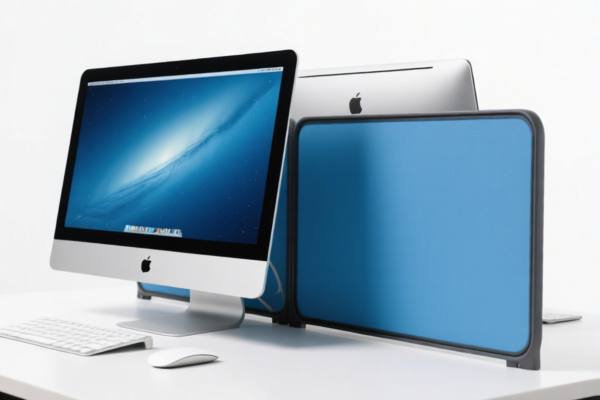
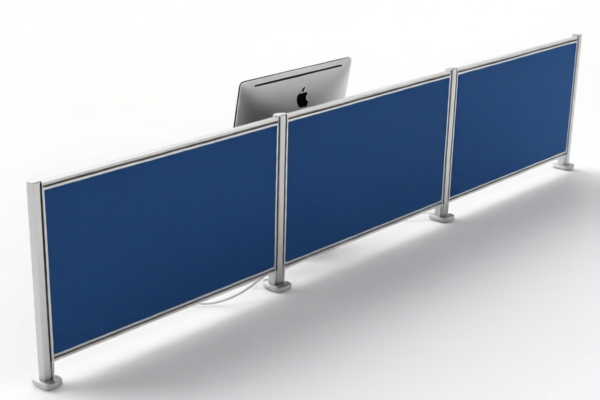

AI分析
🏢 Office Desk Partition (办公桌隔断)
🌐 HS Code Reference & Customs Clearance Guide | 2026 Latest Tariff Analysis | Professional Strategy for Metal & Wood Office Furniture
📌 I. Product Definition: What Exactly is an "Office Desk Partition"?
An Office Desk Partition is a structural component used in office environments to divide workspace, provide privacy, and define individual workstations. In international trade, these are generally classified under Chapter 94 (Furniture; bedding, mattresses, mattress supports, cushions and similar stuffed furnishings).
The classification heavily depends on the material composition (Metal vs. Wood) and whether it is considered a standalone furniture piece or a component/assembly.
⚠️ Key Distinction Point:
- Metal Parts: If the partition is primarily metallic (frames, panels), it often falls under "Other Metal Furniture" or specific metallic furniture subsets.
- Wooden Parts: If the partition is primarily wooden, it falls under "Other Wooden Furniture for Offices."
- Components: If sold as kits or loose parts for assembly, customs may scrutinize whether it constitutes a complete article of furniture.
📦 II. HS Code Classification Details (2026 Official Tariff Alignment)
Based on the provided data, here are the three most likely HS Codes for Office Desk Partitions, depending on material and structure:
| HS Code | Product Description | Application Scenario | Material Logic |
|---|---|---|---|
9403.20.00.78 |
Other Metal Furniture (Specifically: Office Desk Partitions) | Metal frame partitions, aluminum dividers, steel mesh screens | ✅ Metal Falls under "Other Metal Furniture" |
9403.10.00.40 |
Metal or Wooden Furniture for Offices (General Metal/Wood Category) | Hybrid structures or standard office furniture components matching metal/wood office use | ✅ Metal/Wood General office furniture logic |
9403.30.80.90 |
Other Wooden Furniture for Offices (Catch-all for Wood) | Wooden dividers, wood-composite partitions, MDF screens | ✅ Wood "Other Wooden Office Furniture" fallback |
🔍 Critical Insight:
-9403.20.00.78is the most precise fit for metal partitions, explicitly mentioning "Office Desk Partitions" in the summary.
-9403.30.80.90is the fallback for wooden partitions if they don’t fall under specific wooden office furniture subheads.
-9403.10.00.40acts as a broader category for metal/wood office furniture where specific sub-codes might not apply directly.
💰 III. 2026 Latest Tariff Rate Breakdown (Detailed Tax Clauses)
✅ Applicable Country: United States (US)
✅ Origin: China (CN)
✅ Effective Time: Current rates apply including subsequent imports
🎯 1. 9403.20.00.78 —— Other Metal Furniture (Office Desk Partitions)
| Item | Content |
|---|---|
| Base Tariff | 0.0% (ad valorem) |
| Section 301 Additional Tariff | +25.0% |
| Section 301 (List 3/4A/B) | +10.0% (Specific to steel, aluminum, copper products under "122 Clause") |
| Steel/Aluminum/Copper Additional Tariff | +50.0% (Under "122 Clause") |
| Total Tax Rate | 85.0% |
| Tax Calculation | CIF Value × 85% |
| De Minimis Exemption | ❌ Not Eligible (High tariff items are excluded) |
| Legal Basis Path | USITC:9403.20.00.78 → Section 301: 25% → 122 Clause: 10% + 50% |
📌 Explanation:
- This is the highest tax bracket for metal office furniture.
- The 85% total includes:
- 25% from Section 301 (general China tariffs).
- 10% from the "122 Clause" (targeting specific strategic materials).
- 50% from the "122 Clause" (specifically for steel, aluminum, and copper products).
- Critical Note: If your partition is made of steel or aluminum, the 50% surcharge applies, making the total 85%. This is extremely punitive and must be factored into cost models.
🎯 2. 9403.10.00.40 —— Metal or Wooden Office Furniture
| Item | Content |
|---|---|
| Base Tariff | 0.0% |
| Section 301 Additional Tariff | +25.0% |
| Section 301 (List 3/4A/B) | +10.0% (Specific to steel, aluminum, copper products under "122 Clause") |
| Steel/Aluminum/Copper Additional Tariff | +50.0% (Under "122 Clause") |
| Total Tax Rate | 85.0% |
| Tax Calculation | CIF Value × 85% |
| De Minimis Exemption | ❌ Not Eligible |
| Legal Basis Path | USITC:9403.10.00.40 → Section 301: 25% → 122 Clause: 10% + 50% |
📌 Note:
- Even if classified under this broader code, if the product contains steel, aluminum, or copper, the 50% 122 Clause tariff still applies.
- Total 85% remains the same for metallic compositions.
🎯 3. 9403.30.80.90 —— Other Wooden Office Furniture
| Item | Content |
|---|---|
| Base Tariff | 0.0% |
| Section 301 Additional Tariff | +25.0% |
| Section 301 (List 3/4A/B) | +10.0% (Specific to steel, aluminum, copper products under "122 Clause") |
| Steel/Aluminum/Copper Additional Tariff | N/A (Product is wood, not metal) |
| Total Tax Rate | 35.0% |
| Tax Calculation | CIF Value × 35% |
| De Minimis Exemption | ❌ Not Eligible |
| Legal Basis Path | USITC:9403.30.80.90 → Section 301: 25% → 122 Clause: 10% |
📌 Important:
- Wooden partitions avoid the 50% steel/aluminum surcharge.
- Total tax is 35% (25% Section 301 + 10% 122 Clause).
- This is significantly cheaper than metal partitions (85% vs. 35%).
- Strategy: If possible, consider wood-composite or non-metallic designs to reduce tariffs.
🛠️ IV. Customs Clearance Practical Advice (Pitfall Avoidance Guide)
✅ 1. Document Checklist (Mandatory)
| Document | Required | Explanation |
|---|---|---|
| ✅ Product Specification Sheet | ✔️ | Must detail material (Metal/Wood), dimensions, weight, and assembly status. |
| ✅ Material Composition Report | ✔️ | Critical to prove if it’s steel, aluminum, or wood. Incorrect classification leads to 50% penalty. |
| ✅ Product Photos (Labeled) | ✔️ | Show entire unit, joints, and any metal/wood labels. |
| ✅ Commercial Invoice | ✔️ | Clearly state "Office Desk Partition" and material type. Avoid vague terms like "Furniture Part." |
| ✅ Packing List | ✔️ | Detail packaging to ensure no confusion with "components" vs. "finished goods." |
| ✅ Origin Certificate (CO) | ✔️ | If from non-China origin, may qualify for different rates (but check US rules). |
✅ 2. Classification Strategy (Key Rules)
🔥 “Material Dictates Tax: Metal 85%, Wood 35%. Be Precise!”
| Scenario | Correct HS Code | Consequence of Error |
|---|---|---|
| Steel/Aluminum Partition | 9403.20.00.78 or 9403.10.00.40 |
Misclassifying as wood → Back taxes + Penalties |
| Wooden Partition | 9403.30.80.90 |
Misclassifying as metal → Overpayment (but less risky) |
| Mixed Material (e.g., Wood Frame + Metal Mesh) | Depends on Essential Character | Customs may rule based on primary material. Provide detailed specs. |
| Kits for Assembly | Same as finished good | Do not split shipment into "parts" and "assembled" to avoid scrutiny. |
✅ 3. Special Cases & Mitigation
| Case | Handling Advice |
|---|---|
| OEM Custom Partitions | Provide client design specs to prove it’s a finished article, not just a component. |
| Hybrid Materials (Wood + Metal) | If metal is >50% by value/weight, it may be classified as metal (85%). Aim for wood-dominant design if cost-sensitive. |
| Avoiding the 50% Surcharge | If using aluminum or steel, the 50% is unavoidable under current rules. Consider polymer-coated or composite materials that don’t trigger "122 Clause" if applicable (consult legal counsel). |
| De Minimis (Section 321) | ❌ Not Available for these HS codes due to high tariffs and "122 Clause" restrictions. |
🌍 V. Global Market Comparison (2026 Update)
| Country/Region | Recommended HS Code | Tariff Rate (China Origin) | Notes |
|---|---|---|---|
| 🇺🇸 USA | 9403.20.00.78 (Metal)9403.30.80.90 (Wood) |
85% (Metal) 35% (Wood) |
High barriers due to Section 301 & 122 Clause. |
| 🇨🇳 China | 9403.20 / 9403.30 |
~5-10% | No additional punitive tariffs. |
| 🇪🇺 EU | 9403.20 / 9403.30 |
~0-5% | No Section 301 equivalent. |
| 🇨🇦 Canada | 9403.20 / 9403.30 |
~0-5% | CUSMA may apply for Mexican/US origin. |
| 🇯🇵 Japan | 9403.20 / 9403.30 |
~0-5% | Low tariffs, no punitive surcharges. |
📌 Conclusion:
- USA is the most challenging market due to 85% tariffs on metal partitions.
- Wooden partitions (35%) are a strategic alternative to reduce costs.
- EU, Japan, and Canada offer much lower barriers, making them preferable for high-volume, low-margin goods.
📌 VI. Common Mistakes & Pitfalls (Lessons Learned)
❌ Mistake 1: Classifying metal partitions as wooden to avoid tariffs.
👉 Consequence: Customs audit finds steel/aluminum → 85% tax + 200% penalty.
❌ Mistake 2: Ignoring the "122 Clause" 50% surcharge for steel/aluminum.
👉 Consequence: Budgeting for 25% but facing 85% → Cash flow crisis.
❌ Mistake 3: Declaring as "Parts" to claim lower duties.
👉 Consequence: Customs rules that assembled partitions are complete articles → Full tax + demurrage.
❌ Mistake 4: Using vague descriptions like "Office Furniture Part."
👉 Consequence: Customs delays for classification review → Shipment holds.
✅ Best Practice:
"Steel/Aluminum? Expect 85%. Wood? 35%. Be explicit: 'Office Desk Partition, 100% Steel, Model XYZ.' Provide material certs."
🎯 VII. Conclusion: Strategic Sourcing & Cost Optimization
🎯 Key Takeaways:
🔹 Material is Destiny: Metal partitions face 85% tariffs; Wooden face 35%.
🔹 122 Clause is Brutal: The 50% surcharge on steel/aluminum makes US imports extremely expensive.
🔹 Design for Duty: Consider wood-composite or non-metallic designs to lower tariffs.
🔹 Pre-Rule is Essential: Apply for a Binding Ruling with US Customs before shipping to confirm classification.
📌 Pro Tip:
If your product is aluminum, check if it qualifies for any exclusions (rare for 122 Clause). If not, explore near-shoring to Mexico or Vietnam to avoid China-origin tariffs entirely.
📣 Immediate Action:
📞 Contact a Licensed Customs Broker + Provide Material Safety Data Sheet (MSDS) + Request Pre-Ruling
🚀 Optimize your supply chain to mitigate the 85% tariff hit!
✨ Precision Classification = Cost Savings!
💼 Every dollar saved on duty is pure profit!
用户评价
关于 HS 编码归类
协调制度(HS)是由世界海关组织(WCO)制定的国际贸易商品分类标准。全球 200 多个国家采用 HS 系统作为海关关税、贸易统计和进出口监管的基础。
每个 HS 编码遵循以下层级结构:
- 章(2 位)——商品大类(例如:第 84 章:机器和机械设备)
- 品目(4 位)——章内的更具体分类
- 子目(6 位)——国际通用细分,所有 WCO 成员国统一使用
- 本国细分(8-10 位)——各国自行扩展的细分编码,如美国 HTSUS 10 位编码
正确的 HS 编码归类对于顺利通关、准确缴纳关税和遵守贸易法规至关重要。错误归类可能导致海关延误、多缴关税或罚款。
从CN进口到US时,适用的关税税率可能包括:
- 最惠国(MFN)税率——适用于 WTO 成员国的标准关税税率
- 普通税率——适用于无贸易协定国家
- 贸易救济关税——附加关税,如 301 条款(反倾销)、232 条款(国家安全)或反补贴税
本页内容仅供参考。如需正式归类,请咨询当地海关或持牌报关代理。