Office Desk Partition
CN → US| HS Code | Tariff Rate | Origin | Destination | Doc |
|---|---|---|---|---|
| 9403200078 | 85.0% | CN | US | Official Doc |
| 9403100040 | 85.0% | CN | US | Official Doc |
| 9403308090 | 35.0% | CN | US | Official Doc |
Product Images
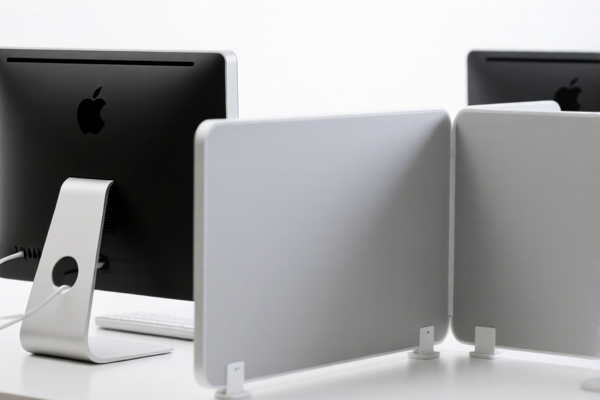
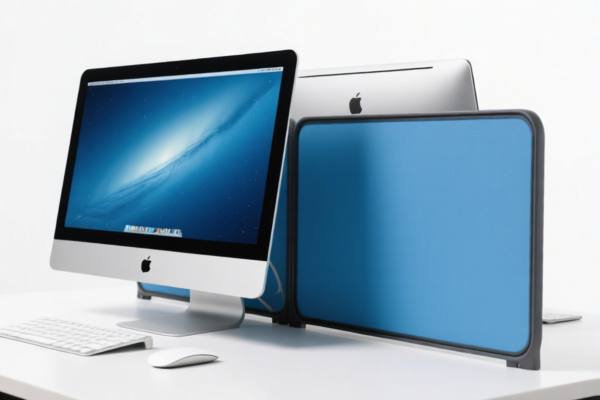
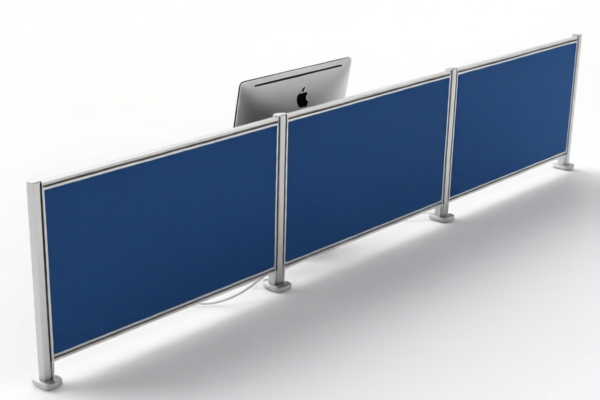

AI Analysis
🏢 Office Desk Partition (办公桌隔断)
🌐 HS Code Reference & Customs Clearance Guide | 2026 Latest Tariff Analysis | Professional Strategy for Metal & Wood Office Furniture
📌 I. Product Definition: What Exactly is an "Office Desk Partition"?
An Office Desk Partition is a structural component used in office environments to divide workspace, provide privacy, and define individual workstations. In international trade, these are generally classified under Chapter 94 (Furniture; bedding, mattresses, mattress supports, cushions and similar stuffed furnishings).
The classification heavily depends on the material composition (Metal vs. Wood) and whether it is considered a standalone furniture piece or a component/assembly.
⚠️ Key Distinction Point:
- Metal Parts: If the partition is primarily metallic (frames, panels), it often falls under "Other Metal Furniture" or specific metallic furniture subsets.
- Wooden Parts: If the partition is primarily wooden, it falls under "Other Wooden Furniture for Offices."
- Components: If sold as kits or loose parts for assembly, customs may scrutinize whether it constitutes a complete article of furniture.
📦 II. HS Code Classification Details (2026 Official Tariff Alignment)
Based on the provided data, here are the three most likely HS Codes for Office Desk Partitions, depending on material and structure:
| HS Code | Product Description | Application Scenario | Material Logic |
|---|---|---|---|
9403.20.00.78 |
Other Metal Furniture (Specifically: Office Desk Partitions) | Metal frame partitions, aluminum dividers, steel mesh screens | ✅ Metal Falls under "Other Metal Furniture" |
9403.10.00.40 |
Metal or Wooden Furniture for Offices (General Metal/Wood Category) | Hybrid structures or standard office furniture components matching metal/wood office use | ✅ Metal/Wood General office furniture logic |
9403.30.80.90 |
Other Wooden Furniture for Offices (Catch-all for Wood) | Wooden dividers, wood-composite partitions, MDF screens | ✅ Wood "Other Wooden Office Furniture" fallback |
🔍 Critical Insight:
-9403.20.00.78is the most precise fit for metal partitions, explicitly mentioning "Office Desk Partitions" in the summary.
-9403.30.80.90is the fallback for wooden partitions if they don’t fall under specific wooden office furniture subheads.
-9403.10.00.40acts as a broader category for metal/wood office furniture where specific sub-codes might not apply directly.
💰 III. 2026 Latest Tariff Rate Breakdown (Detailed Tax Clauses)
✅ Applicable Country: United States (US)
✅ Origin: China (CN)
✅ Effective Time: Current rates apply including subsequent imports
🎯 1. 9403.20.00.78 —— Other Metal Furniture (Office Desk Partitions)
| Item | Content |
|---|---|
| Base Tariff | 0.0% (ad valorem) |
| Section 301 Additional Tariff | +25.0% |
| Section 301 (List 3/4A/B) | +10.0% (Specific to steel, aluminum, copper products under "122 Clause") |
| Steel/Aluminum/Copper Additional Tariff | +50.0% (Under "122 Clause") |
| Total Tax Rate | 85.0% |
| Tax Calculation | CIF Value × 85% |
| De Minimis Exemption | ❌ Not Eligible (High tariff items are excluded) |
| Legal Basis Path | USITC:9403.20.00.78 → Section 301: 25% → 122 Clause: 10% + 50% |
📌 Explanation:
- This is the highest tax bracket for metal office furniture.
- The 85% total includes:
- 25% from Section 301 (general China tariffs).
- 10% from the "122 Clause" (targeting specific strategic materials).
- 50% from the "122 Clause" (specifically for steel, aluminum, and copper products).
- Critical Note: If your partition is made of steel or aluminum, the 50% surcharge applies, making the total 85%. This is extremely punitive and must be factored into cost models.
🎯 2. 9403.10.00.40 —— Metal or Wooden Office Furniture
| Item | Content |
|---|---|
| Base Tariff | 0.0% |
| Section 301 Additional Tariff | +25.0% |
| Section 301 (List 3/4A/B) | +10.0% (Specific to steel, aluminum, copper products under "122 Clause") |
| Steel/Aluminum/Copper Additional Tariff | +50.0% (Under "122 Clause") |
| Total Tax Rate | 85.0% |
| Tax Calculation | CIF Value × 85% |
| De Minimis Exemption | ❌ Not Eligible |
| Legal Basis Path | USITC:9403.10.00.40 → Section 301: 25% → 122 Clause: 10% + 50% |
📌 Note:
- Even if classified under this broader code, if the product contains steel, aluminum, or copper, the 50% 122 Clause tariff still applies.
- Total 85% remains the same for metallic compositions.
🎯 3. 9403.30.80.90 —— Other Wooden Office Furniture
| Item | Content |
|---|---|
| Base Tariff | 0.0% |
| Section 301 Additional Tariff | +25.0% |
| Section 301 (List 3/4A/B) | +10.0% (Specific to steel, aluminum, copper products under "122 Clause") |
| Steel/Aluminum/Copper Additional Tariff | N/A (Product is wood, not metal) |
| Total Tax Rate | 35.0% |
| Tax Calculation | CIF Value × 35% |
| De Minimis Exemption | ❌ Not Eligible |
| Legal Basis Path | USITC:9403.30.80.90 → Section 301: 25% → 122 Clause: 10% |
📌 Important:
- Wooden partitions avoid the 50% steel/aluminum surcharge.
- Total tax is 35% (25% Section 301 + 10% 122 Clause).
- This is significantly cheaper than metal partitions (85% vs. 35%).
- Strategy: If possible, consider wood-composite or non-metallic designs to reduce tariffs.
🛠️ IV. Customs Clearance Practical Advice (Pitfall Avoidance Guide)
✅ 1. Document Checklist (Mandatory)
| Document | Required | Explanation |
|---|---|---|
| ✅ Product Specification Sheet | ✔️ | Must detail material (Metal/Wood), dimensions, weight, and assembly status. |
| ✅ Material Composition Report | ✔️ | Critical to prove if it’s steel, aluminum, or wood. Incorrect classification leads to 50% penalty. |
| ✅ Product Photos (Labeled) | ✔️ | Show entire unit, joints, and any metal/wood labels. |
| ✅ Commercial Invoice | ✔️ | Clearly state "Office Desk Partition" and material type. Avoid vague terms like "Furniture Part." |
| ✅ Packing List | ✔️ | Detail packaging to ensure no confusion with "components" vs. "finished goods." |
| ✅ Origin Certificate (CO) | ✔️ | If from non-China origin, may qualify for different rates (but check US rules). |
✅ 2. Classification Strategy (Key Rules)
🔥 “Material Dictates Tax: Metal 85%, Wood 35%. Be Precise!”
| Scenario | Correct HS Code | Consequence of Error |
|---|---|---|
| Steel/Aluminum Partition | 9403.20.00.78 or 9403.10.00.40 |
Misclassifying as wood → Back taxes + Penalties |
| Wooden Partition | 9403.30.80.90 |
Misclassifying as metal → Overpayment (but less risky) |
| Mixed Material (e.g., Wood Frame + Metal Mesh) | Depends on Essential Character | Customs may rule based on primary material. Provide detailed specs. |
| Kits for Assembly | Same as finished good | Do not split shipment into "parts" and "assembled" to avoid scrutiny. |
✅ 3. Special Cases & Mitigation
| Case | Handling Advice |
|---|---|
| OEM Custom Partitions | Provide client design specs to prove it’s a finished article, not just a component. |
| Hybrid Materials (Wood + Metal) | If metal is >50% by value/weight, it may be classified as metal (85%). Aim for wood-dominant design if cost-sensitive. |
| Avoiding the 50% Surcharge | If using aluminum or steel, the 50% is unavoidable under current rules. Consider polymer-coated or composite materials that don’t trigger "122 Clause" if applicable (consult legal counsel). |
| De Minimis (Section 321) | ❌ Not Available for these HS codes due to high tariffs and "122 Clause" restrictions. |
🌍 V. Global Market Comparison (2026 Update)
| Country/Region | Recommended HS Code | Tariff Rate (China Origin) | Notes |
|---|---|---|---|
| 🇺🇸 USA | 9403.20.00.78 (Metal)9403.30.80.90 (Wood) |
85% (Metal) 35% (Wood) |
High barriers due to Section 301 & 122 Clause. |
| 🇨🇳 China | 9403.20 / 9403.30 |
~5-10% | No additional punitive tariffs. |
| 🇪🇺 EU | 9403.20 / 9403.30 |
~0-5% | No Section 301 equivalent. |
| 🇨🇦 Canada | 9403.20 / 9403.30 |
~0-5% | CUSMA may apply for Mexican/US origin. |
| 🇯🇵 Japan | 9403.20 / 9403.30 |
~0-5% | Low tariffs, no punitive surcharges. |
📌 Conclusion:
- USA is the most challenging market due to 85% tariffs on metal partitions.
- Wooden partitions (35%) are a strategic alternative to reduce costs.
- EU, Japan, and Canada offer much lower barriers, making them preferable for high-volume, low-margin goods.
📌 VI. Common Mistakes & Pitfalls (Lessons Learned)
❌ Mistake 1: Classifying metal partitions as wooden to avoid tariffs.
👉 Consequence: Customs audit finds steel/aluminum → 85% tax + 200% penalty.
❌ Mistake 2: Ignoring the "122 Clause" 50% surcharge for steel/aluminum.
👉 Consequence: Budgeting for 25% but facing 85% → Cash flow crisis.
❌ Mistake 3: Declaring as "Parts" to claim lower duties.
👉 Consequence: Customs rules that assembled partitions are complete articles → Full tax + demurrage.
❌ Mistake 4: Using vague descriptions like "Office Furniture Part."
👉 Consequence: Customs delays for classification review → Shipment holds.
✅ Best Practice:
"Steel/Aluminum? Expect 85%. Wood? 35%. Be explicit: 'Office Desk Partition, 100% Steel, Model XYZ.' Provide material certs."
🎯 VII. Conclusion: Strategic Sourcing & Cost Optimization
🎯 Key Takeaways:
🔹 Material is Destiny: Metal partitions face 85% tariffs; Wooden face 35%.
🔹 122 Clause is Brutal: The 50% surcharge on steel/aluminum makes US imports extremely expensive.
🔹 Design for Duty: Consider wood-composite or non-metallic designs to lower tariffs.
🔹 Pre-Rule is Essential: Apply for a Binding Ruling with US Customs before shipping to confirm classification.
📌 Pro Tip:
If your product is aluminum, check if it qualifies for any exclusions (rare for 122 Clause). If not, explore near-shoring to Mexico or Vietnam to avoid China-origin tariffs entirely.
📣 Immediate Action:
📞 Contact a Licensed Customs Broker + Provide Material Safety Data Sheet (MSDS) + Request Pre-Ruling
🚀 Optimize your supply chain to mitigate the 85% tariff hit!
✨ Precision Classification = Cost Savings!
💼 Every dollar saved on duty is pure profit!
Customer Reviews
About HS Code Classification
The Harmonized System (HS) is an internationally standardized nomenclature developed by the World Customs Organization (WCO) to classify traded products. Over 200 countries use the HS system as the basis for customs tariffs, trade statistics, and import/export regulations.
Each HS code follows a hierarchical structure:
- Chapter (2 digits) — Broad category of goods (e.g., Chapter 84: Machinery and Mechanical Appliances)
- Heading (4 digits) — More specific grouping within the chapter
- Subheading (6 digits) — Internationally standardized breakdown, used by all WCO member countries
- National subdivisions (8-10 digits) — Country-specific extensions for further classification, such as US HTSUS 10-digit codes
Correct HS code classification is essential for smooth customs clearance, accurate duty payment, and compliance with trade regulations. Misclassification can lead to customs delays, overpayment of duties, or penalties.
When importing from CN to US, the applicable tariff rates may include:
- Most-Favored-Nation (MFN) rate — The standard duty rate applied to WTO members
- General rate — Applied to countries without trade agreements
- Trade remedy duties — Additional tariffs such as Section 301 (anti-dumping), Section 232 (national security), or countervailing duties
The information provided on this page is for reference purposes only. For official classification, please consult with your local customs authority or a licensed customs broker.