Oleic Acid Mold Release Agent
CN → US| HS编码 | 关税税率 | 原产国 | 目的国 | 文档 |
|---|---|---|---|---|
| 1515908190 | 20.7% | CN | US | 官方文档 |
| 3824994190 | 39.6% | CN | US | 官方文档 |
| 3404905150 | 35.0% | CN | US | 官方文档 |
| 3404901000 | 35.0% | CN | US | 官方文档 |
| 3824994140 | 39.6% | CN | US | 官方文档 |
商品图片
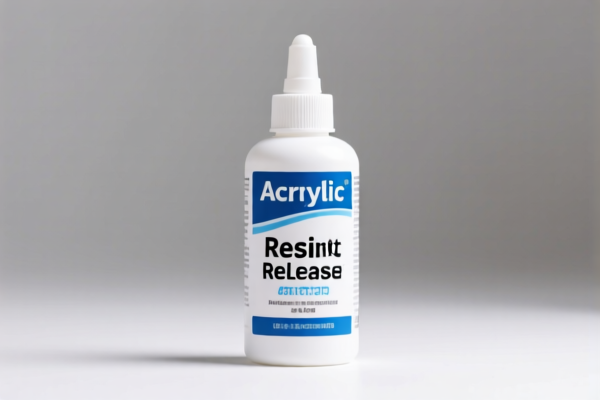
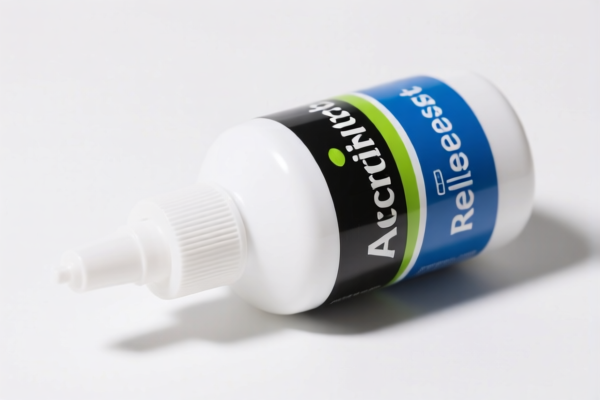
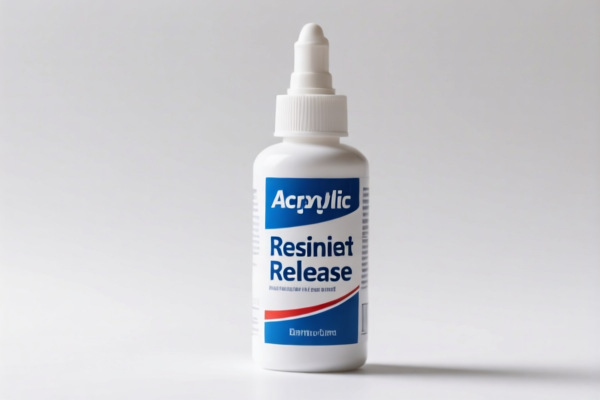
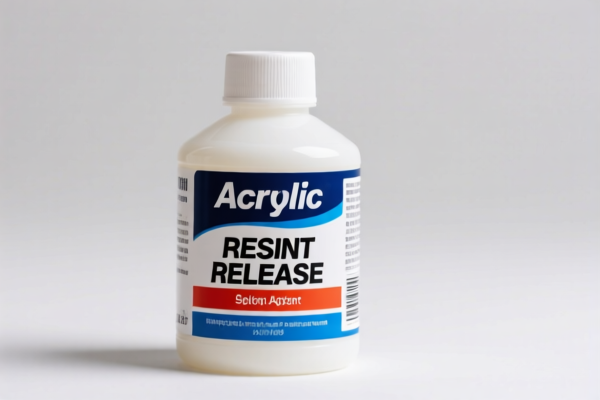
AI分析
🧪 Oleic Acid Mold Release Agent (植物脂肪/模具脱模剂)
🌐 HS Code Classification & Customs Clearance Guide | 2026 Latest Tariff Analysis | Strategic Import Strategy for US Market
📌 Part 1: Product Definition & Classification Logic
Oleic Acid Mold Release Agent is a specialized chemical aid used in manufacturing (casting, molding, or composite industries) to prevent material adhesion to molds. Based on the provided data, its classification hinges on two conflicting characteristics: 1. Material Origin: "Oleic Acid" implies a plant-derived fat/oil (Chemical nature). 2. End Use: "Mold Release Agent" implies a chemical preparation/prepared substance (Functional nature).
This duality creates a classification dilemma between Chapter 15 (Animal/Vegetable Fats) and Chapter 34/38 (Prepared Binders/Lubricants/Chemical Products). The following analysis breaks down why each HS Code applies and the significant tariff implications.
📦 Part 2: HS Code Classification Details & Tax Breakdown
The classification varies significantly depending on whether Customs prioritizes the chemical base (Fat) or the industrial preparation (Chemical).
🎯 1. Classification by Chemical Base (Vegetable Fat)
Logic: Customs views the product primarily as a processed vegetable oil/fat due to the "Oleic Acid" content.
| HS Code | Product Description | Tariff Impact | Total Tax Rate |
|---|---|---|---|
| 1515.90.81.90 | Other Fixed Vegetable Fats and Oils (Excluding Sesame, Linseed, etc.) |
📉 Lowest Risk | 20.7% |
💰 Tax Detail for 1515.90.81.90:
* Base Duty: 3.2%
* Section 301 (Trade War) Duty: 7.5%
* Section 122 Duty (China Specific): 10%
* Total: 20.7%
* Matching Logic: "Inferred from 'Plant Fat' as vegetable oil category; belongs to 'Other' sub-category as it is not explicitly excluded (like hemp seed oil)."
🎯 2. Classification by Industrial Preparation (Chemical/Binding Agent)
Logic: Customs views the product primarily as a prepared chemical preparation or preformed binder for industrial mold use, overriding the raw material origin. This category is significantly more expensive due to higher Section 301 duties.
| HS Code | Product Description | Tariff Impact | Total Tax Rate |
|---|---|---|---|
| 3824.99.41.40 | Other Prepared Binders for Foundry Molds/Cores (Animal/Vegetable Origin) |
📈 High Cost | 39.6% |
| 3824.99.41.90 | Other Chemical Products & Preparations (Animal/Vegetable Fat Substances) |
📈 High Cost | 39.6% |
💰 Tax Detail for 3824.99.41.40 & 3824.99.41.90:
* Base Duty: 4.6%
* Section 301 (Trade War) Duty: 25.0%
* Section 122 Duty (China Specific): 10%
* Total: 39.6%
* Matching Logic:
* 3824.99.41.40: "Plant Fat" matches "Animal/Vegetable Origin"; "Mold Release" matches "Prepared Binders for Foundry Molds."
* 3824.99.41.90: "Plant Fat" matches material; "Mold Release" is a chemical preparation under "Chemical Products."
🎯 3. Classification by Wax/Lubricant Preparation
Logic: Customs views the product as a synthetic wax or prepared lubricant used for release purposes. Note that while the base tax is lower, the high Section 301 duty remains.
| HS Code | Product Description | Tariff Impact | Total Tax Rate |
|---|---|---|---|
| 3404.90.51.50 | Other Artificial Waxes & Prepared Waxes (Non-Automotive/Non-Industrial Specific?) |
⚖️ Medium-High | 35.0% |
| 3404.90.10.00 | Other Artificial Waxes & Prepared Waxes | ⚖️ Medium-High | 35.0% |
💰 Tax Detail for 3404.90.51.50 & 3404.90.10.00:
* Base Duty: 0.0%
* Section 301 (Trade War) Duty: 25.0%
* Section 122 Duty (China Specific): 10%
* Total: 35.0%
* Matching Logic: "Mold release agents are often composed of waxes/oils; matches 'Artificial/Prepared Wax' material attributes under the 'Other' residual category."
🛠️ Part 3: Customs Clearance Strategic Advice
✅ 1. Critical Material & Documentation Checklist
To justify your chosen HS Code (and avoid misclassification penalties), you must provide:
| Document | Requirement | Purpose |
|---|---|---|
| ✅ Ingredient Declaration (MSDS) | Must list % composition. | Proves if it is >50% Oleic Acid (supports Ch. 15) or if it contains binding agents/silicates (supports Ch. 38/34). |
| ✅ Functional Description | "Mold Release Agent for [Specific Industry]." | Clarifies the industrial purpose. If it acts as a binder, it pushes toward 3824. If it acts only as a lubricant/release, 3404 or 1515 is stronger. |
| ✅ Product Images | Packaging, Label, Liquid/Solid State. | Visual evidence of physical state (oil vs. wax paste). |
| ✅ Certificate of Origin | For Section 122 Duty Assessment. | Crucial for confirming the 10% Section 122 duty applies to China-origin goods. |
✅ 2. Classification Strategy & Risk Mitigation
🚀 Strategy A: Aim for 1515.90.81.90 (Tax: 20.7%)
- When to use: If the product is purely or predominantly Oleic Acid with minimal additives.
- Argument: "This is a refined vegetable oil derivative used as a lubricant. It does not contain binding agents (silicates, clay) that constitute a 'prepared binder' under 3824."
- Risk: Moderate. If the product contains significant binding polymers, Customs may reclassify to 3824.
🚀 Strategy B: Aim for 3404.90.xxxx (Tax: 35.0%)
- When to use: If the product is a wax-based paste or contains synthetic waxes alongside oleic acid.
- Argument: "The primary function is lubrication/release via a wax matrix, fitting the definition of 'prepared wax' rather than a chemical binder."
- Risk: Low-Moderate. Often viewed as a "residual" category, so classification disputes are less aggressive than for 3824.
⚠️ Strategy C: Accept 3824.99.41.xx (Tax: 39.6%)
- When to use: If the product is a complex mixture containing silicates, clays, or specific bonding agents designed to hold mold cores together while releasing.
- Argument: Acknowledge it is a "prepared binder." High duty is accepted due to precise functional definition.
- Risk: Low (if description is accurate), but High Cost.
✅ 3. Important Tax Clauses Explanation (Why the Difference?)
The tax disparity (20.7% vs 39.6%) is driven by US Trade Policy Layers:
-
Base Duty (MFN):
- Ch 15 (Fats): 3.2% (Lower, promoting basic material trade)
- Ch 34/38 (Chemicals): 4.6% (Standard chemical tariff)
- Ch 34 (Waxes): 0.0% (Low base, but...)
-
Section 301 Duties (The "Trade War" Tax):
- Ch 15: Historically lower priority → 7.5%
- Ch 34/38: Broadly targeted industrial chemicals → 25.0%
- Note: This is the biggest differentiator.
-
Section 122 Duties (China-Specific):
- Applies to all listed codes for China-origin goods → 10%
- Note: This is a retaliatory/administrative duty on top of Section 301.
📌 Part 4: Common Pitfalls & Best Practices
❌ Pitfall 1: Generic Naming
* Bad: "Chemical Lubricant"
* Good: "Oleic Acid-Based Mold Release Agent, Liquid, Non-Binding"
* Why: Vague names lead Customs to default to the highest-risk or most generic chemical code (3824.99.99).
❌ Pitfall 2: Ignoring Section 122 * Many importers forget that Section 122 (10%) applies regardless of HS Code if the origin is China. Ensure your COO is clear.
❌ Pitfall 3: Misidentifying "Binder" vs. "Lubricant"
* If your product sticks things together, it’s a binder (3824).
* If your product prevents sticking, it’s a release agent/lubricant (1515, 3404, or 3824.10).
* Recommendation: If it is purely for release, argue for 3404 or 1515. Do not call it a "binder" in documentation.
🎯 Conclusion: Professional Clearance Recommendation
- Cost Optimization: If your product is >80% Oleic Acid with no binding agents, fight for
1515.90.81.90(20.7%). This saves ~19% in duty compared to the chemical classification. - Documentation: Provide a Formula Sheet and MSDS clearly stating "No Binding Agents" or "Pure Vegetable Oil Derivative."
- Pre-Ruling: If shipping large volumes, consider applying for an US CBP Advance Ruling. Present the exact formula and get a binding decision on HS Code to avoid post-audit penalties.
📣 Final Tip: "Define by Function, Justify by Formula." If it releases, it’s a lubricant/wax. If it binds, it’s a binder. Accurate description = Accurate Tax.
✨ Accurate Classification Saves 19% in Duties! 💼 Consult a Customs Broker with the MSDS and Formula for a final ruling.
用户评价
关于 HS 编码归类
协调制度(HS)是由世界海关组织(WCO)制定的国际贸易商品分类标准。全球 200 多个国家采用 HS 系统作为海关关税、贸易统计和进出口监管的基础。
每个 HS 编码遵循以下层级结构:
- 章(2 位)——商品大类(例如:第 84 章:机器和机械设备)
- 品目(4 位)——章内的更具体分类
- 子目(6 位)——国际通用细分,所有 WCO 成员国统一使用
- 本国细分(8-10 位)——各国自行扩展的细分编码,如美国 HTSUS 10 位编码
正确的 HS 编码归类对于顺利通关、准确缴纳关税和遵守贸易法规至关重要。错误归类可能导致海关延误、多缴关税或罚款。
从CN进口到US时,适用的关税税率可能包括:
- 最惠国(MFN)税率——适用于 WTO 成员国的标准关税税率
- 普通税率——适用于无贸易协定国家
- 贸易救济关税——附加关税,如 301 条款(反倾销)、232 条款(国家安全)或反补贴税
本页内容仅供参考。如需正式归类,请咨询当地海关或持牌报关代理。