Oleic Acid Mold Release Agent
CN → US| HS Code | Tariff Rate | Origin | Destination | Doc |
|---|---|---|---|---|
| 1515908190 | 20.7% | CN | US | Official Doc |
| 3824994190 | 39.6% | CN | US | Official Doc |
| 3404905150 | 35.0% | CN | US | Official Doc |
| 3404901000 | 35.0% | CN | US | Official Doc |
| 3824994140 | 39.6% | CN | US | Official Doc |
Product Images
AI Analysis
🧪 Oleic Acid Mold Release Agent (植物脂肪/模具脱模剂)
🌐 HS Code Classification & Customs Clearance Guide | 2026 Latest Tariff Analysis | Strategic Import Strategy for US Market
📌 Part 1: Product Definition & Classification Logic
Oleic Acid Mold Release Agent is a specialized chemical aid used in manufacturing (casting, molding, or composite industries) to prevent material adhesion to molds. Based on the provided data, its classification hinges on two conflicting characteristics: 1. Material Origin: "Oleic Acid" implies a plant-derived fat/oil (Chemical nature). 2. End Use: "Mold Release Agent" implies a chemical preparation/prepared substance (Functional nature).
This duality creates a classification dilemma between Chapter 15 (Animal/Vegetable Fats) and Chapter 34/38 (Prepared Binders/Lubricants/Chemical Products). The following analysis breaks down why each HS Code applies and the significant tariff implications.
📦 Part 2: HS Code Classification Details & Tax Breakdown
The classification varies significantly depending on whether Customs prioritizes the chemical base (Fat) or the industrial preparation (Chemical).
🎯 1. Classification by Chemical Base (Vegetable Fat)
Logic: Customs views the product primarily as a processed vegetable oil/fat due to the "Oleic Acid" content.
| HS Code | Product Description | Tariff Impact | Total Tax Rate |
|---|---|---|---|
| 1515.90.81.90 | Other Fixed Vegetable Fats and Oils (Excluding Sesame, Linseed, etc.) |
📉 Lowest Risk | 20.7% |
💰 Tax Detail for 1515.90.81.90:
* Base Duty: 3.2%
* Section 301 (Trade War) Duty: 7.5%
* Section 122 Duty (China Specific): 10%
* Total: 20.7%
* Matching Logic: "Inferred from 'Plant Fat' as vegetable oil category; belongs to 'Other' sub-category as it is not explicitly excluded (like hemp seed oil)."
🎯 2. Classification by Industrial Preparation (Chemical/Binding Agent)
Logic: Customs views the product primarily as a prepared chemical preparation or preformed binder for industrial mold use, overriding the raw material origin. This category is significantly more expensive due to higher Section 301 duties.
| HS Code | Product Description | Tariff Impact | Total Tax Rate |
|---|---|---|---|
| 3824.99.41.40 | Other Prepared Binders for Foundry Molds/Cores (Animal/Vegetable Origin) |
📈 High Cost | 39.6% |
| 3824.99.41.90 | Other Chemical Products & Preparations (Animal/Vegetable Fat Substances) |
📈 High Cost | 39.6% |
💰 Tax Detail for 3824.99.41.40 & 3824.99.41.90:
* Base Duty: 4.6%
* Section 301 (Trade War) Duty: 25.0%
* Section 122 Duty (China Specific): 10%
* Total: 39.6%
* Matching Logic:
* 3824.99.41.40: "Plant Fat" matches "Animal/Vegetable Origin"; "Mold Release" matches "Prepared Binders for Foundry Molds."
* 3824.99.41.90: "Plant Fat" matches material; "Mold Release" is a chemical preparation under "Chemical Products."
🎯 3. Classification by Wax/Lubricant Preparation
Logic: Customs views the product as a synthetic wax or prepared lubricant used for release purposes. Note that while the base tax is lower, the high Section 301 duty remains.
| HS Code | Product Description | Tariff Impact | Total Tax Rate |
|---|---|---|---|
| 3404.90.51.50 | Other Artificial Waxes & Prepared Waxes (Non-Automotive/Non-Industrial Specific?) |
⚖️ Medium-High | 35.0% |
| 3404.90.10.00 | Other Artificial Waxes & Prepared Waxes | ⚖️ Medium-High | 35.0% |
💰 Tax Detail for 3404.90.51.50 & 3404.90.10.00:
* Base Duty: 0.0%
* Section 301 (Trade War) Duty: 25.0%
* Section 122 Duty (China Specific): 10%
* Total: 35.0%
* Matching Logic: "Mold release agents are often composed of waxes/oils; matches 'Artificial/Prepared Wax' material attributes under the 'Other' residual category."
🛠️ Part 3: Customs Clearance Strategic Advice
✅ 1. Critical Material & Documentation Checklist
To justify your chosen HS Code (and avoid misclassification penalties), you must provide:
| Document | Requirement | Purpose |
|---|---|---|
| ✅ Ingredient Declaration (MSDS) | Must list % composition. | Proves if it is >50% Oleic Acid (supports Ch. 15) or if it contains binding agents/silicates (supports Ch. 38/34). |
| ✅ Functional Description | "Mold Release Agent for [Specific Industry]." | Clarifies the industrial purpose. If it acts as a binder, it pushes toward 3824. If it acts only as a lubricant/release, 3404 or 1515 is stronger. |
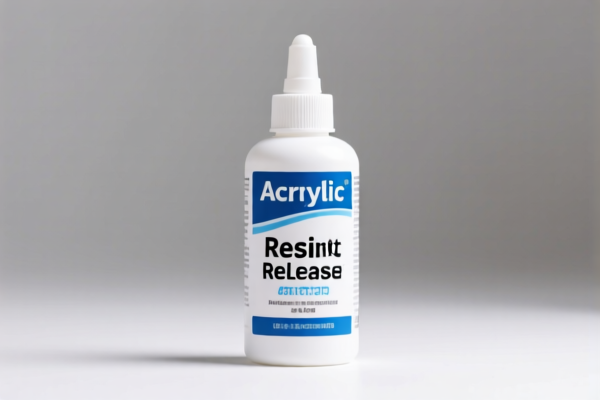
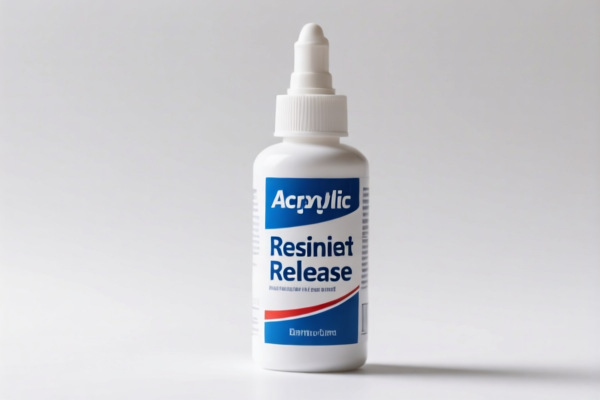
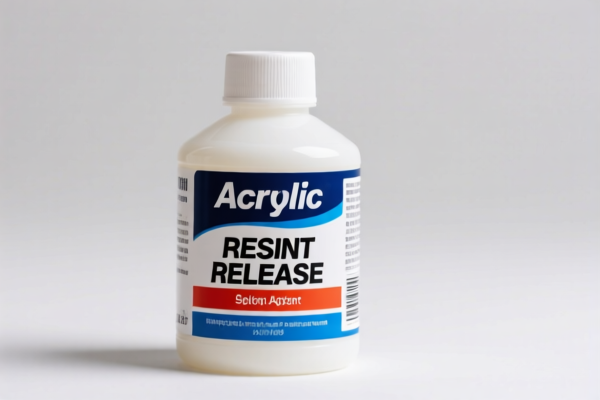
| ✅ Product Images | Packaging, Label, Liquid/Solid State. | Visual evidence of physical state (oil vs. wax paste). |
| ✅ Certificate of Origin | For Section 122 Duty Assessment. | Crucial for confirming the 10% Section 122 duty applies to China-origin goods. |
✅ 2. Classification Strategy & Risk Mitigation
🚀 Strategy A: Aim for 1515.90.81.90 (Tax: 20.7%)
- When to use: If the product is purely or predominantly Oleic Acid with minimal additives.
- Argument: "This is a refined vegetable oil derivative used as a lubricant. It does not contain binding agents (silicates, clay) that constitute a 'prepared binder' under 3824."
- Risk: Moderate. If the product contains significant binding polymers, Customs may reclassify to 3824.
🚀 Strategy B: Aim for 3404.90.xxxx (Tax: 35.0%)
- When to use: If the product is a wax-based paste or contains synthetic waxes alongside oleic acid.
- Argument: "The primary function is lubrication/release via a wax matrix, fitting the definition of 'prepared wax' rather than a chemical binder."
- Risk: Low-Moderate. Often viewed as a "residual" category, so classification disputes are less aggressive than for 3824.
⚠️ Strategy C: Accept 3824.99.41.xx (Tax: 39.6%)
- When to use: If the product is a complex mixture containing silicates, clays, or specific bonding agents designed to hold mold cores together while releasing.
- Argument: Acknowledge it is a "prepared binder." High duty is accepted due to precise functional definition.
- Risk: Low (if description is accurate), but High Cost.
✅ 3. Important Tax Clauses Explanation (Why the Difference?)
The tax disparity (20.7% vs 39.6%) is driven by US Trade Policy Layers:
-
Base Duty (MFN):
- Ch 15 (Fats): 3.2% (Lower, promoting basic material trade)
- Ch 34/38 (Chemicals): 4.6% (Standard chemical tariff)
- Ch 34 (Waxes): 0.0% (Low base, but...)
-
Section 301 Duties (The "Trade War" Tax):
- Ch 15: Historically lower priority → 7.5%
- Ch 34/38: Broadly targeted industrial chemicals → 25.0%
- Note: This is the biggest differentiator.
-
Section 122 Duties (China-Specific):
- Applies to all listed codes for China-origin goods → 10%
- Note: This is a retaliatory/administrative duty on top of Section 301.
📌 Part 4: Common Pitfalls & Best Practices
❌ Pitfall 1: Generic Naming
* Bad: "Chemical Lubricant"
* Good: "Oleic Acid-Based Mold Release Agent, Liquid, Non-Binding"
* Why: Vague names lead Customs to default to the highest-risk or most generic chemical code (3824.99.99).
❌ Pitfall 2: Ignoring Section 122 * Many importers forget that Section 122 (10%) applies regardless of HS Code if the origin is China. Ensure your COO is clear.
❌ Pitfall 3: Misidentifying "Binder" vs. "Lubricant"
* If your product sticks things together, it’s a binder (3824).
* If your product prevents sticking, it’s a release agent/lubricant (1515, 3404, or 3824.10).
* Recommendation: If it is purely for release, argue for 3404 or 1515. Do not call it a "binder" in documentation.
🎯 Conclusion: Professional Clearance Recommendation
- Cost Optimization: If your product is >80% Oleic Acid with no binding agents, fight for
1515.90.81.90(20.7%). This saves ~19% in duty compared to the chemical classification. - Documentation: Provide a Formula Sheet and MSDS clearly stating "No Binding Agents" or "Pure Vegetable Oil Derivative."
- Pre-Ruling: If shipping large volumes, consider applying for an US CBP Advance Ruling. Present the exact formula and get a binding decision on HS Code to avoid post-audit penalties.
📣 Final Tip: "Define by Function, Justify by Formula." If it releases, it’s a lubricant/wax. If it binds, it’s a binder. Accurate description = Accurate Tax.
✨ Accurate Classification Saves 19% in Duties! 💼 Consult a Customs Broker with the MSDS and Formula for a final ruling.
Customer Reviews
About HS Code Classification
The Harmonized System (HS) is an internationally standardized nomenclature developed by the World Customs Organization (WCO) to classify traded products. Over 200 countries use the HS system as the basis for customs tariffs, trade statistics, and import/export regulations.
Each HS code follows a hierarchical structure:
- Chapter (2 digits) — Broad category of goods (e.g., Chapter 84: Machinery and Mechanical Appliances)
- Heading (4 digits) — More specific grouping within the chapter
- Subheading (6 digits) — Internationally standardized breakdown, used by all WCO member countries
- National subdivisions (8-10 digits) — Country-specific extensions for further classification, such as US HTSUS 10-digit codes
Correct HS code classification is essential for smooth customs clearance, accurate duty payment, and compliance with trade regulations. Misclassification can lead to customs delays, overpayment of duties, or penalties.
When importing from CN to US, the applicable tariff rates may include:
- Most-Favored-Nation (MFN) rate — The standard duty rate applied to WTO members
- General rate — Applied to countries without trade agreements
- Trade remedy duties — Additional tariffs such as Section 301 (anti-dumping), Section 232 (national security), or countervailing duties
The information provided on this page is for reference purposes only. For official classification, please consult with your local customs authority or a licensed customs broker.