Optical Lens
CN → US| HS编码 | 关税税率 | 原产国 | 目的国 | 文档 |
|---|---|---|---|---|
| 9001400000 | 19.5% | CN | US | 官方文档 |
| 7015100000 | 17.5% | CN | US | 官方文档 |
| 7020006000 | 40.0% | CN | US | 官方文档 |
| 7020004000 | 41.6% | CN | US | 官方文档 |
| 9001906000 | 35.0% | CN | US | 官方文档 |
商品图片
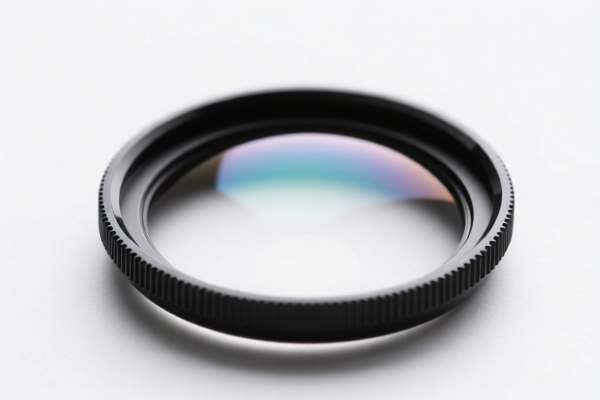
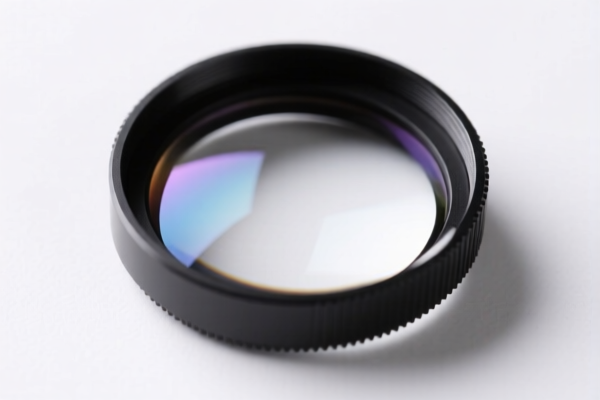
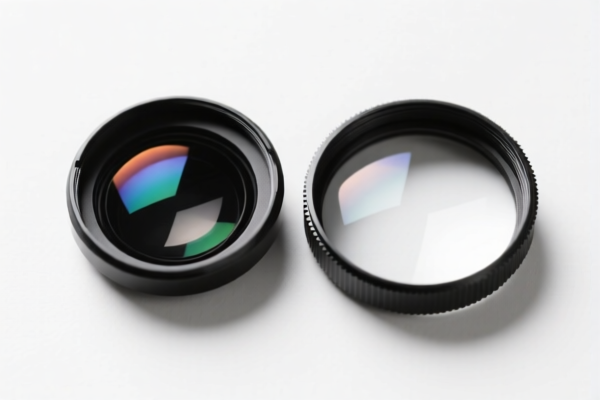
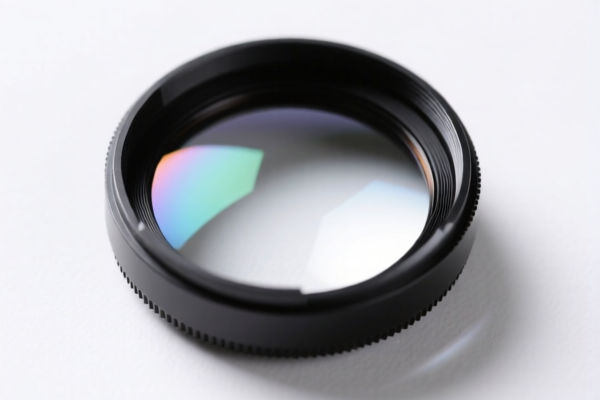
AI分析
👓 Optical Lens (Optical Glass Lenses)
🌐 HS Code Reference & Customs Clearance Guide | 2026 Latest Tariff Analysis | Professional Clearance Strategy
📌 1. Product Definition & Classification: What Exactly Are "Optical Lenses"?
Optical lenses are precision-crafted transparent elements used to focus or disperse light. In international trade, they are primarily categorized based on material, application (eyewear vs. instruments), and assembly status.
⚠️ Key Distinction Points:
- Eyewear Lenses: Specifically designed for glasses/spectacles. Typically classified under Chapter 90 (Optical Instruments).
- Generic Optical/Industrial Lenses: Used in lasers, cameras, or other instruments. If not fitted for eyewear, they may fall under Chapter 90 or Chapter 70 (Glass Articles) depending on specificity.
- Unmounted vs. Mounted: Unmounted glass lenses often trigger different tariff rates than pre-assembled eyeglass lenses.
📦 2. HS Code Classification Details (2026 Latest Tariff Authoritative Comparison)
| HS Code | Product Description | Application Scenario | Total Tax Rate | Tax Composition |
|---|---|---|---|---|
9001.40.00.00 |
Optical glass lenses, unmounted; glass spectacle lenses | Standard optical glass lenses for instruments or generic use | 19.5% | Base: 2.0% + Section 301: 7.5% + Section 122: 10% |
7015.10.00.00 |
Glass spectacle lenses (eyewear specific) | Lenses specifically for eyeglasses, unmounted | 17.5% | Base: 0.0% + Section 301: 7.5% + Section 122: 10% |
7020.00.60.00 |
Glass lenses, other than optical lenses of 90.01 | Generic glass lenses falling under "other glass articles" | 40.0% | Base: 5.0% + Section 301: 25.0% + Section 122: 10% |
7020.00.40.00 |
Optical lenses, other glass articles (fallback category) | Generic optical lenses not fitting specific 90.01 or 70.15 categories | 41.6% | Base: 6.6% + Section 301: 25.0% + Section 122: 10% |
9001.90.60.00 |
Laser lenses / Optical components | Laser optics, precision optical elements (glass/transparent medium) | 35.0% | Base: 0.0% + Section 301: 25.0% + Section 122: 10% |
🔍 Critical Note:
- Chapter 90 (9001.xx) generally attracts lower base tariffs but is subject to heavy Section 301 (25%) and Section 122 (10%) surcharges for Chinese origin goods.
- Chapter 70 (7015.xx/7020.xx) is used when lenses do not meet the strict definition of "optical instruments" in Chapter 90. Note that misclassification from9001to7020can increase taxes by ~20-22%.
- Section 122 Tariff (10%): Applies uniformly across all listed codes for products originating from China.
💰 3. 2026 Latest Tariff Rate Breakdown (Including Additional Duties)
✅ Applicable Country: United States (US)
✅ Origin: China (CN)
✅ Effective Time: 2025-2026 (Current Active Regime)
🎯 1. 9001.40.00.00 & 7015.10.00.00 —— The "Optical/Eyewear" Path
| Item | Content |
|---|---|
| Base Tariff | 0.0% – 2.0% (Low for optical goods) |
| Section 301 Tariff | +7.5% (Specific list for optical goods/eyewear) |
| Section 122 Tariff | +10.0% (Specific list for China-origin goods) |
| Total Tax Rate | 17.5% – 19.5% |
| Calculation | CIF Value × 17.5%~19.5% |
| De Minimis Eligibility | ❌ No (High duty rates disqualify from de minimis exemption) |
| Legal Basis | HTSUS:9001.40 / HTSUS:7015.10 → Section 301 List 4 → Section 122 Order |
📌 Explanation:
- These are the most favorable rates for true optical lenses.
- Key Requirement: Must prove the lens is for optical instruments (9001) or eyewear (7015).
- Risk: If customs determines the lens is for a non-optical purpose (e.g., decorative), it may reclassify to7020, spiking the tax to 40%.
🎯 2. 9001.90.60.00 —— Laser & Precision Optical Components
| Item | Content |
|---|---|
| Base Tariff | 0.0% |
| Section 301 Tariff | +25.0% (Higher rate for general optical components) |
| Section 122 Tariff | +10.0% |
| Total Tax Rate | 35.0% |
| Calculation | CIF Value × 35.0% |
| De Minimis Eligibility | ❌ No |
| Legal Basis | HTSUS:9001.90 → Section 301 List 4A → Section 122 Order |
📌 Note:
- Laser lenses are considered "other optical instruments" or components.
- The Section 301 rate is 25%, significantly higher than the 7.5% for eyewear lenses.
- Ensure product description explicitly states "Laser Lens" or "Optical Component" to justify Chapter 90.
🎯 3. 7020.00.60.00 & 7020.00.40.00 —— The "Fallback/Glass Article" Path
| Item | Content |
|---|---|
| Base Tariff | 5.0% – 6.6% |
| Section 301 Tariff | +25.0% |
| Section 122 Tariff | +10.0% |
| Total Tax Rate | 40.0% – 41.6% |
| Calculation | CIF Value × 40.0%~41.6% |
| De Minimis Eligibility | ❌ No |
| Legal Basis | HTSUS:7020.00 → Section 301 List 4 → Section 122 Order |
📌 Warning:
- These are penalty-tier rates for misclassified goods.
- Only use if the lens cannot be classified as optical (Ch 90) or eyewear (Ch 70.15).
- Example: Decorative glass lenses, non-functional lenses, or lenses for non-optical machinery.
🛠️ 4. Customs Clearance Practical Advice (Real-World Pitfall Guide)
✅ 1. Documentation Checklist (Non-Negotiable)
| Document | Required | Purpose |
|---|---|---|
| ✅ Product Specification Sheet | ✔️ | Must clearly state: Material (Optical Glass), Refractive Index, Diameter, Thickness, Application (Laser/Eyewear/Instrument). |
| ✅ Photographs | ✔️ | Show front/back surfaces, curvature, and any engravings/markings. |
| ✅ Certificate of Origin | ✔️ | To confirm China origin (triggers Section 122). |
| ✅ Commercial Invoice | ✔️ | Description must match HS Code (e.g., "Optical Glass Lens for Camera Module" vs. "Glass Lens"). |
| ✅ Technical Data Sheet | ✔️ | To prove optical function (refractive properties) vs. decorative function. |
✅ 2. Declaration Strategy (Key Principles)
🔥 “Function Defines Chapter: Optical = Ch90, Eyewear = 7015, Glass = 7020!”
| Scenario | Correct Declaration | Incorrect Declaration | Result |
|---|---|---|---|
| Lens for Eyeglasses | 7015.10.00.00 (17.5%) |
7020.00.60.00 (40%) |
Overpay ~22.5% |
| Lens for Camera/Laser | 9001.40.00.00 (19.5%) or 9001.90.60.00 (35%) |
7020.00.40.00 (41.6%) |
Overpay ~6-22% |
| Decorative Glass Disc | 7020.00.60.00 (40%) |
9001.40.00.00 (19.5%) |
Under-declared → Penalty/Seizure |
✅ 3. Special Considerations
| Case | Handling Advice |
|---|---|
| Mixed Shipments | If eyewear lenses (17.5%) and laser lenses (35%) are in one shipment, declare separately. Mixed HS Codes require separate line items. |
| Mounted vs. Unmounted | Ensure the lens is not part of a complete optical instrument (e.g., binoculars). If mounted, it may be classified under the instrument's HS Code (e.g., 9005 or 9013). |
| Origin Marking | Clearly mark "Made in China" on packaging to avoid origin verification delays. |
| Section 122 Applicability | All these codes attract the 10% Section 122 tariff. Ensure your supplier confirms China origin. If transshipped through Vietnam/Malaysia, provide non-origin proof to potentially avoid Section 122 (but Section 301 may still apply). |
🌍 5. Global Market Comparison (2026 Latest)
| Region | Recommended HS Code | Tax Rate (China Origin) | Key Certification | Notes |
|---|---|---|---|---|
| 🇺🇸 USA | 9001.40.00.00 / 7015.10.00.00 |
17.5% – 35% | None (Standard) | Highest scrutiny on optical function. |
| 🇨🇳 China | 9001.40.00.00 |
2.0% (Base) | CCC (if for eyewear) | No Section 301/122. |
| 🇪🇺 EU | 9001.40.00 |
4.5% (Base) | CE (if safety-critical) | No Section 122. Standard MFN rate. |
| 🇬🇧 UK | 9001.40.00 |
4.0% (Base) | UKCA | Post-Brexit MFN rates. |
| 🇯🇵 Japan | 9001.40.00 |
0% (Base) | PSE (if electronic) | Favorable for optical goods. |
📌 Conclusion:
- The US market is the most expensive due to Section 301 and Section 122 tariffs.
- Accurate classification is critical: A $100,000 shipment classified as7020(41.6%) pays $41,600 in duties, while9001.40(19.5%) pays $19,500. Savings: $22,100!
📌 6. Common Errors & Pitfall Guide (Lessons Learned)
❌ Error 1: Classifying Laser Lenses as "Glass Lenses" (7020)
👉 Consequence: Tax jumps from 35% to 41.6%. Also, risk of audit for misdeclaration of optical function.
❌ Error 2: Classifying Eyewear Lenses as "Optical Lenses" (9001)
👉 Consequence: While both are similar, 7015 has a 0% base rate. Misclassification might lead to customs requests for clarification, delaying clearance. Stick to 7015 for eyewear.
❌ Error 3: Omitting Section 122 in Cost Calculation
👉 Consequence: Budgeting only for Section 301 (7.5% or 25%) and forgetting the mandatory 10% Section 122 tariff leads to cash flow shortfalls.
❌ Error 4: Declaring Mounted Lenses as "Unmounted Parts"
👉 Consequence: If lenses are already mounted in a device, they are classified as part of the device (e.g., camera module), not as standalone lenses. Incorrect HS Code → Refusal of Entry.
✅ Correct Practice:
"Optical Glass Lens, Unmounted, for Laser Cutting Machine, Diameter 50mm, Refractive Index 1.5, Made in China"
🎯 7. Conclusion: Professional Declaration, Cost Optimization!
🎯 Remember the Rules:
🔹 "Optical Function = Chapter 90. Eyewear = 7015. Glass Article = 7020."
🔹 "Section 301 (7.5-25%) + Section 122 (10%) = Mandatory for China Origin."
🔹 "Always prove optical function with specs to avoid 40%+ fallback rates."
📌 Pro Tip:
If your optical lenses are shipped in small quantities (<$800), they may still be subject to duty but can bypass complex entry procedures. However, de minimis exemptions are NOT available for goods subject to Section 301/122. Declare fully and accurately.
📣 Immediate Action:
📞 Consult a licensed customs broker for Advance Ruling on complex optical components.
🚀 Classify correctly, save 20%+ in duties, and ensure smooth US customs clearance!
✨ Precision in Classification, Precision in Profit!
💼 Every lens counts—make sure your HS Code counts too!
用户评价
关于 HS 编码归类
协调制度(HS)是由世界海关组织(WCO)制定的国际贸易商品分类标准。全球 200 多个国家采用 HS 系统作为海关关税、贸易统计和进出口监管的基础。
每个 HS 编码遵循以下层级结构:
- 章(2 位)——商品大类(例如:第 84 章:机器和机械设备)
- 品目(4 位)——章内的更具体分类
- 子目(6 位)——国际通用细分,所有 WCO 成员国统一使用
- 本国细分(8-10 位)——各国自行扩展的细分编码,如美国 HTSUS 10 位编码
正确的 HS 编码归类对于顺利通关、准确缴纳关税和遵守贸易法规至关重要。错误归类可能导致海关延误、多缴关税或罚款。
从CN进口到US时,适用的关税税率可能包括:
- 最惠国(MFN)税率——适用于 WTO 成员国的标准关税税率
- 普通税率——适用于无贸易协定国家
- 贸易救济关税——附加关税,如 301 条款(反倾销)、232 条款(国家安全)或反补贴税
本页内容仅供参考。如需正式归类,请咨询当地海关或持牌报关代理。