Optical Lens
CN → US| HS Code | Tariff Rate | Origin | Destination | Doc |
|---|---|---|---|---|
| 9001400000 | 19.5% | CN | US | Official Doc |
| 7015100000 | 17.5% | CN | US | Official Doc |
| 7020006000 | 40.0% | CN | US | Official Doc |
| 7020004000 | 41.6% | CN | US | Official Doc |
| 9001906000 | 35.0% | CN | US | Official Doc |
Product Images
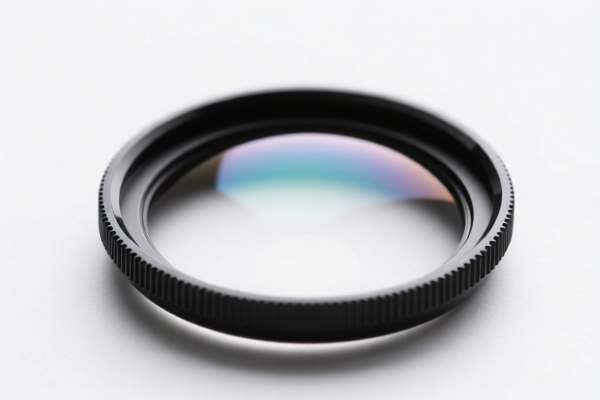
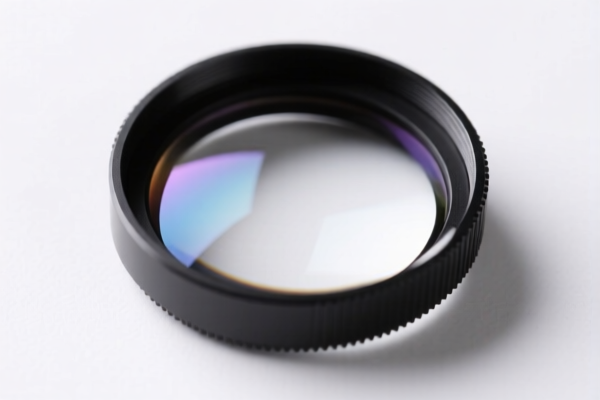
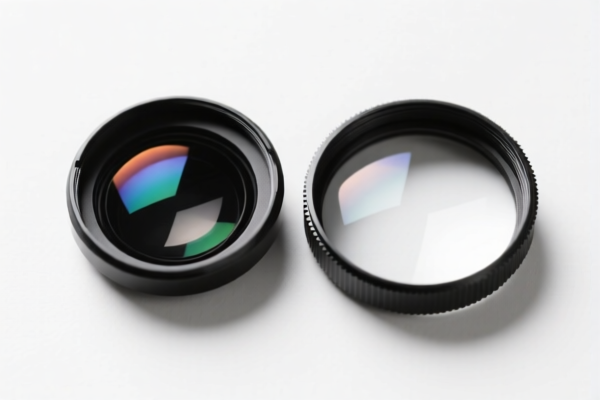
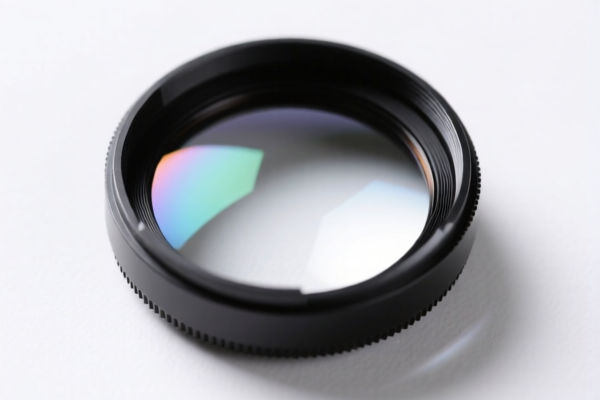
AI Analysis
👓 Optical Lens (Optical Glass Lenses)
🌐 HS Code Reference & Customs Clearance Guide | 2026 Latest Tariff Analysis | Professional Clearance Strategy
📌 1. Product Definition & Classification: What Exactly Are "Optical Lenses"?
Optical lenses are precision-crafted transparent elements used to focus or disperse light. In international trade, they are primarily categorized based on material, application (eyewear vs. instruments), and assembly status.
⚠️ Key Distinction Points:
- Eyewear Lenses: Specifically designed for glasses/spectacles. Typically classified under Chapter 90 (Optical Instruments).
- Generic Optical/Industrial Lenses: Used in lasers, cameras, or other instruments. If not fitted for eyewear, they may fall under Chapter 90 or Chapter 70 (Glass Articles) depending on specificity.
- Unmounted vs. Mounted: Unmounted glass lenses often trigger different tariff rates than pre-assembled eyeglass lenses.
📦 2. HS Code Classification Details (2026 Latest Tariff Authoritative Comparison)
| HS Code | Product Description | Application Scenario | Total Tax Rate | Tax Composition |
|---|---|---|---|---|
9001.40.00.00 |
Optical glass lenses, unmounted; glass spectacle lenses | Standard optical glass lenses for instruments or generic use | 19.5% | Base: 2.0% + Section 301: 7.5% + Section 122: 10% |
7015.10.00.00 |
Glass spectacle lenses (eyewear specific) | Lenses specifically for eyeglasses, unmounted | 17.5% | Base: 0.0% + Section 301: 7.5% + Section 122: 10% |
7020.00.60.00 |
Glass lenses, other than optical lenses of 90.01 | Generic glass lenses falling under "other glass articles" | 40.0% | Base: 5.0% + Section 301: 25.0% + Section 122: 10% |
7020.00.40.00 |
Optical lenses, other glass articles (fallback category) | Generic optical lenses not fitting specific 90.01 or 70.15 categories | 41.6% | Base: 6.6% + Section 301: 25.0% + Section 122: 10% |
9001.90.60.00 |
Laser lenses / Optical components | Laser optics, precision optical elements (glass/transparent medium) | 35.0% | Base: 0.0% + Section 301: 25.0% + Section 122: 10% |
🔍 Critical Note:
- Chapter 90 (9001.xx) generally attracts lower base tariffs but is subject to heavy Section 301 (25%) and Section 122 (10%) surcharges for Chinese origin goods.
- Chapter 70 (7015.xx/7020.xx) is used when lenses do not meet the strict definition of "optical instruments" in Chapter 90. Note that misclassification from9001to7020can increase taxes by ~20-22%.
- Section 122 Tariff (10%): Applies uniformly across all listed codes for products originating from China.
💰 3. 2026 Latest Tariff Rate Breakdown (Including Additional Duties)
✅ Applicable Country: United States (US)
✅ Origin: China (CN)
✅ Effective Time: 2025-2026 (Current Active Regime)
🎯 1. 9001.40.00.00 & 7015.10.00.00 —— The "Optical/Eyewear" Path
| Item | Content |
|---|---|
| Base Tariff | 0.0% – 2.0% (Low for optical goods) |
| Section 301 Tariff | +7.5% (Specific list for optical goods/eyewear) |
| Section 122 Tariff | +10.0% (Specific list for China-origin goods) |
| Total Tax Rate | 17.5% – 19.5% |
| Calculation | CIF Value × 17.5%~19.5% |
| De Minimis Eligibility | ❌ No (High duty rates disqualify from de minimis exemption) |
| Legal Basis | HTSUS:9001.40 / HTSUS:7015.10 → Section 301 List 4 → Section 122 Order |
📌 Explanation:
- These are the most favorable rates for true optical lenses.
- Key Requirement: Must prove the lens is for optical instruments (9001) or eyewear (7015).
- Risk: If customs determines the lens is for a non-optical purpose (e.g., decorative), it may reclassify to7020, spiking the tax to 40%.
🎯 2. 9001.90.60.00 —— Laser & Precision Optical Components
| Item | Content |
|---|---|
| Base Tariff | 0.0% |
| Section 301 Tariff | +25.0% (Higher rate for general optical components) |
| Section 122 Tariff | +10.0% |
| Total Tax Rate | 35.0% |
| Calculation | CIF Value × 35.0% |
| De Minimis Eligibility | ❌ No |
| Legal Basis | HTSUS:9001.90 → Section 301 List 4A → Section 122 Order |
📌 Note:
- Laser lenses are considered "other optical instruments" or components.
- The Section 301 rate is 25%, significantly higher than the 7.5% for eyewear lenses.
- Ensure product description explicitly states "Laser Lens" or "Optical Component" to justify Chapter 90.
🎯 3. 7020.00.60.00 & 7020.00.40.00 —— The "Fallback/Glass Article" Path
| Item | Content |
|---|---|
| Base Tariff | 5.0% – 6.6% |
| Section 301 Tariff | +25.0% |
| Section 122 Tariff | +10.0% |
| Total Tax Rate | 40.0% – 41.6% |
| Calculation | CIF Value × 40.0%~41.6% |
| De Minimis Eligibility | ❌ No |
| Legal Basis | HTSUS:7020.00 → Section 301 List 4 → Section 122 Order |
📌 Warning:
- These are penalty-tier rates for misclassified goods.
- Only use if the lens cannot be classified as optical (Ch 90) or eyewear (Ch 70.15).
- Example: Decorative glass lenses, non-functional lenses, or lenses for non-optical machinery.
🛠️ 4. Customs Clearance Practical Advice (Real-World Pitfall Guide)
✅ 1. Documentation Checklist (Non-Negotiable)
| Document | Required | Purpose |
|---|---|---|
| ✅ Product Specification Sheet | ✔️ | Must clearly state: Material (Optical Glass), Refractive Index, Diameter, Thickness, Application (Laser/Eyewear/Instrument). |
| ✅ Photographs | ✔️ | Show front/back surfaces, curvature, and any engravings/markings. |
| ✅ Certificate of Origin | ✔️ | To confirm China origin (triggers Section 122). |
| ✅ Commercial Invoice | ✔️ | Description must match HS Code (e.g., "Optical Glass Lens for Camera Module" vs. "Glass Lens"). |
| ✅ Technical Data Sheet | ✔️ | To prove optical function (refractive properties) vs. decorative function. |
✅ 2. Declaration Strategy (Key Principles)
🔥 “Function Defines Chapter: Optical = Ch90, Eyewear = 7015, Glass = 7020!”
| Scenario | Correct Declaration | Incorrect Declaration | Result |
|---|---|---|---|
| Lens for Eyeglasses | 7015.10.00.00 (17.5%) |
7020.00.60.00 (40%) |
Overpay ~22.5% |
| Lens for Camera/Laser | 9001.40.00.00 (19.5%) or 9001.90.60.00 (35%) |
7020.00.40.00 (41.6%) |
Overpay ~6-22% |
| Decorative Glass Disc | 7020.00.60.00 (40%) |
9001.40.00.00 (19.5%) |
Under-declared → Penalty/Seizure |
✅ 3. Special Considerations
| Case | Handling Advice |
|---|---|
| Mixed Shipments | If eyewear lenses (17.5%) and laser lenses (35%) are in one shipment, declare separately. Mixed HS Codes require separate line items. |
| Mounted vs. Unmounted | Ensure the lens is not part of a complete optical instrument (e.g., binoculars). If mounted, it may be classified under the instrument's HS Code (e.g., 9005 or 9013). |
| Origin Marking | Clearly mark "Made in China" on packaging to avoid origin verification delays. |
| Section 122 Applicability | All these codes attract the 10% Section 122 tariff. Ensure your supplier confirms China origin. If transshipped through Vietnam/Malaysia, provide non-origin proof to potentially avoid Section 122 (but Section 301 may still apply). |
🌍 5. Global Market Comparison (2026 Latest)
| Region | Recommended HS Code | Tax Rate (China Origin) | Key Certification | Notes |
|---|---|---|---|---|
| 🇺🇸 USA | 9001.40.00.00 / 7015.10.00.00 |
17.5% – 35% | None (Standard) | Highest scrutiny on optical function. |
| 🇨🇳 China | 9001.40.00.00 |
2.0% (Base) | CCC (if for eyewear) | No Section 301/122. |
| 🇪🇺 EU | 9001.40.00 |
4.5% (Base) | CE (if safety-critical) | No Section 122. Standard MFN rate. |
| 🇬🇧 UK | 9001.40.00 |
4.0% (Base) | UKCA | Post-Brexit MFN rates. |
| 🇯🇵 Japan | 9001.40.00 |
0% (Base) | PSE (if electronic) | Favorable for optical goods. |
📌 Conclusion:
- The US market is the most expensive due to Section 301 and Section 122 tariffs.
- Accurate classification is critical: A $100,000 shipment classified as7020(41.6%) pays $41,600 in duties, while9001.40(19.5%) pays $19,500. Savings: $22,100!
📌 6. Common Errors & Pitfall Guide (Lessons Learned)
❌ Error 1: Classifying Laser Lenses as "Glass Lenses" (7020)
👉 Consequence: Tax jumps from 35% to 41.6%. Also, risk of audit for misdeclaration of optical function.
❌ Error 2: Classifying Eyewear Lenses as "Optical Lenses" (9001)
👉 Consequence: While both are similar, 7015 has a 0% base rate. Misclassification might lead to customs requests for clarification, delaying clearance. Stick to 7015 for eyewear.
❌ Error 3: Omitting Section 122 in Cost Calculation
👉 Consequence: Budgeting only for Section 301 (7.5% or 25%) and forgetting the mandatory 10% Section 122 tariff leads to cash flow shortfalls.
❌ Error 4: Declaring Mounted Lenses as "Unmounted Parts"
👉 Consequence: If lenses are already mounted in a device, they are classified as part of the device (e.g., camera module), not as standalone lenses. Incorrect HS Code → Refusal of Entry.
✅ Correct Practice:
"Optical Glass Lens, Unmounted, for Laser Cutting Machine, Diameter 50mm, Refractive Index 1.5, Made in China"
🎯 7. Conclusion: Professional Declaration, Cost Optimization!
🎯 Remember the Rules:
🔹 "Optical Function = Chapter 90. Eyewear = 7015. Glass Article = 7020."
🔹 "Section 301 (7.5-25%) + Section 122 (10%) = Mandatory for China Origin."
🔹 "Always prove optical function with specs to avoid 40%+ fallback rates."
📌 Pro Tip:
If your optical lenses are shipped in small quantities (<$800), they may still be subject to duty but can bypass complex entry procedures. However, de minimis exemptions are NOT available for goods subject to Section 301/122. Declare fully and accurately.
📣 Immediate Action:
📞 Consult a licensed customs broker for Advance Ruling on complex optical components.
🚀 Classify correctly, save 20%+ in duties, and ensure smooth US customs clearance!
✨ Precision in Classification, Precision in Profit!
💼 Every lens counts—make sure your HS Code counts too!
Customer Reviews
About HS Code Classification
The Harmonized System (HS) is an internationally standardized nomenclature developed by the World Customs Organization (WCO) to classify traded products. Over 200 countries use the HS system as the basis for customs tariffs, trade statistics, and import/export regulations.
Each HS code follows a hierarchical structure:
- Chapter (2 digits) — Broad category of goods (e.g., Chapter 84: Machinery and Mechanical Appliances)
- Heading (4 digits) — More specific grouping within the chapter
- Subheading (6 digits) — Internationally standardized breakdown, used by all WCO member countries
- National subdivisions (8-10 digits) — Country-specific extensions for further classification, such as US HTSUS 10-digit codes
Correct HS code classification is essential for smooth customs clearance, accurate duty payment, and compliance with trade regulations. Misclassification can lead to customs delays, overpayment of duties, or penalties.
When importing from CN to US, the applicable tariff rates may include:
- Most-Favored-Nation (MFN) rate — The standard duty rate applied to WTO members
- General rate — Applied to countries without trade agreements
- Trade remedy duties — Additional tariffs such as Section 301 (anti-dumping), Section 232 (national security), or countervailing duties
The information provided on this page is for reference purposes only. For official classification, please consult with your local customs authority or a licensed customs broker.