Other Coniferous Wood for Pile Foundations
CN → US| HS编码 | 关税税率 | 原产国 | 目的国 | 文档 |
|---|---|---|---|---|
| 4407190092 | 35.0% | CN | US | 官方文档 |
| 4407190093 | 35.0% | CN | US | 官方文档 |
商品图片
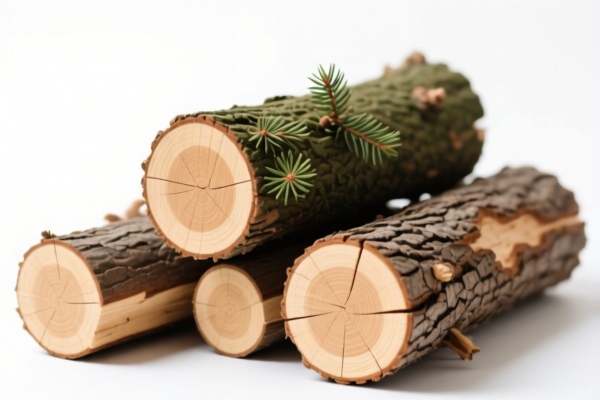
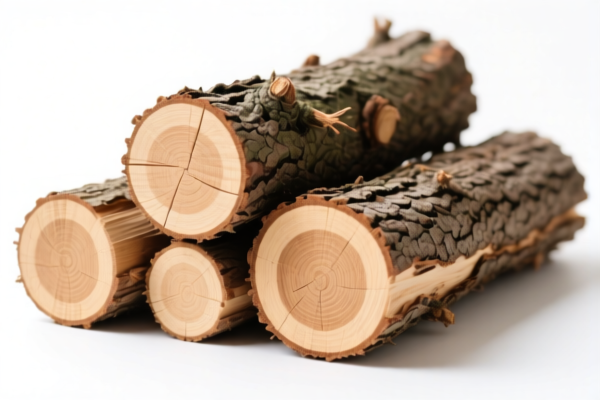
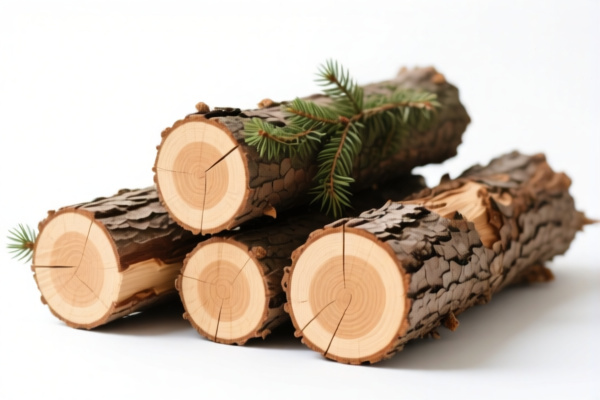
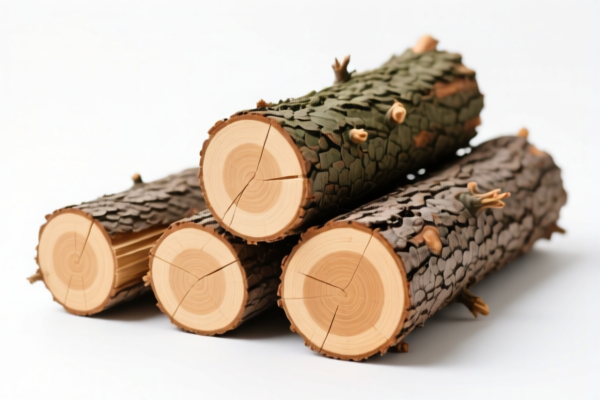
AI分析
🌲 "Other Coniferous Wood for Pile Foundations" (HS Code: 4407.19.00.92)
🌐 HS Code Reference & Customs Clearance Guide | 2026 Latest Tariff Analysis | Professional Strategy for Wood Piles
📌 I. Product Definition & Classification: Is Your Wood a "Pile Foundation"?
Wood sawn, chipped lengthwise, sliced, or peeled, of a thickness exceeding 6 mm, classified under Chapter 44, Section XVI. For "Pile Foundations," the wood must meet specific physical and processing criteria.
1. Core Classification: Coniferous Wood (Softwood)
This category includes pine, spruce, fir, larch, etc. Broadleaf woods (oak, teak) are excluded.
2. Processing State: "Other"
The HS code 4407.19.00.92 specifically targets "Other: Rough" coniferous wood.
- Rough: The wood is sawn or chipped but NOT planed, sanded, tongue-and-grooved, or otherwise finished for immediate decorative use.
- Thickness: Must exceed 6 mm.
⚠️ Critical Distinction for Pile Foundations:
- If the wood is treated (e.g., pressure-treated with preservatives), it may fall under different subheadings or require additional chemical declarations.
- If the wood is planed/sanded (smooth surface), it may be classified under4407.19.00.93("Other: Other") or other finished wood categories.
- Pile foundations typically use rough-sawn timber to maintain structural integrity and allow for better grout/adhesion in soil. Therefore,4407.19.00.92is the most accurate fit for untreated, rough coniferous piles.
📦 II. HS Code Breakdown (2026 Authorized Classification)
| HS Code | Product Description | Application Scenario | Treatment Status | Surface Finish |
|---|---|---|---|---|
4407.19.00.92 |
Rough Coniferous Wood, thickness > 6mm, not treated | Pile foundations, construction beams, rough framing | ❌ Not Treated | Rough (Sawn/Chipped) |
4407.19.00.93 |
Other Coniferous Wood, thickness > 6mm, not treated | Smooth planks, furniture-grade softwood, finished lumber | ❌ Not Treated | Planed/Sanded/Finished |
🔍 Key Alert:
- Do NOT confuse "Rough" with "Finished". If your pile foundations are planed (smooth), they fall under4407.19.00.93.
- Pile foundations are generally used underground or in wet conditions; they are rarely planed. Thus,4407.19.00.92is the standard classification for raw timber piles.
💰 III. 2026 Tariff Rate Details (China → USA)
✅ Applicable Country: United States (US)
✅ Country of Origin: China (CN)
✅ Effective Date: 2025+ (Current Trade Policy)
🎯 1. 4407.19.00.92 —— Rough Coniferous Wood (Pile Foundations)
| Item | Detail |
|---|---|
| Base Tariff | 0.0% (Most Favored Nation Rate) |
| Additional Tariff (Section 301) | +25.0% |
| Total Tax Rate | 25.0% |
| Tax Calculation | CIF Value × 25% |
| De Minimis Exemption | ❌ Not Eligible (Section 301 goods are excluded from de minimis) |
| Legal Basis | USITC Tariff Schedule → Section 301 Trade Act → Footnote 9903.88.01 |
📌 Explanation:
- Although the base tariff is 0%, the 25% Section 301 additional duty applies to all Chinese-origin coniferous wood products (including softwood lumber and piles).
- Total Cost Impact: 25% of the declared CIF value.
- No IEEPA Surcharge: Unlike electronics or critical minerals, wood products generally do not carry the extra 10% IEEPA surcharge unless specifically listed in newer directives (currently not applicable to HS 4407.19.00).
- Strict Enforcement: Customs requires proof of origin and processing state (rough vs. planed). Misclassification can lead to penalties.
🛠️ IV. Customs Clearance Operational Advice (Avoiding Pitfalls)
✅ 1. Required Documentation Checklist
| Document | Mandatory? | Purpose |
|---|---|---|
| ✅ Commercial Invoice | ✔️ | Must state: "Rough Sawn Coniferous Wood for Pile Foundations" |
| ✅ Packing List | ✔️ | Detail dimensions, quantity, and weight per pile |
| ✅ Certificate of Origin (CO) | ✔️ | Proves Chinese origin (triggers 25% tariff) |
| ✅ Phytosanitary Certificate | ✔️ | CRITICAL: USDA APHIS requires this to prevent pest introduction |
| ✅ Treatment Certificate | ✔️ | If treated, provide chemical details. If NOT treated, declare "Untreated" |
| ✅ Product Photos | ✔️ | Show rough surface, thickness > 6mm, and species identification |
| ✅ Bill of Lading | ✔️ | Match description with invoice |
✅ 2. Declaration Tips (Golden Rules)
🔥 "Rough is Key, Untreated is Clear, Phytosanitary is Mandatory!"
| Scenario | Correct Declaration | Incorrect Declaration | Consequence |
|---|---|---|---|
| Raw Piles (Unplaned) | 4407.19.00.92 - Rough, Untreated |
"Lumber" or "Finished Wood" | Misclassification → Delay/Fine |
| Smooth Piles (Planed) | 4407.19.00.93 - Planed/Sanded |
"Rough Wood" | Error → 0% vs 25% confusion |
| Treated Piles | Declare chemical type (e.g., ACQ, CCA) | "Untreated" | Illegal Import → Seizure |
| Thickness ≤ 6mm | Different HS Code (e.g., 4409) | "Pile Foundation" | Wrong Code → Rejection |
✅ 3. Special Considerations for Pile Foundations
| Issue | Solution |
|---|---|
| Pest Control | Ensure wood is free of bark, insects, and soil. Provide heat treatment or fumigation certificate if required by USDA. |
| Moisture Content | Declare moisture content (< 20% preferred) to prevent mold during transit. |
| Marking | Each pile should be marked with species, mill number, and country of origin. |
| HTS vs. HS | Use 10-digit US HTS 4407.19.00.92 for US clearance. |
🌍 V. Global Market Comparison (2026)
| Country/Region | Recommended HS Code | Tariff (China Origin) | Key Requirements |
|---|---|---|---|
| 🇺🇸 USA | 4407.19.00.92 |
25% (301 Tariff) | Phytosanitary Cert, USDA Compliance |
| 🇨🇳 China | 4407.19.00.92 |
0% | Import License (if applicable) |
| 🇪🇺 EU | 4407.19.00.00 |
0% (if FSC certified) | EUDR (Deforestation Regulation) Compliance |
| 🇬🇧 UK | 4407.19.00.00 |
0% | UKCA Marking (if processed) |
| 🇦🇺 Australia | 4407.19.00.00 |
5% | Biosecurity Declaration (Strict) |
📌 Conclusion:
- USA: Highest cost due to 25% tariff. Plan for this in your budget.
- EU/UK: Potential zero tariff, but EUDR compliance is a major new hurdle. Ensure supply chain transparency.
- Australia: High biosecurity standards; delays are common without proper documentation.
📌 VI. Common Mistakes & Pitfalls (Learn from Others)
❌ Mistake 1: Declaring "Rough Wood" when the wood is Planed/Sanded
👉 Result: Wrong HS Code (4407.19.00.93). Customs may question why you’re claiming "Rough" if the surface is smooth.
✅ Fix: Accurately describe surface finish.
❌ Mistake 2: Missing Phytosanitary Certificate
👉 Result: Seizure and Destruction by USDA APHIS. Piles often carry pests (beetles, larvae).
✅ Fix: Obtain certificate from country of export before shipment.
❌ Mistake 3: Not declaring Treatment Status
👉 Result: If treated, you must declare chemicals. If untreated, declare "Untreated." Ambiguity leads to inspections.
✅ Fix: Clear statement: "NOT TREATED" or "Pressure Treated with ACQ."
❌ Mistake 4: Assuming De Minimis applies
👉 Result: Section 301 goods (including wood from China) are excluded from de minimis ($800) exemption.
✅ Fix: All shipments are subject to full duty calculation.
🎯 VII. Conclusion: Smart Sourcing for Pile Foundations
🎯 Key Takeaway:
🔹 "Rough & Untreated = 4407.19.00.92"
🔹 "25% Tariff is Inevitable for China Origin"
🔹 "Phytosanitary Certificate is Non-Negotiable"
📌 Pro Tip:
If you are importing treated wood, ensure the treatment method is USDA-approved. If you are importing untreated wood, ensure it is kiln-dried to prevent mold and pest issues.
Consider supplier diversification (e.g., Canada, Russia, EU) to mitigate 25% tariff risk, if feasible.
📣 Immediate Action:
📞 Contact your customs broker with:
1. Product photos (showing rough surface)
2. Phytosanitary Certificate draft
3. Treatment status declaration
🚀 Ensure smooth customs clearance and avoid costly delays!
✨ Precision in Classification = Savings in Duties & Time!
💼 Your timber supply chain is only as strong as your customs compliance!
用户评价
关于 HS 编码归类
协调制度(HS)是由世界海关组织(WCO)制定的国际贸易商品分类标准。全球 200 多个国家采用 HS 系统作为海关关税、贸易统计和进出口监管的基础。
每个 HS 编码遵循以下层级结构:
- 章(2 位)——商品大类(例如:第 84 章:机器和机械设备)
- 品目(4 位)——章内的更具体分类
- 子目(6 位)——国际通用细分,所有 WCO 成员国统一使用
- 本国细分(8-10 位)——各国自行扩展的细分编码,如美国 HTSUS 10 位编码
正确的 HS 编码归类对于顺利通关、准确缴纳关税和遵守贸易法规至关重要。错误归类可能导致海关延误、多缴关税或罚款。
从CN进口到US时,适用的关税税率可能包括:
- 最惠国(MFN)税率——适用于 WTO 成员国的标准关税税率
- 普通税率——适用于无贸易协定国家
- 贸易救济关税——附加关税,如 301 条款(反倾销)、232 条款(国家安全)或反补贴税
本页内容仅供参考。如需正式归类,请咨询当地海关或持牌报关代理。