Other Coniferous Wood for Pile Foundations
CN → US| HS Code | Tariff Rate | Origin | Destination | Doc |
|---|---|---|---|---|
| 4407190092 | 35.0% | CN | US | Official Doc |
| 4407190093 | 35.0% | CN | US | Official Doc |
Product Images
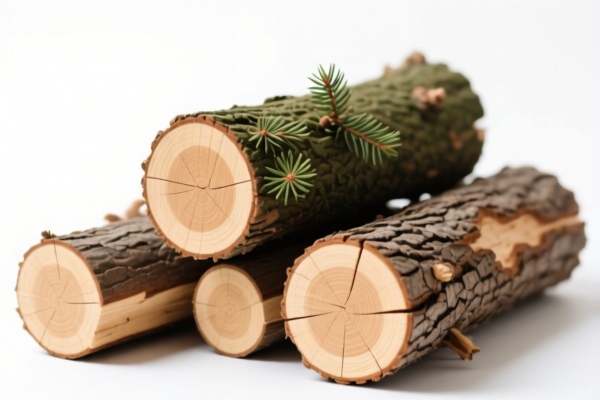
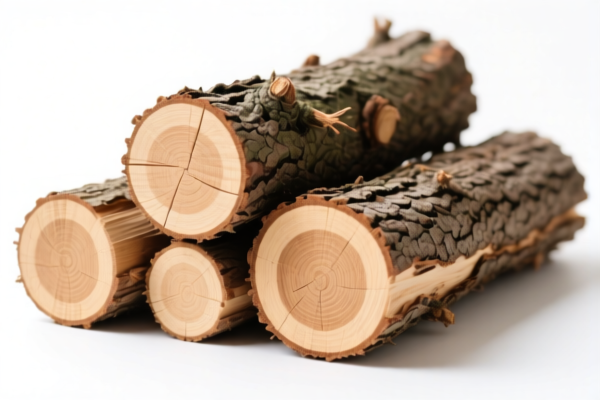
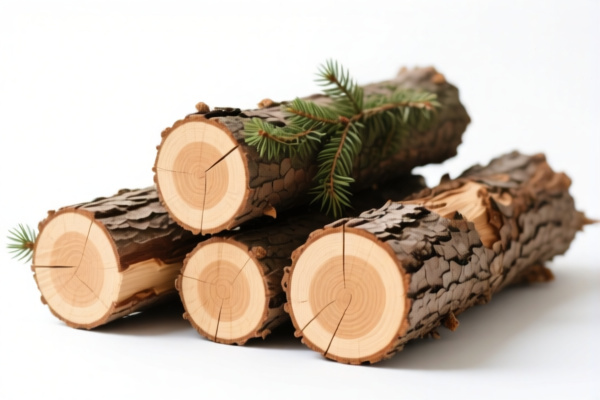
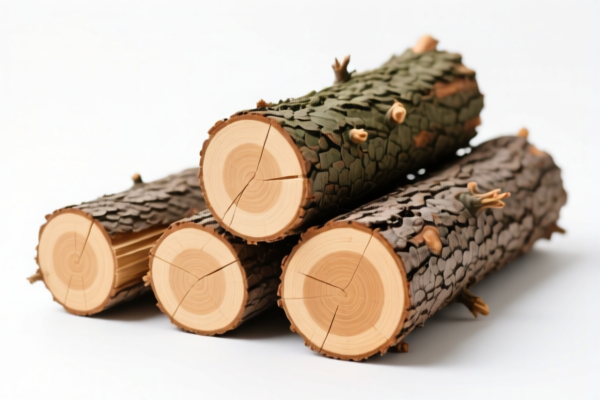
AI Analysis
🌲 "Other Coniferous Wood for Pile Foundations" (HS Code: 4407.19.00.92)
🌐 HS Code Reference & Customs Clearance Guide | 2026 Latest Tariff Analysis | Professional Strategy for Wood Piles
📌 I. Product Definition & Classification: Is Your Wood a "Pile Foundation"?
Wood sawn, chipped lengthwise, sliced, or peeled, of a thickness exceeding 6 mm, classified under Chapter 44, Section XVI. For "Pile Foundations," the wood must meet specific physical and processing criteria.
1. Core Classification: Coniferous Wood (Softwood)
This category includes pine, spruce, fir, larch, etc. Broadleaf woods (oak, teak) are excluded.
2. Processing State: "Other"
The HS code 4407.19.00.92 specifically targets "Other: Rough" coniferous wood.
- Rough: The wood is sawn or chipped but NOT planed, sanded, tongue-and-grooved, or otherwise finished for immediate decorative use.
- Thickness: Must exceed 6 mm.
⚠️ Critical Distinction for Pile Foundations:
- If the wood is treated (e.g., pressure-treated with preservatives), it may fall under different subheadings or require additional chemical declarations.
- If the wood is planed/sanded (smooth surface), it may be classified under4407.19.00.93("Other: Other") or other finished wood categories.
- Pile foundations typically use rough-sawn timber to maintain structural integrity and allow for better grout/adhesion in soil. Therefore,4407.19.00.92is the most accurate fit for untreated, rough coniferous piles.
📦 II. HS Code Breakdown (2026 Authorized Classification)
| HS Code | Product Description | Application Scenario | Treatment Status | Surface Finish |
|---|---|---|---|---|
4407.19.00.92 |
Rough Coniferous Wood, thickness > 6mm, not treated | Pile foundations, construction beams, rough framing | ❌ Not Treated | Rough (Sawn/Chipped) |
4407.19.00.93 |
Other Coniferous Wood, thickness > 6mm, not treated | Smooth planks, furniture-grade softwood, finished lumber | ❌ Not Treated | Planed/Sanded/Finished |
🔍 Key Alert:
- Do NOT confuse "Rough" with "Finished". If your pile foundations are planed (smooth), they fall under4407.19.00.93.
- Pile foundations are generally used underground or in wet conditions; they are rarely planed. Thus,4407.19.00.92is the standard classification for raw timber piles.
💰 III. 2026 Tariff Rate Details (China → USA)
✅ Applicable Country: United States (US)
✅ Country of Origin: China (CN)
✅ Effective Date: 2025+ (Current Trade Policy)
🎯 1. 4407.19.00.92 —— Rough Coniferous Wood (Pile Foundations)
| Item | Detail |
|---|---|
| Base Tariff | 0.0% (Most Favored Nation Rate) |
| Additional Tariff (Section 301) | +25.0% |
| Total Tax Rate | 25.0% |
| Tax Calculation | CIF Value × 25% |
| De Minimis Exemption | ❌ Not Eligible (Section 301 goods are excluded from de minimis) |
| Legal Basis | USITC Tariff Schedule → Section 301 Trade Act → Footnote 9903.88.01 |
📌 Explanation:
- Although the base tariff is 0%, the 25% Section 301 additional duty applies to all Chinese-origin coniferous wood products (including softwood lumber and piles).
- Total Cost Impact: 25% of the declared CIF value.
- No IEEPA Surcharge: Unlike electronics or critical minerals, wood products generally do not carry the extra 10% IEEPA surcharge unless specifically listed in newer directives (currently not applicable to HS 4407.19.00).
- Strict Enforcement: Customs requires proof of origin and processing state (rough vs. planed). Misclassification can lead to penalties.
🛠️ IV. Customs Clearance Operational Advice (Avoiding Pitfalls)
✅ 1. Required Documentation Checklist
| Document | Mandatory? | Purpose |
|---|---|---|
| ✅ Commercial Invoice | ✔️ | Must state: "Rough Sawn Coniferous Wood for Pile Foundations" |
| ✅ Packing List | ✔️ | Detail dimensions, quantity, and weight per pile |
| ✅ Certificate of Origin (CO) | ✔️ | Proves Chinese origin (triggers 25% tariff) |
| ✅ Phytosanitary Certificate | ✔️ | CRITICAL: USDA APHIS requires this to prevent pest introduction |
| ✅ Treatment Certificate | ✔️ | If treated, provide chemical details. If NOT treated, declare "Untreated" |
| ✅ Product Photos | ✔️ | Show rough surface, thickness > 6mm, and species identification |
| ✅ Bill of Lading | ✔️ | Match description with invoice |
✅ 2. Declaration Tips (Golden Rules)
🔥 "Rough is Key, Untreated is Clear, Phytosanitary is Mandatory!"
| Scenario | Correct Declaration | Incorrect Declaration | Consequence |
|---|---|---|---|
| Raw Piles (Unplaned) | 4407.19.00.92 - Rough, Untreated |
"Lumber" or "Finished Wood" | Misclassification → Delay/Fine |
| Smooth Piles (Planed) | 4407.19.00.93 - Planed/Sanded |
"Rough Wood" | Error → 0% vs 25% confusion |
| Treated Piles | Declare chemical type (e.g., ACQ, CCA) | "Untreated" | Illegal Import → Seizure |
| Thickness ≤ 6mm | Different HS Code (e.g., 4409) | "Pile Foundation" | Wrong Code → Rejection |
✅ 3. Special Considerations for Pile Foundations
| Issue | Solution |
|---|---|
| Pest Control | Ensure wood is free of bark, insects, and soil. Provide heat treatment or fumigation certificate if required by USDA. |
| Moisture Content | Declare moisture content (< 20% preferred) to prevent mold during transit. |
| Marking | Each pile should be marked with species, mill number, and country of origin. |
| HTS vs. HS | Use 10-digit US HTS 4407.19.00.92 for US clearance. |
🌍 V. Global Market Comparison (2026)
| Country/Region | Recommended HS Code | Tariff (China Origin) | Key Requirements |
|---|---|---|---|
| 🇺🇸 USA | 4407.19.00.92 |
25% (301 Tariff) | Phytosanitary Cert, USDA Compliance |
| 🇨🇳 China | 4407.19.00.92 |
0% | Import License (if applicable) |
| 🇪🇺 EU | 4407.19.00.00 |
0% (if FSC certified) | EUDR (Deforestation Regulation) Compliance |
| 🇬🇧 UK | 4407.19.00.00 |
0% | UKCA Marking (if processed) |
| 🇦🇺 Australia | 4407.19.00.00 |
5% | Biosecurity Declaration (Strict) |
📌 Conclusion:
- USA: Highest cost due to 25% tariff. Plan for this in your budget.
- EU/UK: Potential zero tariff, but EUDR compliance is a major new hurdle. Ensure supply chain transparency.
- Australia: High biosecurity standards; delays are common without proper documentation.
📌 VI. Common Mistakes & Pitfalls (Learn from Others)
❌ Mistake 1: Declaring "Rough Wood" when the wood is Planed/Sanded
👉 Result: Wrong HS Code (4407.19.00.93). Customs may question why you’re claiming "Rough" if the surface is smooth.
✅ Fix: Accurately describe surface finish.
❌ Mistake 2: Missing Phytosanitary Certificate
👉 Result: Seizure and Destruction by USDA APHIS. Piles often carry pests (beetles, larvae).
✅ Fix: Obtain certificate from country of export before shipment.
❌ Mistake 3: Not declaring Treatment Status
👉 Result: If treated, you must declare chemicals. If untreated, declare "Untreated." Ambiguity leads to inspections.
✅ Fix: Clear statement: "NOT TREATED" or "Pressure Treated with ACQ."
❌ Mistake 4: Assuming De Minimis applies
👉 Result: Section 301 goods (including wood from China) are excluded from de minimis ($800) exemption.
✅ Fix: All shipments are subject to full duty calculation.
🎯 VII. Conclusion: Smart Sourcing for Pile Foundations
🎯 Key Takeaway:
🔹 "Rough & Untreated = 4407.19.00.92"
🔹 "25% Tariff is Inevitable for China Origin"
🔹 "Phytosanitary Certificate is Non-Negotiable"
📌 Pro Tip:
If you are importing treated wood, ensure the treatment method is USDA-approved. If you are importing untreated wood, ensure it is kiln-dried to prevent mold and pest issues.
Consider supplier diversification (e.g., Canada, Russia, EU) to mitigate 25% tariff risk, if feasible.
📣 Immediate Action:
📞 Contact your customs broker with:
1. Product photos (showing rough surface)
2. Phytosanitary Certificate draft
3. Treatment status declaration
🚀 Ensure smooth customs clearance and avoid costly delays!
✨ Precision in Classification = Savings in Duties & Time!
💼 Your timber supply chain is only as strong as your customs compliance!
Customer Reviews
About HS Code Classification
The Harmonized System (HS) is an internationally standardized nomenclature developed by the World Customs Organization (WCO) to classify traded products. Over 200 countries use the HS system as the basis for customs tariffs, trade statistics, and import/export regulations.
Each HS code follows a hierarchical structure:
- Chapter (2 digits) — Broad category of goods (e.g., Chapter 84: Machinery and Mechanical Appliances)
- Heading (4 digits) — More specific grouping within the chapter
- Subheading (6 digits) — Internationally standardized breakdown, used by all WCO member countries
- National subdivisions (8-10 digits) — Country-specific extensions for further classification, such as US HTSUS 10-digit codes
Correct HS code classification is essential for smooth customs clearance, accurate duty payment, and compliance with trade regulations. Misclassification can lead to customs delays, overpayment of duties, or penalties.
When importing from CN to US, the applicable tariff rates may include:
- Most-Favored-Nation (MFN) rate — The standard duty rate applied to WTO members
- General rate — Applied to countries without trade agreements
- Trade remedy duties — Additional tariffs such as Section 301 (anti-dumping), Section 232 (national security), or countervailing duties
The information provided on this page is for reference purposes only. For official classification, please consult with your local customs authority or a licensed customs broker.