Other Recycled Bleached Chemical Pulp Paperboard
CN → US| HS编码 | 关税税率 | 原产国 | 目的国 | 文档 |
|---|---|---|---|---|
| 4706200000 | 35.0% | CN | US | 官方文档 |
| 4707200040 | 35.0% | CN | US | 官方文档 |
| 4707200020 | 35.0% | CN | US | 官方文档 |
| 4706920100 | 35.0% | CN | US | 官方文档 |
商品图片
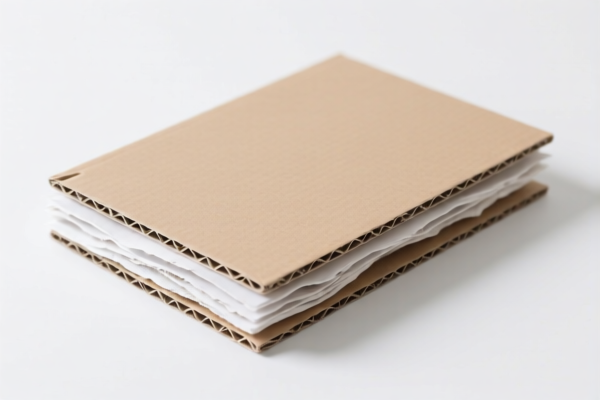
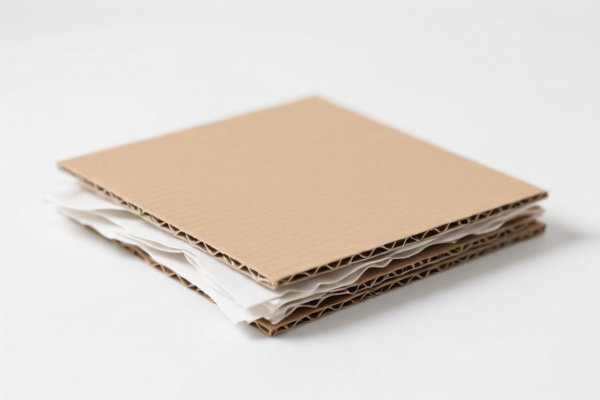
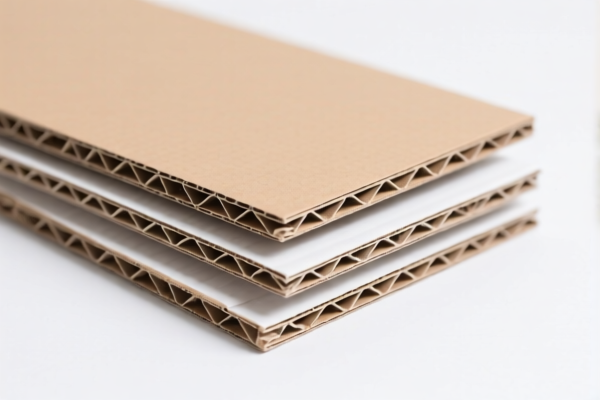
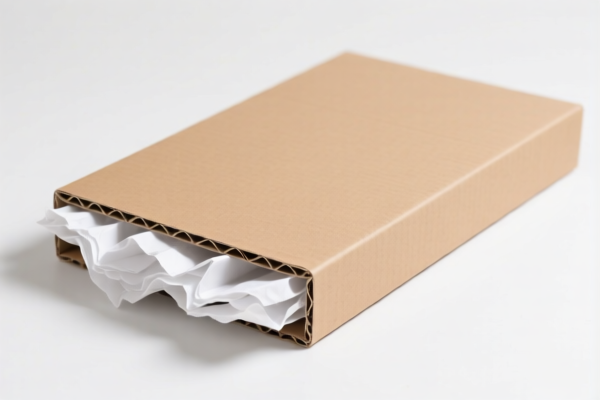
AI分析
🌐 Other Recycled Bleached Chemical Pulp Paperboard
📌 HS Code Classification & Customs Clearance Guide | 2026 Latest Tariff Breakdown | Pro-Level Import Strategy
📦 I. Product Definition & Classification: What Exactly Is This?
Other Recycled Bleached Chemical Pulp Paperboard refers to 废纸及纸板 (waste paper and paperboard) that:
- Are made from bleached chemical pulp (i.e., chemically processed wood pulp with high purity and brightness);
- Have undergone recycling processes (e.g., de-inking, repulping, reprocessing);
- Are not fully classified under more specific subheadings (hence “Other”);
- Still retain the structural and material characteristics of paperboard (rigid, multi-layered, used for packaging, boxes, etc.).
⚠️ Key Classification Triggers: - Must be recycled (not virgin material); - Must be bleached chemical pulp-based (not mechanical or semi-chemical); - Must be in the form of paperboard (not paper sheets or rolls); - Must not fall under more specific HS codes (e.g., those with higher precision in fiber origin or processing method).
✅ In short: This is recycled, bleached, rigid paperboard used in packaging — but not covered by a more specific HS code.
🔍 II. HS Code Breakdown (2026 Latest Tariff Authority) – All Codes from Your Data
| HS Code | Product Description | Applicable Scenario | Tax Rate | Legal Basis |
|---|---|---|---|---|
4706.20.00.00 |
Recycled bleached chemical pulp paperboard; meets requirements for recycled paper/paperboard material and pulp fiber form | General recycled bleached paperboard; no specific processing details | 35.0% | Base: 0%, Add: 25% (Section 301), Add: 10% (Section 122) |
4707.20.00.40 |
Recycled bleached chemical pulp paperboard; fully meets definition of bleached chemical pulp & recycled paperboard | High-compliance recycled board; fully aligned with both pulp and recycling standards | 35.0% | Base: 0%, Add: 25% (Section 301), Add: 10% (Section 122) |
4707.20.00.20 |
Recycled bleached chemical pulp paperboard; primarily made from bleached chemical pulp and falls under waste paperboard category | Mainly bleached chemical pulp-based; recycled origin confirmed | 35.0% | Base: 0%, Add: 25% (Section 301), Add: 10% (Section 122) |
4706.92.01.00 |
Recycled bleached chemical pulp paperboard; meets requirements for recycled waste paper, paperboard, and chemical pulp form | Recycled board with chemical pulp characteristics; general compliance | 35.0% | Base: 0%, Add: 25% (Section 301), Add: 10% (Section 122) |
📌 Note: All four codes are equally taxed at 35.0% — no difference in final rate, but slight differences in compliance criteria.
💰 III. 2026 Tariff Breakdown – Full Legal & Policy Explanation
✅ Applicable Country: United States (US)
✅ Origin: China (CN)
✅ Effective Date: November 10, 2025 (and ongoing)
✅ Applicable to: All imports of recycled bleached chemical pulp paperboard
🎯 1. 4706.20.00.00 – General Recycled Bleached Paperboard
| Tax Component | Rate | Legal Source | Explanation |
|---|---|---|---|
| Base Tariff | 0.0% | HTSUS 4706.20.00.00 | Standard rate for this category |
| Section 301 (USITC) Additional Tariff | +25.0% | USITC Footnote 9903.88.01 | Imposed under Section 301 of the Trade Act of 1974 (China trade actions) |
| Section 122 (IEEPA) Additional Tariff | +10.0% | IEEPA: 9903.01.24 | Imposed under the International Emergency Economic Powers Act (IEEPA) for national security and economic concerns |
| Total Effective Tariff | 35.0% | — | CIF Value × 35% |
| De Minimis Threshold | ❌ Not applicable | — | No exemption — even small shipments face full tariff |
| Legal Pathway | IEEPA:9903.01.24 → USITC:9903.88.01 → HTSUS:4706.20.00.00 |
— | Full compliance chain |
🔍 Why 35%?
- 0% base tariff (standard for recycled paperboard); - 25% from Section 301 (China-specific trade action); - 10% from Section 122 (IEEPA) (emergency economic powers — applies to all Chinese-origin goods in this category).
🎯 2. 4707.20.00.40 – Fully Compliant Recycled Bleached Paperboard
| Tax Component | Rate | Legal Source | Explanation |
|---|---|---|---|
| Base Tariff | 0.0% | HTSUS 4707.20.00.40 | Higher specificity in classification |
| Section 301 (USITC) Additional Tariff | +25.0% | USITC Footnote 9903.88.01 | Same as above — applies to all eligible goods |
| Section 122 (IEEPA) Additional Tariff | +10.0% | IEEPA: 9903.01.24 | Same emergency tariff |
| Total Effective Tariff | 35.0% | — | Same as above |
| De Minimis | ❌ Not applicable | — | Full tariff applies |
| Legal Pathway | IEEPA:9903.01.24 → USITC:9903.88.01 → HTSUS:4707.20.00.40 |
— | Full audit trail |
📌 Why This Code?
- Used when the product fully satisfies both: - Bleached chemical pulp manufacturing standards; - Recycled paperboard definition (material & fiber form). - Best choice for compliance — reduces risk of audit or reclassification.
🎯 3. 4707.20.00.20 – Primarily Bleached Chemical Pulp-Based Recycled Board
| Tax Component | Rate | Legal Source | Explanation |
|---|---|---|---|
| Base Tariff | 0.0% | HTSUS 4707.20.00.20 | Applies to products mainly made from bleached chemical pulp |
| Section 301 (USITC) | +25.0% | USITC Footnote 9903.88.01 | Applies to all goods under this category |
| Section 122 (IEEPA) | +10.0% | IEEPA: 9903.01.24 | Applies to all Chinese-origin goods in this group |
| Total Tariff | 35.0% | — | Same rate |
| De Minimis | ❌ Not applicable | — | Full tariff applies |
| Legal Pathway | IEEPA:9903.01.24 → USITC:9903.88.01 → HTSUS:4707.20.00.20 |
— | Clear compliance path |
📌 Best For:
- Products where bleached chemical pulp is the primary fiber source, but not 100% compliant with all criteria of4707.20.00.40(e.g., slight impurities or processing variation).
🎯 4. 4706.92.01.00 – General Recycled Waste Paperboard with Chemical Pulp Form
| Tax Component | Rate | Legal Source | Explanation |
|---|---|---|---|
| Base Tariff | 0.0% | HTSUS 4706.92.01.00 | Applies to “other” recycled paperboard |
| Section 301 (USITC) | +25.0% | USITC Footnote 9903.88.01 | Applies to all goods in this category |
| Section 122 (IEEPA) | +10.0% | IEEPA: 9903.01.24 | Applies to all Chinese-origin goods |
| Total Tariff | 35.0% | — | Same rate |
| De Minimis | ❌ Not applicable | — | Full tariff applies |
| Legal Pathway | IEEPA:9903.01.24 → USITC:9903.88.01 → HTSUS:4706.92.01.00 |
— | Standard compliance path |
📌 When to Use This?
- When the product meets general recycled paperboard and chemical pulp form, but does not meet the stricter criteria of4707.20.00.40or4707.20.00.20.
🛠️ IV. Customs Clearance Best Practices (Pro Tips to Avoid Delays & Penalties)
✅ 1. Required Documentation (Must-Have Checklist)
| Document | Required? | Why It Matters |
|---|---|---|
| ✅ Commercial Invoice | ✔️ | Must clearly state: “Recycled Bleached Chemical Pulp Paperboard” + HS Code |
| ✅ Packing List | ✔️ | Shows weight, quantity, packaging type |
| ✅ Certificate of Origin (CO) | ✔️ | Proves origin (China → triggers 35% tariff) |
| ✅ Material Test Report | ✔️ | Confirms bleached chemical pulp content, recycling process |
| ✅ Fiber Analysis Report | ✔️ | Proves fiber source (chemical vs. mechanical) |
| ✅ De-inking & Repulping Process Description | ✔️ | Proves recycling compliance |
| ✅ Product Photos (with labels) | ✔️ | Helps customs verify physical characteristics |
✅ 2.申报技巧(Critical Rules of Thumb)
🔥 “Choose the most specific code, prove compliance, avoid penalties!”
| Scenario | Correct HS Code | Why |
|---|---|---|
| Fully compliant with bleached chemical pulp + recycling | 4707.20.00.40 |
Highest specificity → lowest audit risk |
| Primarily bleached chemical pulp, but minor non-compliance | 4707.20.00.20 |
Best fit for partial compliance |
| General recycled board with chemical pulp form | 4706.92.01.00 |
Use only if no better fit |
| Incorrect code | Any other | Risk of reclassification, penalties, or seizure |
❌ Never use
4706.20.00.00unless you cannot use a more specific code.
✅ 3. Special Cases & Risk Mitigation
| Situation | Recommended Action |
|---|---|
| Mixed fiber content (chemical + mechanical) | Use 4707.20.00.20 or 4706.92.01.00 — avoid 4707.20.00.40 |
| High impurity level | Provide lab report; declare as “recycled” not “bleached” if unsure |
| Re-exported goods | Must prove no U.S. origin — otherwise, 35% applies |
| Pre-shipment inspection | Highly recommended — avoid surprise rejections |
🌍 V. Global Customs Comparison (2026 Update)
| Country | Recommended HS Code | Base Tariff | Additional Taxes | Notes |
|---|---|---|---|---|
| 🇺🇸 United States | 4707.20.00.40 |
0% | +25% (301) +10% (122) → 35% | Highest risk — full 35% |
| 🇨🇳 China | 4707.20.00.40 |
5% | 0% | No extra tariffs — best for domestic use |
| 🇪🇺 EU | 4707.20.00.40 |
0% | 0% (if CE compliant) | No 301/122 tariffs |
| 🇦🇺 Australia | 4707.20.00.40 |
5% | 0% | No extra tariffs |
| 🇯🇵 Japan | 4707.20.00.40 |
0% | 0% | No additional duties |
📌 Insight:
- Only the U.S. applies the 35% tariff to this product from China; - Other markets are far more favorable — consider diversifying export routes.
🚨 VI. Common Mistakes & How to Avoid Them (Real-World Risks)
❌ Mistake 1: Using 4706.20.00.00 for a product that qualifies for 4707.20.00.40
👉 Risk: Higher audit risk, potential penalties, or forced reclassification.
❌ Mistake 2: Not providing fiber analysis or recycling proof
👉 Risk: Customs may reject the shipment or impose higher scrutiny.
❌ Mistake 3: Claiming “bleached” without lab evidence
👉 Risk: Re-classification to lower tariff code → underpayment → fines.
❌ Mistake 4: Using “recycled paper” instead of “recycled bleached chemical pulp paperboard” in invoice
👉 Risk: Misleading description → delay or rejection.
✅ Best Practice:
Use exact language:
“Recycled Bleached Chemical Pulp Paperboard, manufactured from 100% de-inked bleached chemical pulp, conforming to HTSUS 4707.20.00.40”
🎯 VII. Final Verdict: Strategic Import Planning
🔹 HS Code Choice Matters:
-4707.20.00.40→ Best for compliance, lowest risk
-4707.20.00.20→ Good for mixed or near-compliant products
-4706.92.01.00→ Fallback only
-4706.20.00.00→ Avoid unless no better option🔹 Tariff is Fixed at 35% — no exceptions
- No de minimis — even 1kg shipment pays 35% - No duty drawback for recycled goods in this category🔹 Pro Tip:
- Apply for a Pre-Ruling (Advance Ruling) from U.S. Customs before shipment; - Use a U.S.-based customs broker with experience in paperboard and recycled materials.
📌 VIII. Key Takeaways – Remember This!
✅ All four HS codes are taxed at 35% — same final rate, different compliance paths
✅ Section 301 (25%) + Section 122 (10%) = 35% — no base tariff
✅ No de minimis — no exceptions
✅ Choose the most specific code to reduce audit risk
✅ Prove fiber source and recycling process — lab reports are mandatory
📣 Call to Action: Act Now to Protect Your Supply Chain!
📞 Contact a U.S. customs broker with experience in recycled paperboard
📄 Request a pre-ruling on HS Code for your product
📊 Run a cost model with 35% tariff vs. alternative markets
🚀 Consider shifting origin to Vietnam, Mexico, or Malaysia to avoid 35% tariff
✨ Professional Customs Starts with Precise Classification!
💼 Your profit margin depends on the right HS code — choose wisely!
用户评价
关于 HS 编码归类
协调制度(HS)是由世界海关组织(WCO)制定的国际贸易商品分类标准。全球 200 多个国家采用 HS 系统作为海关关税、贸易统计和进出口监管的基础。
每个 HS 编码遵循以下层级结构:
- 章(2 位)——商品大类(例如:第 84 章:机器和机械设备)
- 品目(4 位)——章内的更具体分类
- 子目(6 位)——国际通用细分,所有 WCO 成员国统一使用
- 本国细分(8-10 位)——各国自行扩展的细分编码,如美国 HTSUS 10 位编码
正确的 HS 编码归类对于顺利通关、准确缴纳关税和遵守贸易法规至关重要。错误归类可能导致海关延误、多缴关税或罚款。
从CN进口到US时,适用的关税税率可能包括:
- 最惠国(MFN)税率——适用于 WTO 成员国的标准关税税率
- 普通税率——适用于无贸易协定国家
- 贸易救济关税——附加关税,如 301 条款(反倾销)、232 条款(国家安全)或反补贴税
本页内容仅供参考。如需正式归类,请咨询当地海关或持牌报关代理。