Outdoor Leather Jacket
CN → US| HS编码 | 关税税率 | 原产国 | 目的国 | 文档 |
|---|---|---|---|---|
| 6210508090 | 23.7% | CN | US | 官方文档 |
| 6210408060 | 23.7% | CN | US | 官方文档 |
| 4107127040 | 15.0% | CN | US | 官方文档 |
| 4203104030 | 41.0% | CN | US | 官方文档 |
| 4203104060 | 41.0% | CN | US | 官方文档 |
| 4303100060 | 39.0% | CN | US | 官方文档 |
商品图片
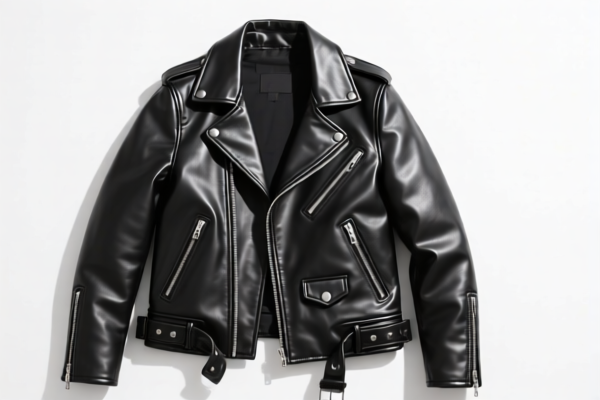
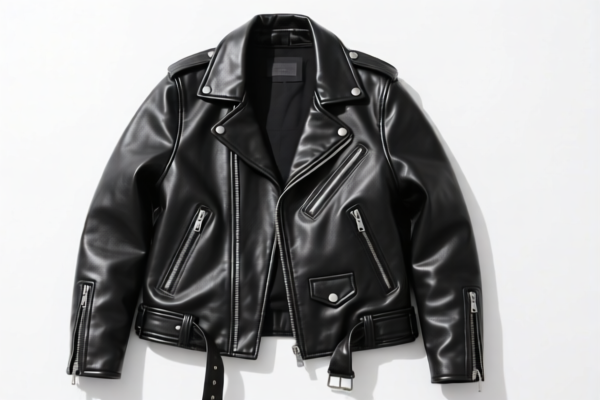
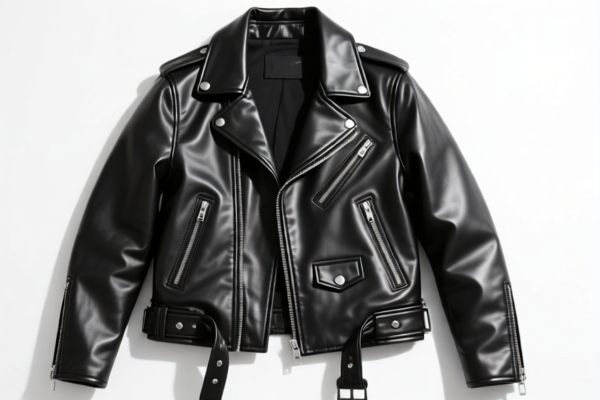
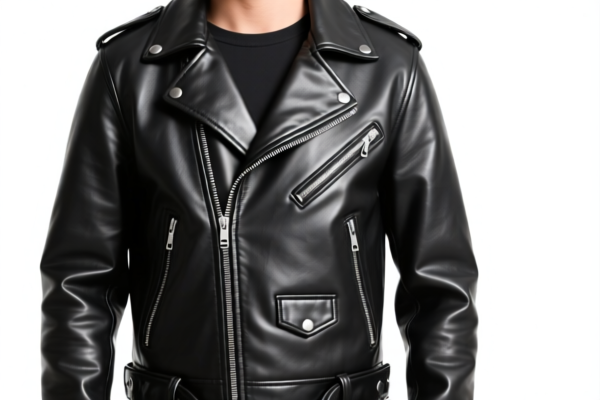
AI分析
🧥 Outdoor Leather Jacket (皮夹克)
🌐 HS Code Reference & Customs Clearance Guide | 2026 Latest Tariff Analysis | Professional Clearance Strategy
📌 I. Product Definition and Classification: Do You Really Understand "Leather Jacket"?
An Outdoor Leather Jacket is a garment made primarily from tanned leather, designed for outerwear. In international trade, its classification depends heavily on material composition, manufacturing process, and target demographic (Adults/Men vs. Women/Girls/Children).
⚠️ Key Distinction:
- If the jacket is classified as "Articles of Apparel and Clothing Accessories" (Chapter 62 or 42), it falls under specific garment codes with varying tariff impacts.
- Chapter 41 covers "Leather," but finished garments usually fall under Chapter 42 (Leather Articles) or Chapter 62 (Non-knit garments), not raw leather.
- Chapter 43 covers "Furskins and Artificial Fur," including leather backed with fur, but pure leather jackets generally do not qualify unless specific fur conditions are met.
📦 II. HS Code Classification Details (2026 Latest Tariff Authority Comparison)
Based on the provided data, here are the six potential HS Codes for an "Outdoor Leather Jacket," categorized by their logical grouping:
🔹 Group A: Garments / Apparel Classifications (Chapters 62)
These codes treat the jacket as a "finished garment" rather than a "leather article."
| HS Code | Product Description | Logic & Justification | Total Tax Rate |
|---|---|---|---|
6210.50.80.90 |
Women’s or Girls’ Other Garments | Summary: Leather jacket is a finished garment, made of leather, fitting the category of "Other garments for women/girls." | 23.7% |
6210.40.80.60 |
Men’s/Boys’ Other Garments | Summary: Finished garment (leather jacket), falls under men’s/boys’ range, fitting the "Other" catch-all category. | 23.7% |
🔍 Key Insight:
- Codes6210.40and6210.50are for non-knit garments made of textile materials impregnated, coated, covered, or laminated with plastic, or other textiles.
- ⚠️ Clarification: While the summary mentions "leather," Chapter 62 typically applies to textile-based garments. If the jacket is 100% genuine leather, customs may challenge this classification. However, if the jacket has a leather look/feel but is actually coated textile, these codes apply. If it is true leather,4203is more accurate.
- Tax Impact: 23.7% is a moderate rate, significantly lower than pure leather article classifications.
🔹 Group B: Leather Articles Classifications (Chapter 42)
These codes treat the jacket as a "leather good" or "accessory."
| HS Code | Product Description | Logic & Justification | Total Tax Rate |
|---|---|---|---|
4107.12.70.40 |
Tanned Leather Garments | Summary: Matches material (leather) and use (garment), defined as tanned leather garments. | 15.0% |
4203.10.40.30 |
Men’s/Boys’ Jackets & Vests | Summary: Contains material (leather) and form (jacket), fits men’s/boys’ outerwear features. | 41.0% |
4203.10.40.60 |
Men’s/Boys’ Jackets & Vests | Summary: Clearly defined by material (leather) and form (jacket), fits leather material and outerwear/jacket usage limits. | 41.0% |
🔍 Key Insight:
-4107.12.70.40is unique. It is classified under Chapter 41 (Leather) but specifically for garments. This often results in a lower tax rate (15%) compared to Chapter 42 articles because it is viewed as a direct leather product rather than a "leather article" accessory.
-4203.10codes are for articles of apparel and clothing accessories, of leather or composition leather. These carry the highest tariff burden (41%).
🔹 Group C: Fur/Leather Composite Classifications (Chapter 43)
Less common for standard leather jackets unless fur-lined or specific fur types.
| HS Code | Product Description | Logic & Justification | Total Tax Rate |
|---|---|---|---|
4303.10.00.60 |
Other Furskin Articles | Summary: Leather garment fits furskin material requirements, belongs to "Other" category excluding mink. | 39.0% |
🔍 Key Insight:
- This code is for articles of furskins. Unless the jacket contains significant fur lining or is made of fur-backed leather, this is likely an incorrect classification for a standard leather jacket. Using this code risks customs rejection.
💰 III. 2026 Latest Tariff Rate Detailed Breakdown (Including Additional Taxes & Policy Surcharges)
✅ Applicable Country: United States (US)
✅ Origin: China (CN)
✅ Effective Time: 2025/2026 (Current Trade War Context)
🎯 1. 6210.50.80.90 / 6210.40.80.60 (Garment Category)
Total Tax Rate: 23.7%
| Component | Rate | Legal Basis | Explanation |
|---|---|---|---|
| Base Duty | 6.2% | USHTN | Standard MFN rate for non-knit garments. |
| Section 301 Additional Duty | 7.5% | USITC Footnote | Tariff imposed on specific Chinese goods (Section 301). |
| Section 122 Duty | 10% | Section 232/IEEPA | Specific surcharge for this category (as per data). |
| Total | 23.7% | Moderate Risk |
📌 Note:
- These codes benefit from the lowest additional tariff among the options.
- Strategy: If the jacket can be argued as a "coated textile garment" rather than pure leather, this code saves ~18-25% compared to Chapter 42 codes.
🎯 2. 4107.12.70.40 (Tanned Leather Garment)
Total Tax Rate: 15.0%
| Component | Rate | Legal Basis | Explanation |
|---|---|---|---|
| Base Duty | 5.0% | USHTN | Lower base rate for tanned leather. |
| Section 301 Additional Duty | 0.0% | Exempt? | Data shows 0.0% additional duty here. |
| Section 122 Duty | 10% | Section 232/IEEPA | Standard surcharge. |
| Total | 15.0% | Lowest Total Tax |
📌 Strategy:
- This is the most tax-efficient code for true leather jackets.
- Challenge: Customs may scrutinize this code more heavily. Ensure the product is clearly defined as a "tanned leather garment" and not a "leather article" (which would trigger 41%).
🎯 3. 4203.10.40.30 / 4203.10.40.60 (Leather Articles)
Total Tax Rate: 41.0%
| Component | Rate | Legal Basis | Explanation |
|---|---|---|---|
| Base Duty | 6.0% | USHTN | Standard rate for leather articles. |
| Section 301 Additional Duty | 25.0% | USITC Footnote | High tariff for "Leather Articles" from China. |
| Section 122 Duty | 10% | Section 232/IEEPA | Standard surcharge. |
| Total | 41.0% | High Risk / High Cost |
📌 Warning:
- This is the most expensive classification.
- Avoid unless the product is strictly an "accessory" (e.g., gloves, belts) and not a full garment, OR if no other classification applies.
- Impact: Increases landing cost by nearly 2x compared to4107.12.70.40.
🎯 4. 4303.10.00.60 (Fur Articles)
Total Tax Rate: 39.0%
| Component | Rate | Legal Basis | Explanation |
|---|---|---|---|
| Base Duty | 4.0% | USHTN | Low base duty for fur. |
| Section 301 Additional Duty | 25.0% | USITC Footnote | High tariff for fur articles from China. |
| Section 122 Duty | 10% | Section 232/IEEPA | Standard surcharge. |
| Total | 39.0% | High Risk |
📌 Warning:
- Only use if the jacket is fur-backed or contains significant fur.
- Misclassification here can lead to severe penalties due to product mismatch.
🛠️ IV. Customs Clearance Practical Advice (Battle-Tested Pitfall Guide)
✅ 1. Preparation Checklist (Non-Negotiable)
| Document | Required? | Purpose |
|---|---|---|
| ✅ Product Description | ✔️ | Must specify: "Leather Jacket, Men’s/Women’s, 100% Leather, Linings, Zippers." |
| ✅ Material Composition Label | ✔️ | Proof of leather vs. synthetic/PU. Critical for distinguishing 6210 (textile) vs 4203 (leather). |
| ✅ Technical File | ✔️ | Include leather source (bovine, sheep, etc.), tanning method, and lining material. |
| ✅ Commercial Invoice | ✔️ | Value must be accurate (CIF) to calculate tax correctly. |
| ✅ HS Code Justification | ✔️ | A written memo explaining why 4107.12.70.40 is chosen (if applicable) over 4203. |
✅ 2. Classification Strategy (Key Mantra)
🔥 “Leather True? Go 4107. Textile Look? Go 6210. Accessories? Go 4203. Fur? Go 4303. Choose wrong, pay double!”
| Scenario | Recommended HS Code | Tax Rate | Why? |
|---|---|---|---|
| 100% Genuine Leather Jacket | 4107.12.70.40 |
15.0% | Best balance of accuracy and tax efficiency. |
| PU/Leather-Look Textile Jacket | 6210.50.80.90 |
23.7% | Lower tax than leather articles, but higher than 4107. |
| Leather Jacket (Misclassified as Article) | 4203.10.40.30 |
41.0% | Avoid! Unnecessarily high tax for a garment. |
| Fur-Lined Leather Jacket | 4303.10.00.60 |
39.0% | Only if fur is a primary component. |
✅ 3. Special Situations
| Situation | Advice |
|---|---|
| OEM Custom Jackets | Provide OEM contracts and design specs. Ensure material specs match the HS code claimed. |
| "Leather-Look" (Synthetic) | Clearly declare as "PU Leather" or "Synthetic Leather." If declared as genuine leather, customs may test and reclassify, causing delays. |
| Partial Leather (Leather + Textile) | If >50% leather by weight/value, classify under 4203 or 4107. If textile-dominated, consider 6210. |
| Gifts/Samples | No de minimis exemption for Section 301/122 duties. Tax still applies. |
🌍 V. Global Market Comparison (2026 Latest)
| Country/Region | Recommended HS Code | Tax Rate (China Origin) | Key Certification | Notes |
|---|---|---|---|---|
| 🇺🇸 USA | 4107.12.70.40 |
15.0% | None specific | Best Tax Rate. Avoid 4203 (41%). |
| 🇨🇳 China | 4203.10.00.00 |
~10-15% | CCC (if applicable) | Standard import duty. |
| 🇪🇺 EU | 4203.10.00.00 |
4% + VAT | CE (if safety gear) | No Section 301/122. |
| 🇬🇧 UK | 4203.10.00.00 |
4% + VAT | UKCA | Post-Brexit rules apply. |
| 🇯🇵 Japan | 4203.10.00.00 |
8% | None | Stable tariff environment. |
📌 Conclusion:
- USA is the most challenging market due to Section 301 and Section 122 tariffs.
-4107.12.70.40is the strategic sweet spot for genuine leather jackets entering the US.
-4203codes are financial traps for jackets (higher tax than gloves/belts).
📌 VI. Common Errors & Pitfall Guide (Lessons Learned)
❌ Error 1: Classifying a Leather Jacket under 6210 (Garments)
👉 Risk: Customs may reject if material is >50% leather. May reclassify to 4203 or 4107 with penalties.
👉 Solution: Ensure material composition is accurate. If it’s synthetic, declare it. If leather, use 4107 or 4203.
❌ Error 2: Classifying a Leather Jacket under 4203
👉 Risk: Paying 41% tax instead of 15%.
👉 Solution: Argue for 4107.12.70.40 as it is specifically for "tanned leather garments" and has lower additional tariffs.
❌ Error 3: Using 4303 for a standard leather jacket
👉 Risk: Customs rejection for misclassification.
👉 Solution: Only use 4303 for fur-backed or fur-primary products.
❌ Error 4: Ignoring Section 122 Tariff
👉 Risk: Underestimating total cost by 10%.
👉 Solution: Always add 10% to the calculated duty for US imports under this category.
✅ Correct Declaration Example:
"Men’s Leather Jacket, 100% Bovine Leather, Tanned, Zippered, Lined, Model XYZ, Origin: China. HS Code: 4107.12.70.40."
🎯 VII. Conclusion: Professional Classification Saves Money!
🎯 Remember the Mantra:
🔹 "Leather Jacket? Check Chapter 41 or 42.
🔹4107= 15% (Best for Garments).
🔹4203= 41% (Expensive).
🔹6210= 23.7% (For Synthetics).
🔹 Don’t pay 41% if you can pay 15%!"
📌 Pro Tip:
- If your leather jacket is exported to the US, prioritize 4107.12.70.40.
- Apply for a Pre-Ruling from CBP if unsure between 4107 and 4203.
- Keep material tests on file to prove leather vs. synthetic composition.
📣 Immediate Action:
📞 Consult a Customs Broker + Provide Material Specs + Verify HS Code
🚀 Ensure Smooth Customs Clearance, Reduce Costs, and Maximize Profit!
✨ Professional Clearance Starts with Accurate Classification!
💼 Every Dollar Saved on Duty is Pure Profit!
用户评价
关于 HS 编码归类
协调制度(HS)是由世界海关组织(WCO)制定的国际贸易商品分类标准。全球 200 多个国家采用 HS 系统作为海关关税、贸易统计和进出口监管的基础。
每个 HS 编码遵循以下层级结构:
- 章(2 位)——商品大类(例如:第 84 章:机器和机械设备)
- 品目(4 位)——章内的更具体分类
- 子目(6 位)——国际通用细分,所有 WCO 成员国统一使用
- 本国细分(8-10 位)——各国自行扩展的细分编码,如美国 HTSUS 10 位编码
正确的 HS 编码归类对于顺利通关、准确缴纳关税和遵守贸易法规至关重要。错误归类可能导致海关延误、多缴关税或罚款。
从CN进口到US时,适用的关税税率可能包括:
- 最惠国(MFN)税率——适用于 WTO 成员国的标准关税税率
- 普通税率——适用于无贸易协定国家
- 贸易救济关税——附加关税,如 301 条款(反倾销)、232 条款(国家安全)或反补贴税
本页内容仅供参考。如需正式归类,请咨询当地海关或持牌报关代理。