Outdoor Leather Jacket
CN → US| HS Code | Tariff Rate | Origin | Destination | Doc |
|---|---|---|---|---|
| 6210508090 | 23.7% | CN | US | Official Doc |
| 6210408060 | 23.7% | CN | US | Official Doc |
| 4107127040 | 15.0% | CN | US | Official Doc |
| 4203104030 | 41.0% | CN | US | Official Doc |
| 4203104060 | 41.0% | CN | US | Official Doc |
| 4303100060 | 39.0% | CN | US | Official Doc |
Product Images
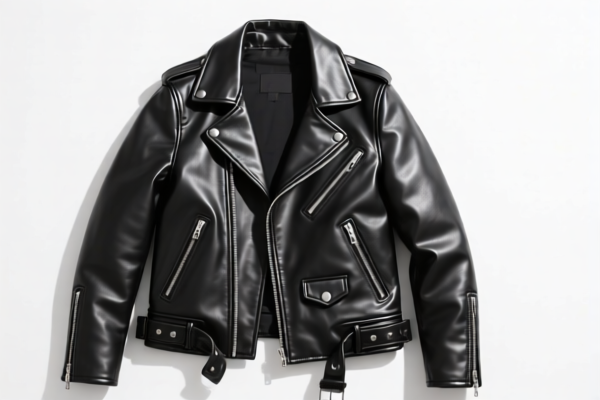
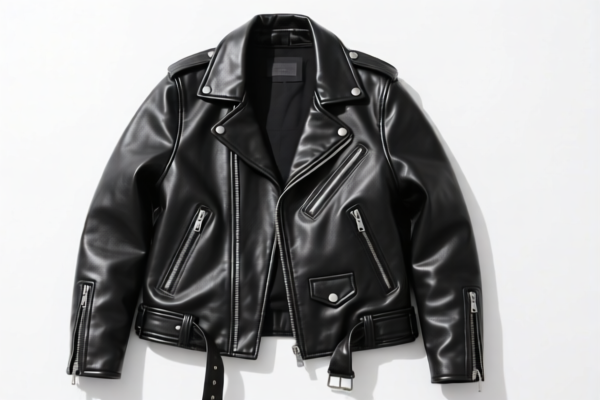
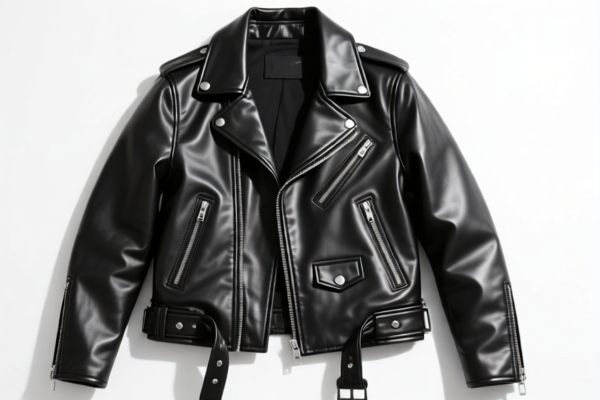
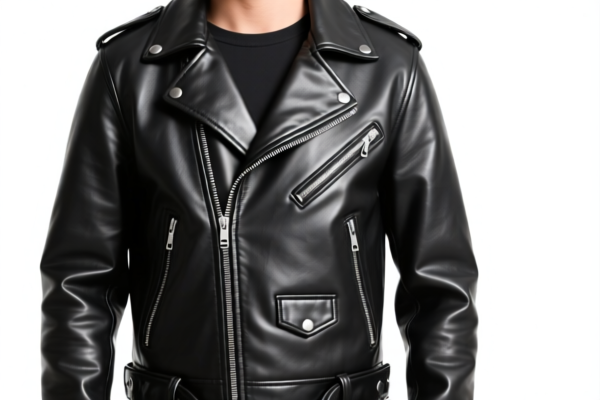
AI Analysis
🧥 Outdoor Leather Jacket (皮夹克)
🌐 HS Code Reference & Customs Clearance Guide | 2026 Latest Tariff Analysis | Professional Clearance Strategy
📌 I. Product Definition and Classification: Do You Really Understand "Leather Jacket"?
An Outdoor Leather Jacket is a garment made primarily from tanned leather, designed for outerwear. In international trade, its classification depends heavily on material composition, manufacturing process, and target demographic (Adults/Men vs. Women/Girls/Children).
⚠️ Key Distinction:
- If the jacket is classified as "Articles of Apparel and Clothing Accessories" (Chapter 62 or 42), it falls under specific garment codes with varying tariff impacts.
- Chapter 41 covers "Leather," but finished garments usually fall under Chapter 42 (Leather Articles) or Chapter 62 (Non-knit garments), not raw leather.
- Chapter 43 covers "Furskins and Artificial Fur," including leather backed with fur, but pure leather jackets generally do not qualify unless specific fur conditions are met.
📦 II. HS Code Classification Details (2026 Latest Tariff Authority Comparison)
Based on the provided data, here are the six potential HS Codes for an "Outdoor Leather Jacket," categorized by their logical grouping:
🔹 Group A: Garments / Apparel Classifications (Chapters 62)
These codes treat the jacket as a "finished garment" rather than a "leather article."
| HS Code | Product Description | Logic & Justification | Total Tax Rate |
|---|---|---|---|
6210.50.80.90 |
Women’s or Girls’ Other Garments | Summary: Leather jacket is a finished garment, made of leather, fitting the category of "Other garments for women/girls." | 23.7% |
6210.40.80.60 |
Men’s/Boys’ Other Garments | Summary: Finished garment (leather jacket), falls under men’s/boys’ range, fitting the "Other" catch-all category. | 23.7% |
🔍 Key Insight:
- Codes6210.40and6210.50are for non-knit garments made of textile materials impregnated, coated, covered, or laminated with plastic, or other textiles.
- ⚠️ Clarification: While the summary mentions "leather," Chapter 62 typically applies to textile-based garments. If the jacket is 100% genuine leather, customs may challenge this classification. However, if the jacket has a leather look/feel but is actually coated textile, these codes apply. If it is true leather,4203is more accurate.
- Tax Impact: 23.7% is a moderate rate, significantly lower than pure leather article classifications.
🔹 Group B: Leather Articles Classifications (Chapter 42)
These codes treat the jacket as a "leather good" or "accessory."
| HS Code | Product Description | Logic & Justification | Total Tax Rate |
|---|---|---|---|
4107.12.70.40 |
Tanned Leather Garments | Summary: Matches material (leather) and use (garment), defined as tanned leather garments. | 15.0% |
4203.10.40.30 |
Men’s/Boys’ Jackets & Vests | Summary: Contains material (leather) and form (jacket), fits men’s/boys’ outerwear features. | 41.0% |
4203.10.40.60 |
Men’s/Boys’ Jackets & Vests | Summary: Clearly defined by material (leather) and form (jacket), fits leather material and outerwear/jacket usage limits. | 41.0% |
🔍 Key Insight:
-4107.12.70.40is unique. It is classified under Chapter 41 (Leather) but specifically for garments. This often results in a lower tax rate (15%) compared to Chapter 42 articles because it is viewed as a direct leather product rather than a "leather article" accessory.
-4203.10codes are for articles of apparel and clothing accessories, of leather or composition leather. These carry the highest tariff burden (41%).
🔹 Group C: Fur/Leather Composite Classifications (Chapter 43)
Less common for standard leather jackets unless fur-lined or specific fur types.
| HS Code | Product Description | Logic & Justification | Total Tax Rate |
|---|---|---|---|
4303.10.00.60 |
Other Furskin Articles | Summary: Leather garment fits furskin material requirements, belongs to "Other" category excluding mink. | 39.0% |
🔍 Key Insight:
- This code is for articles of furskins. Unless the jacket contains significant fur lining or is made of fur-backed leather, this is likely an incorrect classification for a standard leather jacket. Using this code risks customs rejection.
💰 III. 2026 Latest Tariff Rate Detailed Breakdown (Including Additional Taxes & Policy Surcharges)
✅ Applicable Country: United States (US)
✅ Origin: China (CN)
✅ Effective Time: 2025/2026 (Current Trade War Context)
🎯 1. 6210.50.80.90 / 6210.40.80.60 (Garment Category)
Total Tax Rate: 23.7%
| Component | Rate | Legal Basis | Explanation |
|---|---|---|---|
| Base Duty | 6.2% | USHTN | Standard MFN rate for non-knit garments. |
| Section 301 Additional Duty | 7.5% | USITC Footnote | Tariff imposed on specific Chinese goods (Section 301). |
| Section 122 Duty | 10% | Section 232/IEEPA | Specific surcharge for this category (as per data). |
| Total | 23.7% | Moderate Risk |
📌 Note:
- These codes benefit from the lowest additional tariff among the options.
- Strategy: If the jacket can be argued as a "coated textile garment" rather than pure leather, this code saves ~18-25% compared to Chapter 42 codes.
🎯 2. 4107.12.70.40 (Tanned Leather Garment)
Total Tax Rate: 15.0%
| Component | Rate | Legal Basis | Explanation |
|---|---|---|---|
| Base Duty | 5.0% | USHTN | Lower base rate for tanned leather. |
| Section 301 Additional Duty | 0.0% | Exempt? | Data shows 0.0% additional duty here. |
| Section 122 Duty | 10% | Section 232/IEEPA | Standard surcharge. |
| Total | 15.0% | Lowest Total Tax |
📌 Strategy:
- This is the most tax-efficient code for true leather jackets.
- Challenge: Customs may scrutinize this code more heavily. Ensure the product is clearly defined as a "tanned leather garment" and not a "leather article" (which would trigger 41%).
🎯 3. 4203.10.40.30 / 4203.10.40.60 (Leather Articles)
Total Tax Rate: 41.0%
| Component | Rate | Legal Basis | Explanation |
|---|---|---|---|
| Base Duty | 6.0% | USHTN | Standard rate for leather articles. |
| Section 301 Additional Duty | 25.0% | USITC Footnote | High tariff for "Leather Articles" from China. |
| Section 122 Duty | 10% | Section 232/IEEPA | Standard surcharge. |
| Total | 41.0% | High Risk / High Cost |
📌 Warning:
- This is the most expensive classification.
- Avoid unless the product is strictly an "accessory" (e.g., gloves, belts) and not a full garment, OR if no other classification applies.
- Impact: Increases landing cost by nearly 2x compared to4107.12.70.40.
🎯 4. 4303.10.00.60 (Fur Articles)
Total Tax Rate: 39.0%
| Component | Rate | Legal Basis | Explanation |
|---|---|---|---|
| Base Duty | 4.0% | USHTN | Low base duty for fur. |
| Section 301 Additional Duty | 25.0% | USITC Footnote | High tariff for fur articles from China. |
| Section 122 Duty | 10% | Section 232/IEEPA | Standard surcharge. |
| Total | 39.0% | High Risk |
📌 Warning:
- Only use if the jacket is fur-backed or contains significant fur.
- Misclassification here can lead to severe penalties due to product mismatch.
🛠️ IV. Customs Clearance Practical Advice (Battle-Tested Pitfall Guide)
✅ 1. Preparation Checklist (Non-Negotiable)
| Document | Required? | Purpose |
|---|---|---|
| ✅ Product Description | ✔️ | Must specify: "Leather Jacket, Men’s/Women’s, 100% Leather, Linings, Zippers." |
| ✅ Material Composition Label | ✔️ | Proof of leather vs. synthetic/PU. Critical for distinguishing 6210 (textile) vs 4203 (leather). |
| ✅ Technical File | ✔️ | Include leather source (bovine, sheep, etc.), tanning method, and lining material. |
| ✅ Commercial Invoice | ✔️ | Value must be accurate (CIF) to calculate tax correctly. |
| ✅ HS Code Justification | ✔️ | A written memo explaining why 4107.12.70.40 is chosen (if applicable) over 4203. |
✅ 2. Classification Strategy (Key Mantra)
🔥 “Leather True? Go 4107. Textile Look? Go 6210. Accessories? Go 4203. Fur? Go 4303. Choose wrong, pay double!”
| Scenario | Recommended HS Code | Tax Rate | Why? |
|---|---|---|---|
| 100% Genuine Leather Jacket | 4107.12.70.40 |
15.0% | Best balance of accuracy and tax efficiency. |
| PU/Leather-Look Textile Jacket | 6210.50.80.90 |
23.7% | Lower tax than leather articles, but higher than 4107. |
| Leather Jacket (Misclassified as Article) | 4203.10.40.30 |
41.0% | Avoid! Unnecessarily high tax for a garment. |
| Fur-Lined Leather Jacket | 4303.10.00.60 |
39.0% | Only if fur is a primary component. |
✅ 3. Special Situations
| Situation | Advice |
|---|---|
| OEM Custom Jackets | Provide OEM contracts and design specs. Ensure material specs match the HS code claimed. |
| "Leather-Look" (Synthetic) | Clearly declare as "PU Leather" or "Synthetic Leather." If declared as genuine leather, customs may test and reclassify, causing delays. |
| Partial Leather (Leather + Textile) | If >50% leather by weight/value, classify under 4203 or 4107. If textile-dominated, consider 6210. |
| Gifts/Samples | No de minimis exemption for Section 301/122 duties. Tax still applies. |
🌍 V. Global Market Comparison (2026 Latest)
| Country/Region | Recommended HS Code | Tax Rate (China Origin) | Key Certification | Notes |
|---|---|---|---|---|
| 🇺🇸 USA | 4107.12.70.40 |
15.0% | None specific | Best Tax Rate. Avoid 4203 (41%). |
| 🇨🇳 China | 4203.10.00.00 |
~10-15% | CCC (if applicable) | Standard import duty. |
| 🇪🇺 EU | 4203.10.00.00 |
4% + VAT | CE (if safety gear) | No Section 301/122. |
| 🇬🇧 UK | 4203.10.00.00 |
4% + VAT | UKCA | Post-Brexit rules apply. |
| 🇯🇵 Japan | 4203.10.00.00 |
8% | None | Stable tariff environment. |
📌 Conclusion:
- USA is the most challenging market due to Section 301 and Section 122 tariffs.
-4107.12.70.40is the strategic sweet spot for genuine leather jackets entering the US.
-4203codes are financial traps for jackets (higher tax than gloves/belts).
📌 VI. Common Errors & Pitfall Guide (Lessons Learned)
❌ Error 1: Classifying a Leather Jacket under 6210 (Garments)
👉 Risk: Customs may reject if material is >50% leather. May reclassify to 4203 or 4107 with penalties.
👉 Solution: Ensure material composition is accurate. If it’s synthetic, declare it. If leather, use 4107 or 4203.
❌ Error 2: Classifying a Leather Jacket under 4203
👉 Risk: Paying 41% tax instead of 15%.
👉 Solution: Argue for 4107.12.70.40 as it is specifically for "tanned leather garments" and has lower additional tariffs.
❌ Error 3: Using 4303 for a standard leather jacket
👉 Risk: Customs rejection for misclassification.
👉 Solution: Only use 4303 for fur-backed or fur-primary products.
❌ Error 4: Ignoring Section 122 Tariff
👉 Risk: Underestimating total cost by 10%.
👉 Solution: Always add 10% to the calculated duty for US imports under this category.
✅ Correct Declaration Example:
"Men’s Leather Jacket, 100% Bovine Leather, Tanned, Zippered, Lined, Model XYZ, Origin: China. HS Code: 4107.12.70.40."
🎯 VII. Conclusion: Professional Classification Saves Money!
🎯 Remember the Mantra:
🔹 "Leather Jacket? Check Chapter 41 or 42.
🔹4107= 15% (Best for Garments).
🔹4203= 41% (Expensive).
🔹6210= 23.7% (For Synthetics).
🔹 Don’t pay 41% if you can pay 15%!"
📌 Pro Tip:
- If your leather jacket is exported to the US, prioritize 4107.12.70.40.
- Apply for a Pre-Ruling from CBP if unsure between 4107 and 4203.
- Keep material tests on file to prove leather vs. synthetic composition.
📣 Immediate Action:
📞 Consult a Customs Broker + Provide Material Specs + Verify HS Code
🚀 Ensure Smooth Customs Clearance, Reduce Costs, and Maximize Profit!
✨ Professional Clearance Starts with Accurate Classification!
💼 Every Dollar Saved on Duty is Pure Profit!
Customer Reviews
About HS Code Classification
The Harmonized System (HS) is an internationally standardized nomenclature developed by the World Customs Organization (WCO) to classify traded products. Over 200 countries use the HS system as the basis for customs tariffs, trade statistics, and import/export regulations.
Each HS code follows a hierarchical structure:
- Chapter (2 digits) — Broad category of goods (e.g., Chapter 84: Machinery and Mechanical Appliances)
- Heading (4 digits) — More specific grouping within the chapter
- Subheading (6 digits) — Internationally standardized breakdown, used by all WCO member countries
- National subdivisions (8-10 digits) — Country-specific extensions for further classification, such as US HTSUS 10-digit codes
Correct HS code classification is essential for smooth customs clearance, accurate duty payment, and compliance with trade regulations. Misclassification can lead to customs delays, overpayment of duties, or penalties.
When importing from CN to US, the applicable tariff rates may include:
- Most-Favored-Nation (MFN) rate — The standard duty rate applied to WTO members
- General rate — Applied to countries without trade agreements
- Trade remedy duties — Additional tariffs such as Section 301 (anti-dumping), Section 232 (national security), or countervailing duties
The information provided on this page is for reference purposes only. For official classification, please consult with your local customs authority or a licensed customs broker.