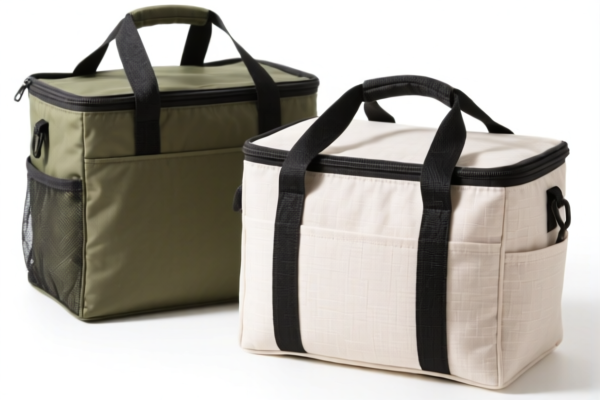
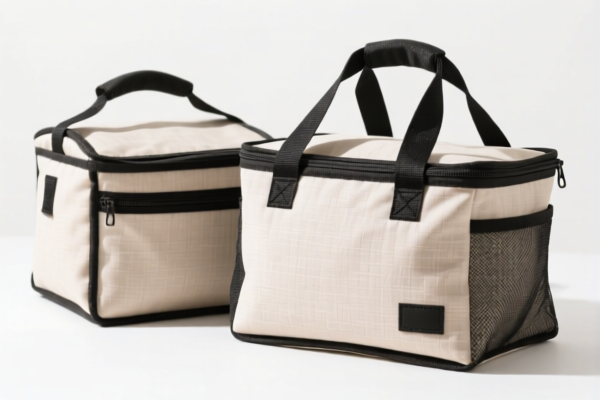
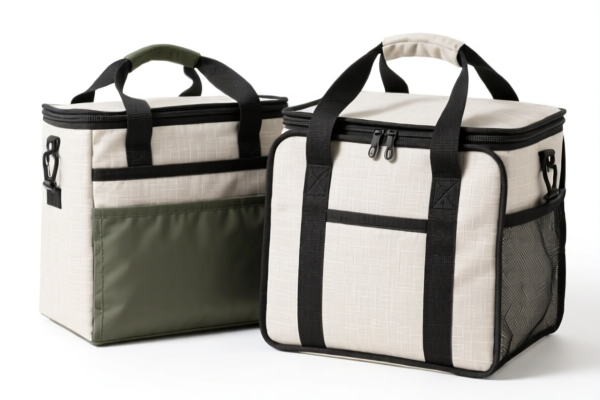
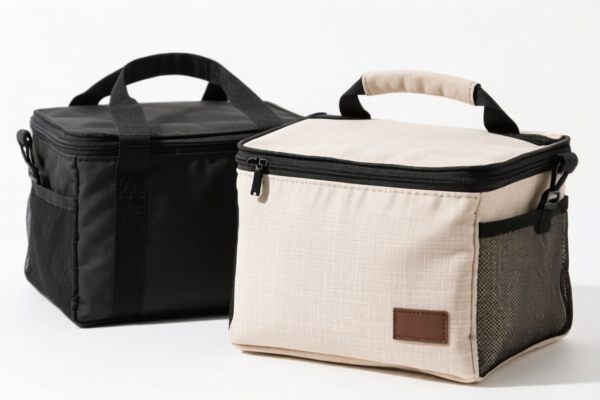
Outdoor Textile Insulated Food Bag
CN → US| HS编码 | 关税税率 | 原产国 | 目的国 | 文档 |
|---|---|---|---|---|
| 6307909891 | 24.5% | CN | US | 官方文档 |
| 4202920809 | 42.0% | CN | US | 官方文档 |
| 6307908940 | 17.0% | CN | US | 官方文档 |
| 3926903300 | 16.5% | CN | US | 官方文档 |
| 3926904800 | 13.4% | CN | US | 官方文档 |
商品图片
AI分析
🎒 Outdoor Textile Insulated Food Bag
🌐 HS Code Reference & Customs Clearance Guide | 2026 Latest Tariff Analysis | Professional Clearance Strategy
📌 I. Product Definition and Classification: Do You Really Understand "Insulated Food Bags"?
An Outdoor Textile Insulated Food Bag is a specialized container designed to maintain the temperature of food and beverages during outdoor activities, commutes, or storage. In international trade, its classification hinges on two critical factors: 1. Material Composition: Is the outer surface primarily textile, plastic, or other materials? 2. Functionality: Is it a general-purpose bag (Chapter 42) or an article of clothing/accessory classified as "other made-up textile articles" (Chapter 63)?
⚠️ Key Distinction:
- If the bag is constructed like a handbag or backpack with textile outer surfaces → It may fall under Chapter 42 (Articles of Leather/Travel Goods).
- If the bag is considered a general textile article (not a handbag) → It may fall under Chapter 63 (Other Made-Up Textile Articles).
- If the bag is primarily plastic or composite materials → It falls under Chapter 39 (Plastics).
📦 II. HS Code Classification Details (2026 Latest Tariff Authority Comparison)
Based on the provided data, here are the 5 potential HS Code classifications for "Outdoor Textile Insulated Food Bags," ranging from textile-based to plastic-based compositions:
| HS Code | Product Description | Application Scenario | Material Logic |
|---|---|---|---|
6307.90.98.91 |
Other made-up articles, textile material, food保温 bags, catch-all category | General textile insulated bags, non-handbag style | ✅ Textile (Catch-all) |
4202.92.08.09 |
Insulated bags with outer surface of textile materials, food storage | Treated as travel goods/handbags with textile exterior | ✅ Textile (Handbag Logic) |
6307.90.89.40 |
Food bag finished consumer goods, cotton/synthetic fiber fabric | Cotton or synthetic textile bags, bag-type logic | ✅ Textile (Cotton/Synthetic) |
3926.90.33.00 |
Other plastic products, plastic/synthetic fiber material, food bag | Plastic-heavy or synthetic fiber composite bags | ⚠️ Plastic/Synthetic |
3926.90.48.00 |
Other plastic products, plastic/aluminum foil/synthetic fiber, food bag | Composite material bags (e.g., PVC, Foil-lined) | ⚠️ Plastic/Composite |
🔍 Key Reminder:
- Textile Outer Surface: If the bag's outer surface is textile, it leans towards Chapter 42 or Chapter 63.
- Plastic/Composite: If the bag is primarily plastic, foil, or synthetic fiber with plastic characteristics, it leans towards Chapter 39.
- Material Composition is King: Customs will inspect the primary material and construction method to decide between Chapter 42, 63, or 39.
💰 III. 2026 Latest Tariff Rate Details (Including Additional Taxes, Policy Add-ons)
✅ Applicable Country: United States (US)
✅ Country of Origin: China (CN)
✅ Effective Date: 2025 November 10 onwards (including subsequent imports)
🎯 1. 6307.90.98.91 —— Other made-up textile articles (Catch-all)
| Item | Content |
|---|---|
| Base Tariff | 7.0% |
| Section 301 Additional Tariff | +7.5% |
| Section 122 Tariff | +10.0% |
| Total Tariff Rate | 24.5% |
| Tax Calculation | CIF Value × 24.5% |
| De Minimis Eligibility | ❌ No (deny_de_minimis) |
| Legal Basis Path | Base Tariff → Section 301 → Section 122 |
📌 Explanation:
- This classification treats the bag as a general textile article.
- Total 24.5% is a moderate-to-high tariff, driven by Section 301 (7.5%) and Section 122 (10%).
- Risk: If customs reclassifies this as a handbag (4202), the rate jumps to 42%.
🎯 2. 4202.92.08.09 —— Insulated bags with textile outer surface (Handbag/Travel Goods)
| Item | Content |
|---|---|
| Base Tariff | 7.0% |
| Section 301 Additional Tariff | +25.0% |
| Section 122 Tariff | +10.0% |
| Total Tariff Rate | 42.0% |
| Tax Calculation | CIF Value × 42.0% |
| De Minimis Eligibility | ❌ No (deny_de_minimis) |
| Legal Basis Path | Base Tariff → Section 301 (Higher Bracket) → Section 122 |
📌 Warning:
- This is the highest tariff among the 5 options.
- Classification as a "handbag" or "travel good" triggers the maximum Section 301 rate (25%).
- Why it matters: If your bag has handles, zippers, and a structure resembling a handbag, customs will apply this rate.
🎯 3. 6307.90.89.40 —— Food bag finished consumer goods (Cotton/Synthetic)
| Item | Content |
|---|---|
| Base Tariff | 7.0% |
| Section 301 Additional Tariff | +0.0% |
| Section 122 Tariff | +10.0% |
| Total Tariff Rate | 17.0% |
| Tax Calculation | CIF Value × 17.0% |
| De Minimis Eligibility | ❌ No (deny_de_minimis) |
| Legal Basis Path | Base Tariff → Section 122 Only |
📌 Opportunity:
- This is a more favorable rate (17%) if the product qualifies under this specific subheading.
- Condition: The product must be clearly defined as a "food bag finished consumer good" made of cotton or synthetic fiber, not a handbag.
- Note: Section 301 (7.5% or 25%) appears to be exempted here, which is rare. This suggests a specific trade agreement or exclusion. Verify this exemption carefully with customs.
🎯 4. 3926.90.33.00 —— Other plastic products (Plastic/Synthetic Fiber)
| Item | Content |
|---|---|
| Base Tariff | 6.5% |
| Section 301 Additional Tariff | +0.0% |
| Section 122 Tariff | +10.0% |
| Total Tariff Rate | 16.5% |
| Tax Calculation | CIF Value × 16.5% |
| De Minimis Eligibility | ❌ No (deny_de_minimis) |
| Legal Basis Path | Base Tariff → Section 122 Only |
📌 Strategy:
- If the bag is made of plastic or synthetic fiber with plastic characteristics, this is a low-tariff option (16.5%).
- Condition: Must prove the material is primarily plastic or falls under "other plastic products."
- Risk: If customs determines the outer surface is textile, they will reclassify to Chapter 63 or 42, increasing the tariff.
🎯 5. 3926.90.48.00 —— Other plastic products (Plastic/Aluminum Foil/Synthetic)
| Item | Content |
|---|---|
| Base Tariff | 3.4% |
| Section 301 Additional Tariff | +0.0% |
| Section 122 Tariff | +10.0% |
| Total Tariff Rate | 13.4% |
| Tax Calculation | CIF Value × 13.4% |
| De Minimis Eligibility | ❌ No (deny_de_minimis) |
| Legal Basis Path | Base Tariff → Section 122 Only |
📌 Best Option:
- This is the lowest tariff (13.4%) among all options.
- Condition: The bag must be made of plastic, aluminum foil, or synthetic fiber composite materials.
- Why it's low: Base tariff is only 3.4%, and Section 301 is 0%.
- Caution: You must provide material test reports proving the primary composition is not textile. If it's >50% textile, this classification will be rejected.
🛠️ IV. Customs Clearance Practical Advice (Battle-Tested Pitfall Guide)
✅ 1. Preparation Checklist (Must-Haves)
| Document | Required | Explanation |
|---|---|---|
| ✅ Material Composition Report | ✔️ | Critical for distinguishing between Chapter 63, 42, and 39. Must detail % of textile, plastic, foil, etc. |
| ✅ Product Photos | ✔️ | Clear images of exterior (material texture), interior (insulation layer), and handles/zippers. |
| ✅ Technical Specification Sheet | ✔️ | Dimensions, weight, intended use (food storage), insulation type. |
| ✅ Commercial Invoice | ✔️ | Must accurately describe the product as "Insulated Food Bag," not "Handbag" or "Plastic Sheet." |
| ✅ Packing List | ✔️ | Ensure consistency with invoice. |
| ✅ Origin Certificate | ✔️ | If claiming preferential rates (if any), though Section 122 applies to China origin. |
✅ 2. Declaration Strategy (Key Mantra)
🔥 “Material Dictates HS, Not Shape. Textile vs. Plastic is the Battle!”
| Scenario | Correct Declaration | Incorrect Action |
|---|---|---|
| Bag is textile outer, insulated inner | 6307.90.98.91 (24.5%) or 4202.92.08.09 (42%) |
Misdeclare as plastic → 13.4% → Customs Penalty |
| Bag is plastic/foil composite | 3926.90.48.00 (13.4%) |
Misdeclare as textile → 24.5% → Lost Profit |
| Bag is handbag-style textile | 4202.92.08.09 (42%) |
Declare as general textile bag → 17% → High Risk of Audit |
| Bag is cotton/synthetic general bag | 6307.90.89.40 (17%) |
Declare as handbag → 42% → Unnecessary Cost |
📌 Critical Tip:
- Do NOT use the word "Handbag" in your product description if you want to avoid the 42% tariff. Use "Insulated Cooler Bag," "Food Carrier," or "Thermal Lunch Bag."
- Material Evidence is Key: Provide lab tests showing the outer fabric is not the primary structural material if you want Chapter 39, or prove it is if you want Chapter 63/42.
🌍 V. Global Market Clearance Comparison (2026 Latest)
| Country/Region | Recommended HS Code | Tariff (China Origin) | Certification Requirements | Remarks |
|---|---|---|---|---|
| 🇺🇸 USA | 3926.90.48.00 |
13.4% (Lowest) | No specific | Section 122 applies; Chapter 39 avoids Section 301 |
| 🇺🇸 USA | 4202.92.08.09 |
42.0% (Highest) | No specific | Handbag classification triggers max Section 301 |
| 🇺🇸 USA | 6307.90.98.91 |
24.5% | No specific | General textile article, moderate Section 301 |
| 🇨🇳 China | 6307.90.98.91 |
~8-10% | CCC (if applicable) | No Section 122/301 |
| 🇪🇺 EU | 6307.90.98.91 |
~4-6% | CE (if applicable) | No additional tariffs |
| 🇯🇵 Japan | 6307.90.98.91 |
~8% | PSE (if applicable) | No additional tariffs |
📌 Conclusion:
- USA is the only market with significant Section 301 and Section 122 tariffs.
- Choosing the right HS Code can save up to 28.6% in tariffs (42% vs 13.4%).
- China-origin goods face higher costs in the US; consider material composition strategy to optimize classification.
📌 VI. Common Errors & Pitfall Guide (Blood & Tears Lessons)
❌ Error 1: Calling a plastic-lined insulated bag a "Textile Bag"
👉 Consequence: Customs reclassifies to 3926.90.48.00 (13.4%) → But wait, this is lower!
👉 Correction: If you want the lower rate, ensure material tests prove plastic/foil composition. If you claimed textile but it's plastic, it's fraud risk.
❌ Error 2: Calling a handbag-style insulated bag a "General Textile Article"
👉 Consequence: Customs reclassifies to 4202.92.08.09 (42%) → Bill for 25% extra tariff!
❌ Error 3: Ignoring Section 122 (10%)
👉 Consequence: All these codes are subject to Section 122 (10%). Failing to include this in cost calculation leads to unexpected landed costs.
❌ Error 4: Using "Handbag" in Product Name
👉 Consequence: Immediate trigger for Chapter 42 classification → 42% Tariff.
✅ Correct Practice:
"Insulated Food Storage Bag, 5L, Outer Material: Polyester Textile (60%), Inner Lining: Aluminum Foil/PE (40%), Zip Closure, No Handles"
→ Supports6307.90.98.91(24.5%) or3926.90.48.00(13.4%) if foil/plastic dominates.
🎯 VII. Conclusion: Professional Declaration, Save Costs, Boost Efficiency!
🎯 Remember the Mantra:
🔹 "Material Dictates HS, Shape Defines Category, Section 122 Applies to All!"
🔹 "Handbag = 42%, General Textile = 24.5%, Plastic/Composite = 13.4%!"
🔹 "Declaration Error = 28.6% Cost Increase!"
📌 Pro Tip:
If your bag is originally manufactured in Vietnam, Mexico, or Thailand, you may avoid Section 301 and Section 122 tariffs, reducing the effective rate to Base Tariff only (e.g., 3.4% - 7%).
Recommendation: Consider Advance Ruling from US Customs and Border Protection (CBP) to secure your HS Code classification before shipment.
📣 Immediate Action:
📞 Contact a licensed customs broker + Provide material test reports + Apply for HS Code Advance Ruling
🚀 Ensure your Insulated Food Bags clear customs smoothly, efficiently, and profitably!
✨ Professional Clearance Starts with Accurate Classification!
💼 Every Percentage Point Counts in Your Profit Margin!
用户评价
关于 HS 编码归类
协调制度(HS)是由世界海关组织(WCO)制定的国际贸易商品分类标准。全球 200 多个国家采用 HS 系统作为海关关税、贸易统计和进出口监管的基础。
每个 HS 编码遵循以下层级结构:
- 章(2 位)——商品大类(例如:第 84 章:机器和机械设备)
- 品目(4 位)——章内的更具体分类
- 子目(6 位)——国际通用细分,所有 WCO 成员国统一使用
- 本国细分(8-10 位)——各国自行扩展的细分编码,如美国 HTSUS 10 位编码
正确的 HS 编码归类对于顺利通关、准确缴纳关税和遵守贸易法规至关重要。错误归类可能导致海关延误、多缴关税或罚款。
从CN进口到US时,适用的关税税率可能包括:
- 最惠国(MFN)税率——适用于 WTO 成员国的标准关税税率
- 普通税率——适用于无贸易协定国家
- 贸易救济关税——附加关税,如 301 条款(反倾销)、232 条款(国家安全)或反补贴税
本页内容仅供参考。如需正式归类,请咨询当地海关或持牌报关代理。