Outdoor Textile Insulated Food Bag
CN → US| HS Code | Tariff Rate | Origin | Destination | Doc |
|---|---|---|---|---|
| 6307909891 | 24.5% | CN | US | Official Doc |
| 4202920809 | 42.0% | CN | US | Official Doc |
| 6307908940 | 17.0% | CN | US | Official Doc |
| 3926903300 | 16.5% | CN | US | Official Doc |
| 3926904800 | 13.4% | CN | US | Official Doc |
Product Images
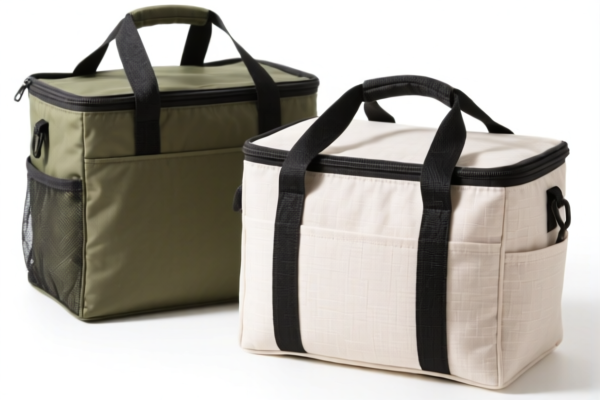
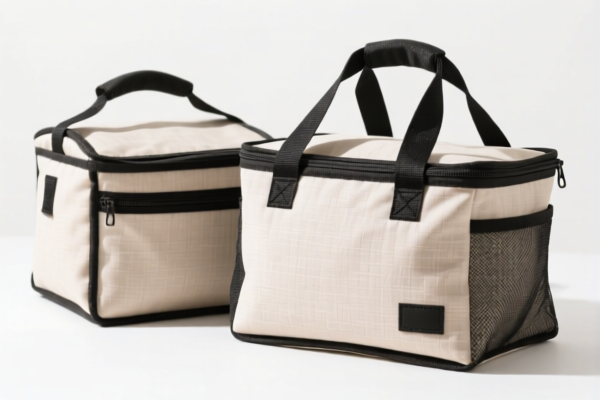
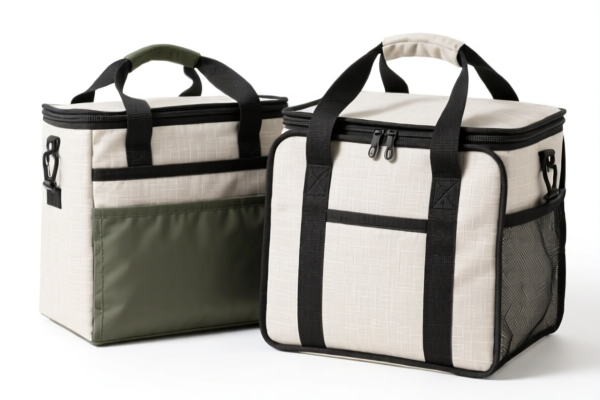
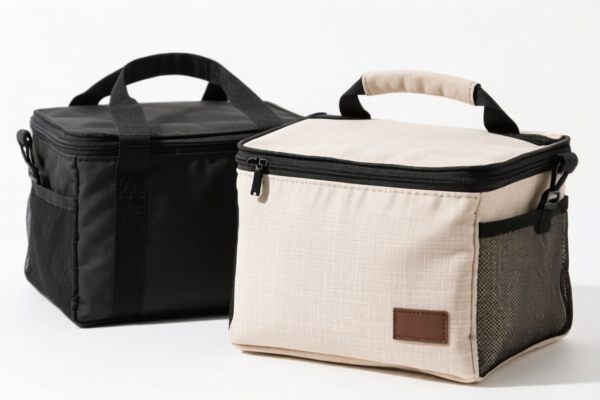
AI Analysis
🎒 Outdoor Textile Insulated Food Bag
🌐 HS Code Reference & Customs Clearance Guide | 2026 Latest Tariff Analysis | Professional Clearance Strategy
📌 I. Product Definition and Classification: Do You Really Understand "Insulated Food Bags"?
An Outdoor Textile Insulated Food Bag is a specialized container designed to maintain the temperature of food and beverages during outdoor activities, commutes, or storage. In international trade, its classification hinges on two critical factors: 1. Material Composition: Is the outer surface primarily textile, plastic, or other materials? 2. Functionality: Is it a general-purpose bag (Chapter 42) or an article of clothing/accessory classified as "other made-up textile articles" (Chapter 63)?
⚠️ Key Distinction:
- If the bag is constructed like a handbag or backpack with textile outer surfaces → It may fall under Chapter 42 (Articles of Leather/Travel Goods).
- If the bag is considered a general textile article (not a handbag) → It may fall under Chapter 63 (Other Made-Up Textile Articles).
- If the bag is primarily plastic or composite materials → It falls under Chapter 39 (Plastics).
📦 II. HS Code Classification Details (2026 Latest Tariff Authority Comparison)
Based on the provided data, here are the 5 potential HS Code classifications for "Outdoor Textile Insulated Food Bags," ranging from textile-based to plastic-based compositions:
| HS Code | Product Description | Application Scenario | Material Logic |
|---|---|---|---|
6307.90.98.91 |
Other made-up articles, textile material, food保温 bags, catch-all category | General textile insulated bags, non-handbag style | ✅ Textile (Catch-all) |
4202.92.08.09 |
Insulated bags with outer surface of textile materials, food storage | Treated as travel goods/handbags with textile exterior | ✅ Textile (Handbag Logic) |
6307.90.89.40 |
Food bag finished consumer goods, cotton/synthetic fiber fabric | Cotton or synthetic textile bags, bag-type logic | ✅ Textile (Cotton/Synthetic) |
3926.90.33.00 |
Other plastic products, plastic/synthetic fiber material, food bag | Plastic-heavy or synthetic fiber composite bags | ⚠️ Plastic/Synthetic |
3926.90.48.00 |
Other plastic products, plastic/aluminum foil/synthetic fiber, food bag | Composite material bags (e.g., PVC, Foil-lined) | ⚠️ Plastic/Composite |
🔍 Key Reminder:
- Textile Outer Surface: If the bag's outer surface is textile, it leans towards Chapter 42 or Chapter 63.
- Plastic/Composite: If the bag is primarily plastic, foil, or synthetic fiber with plastic characteristics, it leans towards Chapter 39.
- Material Composition is King: Customs will inspect the primary material and construction method to decide between Chapter 42, 63, or 39.
💰 III. 2026 Latest Tariff Rate Details (Including Additional Taxes, Policy Add-ons)
✅ Applicable Country: United States (US)
✅ Country of Origin: China (CN)
✅ Effective Date: 2025 November 10 onwards (including subsequent imports)
🎯 1. 6307.90.98.91 —— Other made-up textile articles (Catch-all)
| Item | Content |
|---|---|
| Base Tariff | 7.0% |
| Section 301 Additional Tariff | +7.5% |
| Section 122 Tariff | +10.0% |
| Total Tariff Rate | 24.5% |
| Tax Calculation | CIF Value × 24.5% |
| De Minimis Eligibility | ❌ No (deny_de_minimis) |
| Legal Basis Path | Base Tariff → Section 301 → Section 122 |
📌 Explanation:
- This classification treats the bag as a general textile article.
- Total 24.5% is a moderate-to-high tariff, driven by Section 301 (7.5%) and Section 122 (10%).
- Risk: If customs reclassifies this as a handbag (4202), the rate jumps to 42%.
🎯 2. 4202.92.08.09 —— Insulated bags with textile outer surface (Handbag/Travel Goods)
| Item | Content |
|---|---|
| Base Tariff | 7.0% |
| Section 301 Additional Tariff | +25.0% |
| Section 122 Tariff | +10.0% |
| Total Tariff Rate | 42.0% |
| Tax Calculation | CIF Value × 42.0% |
| De Minimis Eligibility | ❌ No (deny_de_minimis) |
| Legal Basis Path | Base Tariff → Section 301 (Higher Bracket) → Section 122 |
📌 Warning:
- This is the highest tariff among the 5 options.
- Classification as a "handbag" or "travel good" triggers the maximum Section 301 rate (25%).
- Why it matters: If your bag has handles, zippers, and a structure resembling a handbag, customs will apply this rate.
🎯 3. 6307.90.89.40 —— Food bag finished consumer goods (Cotton/Synthetic)
| Item | Content |
|---|---|
| Base Tariff | 7.0% |
| Section 301 Additional Tariff | +0.0% |
| Section 122 Tariff | +10.0% |
| Total Tariff Rate | 17.0% |
| Tax Calculation | CIF Value × 17.0% |
| De Minimis Eligibility | ❌ No (deny_de_minimis) |
| Legal Basis Path | Base Tariff → Section 122 Only |
📌 Opportunity:
- This is a more favorable rate (17%) if the product qualifies under this specific subheading.
- Condition: The product must be clearly defined as a "food bag finished consumer good" made of cotton or synthetic fiber, not a handbag.
- Note: Section 301 (7.5% or 25%) appears to be exempted here, which is rare. This suggests a specific trade agreement or exclusion. Verify this exemption carefully with customs.
🎯 4. 3926.90.33.00 —— Other plastic products (Plastic/Synthetic Fiber)
| Item | Content |
|---|---|
| Base Tariff | 6.5% |
| Section 301 Additional Tariff | +0.0% |
| Section 122 Tariff | +10.0% |
| Total Tariff Rate | 16.5% |
| Tax Calculation | CIF Value × 16.5% |
| De Minimis Eligibility | ❌ No (deny_de_minimis) |
| Legal Basis Path | Base Tariff → Section 122 Only |
📌 Strategy:
- If the bag is made of plastic or synthetic fiber with plastic characteristics, this is a low-tariff option (16.5%).
- Condition: Must prove the material is primarily plastic or falls under "other plastic products."
- Risk: If customs determines the outer surface is textile, they will reclassify to Chapter 63 or 42, increasing the tariff.
🎯 5. 3926.90.48.00 —— Other plastic products (Plastic/Aluminum Foil/Synthetic)
| Item | Content |
|---|---|
| Base Tariff | 3.4% |
| Section 301 Additional Tariff | +0.0% |
| Section 122 Tariff | +10.0% |
| Total Tariff Rate | 13.4% |
| Tax Calculation | CIF Value × 13.4% |
| De Minimis Eligibility | ❌ No (deny_de_minimis) |
| Legal Basis Path | Base Tariff → Section 122 Only |
📌 Best Option:
- This is the lowest tariff (13.4%) among all options.
- Condition: The bag must be made of plastic, aluminum foil, or synthetic fiber composite materials.
- Why it's low: Base tariff is only 3.4%, and Section 301 is 0%.
- Caution: You must provide material test reports proving the primary composition is not textile. If it's >50% textile, this classification will be rejected.
🛠️ IV. Customs Clearance Practical Advice (Battle-Tested Pitfall Guide)
✅ 1. Preparation Checklist (Must-Haves)
| Document | Required | Explanation |
|---|---|---|
| ✅ Material Composition Report | ✔️ | Critical for distinguishing between Chapter 63, 42, and 39. Must detail % of textile, plastic, foil, etc. |
| ✅ Product Photos | ✔️ | Clear images of exterior (material texture), interior (insulation layer), and handles/zippers. |
| ✅ Technical Specification Sheet | ✔️ | Dimensions, weight, intended use (food storage), insulation type. |
| ✅ Commercial Invoice | ✔️ | Must accurately describe the product as "Insulated Food Bag," not "Handbag" or "Plastic Sheet." |
| ✅ Packing List | ✔️ | Ensure consistency with invoice. |
| ✅ Origin Certificate | ✔️ | If claiming preferential rates (if any), though Section 122 applies to China origin. |
✅ 2. Declaration Strategy (Key Mantra)
🔥 “Material Dictates HS, Not Shape. Textile vs. Plastic is the Battle!”
| Scenario | Correct Declaration | Incorrect Action |
|---|---|---|
| Bag is textile outer, insulated inner | 6307.90.98.91 (24.5%) or 4202.92.08.09 (42%) |
Misdeclare as plastic → 13.4% → Customs Penalty |
| Bag is plastic/foil composite | 3926.90.48.00 (13.4%) |
Misdeclare as textile → 24.5% → Lost Profit |
| Bag is handbag-style textile | 4202.92.08.09 (42%) |
Declare as general textile bag → 17% → High Risk of Audit |
| Bag is cotton/synthetic general bag | 6307.90.89.40 (17%) |
Declare as handbag → 42% → Unnecessary Cost |
📌 Critical Tip:
- Do NOT use the word "Handbag" in your product description if you want to avoid the 42% tariff. Use "Insulated Cooler Bag," "Food Carrier," or "Thermal Lunch Bag."
- Material Evidence is Key: Provide lab tests showing the outer fabric is not the primary structural material if you want Chapter 39, or prove it is if you want Chapter 63/42.
🌍 V. Global Market Clearance Comparison (2026 Latest)
| Country/Region | Recommended HS Code | Tariff (China Origin) | Certification Requirements | Remarks |
|---|---|---|---|---|
| 🇺🇸 USA | 3926.90.48.00 |
13.4% (Lowest) | No specific | Section 122 applies; Chapter 39 avoids Section 301 |
| 🇺🇸 USA | 4202.92.08.09 |
42.0% (Highest) | No specific | Handbag classification triggers max Section 301 |
| 🇺🇸 USA | 6307.90.98.91 |
24.5% | No specific | General textile article, moderate Section 301 |
| 🇨🇳 China | 6307.90.98.91 |
~8-10% | CCC (if applicable) | No Section 122/301 |
| 🇪🇺 EU | 6307.90.98.91 |
~4-6% | CE (if applicable) | No additional tariffs |
| 🇯🇵 Japan | 6307.90.98.91 |
~8% | PSE (if applicable) | No additional tariffs |
📌 Conclusion:
- USA is the only market with significant Section 301 and Section 122 tariffs.
- Choosing the right HS Code can save up to 28.6% in tariffs (42% vs 13.4%).
- China-origin goods face higher costs in the US; consider material composition strategy to optimize classification.
📌 VI. Common Errors & Pitfall Guide (Blood & Tears Lessons)
❌ Error 1: Calling a plastic-lined insulated bag a "Textile Bag"
👉 Consequence: Customs reclassifies to 3926.90.48.00 (13.4%) → But wait, this is lower!
👉 Correction: If you want the lower rate, ensure material tests prove plastic/foil composition. If you claimed textile but it's plastic, it's fraud risk.
❌ Error 2: Calling a handbag-style insulated bag a "General Textile Article"
👉 Consequence: Customs reclassifies to 4202.92.08.09 (42%) → Bill for 25% extra tariff!
❌ Error 3: Ignoring Section 122 (10%)
👉 Consequence: All these codes are subject to Section 122 (10%). Failing to include this in cost calculation leads to unexpected landed costs.
❌ Error 4: Using "Handbag" in Product Name
👉 Consequence: Immediate trigger for Chapter 42 classification → 42% Tariff.
✅ Correct Practice:
"Insulated Food Storage Bag, 5L, Outer Material: Polyester Textile (60%), Inner Lining: Aluminum Foil/PE (40%), Zip Closure, No Handles"
→ Supports6307.90.98.91(24.5%) or3926.90.48.00(13.4%) if foil/plastic dominates.
🎯 VII. Conclusion: Professional Declaration, Save Costs, Boost Efficiency!
🎯 Remember the Mantra:
🔹 "Material Dictates HS, Shape Defines Category, Section 122 Applies to All!"
🔹 "Handbag = 42%, General Textile = 24.5%, Plastic/Composite = 13.4%!"
🔹 "Declaration Error = 28.6% Cost Increase!"
📌 Pro Tip:
If your bag is originally manufactured in Vietnam, Mexico, or Thailand, you may avoid Section 301 and Section 122 tariffs, reducing the effective rate to Base Tariff only (e.g., 3.4% - 7%).
Recommendation: Consider Advance Ruling from US Customs and Border Protection (CBP) to secure your HS Code classification before shipment.
📣 Immediate Action:
📞 Contact a licensed customs broker + Provide material test reports + Apply for HS Code Advance Ruling
🚀 Ensure your Insulated Food Bags clear customs smoothly, efficiently, and profitably!
✨ Professional Clearance Starts with Accurate Classification!
💼 Every Percentage Point Counts in Your Profit Margin!
Customer Reviews
About HS Code Classification
The Harmonized System (HS) is an internationally standardized nomenclature developed by the World Customs Organization (WCO) to classify traded products. Over 200 countries use the HS system as the basis for customs tariffs, trade statistics, and import/export regulations.
Each HS code follows a hierarchical structure:
- Chapter (2 digits) — Broad category of goods (e.g., Chapter 84: Machinery and Mechanical Appliances)
- Heading (4 digits) — More specific grouping within the chapter
- Subheading (6 digits) — Internationally standardized breakdown, used by all WCO member countries
- National subdivisions (8-10 digits) — Country-specific extensions for further classification, such as US HTSUS 10-digit codes
Correct HS code classification is essential for smooth customs clearance, accurate duty payment, and compliance with trade regulations. Misclassification can lead to customs delays, overpayment of duties, or penalties.
When importing from CN to US, the applicable tariff rates may include:
- Most-Favored-Nation (MFN) rate — The standard duty rate applied to WTO members
- General rate — Applied to countries without trade agreements
- Trade remedy duties — Additional tariffs such as Section 301 (anti-dumping), Section 232 (national security), or countervailing duties
The information provided on this page is for reference purposes only. For official classification, please consult with your local customs authority or a licensed customs broker.