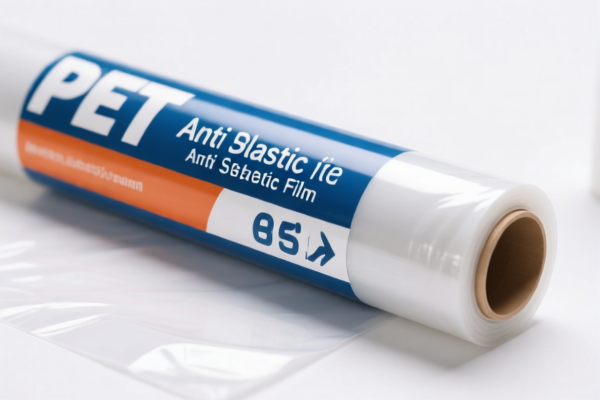
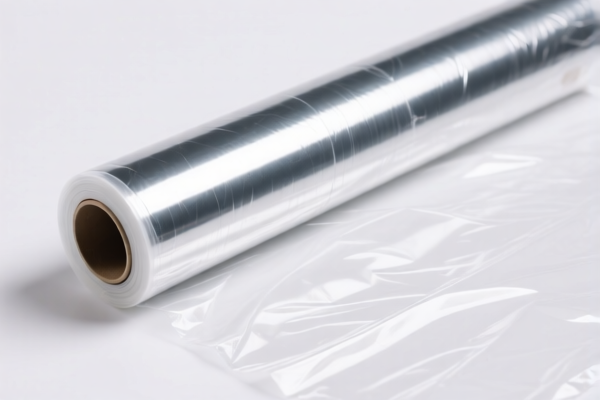
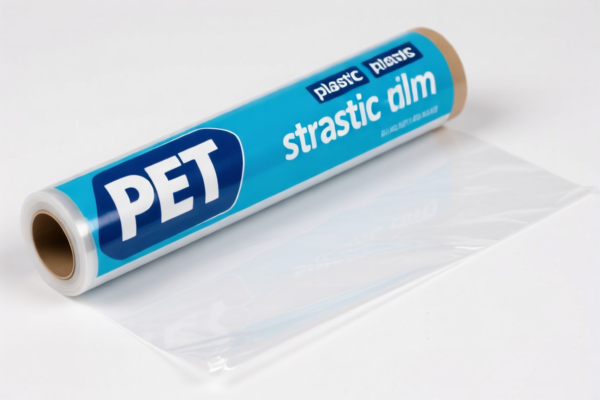
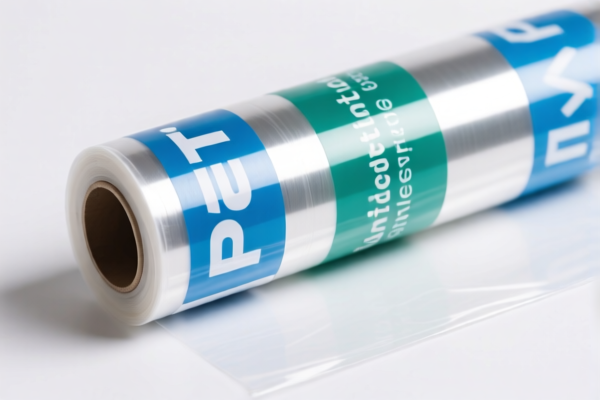
PET Aluminum Coated Anti Static Film
CN → US| HS编码 | 关税税率 | 原产国 | 目的国 | 文档 |
|---|---|---|---|---|
| 7607205000 | 17.5% | CN | US | 官方文档 |
| 7607201000 | 13.7% | CN | US | 官方文档 |
商品图片
AI分析
🧪 PET Aluminum Coated Anti-Static Film (PET镀铝防静电膜)
🌐 HS Code Reference & Customs Clearance Guide | 2026 Latest Tariff Analysis | Professional Clearance Strategy
📌 1. Product Definition & Classification: What is "PET Aluminum Coated Anti-Static Film"?
This product is a composite material consisting of a PET (Polyethylene Terephthalate) plastic substrate coated with aluminum and treated for anti-static properties. In international trade, the classification depends heavily on whether customs authorities view it primarily as a metal product (aluminum foil composite) or a plastic product.
⚠️ Key Classification Logic:
- If classified under Chapter 76 (Aluminum): It is viewed as "Aluminum foil, whether or not printed, in rolls or sheets, backing with plastic." → HS Codes starting with7607.20.
- If classified under Chapter 39 (Plastics): It is viewed as "Other articles of plastics," ignoring the thin metal layer as merely a coating. → HS Codes starting with3926.90.
📦 2. HS Code Classification Details (2026 Latest Tariff Authority Comparison)
| HS Code | Product Description | Key Classification Criteria | Tax Rate (China Origin → US) |
|---|---|---|---|
7607.20.10.00 |
Aluminum foil, with plastic backing (Anti-Static PET) | Views PET as the "backing" and Aluminum as the primary functional layer. Anti-static feature does not change the base material status. | 13.7% |
3926.90.99.89 |
Other plastic articles (PET Film with Al Coating) | Views PET as the primary material. The aluminum layer is considered a minor coating. Classified as general plastic goods. | 22.8% |
7607.20.50.00 |
Aluminum foil, with metal/plastic backing (Composite) | Views the product as a "Composite Material" where the metallic layer defines the tariff heading, specifically under "Other aluminum foil" categories. | 17.5% |
3926.90.94.00 |
Plastic sheets/films (No specific metal exclusion) | Strictly interprets as a "Plastic Sheet" category. No conflict with metal layers in this specific subheading interpretation. | 35.0% |
7607.20.10.00 |
Aluminum foil articles, with plastic backing | Repeated entry. Emphasizes the "Plastic-Backed Aluminum" structure. Anti-static function is secondary to the material composition. | 13.7% |
🔍 Critical Note:
- The lowest tax rate (13.7%) applies if classified as7607.20.10.00(Aluminum with plastic backing).
- The highest tax rate (35.0%) applies if classified as3926.90.94.00(Plastic sheet).
- The difference lies in whether Customs prioritizes the Aluminum (Ch 76) or the Plastic (Ch 39).
💰 3. 2026 Latest Tariff Rate Breakdown (Including Surcharges & Policy Add-ons)
✅ Applicable Country: United States (US)
✅ Origin: China (CN)
✅ Effective Time: From November 10, 2025 (Including subsequent imports)
🎯 1. 7607.20.10.00 —— Aluminum Foil with Plastic Backing (Best Case Scenario)
| Item | Content |
|---|---|
| Base Tariff | 3.7% |
| USITC Additional Tariff (Section 301) | 0.0% (Not applicable or excluded in this specific sub-heading interpretation) |
| 122 Provision Tariff (IEEPA/China Add-on) | 10.0% |
| Total Tax Rate | 13.7% |
| Tax Calculation | CIF Value × 13.7% |
| De Minimis Exemption | ❌ Not Eligible (Deny de minimis for China-origin aluminum/plastic composites) |
| Legal Basis Path | USITC:7607.20.10.00 → IEEPA:9903.01.25 (122 Clause) |
📌 Explanation:
- Base Rate (3.7%): Standard MFN rate for aluminum foil composites.
- 122 Clause (10%): This is a specific US trade remedy provision targeting Chinese-origin goods.
- Total 13.7%: This is the most favorable classification if the "plastic backing" argument holds.
🎯 2. 3926.90.99.89 —— Other Plastic Articles (Moderate Cost)
| Item | Content |
|---|---|
| Base Tariff | 5.3% |
| USITC Additional Tariff (Section 301) | 7.5% |
| 122 Provision Tariff | 10.0% |
| Total Tax Rate | 22.8% |
| Tax Calculation | CIF Value × 22.8% |
| De Minimis Exemption | ❌ Not Eligible |
| Legal Basis Path | USITC:3926.90.99.89 → IEEPA:9903.01.25 + USITC:3926.90 (Section 301) |
📌 Explanation:
- Classified as a general plastic article.
- Suffers from Section 301 tariffs (7.5%) because it is deemed a plastic product subject to those restrictions.
- Plus the 122 Clause (10%).
🎯 3. 7607.20.50.00 —— Aluminum Foil, Other (Intermediate)
| Item | Content |
|---|---|
| Base Tariff | 0.0% |
| USITC Additional Tariff (Section 301) | 7.5% |
| 122 Provision Tariff | 10.0% |
| Total Tax Rate | 17.5% |
| Tax Calculation | CIF Value × 17.5% |
| De Minimis Exemption | ❌ Not Eligible |
| Legal Basis Path | USITC:7607.20.50.00 → IEEPA:9903.01.25 + USITC:7607.20 (Section 301) |
📌 Explanation:
- Base rate is 0%, which is attractive, but it still incurs Section 301 (7.5%) and 122 Clause (10%).
🎯 4. 3926.90.94.00 —— Plastic Sheets (Worst Case Scenario)
| Item | Content |
|---|---|
| Base Tariff | 0.0% |
| USITC Additional Tariff (Section 301) | 25.0% |
| 122 Provision Tariff | 10.0% |
| Total Tax Rate | 35.0% |
| Tax Calculation | CIF Value × 35.0% |
| De Minimis Exemption | ❌ Not Eligible |
| Legal Basis Path | USITC:3926.90.94.00 → IEEPA:9903.01.25 + USITC:3926.90 (Section 301) |
📌 Explanation:
- This is the highest cost option.
- While base rate is 0%, the Section 301 tariff jumps to 25% for certain plastic sub-headings.
- Plus the 122 Clause (10%).
🛠️ 4. Customs Clearance Practical Advice (Avoid Pitfalls)
✅ 1. Documentation Checklist (Must-Haves)
| Document | Required | Explanation |
|---|---|---|
| ✅ Product Specification Sheet | ✔️ | Must explicitly state: "PET Substrate," "Aluminum Coating," and "Anti-Static Properties." |
| ✅ Composition Analysis | ✔️ | Proof of layers: e.g., "50μm PET + 0.05μm Al." Helps argue for Ch 76 vs Ch 39. |
| ✅ Commercial Invoice | ✔️ | Clearly describe as "PET Aluminum Coated Anti-Static Film." Avoid vague terms like "Plastic Sheet." |
| ✅ Certificate of Origin | ✔️ | Essential for determining applicability of 122 Clause and Section 301. |
| ✅ Anti-Static Test Report | ✔️ | Confirms functional specification; does not change HS code but validates product identity. |
| ✅ Packing List | ✔️ | Show roll dimensions, weight, and packaging to confirm it is a "film/roll" not a "sheet." |
✅ 2. Declaration Strategy (Key Tips)
🔥 "Aluminum Backing Wins, Plastic Coating Loses!"
Argue that the Aluminum layer provides the functional essence (shielding/conductivity), making it an Aluminum article (Ch 76), not just a Plastic article.
| Scenario | Recommended HS Code | Reasoning | Risk |
|---|---|---|---|
| Primary Value in Aluminum | 7607.20.10.00 |
Aluminum is the functional core; PET is just a backing carrier. | ✅ Lowest Tax (13.7%) |
| Primary Value in Plastic | 3926.90.99.89 |
PET is the structural bulk; Al is just a thin surface coating. | ⚠️ Moderate Tax (22.8%) |
| Generic Plastic Article | 3926.90.94.00 |
If customs ignores Al entirely and treats it as generic plastic film. | ❌ Highest Tax (35.0%) |
✅ 3. Special Case Handling
| Situation | Handling Advice |
|---|---|
| Anti-Static Feature | This is a functional property, not a structural one. It does not change the HS code. Do not try to classify under "Electrical Insulators" unless it's specifically for that use. |
| Composite Nature | Emphasize that the Aluminum is not merely a decorative layer. If it’s used for EMI shielding or static dissipation, argue for Ch 76 (Aluminum) as the essential character. |
| Pre-Ruling Recommendation | Highly Recommended: Apply for an HS Code Advance Ruling with US Customs. Provide cross-section images and chemical composition reports to secure the 7607.20.10.00 classification. |
🌍 5. Global Market Comparison (2026 Update)
| Country/Region | Recommended HS Code | Tariff (China Origin) | Notes |
|---|---|---|---|
| 🇺🇸 USA | 7607.20.10.00 |
13.7% | Best case. Avoid 3926.90.94.00 (35%). |
| 🇨🇳 China | 3920.43.00.00 |
5-10% | Import duty varies; VAT 13%. No Section 301/122. |
| 🇪🇺 EU | 7607.20.00 |
0% | Generally free duty for aluminum foil. Check specific anti-dumping rules. |
| 🇬🇧 UK | 7607.20.00 |
0% | Post-Brexit tariff. No US-style surcharges. |
📌 Conclusion:
- The US is the most challenging market due to Section 301 and 122 Clause surcharges.
- Classification Strategy is Critical: A difference of 21.3% in tax rate exists between the best (7607.20.10.00) and worst (3926.90.94.00) classifications.
📌 6. Common Mistakes & Pitfalls (Blood & Tears Lessons)
❌ Mistake 1: Classifying as 3926.90.94.00 (Plastic Sheet)
👉 Consequence: 35% Total Tax. You pay an extra 21.3% in duties unnecessarily.
❌ Mistake 2: Ignoring the 122 Clause
👉 Consequence: Even if you get a low base rate, forgetting the 10% 122 Clause leads to underpayment penalties and cargo hold.
❌ Mistake 3: Claiming "Anti-Static" exempts from Section 301
👉 Consequence: Functional features do not exempt goods from Section 301 or 122 tariffs.
❌ Mistake 4: Poor Description on Invoice
👉 Consequence: If you just write "Plastic Film," customs will default to Ch 39.
✅ Correct Description:
"Aluminum Foil with PET Backing, Anti-Static Grade, Roll Form, 50μm PET + 0.05μm Al"
🎯 7. Conclusion: Professional Classification Saves Money!
🎯 Remember the Golden Rule:
🔹 "Aluminum Functional Core = Ch 76 (13.7%) vs. Plastic Bulk = Ch 39 (Up to 35%)."
🔹 "Don't let 'Plastic' trick you into paying double taxes!"
📌 Pro Tip:
- For US imports, always aim for 7607.20.10.00.
- Provide cross-sectional microscopy images in your pre-shipment documentation to prove the Aluminum layer is integral.
- Consider Advance Ruling if your shipment volume is high.
📣 Immediate Action:
📞 Consult a licensed customs broker before shipping.
📄 Prepare technical datasheets highlighting Aluminum content and function.
🚀 Secure the 13.7% rate, not the 35% rate!
✨ Precision in Classification, Profit in Clearance!
💼 Your bottom line depends on these two digits: 76 vs 39.
用户评价
关于 HS 编码归类
协调制度(HS)是由世界海关组织(WCO)制定的国际贸易商品分类标准。全球 200 多个国家采用 HS 系统作为海关关税、贸易统计和进出口监管的基础。
每个 HS 编码遵循以下层级结构:
- 章(2 位)——商品大类(例如:第 84 章:机器和机械设备)
- 品目(4 位)——章内的更具体分类
- 子目(6 位)——国际通用细分,所有 WCO 成员国统一使用
- 本国细分(8-10 位)——各国自行扩展的细分编码,如美国 HTSUS 10 位编码
正确的 HS 编码归类对于顺利通关、准确缴纳关税和遵守贸易法规至关重要。错误归类可能导致海关延误、多缴关税或罚款。
从CN进口到US时,适用的关税税率可能包括:
- 最惠国(MFN)税率——适用于 WTO 成员国的标准关税税率
- 普通税率——适用于无贸易协定国家
- 贸易救济关税——附加关税,如 301 条款(反倾销)、232 条款(国家安全)或反补贴税
本页内容仅供参考。如需正式归类,请咨询当地海关或持牌报关代理。