PET Aluminum Coated Anti Static Film
CN → US| HS Code | Tariff Rate | Origin | Destination | Doc |
|---|---|---|---|---|
| 7607205000 | 17.5% | CN | US | Official Doc |
| 7607201000 | 13.7% | CN | US | Official Doc |
Product Images
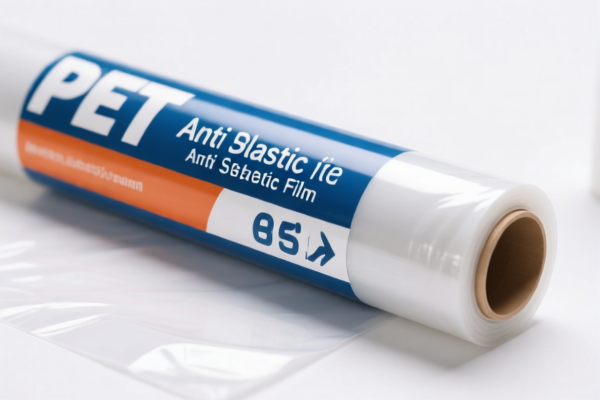
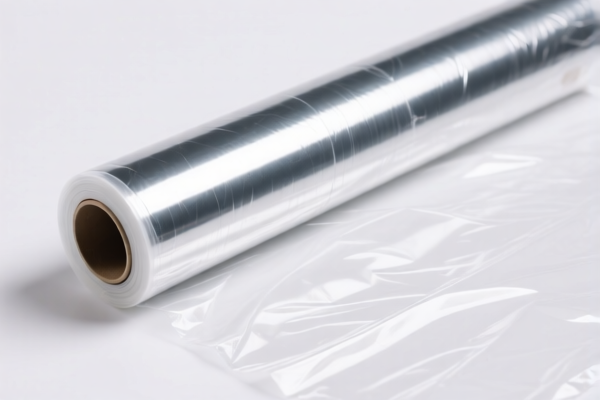
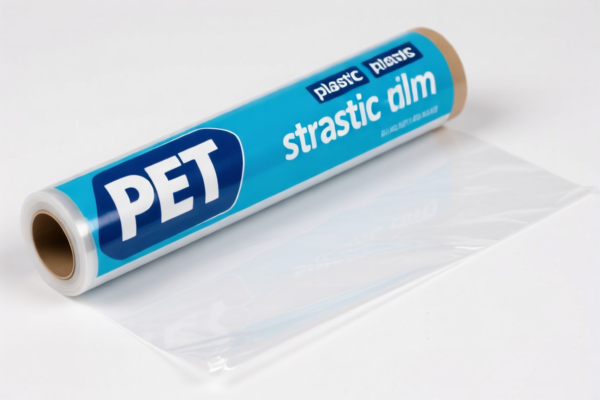
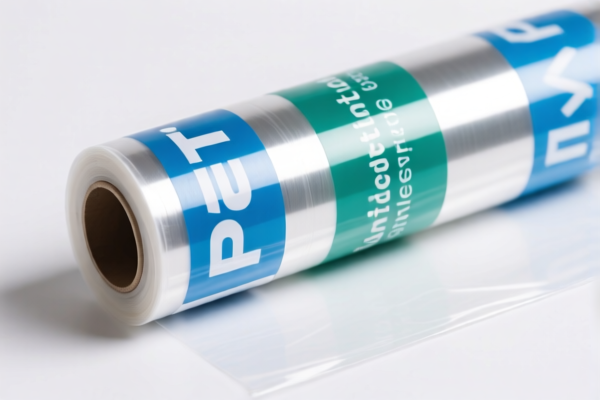
AI Analysis
🧪 PET Aluminum Coated Anti-Static Film (PET镀铝防静电膜)
🌐 HS Code Reference & Customs Clearance Guide | 2026 Latest Tariff Analysis | Professional Clearance Strategy
📌 1. Product Definition & Classification: What is "PET Aluminum Coated Anti-Static Film"?
This product is a composite material consisting of a PET (Polyethylene Terephthalate) plastic substrate coated with aluminum and treated for anti-static properties. In international trade, the classification depends heavily on whether customs authorities view it primarily as a metal product (aluminum foil composite) or a plastic product.
⚠️ Key Classification Logic:
- If classified under Chapter 76 (Aluminum): It is viewed as "Aluminum foil, whether or not printed, in rolls or sheets, backing with plastic." → HS Codes starting with7607.20.
- If classified under Chapter 39 (Plastics): It is viewed as "Other articles of plastics," ignoring the thin metal layer as merely a coating. → HS Codes starting with3926.90.
📦 2. HS Code Classification Details (2026 Latest Tariff Authority Comparison)
| HS Code | Product Description | Key Classification Criteria | Tax Rate (China Origin → US) |
|---|---|---|---|
7607.20.10.00 |
Aluminum foil, with plastic backing (Anti-Static PET) | Views PET as the "backing" and Aluminum as the primary functional layer. Anti-static feature does not change the base material status. | 13.7% |
3926.90.99.89 |
Other plastic articles (PET Film with Al Coating) | Views PET as the primary material. The aluminum layer is considered a minor coating. Classified as general plastic goods. | 22.8% |
7607.20.50.00 |
Aluminum foil, with metal/plastic backing (Composite) | Views the product as a "Composite Material" where the metallic layer defines the tariff heading, specifically under "Other aluminum foil" categories. | 17.5% |
3926.90.94.00 |
Plastic sheets/films (No specific metal exclusion) | Strictly interprets as a "Plastic Sheet" category. No conflict with metal layers in this specific subheading interpretation. | 35.0% |
7607.20.10.00 |
Aluminum foil articles, with plastic backing | Repeated entry. Emphasizes the "Plastic-Backed Aluminum" structure. Anti-static function is secondary to the material composition. | 13.7% |
🔍 Critical Note:
- The lowest tax rate (13.7%) applies if classified as7607.20.10.00(Aluminum with plastic backing).
- The highest tax rate (35.0%) applies if classified as3926.90.94.00(Plastic sheet).
- The difference lies in whether Customs prioritizes the Aluminum (Ch 76) or the Plastic (Ch 39).
💰 3. 2026 Latest Tariff Rate Breakdown (Including Surcharges & Policy Add-ons)
✅ Applicable Country: United States (US)
✅ Origin: China (CN)
✅ Effective Time: From November 10, 2025 (Including subsequent imports)
🎯 1. 7607.20.10.00 —— Aluminum Foil with Plastic Backing (Best Case Scenario)
| Item | Content |
|---|---|
| Base Tariff | 3.7% |
| USITC Additional Tariff (Section 301) | 0.0% (Not applicable or excluded in this specific sub-heading interpretation) |
| 122 Provision Tariff (IEEPA/China Add-on) | 10.0% |
| Total Tax Rate | 13.7% |
| Tax Calculation | CIF Value × 13.7% |
| De Minimis Exemption | ❌ Not Eligible (Deny de minimis for China-origin aluminum/plastic composites) |
| Legal Basis Path | USITC:7607.20.10.00 → IEEPA:9903.01.25 (122 Clause) |
📌 Explanation:
- Base Rate (3.7%): Standard MFN rate for aluminum foil composites.
- 122 Clause (10%): This is a specific US trade remedy provision targeting Chinese-origin goods.
- Total 13.7%: This is the most favorable classification if the "plastic backing" argument holds.
🎯 2. 3926.90.99.89 —— Other Plastic Articles (Moderate Cost)
| Item | Content |
|---|---|
| Base Tariff | 5.3% |
| USITC Additional Tariff (Section 301) | 7.5% |
| 122 Provision Tariff | 10.0% |
| Total Tax Rate | 22.8% |
| Tax Calculation | CIF Value × 22.8% |
| De Minimis Exemption | ❌ Not Eligible |
| Legal Basis Path | USITC:3926.90.99.89 → IEEPA:9903.01.25 + USITC:3926.90 (Section 301) |
📌 Explanation:
- Classified as a general plastic article.
- Suffers from Section 301 tariffs (7.5%) because it is deemed a plastic product subject to those restrictions.
- Plus the 122 Clause (10%).
🎯 3. 7607.20.50.00 —— Aluminum Foil, Other (Intermediate)
| Item | Content |
|---|---|
| Base Tariff | 0.0% |
| USITC Additional Tariff (Section 301) | 7.5% |
| 122 Provision Tariff | 10.0% |
| Total Tax Rate | 17.5% |
| Tax Calculation | CIF Value × 17.5% |
| De Minimis Exemption | ❌ Not Eligible |
| Legal Basis Path | USITC:7607.20.50.00 → IEEPA:9903.01.25 + USITC:7607.20 (Section 301) |
📌 Explanation:
- Base rate is 0%, which is attractive, but it still incurs Section 301 (7.5%) and 122 Clause (10%).
🎯 4. 3926.90.94.00 —— Plastic Sheets (Worst Case Scenario)
| Item | Content |
|---|---|
| Base Tariff | 0.0% |
| USITC Additional Tariff (Section 301) | 25.0% |
| 122 Provision Tariff | 10.0% |
| Total Tax Rate | 35.0% |
| Tax Calculation | CIF Value × 35.0% |
| De Minimis Exemption | ❌ Not Eligible |
| Legal Basis Path | USITC:3926.90.94.00 → IEEPA:9903.01.25 + USITC:3926.90 (Section 301) |
📌 Explanation:
- This is the highest cost option.
- While base rate is 0%, the Section 301 tariff jumps to 25% for certain plastic sub-headings.
- Plus the 122 Clause (10%).
🛠️ 4. Customs Clearance Practical Advice (Avoid Pitfalls)
✅ 1. Documentation Checklist (Must-Haves)
| Document | Required | Explanation |
|---|---|---|
| ✅ Product Specification Sheet | ✔️ | Must explicitly state: "PET Substrate," "Aluminum Coating," and "Anti-Static Properties." |
| ✅ Composition Analysis | ✔️ | Proof of layers: e.g., "50μm PET + 0.05μm Al." Helps argue for Ch 76 vs Ch 39. |
| ✅ Commercial Invoice | ✔️ | Clearly describe as "PET Aluminum Coated Anti-Static Film." Avoid vague terms like "Plastic Sheet." |
| ✅ Certificate of Origin | ✔️ | Essential for determining applicability of 122 Clause and Section 301. |
| ✅ Anti-Static Test Report | ✔️ | Confirms functional specification; does not change HS code but validates product identity. |
| ✅ Packing List | ✔️ | Show roll dimensions, weight, and packaging to confirm it is a "film/roll" not a "sheet." |
✅ 2. Declaration Strategy (Key Tips)
🔥 "Aluminum Backing Wins, Plastic Coating Loses!"
Argue that the Aluminum layer provides the functional essence (shielding/conductivity), making it an Aluminum article (Ch 76), not just a Plastic article.
| Scenario | Recommended HS Code | Reasoning | Risk |
|---|---|---|---|
| Primary Value in Aluminum | 7607.20.10.00 |
Aluminum is the functional core; PET is just a backing carrier. | ✅ Lowest Tax (13.7%) |
| Primary Value in Plastic | 3926.90.99.89 |
PET is the structural bulk; Al is just a thin surface coating. | ⚠️ Moderate Tax (22.8%) |
| Generic Plastic Article | 3926.90.94.00 |
If customs ignores Al entirely and treats it as generic plastic film. | ❌ Highest Tax (35.0%) |
✅ 3. Special Case Handling
| Situation | Handling Advice |
|---|---|
| Anti-Static Feature | This is a functional property, not a structural one. It does not change the HS code. Do not try to classify under "Electrical Insulators" unless it's specifically for that use. |
| Composite Nature | Emphasize that the Aluminum is not merely a decorative layer. If it’s used for EMI shielding or static dissipation, argue for Ch 76 (Aluminum) as the essential character. |
| Pre-Ruling Recommendation | Highly Recommended: Apply for an HS Code Advance Ruling with US Customs. Provide cross-section images and chemical composition reports to secure the 7607.20.10.00 classification. |
🌍 5. Global Market Comparison (2026 Update)
| Country/Region | Recommended HS Code | Tariff (China Origin) | Notes |
|---|---|---|---|
| 🇺🇸 USA | 7607.20.10.00 |
13.7% | Best case. Avoid 3926.90.94.00 (35%). |
| 🇨🇳 China | 3920.43.00.00 |
5-10% | Import duty varies; VAT 13%. No Section 301/122. |
| 🇪🇺 EU | 7607.20.00 |
0% | Generally free duty for aluminum foil. Check specific anti-dumping rules. |
| 🇬🇧 UK | 7607.20.00 |
0% | Post-Brexit tariff. No US-style surcharges. |
📌 Conclusion:
- The US is the most challenging market due to Section 301 and 122 Clause surcharges.
- Classification Strategy is Critical: A difference of 21.3% in tax rate exists between the best (7607.20.10.00) and worst (3926.90.94.00) classifications.
📌 6. Common Mistakes & Pitfalls (Blood & Tears Lessons)
❌ Mistake 1: Classifying as 3926.90.94.00 (Plastic Sheet)
👉 Consequence: 35% Total Tax. You pay an extra 21.3% in duties unnecessarily.
❌ Mistake 2: Ignoring the 122 Clause
👉 Consequence: Even if you get a low base rate, forgetting the 10% 122 Clause leads to underpayment penalties and cargo hold.
❌ Mistake 3: Claiming "Anti-Static" exempts from Section 301
👉 Consequence: Functional features do not exempt goods from Section 301 or 122 tariffs.
❌ Mistake 4: Poor Description on Invoice
👉 Consequence: If you just write "Plastic Film," customs will default to Ch 39.
✅ Correct Description:
"Aluminum Foil with PET Backing, Anti-Static Grade, Roll Form, 50μm PET + 0.05μm Al"
🎯 7. Conclusion: Professional Classification Saves Money!
🎯 Remember the Golden Rule:
🔹 "Aluminum Functional Core = Ch 76 (13.7%) vs. Plastic Bulk = Ch 39 (Up to 35%)."
🔹 "Don't let 'Plastic' trick you into paying double taxes!"
📌 Pro Tip:
- For US imports, always aim for 7607.20.10.00.
- Provide cross-sectional microscopy images in your pre-shipment documentation to prove the Aluminum layer is integral.
- Consider Advance Ruling if your shipment volume is high.
📣 Immediate Action:
📞 Consult a licensed customs broker before shipping.
📄 Prepare technical datasheets highlighting Aluminum content and function.
🚀 Secure the 13.7% rate, not the 35% rate!
✨ Precision in Classification, Profit in Clearance!
💼 Your bottom line depends on these two digits: 76 vs 39.
Customer Reviews
About HS Code Classification
The Harmonized System (HS) is an internationally standardized nomenclature developed by the World Customs Organization (WCO) to classify traded products. Over 200 countries use the HS system as the basis for customs tariffs, trade statistics, and import/export regulations.
Each HS code follows a hierarchical structure:
- Chapter (2 digits) — Broad category of goods (e.g., Chapter 84: Machinery and Mechanical Appliances)
- Heading (4 digits) — More specific grouping within the chapter
- Subheading (6 digits) — Internationally standardized breakdown, used by all WCO member countries
- National subdivisions (8-10 digits) — Country-specific extensions for further classification, such as US HTSUS 10-digit codes
Correct HS code classification is essential for smooth customs clearance, accurate duty payment, and compliance with trade regulations. Misclassification can lead to customs delays, overpayment of duties, or penalties.
When importing from CN to US, the applicable tariff rates may include:
- Most-Favored-Nation (MFN) rate — The standard duty rate applied to WTO members
- General rate — Applied to countries without trade agreements
- Trade remedy duties — Additional tariffs such as Section 301 (anti-dumping), Section 232 (national security), or countervailing duties
The information provided on this page is for reference purposes only. For official classification, please consult with your local customs authority or a licensed customs broker.