PET Aluminum Plated High Strength Film
CN → US| HS编码 | 关税税率 | 原产国 | 目的国 | 文档 |
|---|---|---|---|---|
| 7607201000 | 13.7% | CN | US | 官方文档 |
| 3926909989 | 22.8% | CN | US | 官方文档 |
| 7607205000 | 17.5% | CN | US | 官方文档 |
| 3926909400 | 35.0% | CN | US | 官方文档 |
| 7607201000 | 13.7% | CN | US | 官方文档 |
商品图片
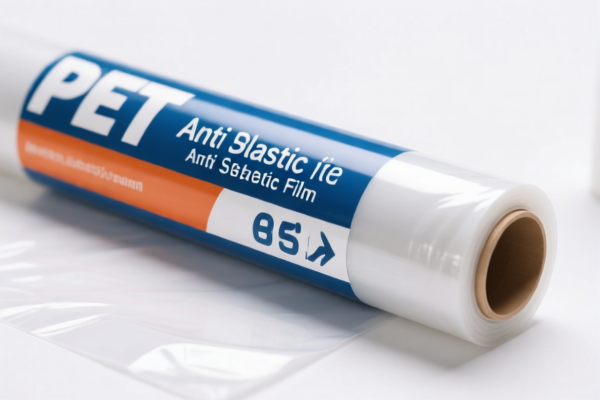
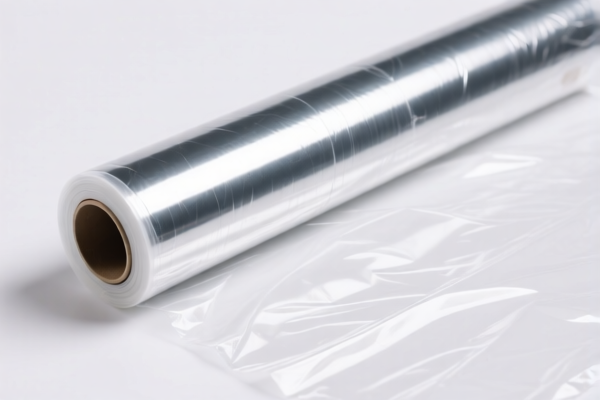
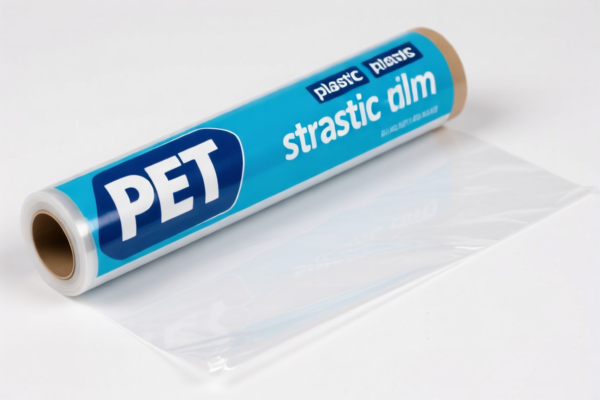
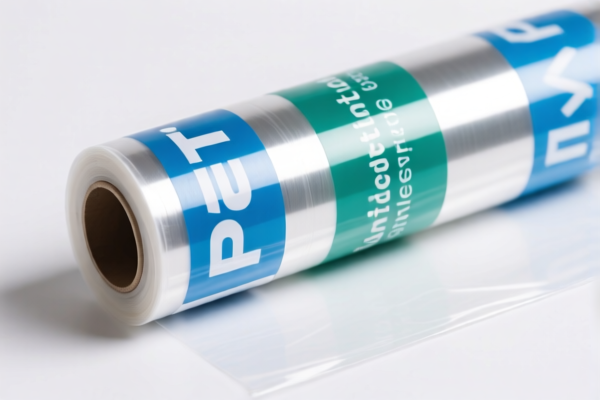
AI分析
🎬 PET Aluminum Plated High Strength Film (Anti-Static)
🌐 HS Code Reference & Customs Clearance Guide | 2026 Latest Tariff Analysis | Professional Compliance Strategy
📌 I. Product Definition & Classification: Do You Really Understand "PET Aluminized Film"?
PET Aluminum Plated High Strength Film (Anti-Static) is a composite material widely used in packaging, electronics shielding, and decorative applications. It combines the mechanical strength of Polyethylene Terephthalate (PET) with the conductivity/shielding properties of vacuum-deposited aluminum, enhanced with anti-static coatings.
In international trade, classification hinges on three key factors: 1. Structure: Is it primarily a plastic film with a metal backing, or a metal foil with a plastic backing? 2. Function: Is the anti-static property defining, or is it incidental? 3. Material Composition: The interplay between the PET substrate and the Al layer determines the heading under the Harmonized System (HS).
⚠️ Key Distinction Point:
- If classified as Plastic Goods: Falls under Chapter 39 (PET as the essential character).
- If classified as Aluminum Foil: Falls under Chapter 76 (Aluminum as the essential character/backing).
- Anti-static functionality alone does not change the HS code but may influence customs scrutiny regarding "electrical properties."
📦 II. HS Code Classification Details (Based on Provided Data)
The following HS codes are derived directly from the provided dataset, representing different interpretations of the product's composition and function.
| HS Code | Product Description | Application Scenario | Key Classification Logic |
|---|---|---|---|
7607.20.10.00 |
PET Aluminized Anti-Static Film: Material PET, Form Film, Function Anti-Static. Fits "Aluminum Foil with Plastic Backing." | Electronics packaging, ESD-safe storage, high-strength shielding. | Primary Classification: Treated as Aluminum Foil (Ch 76) because the aluminum layer provides the essential functional characteristic (conductivity/shielding), even though PET is the substrate. |
3926.90.99.89 |
PET Aluminized Anti-Static Film: Material PET, Form Film. Classified as "Other Plastic Articles." No specific excluded use. | General plastic packaging, non-specialized industrial film. | Alternative Classification: Treated as a Plastic Article (Ch 39) where PET is considered the essential character, and aluminum is just a surface treatment. |
7607.20.50.00 |
PET Aluminized Anti-Static Film: Material PET, Form Film. Classified as "Composite Material with Metal Layer," fitting "Aluminum Backing." | Industrial laminates, composite materials requiring metal integrity. | Composite Interpretation: Focuses on the "composite nature" with a metal backing, distinct from simple foil. |
3926.90.94.00 |
PET Aluminized Anti-Static Film: Material PET, Form Film. Classified as "Plastic Sheets," no metal or raw material conflict. | Standard plastic sheeting applications, decorative films. | Conservative Plastic Interpretation: Ignores the metallic functional aspect, classifying purely by the polymer base (PET). |
🔍 Critical Reminder:
-7607.20.10.00and7607.20.50.00fall under Chapter 76 (Aluminum), implying the aluminum layer is crucial.
-3926.90.99.89and3926.90.94.00fall under Chapter 39 (Plastics), implying PET is the essential character.
- Do not mix these categories. Customs authorities will look at the essential character (GRI 3(b)).
💰 III. 2026 Latest Tariff Rate Details (Including Surcharges & Policy Add-ons)
✅ Applicable Country: USA (US)
✅ Origin: China (CN)
✅ Effective Time: 2025/2026 Tariff Schedule (Based on provided data)
🎯 1. 7607.20.10.00 —— Aluminum Foil with Plastic Backing (Most Common for Functional Films)
| Item | Detail |
|---|---|
| Basic Tariff | 3.7% |
| Section 301 Surcharge | 0.0% (Not applicable for this sub-heading in the provided data) |
| Section 122 Tariff | 10.0% |
| Total Tax Rate | 13.7% |
| Tax Calculation | CIF Value × 13.7% |
| De Minimis Exemption | ❌ Not Applicable (Commercial shipment) |
| Legal Basis Path | HTSUS:7607.20.10.00 → Section 122: 10% |
📌 Explanation:
- This code benefits from a 0% Section 301 surcharge in the provided data, making it significantly cheaper than plastic alternatives.
- The 10% Section 122 tariff is a specific surcharge applied here.
- Total Impact: 13.7%. This is the most cost-effective option if the product can be legally classified here.
🎯 2. 7607.20.50.00 —— Composite Metal-Layered Film
| Item | Detail |
|---|---|
| Basic Tariff | 0.0% |
| Section 301 Surcharge | 7.5% |
| Section 122 Tariff | 10.0% |
| Total Tax Rate | 17.5% |
| Tax Calculation | CIF Value × 17.5% |
| De Minimis Exemption | ❌ Not Applicable |
| Legal Basis Path | HTSUS:7607.20.50.00 → Section 301: 7.5% → Section 122: 10% |
📌 Explanation:
- While the basic duty is 0%, the 7.5% Section 301 surcharge increases the cost.
- Total impact is 17.5%, which is 3.8% higher than7607.20.10.00.
🎯 3. 3926.90.99.89 —— Other Plastic Articles (General)
| Item | Detail |
|---|---|
| Basic Tariff | 5.3% |
| Section 301 Surcharge | 7.5% |
| Section 122 Tariff | 10.0% |
| Total Tax Rate | 22.8% |
| Tax Calculation | CIF Value × 22.8% |
| De Minimis Exemption | ❌ Not Applicable |
| Legal Basis Path | HTSUS:3926.90.99.89 → Section 301: 7.5% → Section 122: 10% |
📌 Explanation:
- Classified as plastic, so it incurs Section 301 tariffs (unlike7607.20.10.00).
- Total impact is 22.8%, significantly more expensive than the aluminum foil classification.
🎯 4. 3926.90.94.00 —— Plastic Sheets (High Risk/Harsh)
| Item | Detail |
|---|---|
| Basic Tariff | 0.0% |
| Section 301 Surcharge | 25.0% |
| Section 122 Tariff | 10.0% |
| Total Tax Rate | 35.0% |
| Tax Calculation | CIF Value × 35.0% |
| De Minimis Exemption | ❌ Not Applicable |
| Legal Basis Path | HTSUS:3926.90.94.00 → Section 301: 25% → Section 122: 10% |
📌 Explanation:
- This code attracts the maximum Section 301 surcharge of 25% in the provided data.
- Total impact is 35.0%, making it the least favorable option.
- Only use if no other classification applies and you have no choice.
🛠️ IV. Customs Clearance Practical Advice (Real-World Pitfall Guide)
✅ 1. Preparation Checklist (Non-Negotiable)
| Document | Required | Notes |
|---|---|---|
| ✅ Product Spec Sheet | ✔️ | Must detail: PET thickness, Aluminum thickness, Anti-static coefficient (Ohms/sq). |
| ✅ Material Breakdown | ✔️ | Explicitly state: "PET Substrate + Vacuum Aluminized Layer + Anti-Static Coating." |
| ✅ Technical Data Sheet (TDS) | ✔️ | Show conductivity/shielding effectiveness to justify Ch 76 classification. |
| ✅ Commercial Invoice | ✔️ | Description: "PET Film, Aluminized, Anti-Static, for [Specific Use]." |
| ✅ Packing List | ✔️ | Consistent with invoice. |
| ✅ Origin Certificate | ✔️ | If not China-origin, could reduce tariffs (but data assumes China origin). |
✅ 2. Declaration Strategy (Key Rules)
🔥 “Aluminum Backing Wins, Plastic Loses; Anti-Static Adds Scrutiny.”
| Scenario | Correct HS Code | Wrong Code | Consequence |
|---|---|---|---|
| Functional Shielding | 7607.20.10.00 |
3926.90.99.89 |
Overpayment of 9.1% (13.7% vs 22.8%) + Audit Risk. |
| Composite Material | 7607.20.50.00 |
3926.90.94.00 |
Overpayment of 17.5% (17.5% vs 35.0%). |
| General Plastic Use | 3926.90.99.89 |
7607.20.10.00 |
Underpayment Risk (if deemed essential character is Al). |
⚠️ Warning:
- Do not declare as "Plastic Sheet" (3926.90.94.00) if the product has significant metal content. The 25% Section 301 surcharge will destroy your profit margin.
- Do not ignore the "Anti-Static" feature. Customs may ask for proof that it is not a "conductive wire" or "electrical component" (which would fall under Chapter 85). Ensure it is described as a film/sheet.
✅ 3. Special Case Handling
| Situation | Recommendation |
|---|---|
| High Aluminum Content | Prioritize 7607.20.10.00. Provide lab tests showing aluminum layer integrity. |
| Thin PET, Thick Al | Strong case for Ch 76. |
| Thick PET, Thin Al | Risk of Ch 39 classification. Prepare for higher taxes. |
| Electromagnetic Shielding | Emphasize "EMI/RFI Shielding" in description to justify functional necessity of Al. |
| Food Packaging | If for food, ensure FDA compliance documentation is ready. Tariffs remain the same, but clearance speed may vary. |
🌍 V. Global Market Comparison (2026 Perspective)
| Country/Region | Recommended HS Code | Total Tax Rate (China Origin) | Key Certifications | Notes |
|---|---|---|---|---|
| 🇺🇸 USA | 7607.20.10.00 |
13.7% | FDA (if food), RoHS | Best Option due to 0% Section 301 on this sub-heading. |
| 🇺🇸 USA | 3926.90.94.00 |
35.0% | FDA, RoHS | Avoid due to 25% Section 301. |
| 🇪🇺 EU | 3920.62.00.00 |
~5-7% | REACH, RoHS | EU classifies differently; often as plastic laminates. |
| 🇨🇳 China | 3920.62.00.00 |
~6% | CCC (if applicable) | Lower import duty, no Section 122/301. |
📌 Conclusion:
- USA Market: Classification is critical.7607.20.10.00saves 21.3% compared to the worst-case plastic classification.
- Global Trend: Increasing scrutiny on "composite materials." Ensure technical specs are precise.
📌 VI. Common Errors & Pitfalls (Lessons Learned)
❌ Error 1: Declaring as "Plastic Film" (3926...) when Aluminum is the functional layer.
👉 Result: 22.8% tax vs 13.7%. Loss of 9.1% margin.
❌ Error 2: Using 3926.90.94.00 without justification.
👉 Result: 35.0% tax. Catastrophic cost increase.
❌ Error 3: Vague description: "Aluminum Film."
👉 Result: Customs detention for classification review. Delay + Storage Fees.
❌ Error 4: Ignoring Section 122 Tariff.
👉 Result: Unexpected 10% charge on all entries. Budgeting failure.
✅ Correct Declaration Example:
"PET Film, 12μm, Vacuum Aluminized (50nm), Anti-Static Coated, Width 1000mm, Roll, For EMI Shielding. HS: 7607.20.10.00"
🎯 VII. Conclusion: Professional Declaration, Cost Efficiency!
🎯 Remember the Golden Rules:
🔹 "Aluminum Backing = Ch 76 = Lower 301 Rates."
🔹 "Plastic Base = Ch 39 = Higher 301 Rates."
🔹 "Anti-Static = Function, Not Classification Driver."
🔹 "Section 122 Hits Everything: Budget 10% Extra."
📌 Pro Tip:
If your product has varying thicknesses of PET vs. Al, consider applying for an Advance Ruling from US CBP. This locks in the classification (ideally 7607.20.10.00) and prevents future audits.
📣 Immediate Action:
📞 Contact your customs broker with Technical Data Sheets.
🚀 Target HS Code:7607.20.10.00for optimal 13.7% tax rate.
💼 Your Profit Margin Depends on Accurate Classification!
✨ Professional Customs Clearance Starts with Precision!
💼 Every Percentage Point Saved is Pure Profit!
用户评价
关于 HS 编码归类
协调制度(HS)是由世界海关组织(WCO)制定的国际贸易商品分类标准。全球 200 多个国家采用 HS 系统作为海关关税、贸易统计和进出口监管的基础。
每个 HS 编码遵循以下层级结构:
- 章(2 位)——商品大类(例如:第 84 章:机器和机械设备)
- 品目(4 位)——章内的更具体分类
- 子目(6 位)——国际通用细分,所有 WCO 成员国统一使用
- 本国细分(8-10 位)——各国自行扩展的细分编码,如美国 HTSUS 10 位编码
正确的 HS 编码归类对于顺利通关、准确缴纳关税和遵守贸易法规至关重要。错误归类可能导致海关延误、多缴关税或罚款。
从CN进口到US时,适用的关税税率可能包括:
- 最惠国(MFN)税率——适用于 WTO 成员国的标准关税税率
- 普通税率——适用于无贸易协定国家
- 贸易救济关税——附加关税,如 301 条款(反倾销)、232 条款(国家安全)或反补贴税
本页内容仅供参考。如需正式归类,请咨询当地海关或持牌报关代理。