PET Aluminum Plated High Strength Film
CN → US| HS Code | Tariff Rate | Origin | Destination | Doc |
|---|---|---|---|---|
| 7607201000 | 13.7% | CN | US | Official Doc |
| 3926909989 | 22.8% | CN | US | Official Doc |
| 7607205000 | 17.5% | CN | US | Official Doc |
| 3926909400 | 35.0% | CN | US | Official Doc |
| 7607201000 | 13.7% | CN | US | Official Doc |
Product Images
AI Analysis
🎬 PET Aluminum Plated High Strength Film (Anti-Static)
🌐 HS Code Reference & Customs Clearance Guide | 2026 Latest Tariff Analysis | Professional Compliance Strategy
📌 I. Product Definition & Classification: Do You Really Understand "PET Aluminized Film"?
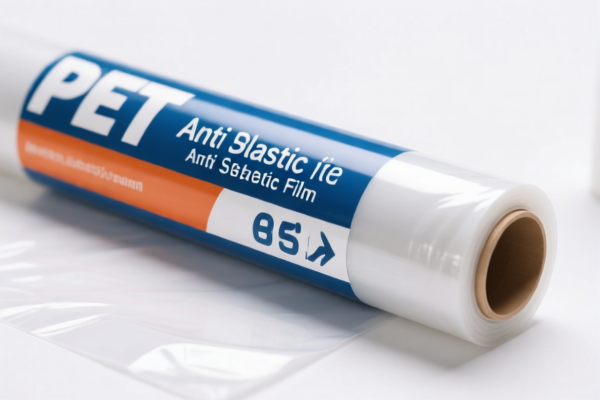
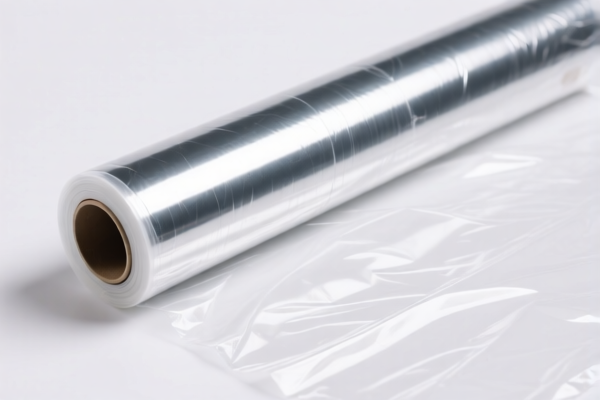
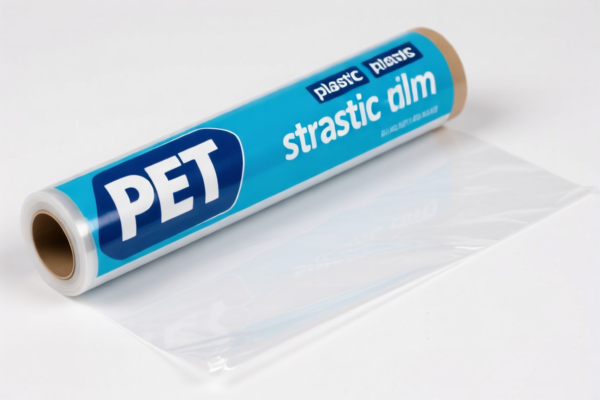
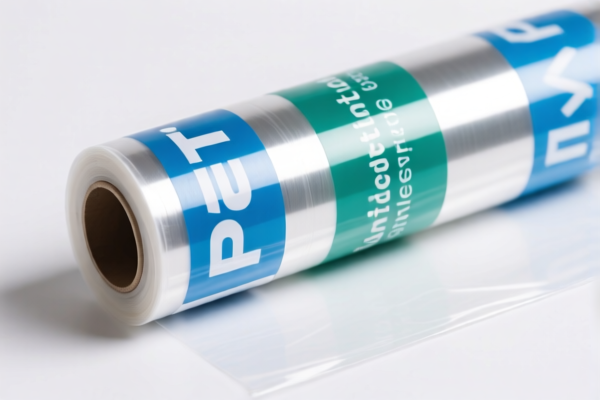
PET Aluminum Plated High Strength Film (Anti-Static) is a composite material widely used in packaging, electronics shielding, and decorative applications. It combines the mechanical strength of Polyethylene Terephthalate (PET) with the conductivity/shielding properties of vacuum-deposited aluminum, enhanced with anti-static coatings.
In international trade, classification hinges on three key factors: 1. Structure: Is it primarily a plastic film with a metal backing, or a metal foil with a plastic backing? 2. Function: Is the anti-static property defining, or is it incidental? 3. Material Composition: The interplay between the PET substrate and the Al layer determines the heading under the Harmonized System (HS).
⚠️ Key Distinction Point:
- If classified as Plastic Goods: Falls under Chapter 39 (PET as the essential character).
- If classified as Aluminum Foil: Falls under Chapter 76 (Aluminum as the essential character/backing).
- Anti-static functionality alone does not change the HS code but may influence customs scrutiny regarding "electrical properties."
📦 II. HS Code Classification Details (Based on Provided Data)
The following HS codes are derived directly from the provided dataset, representing different interpretations of the product's composition and function.
| HS Code | Product Description | Application Scenario | Key Classification Logic |
|---|---|---|---|
7607.20.10.00 |
PET Aluminized Anti-Static Film: Material PET, Form Film, Function Anti-Static. Fits "Aluminum Foil with Plastic Backing." | Electronics packaging, ESD-safe storage, high-strength shielding. | Primary Classification: Treated as Aluminum Foil (Ch 76) because the aluminum layer provides the essential functional characteristic (conductivity/shielding), even though PET is the substrate. |
3926.90.99.89 |
PET Aluminized Anti-Static Film: Material PET, Form Film. Classified as "Other Plastic Articles." No specific excluded use. | General plastic packaging, non-specialized industrial film. | Alternative Classification: Treated as a Plastic Article (Ch 39) where PET is considered the essential character, and aluminum is just a surface treatment. |
7607.20.50.00 |
PET Aluminized Anti-Static Film: Material PET, Form Film. Classified as "Composite Material with Metal Layer," fitting "Aluminum Backing." | Industrial laminates, composite materials requiring metal integrity. | Composite Interpretation: Focuses on the "composite nature" with a metal backing, distinct from simple foil. |
3926.90.94.00 |
PET Aluminized Anti-Static Film: Material PET, Form Film. Classified as "Plastic Sheets," no metal or raw material conflict. | Standard plastic sheeting applications, decorative films. | Conservative Plastic Interpretation: Ignores the metallic functional aspect, classifying purely by the polymer base (PET). |
🔍 Critical Reminder:
-7607.20.10.00and7607.20.50.00fall under Chapter 76 (Aluminum), implying the aluminum layer is crucial.
-3926.90.99.89and3926.90.94.00fall under Chapter 39 (Plastics), implying PET is the essential character.
- Do not mix these categories. Customs authorities will look at the essential character (GRI 3(b)).
💰 III. 2026 Latest Tariff Rate Details (Including Surcharges & Policy Add-ons)
✅ Applicable Country: USA (US)
✅ Origin: China (CN)
✅ Effective Time: 2025/2026 Tariff Schedule (Based on provided data)
🎯 1. 7607.20.10.00 —— Aluminum Foil with Plastic Backing (Most Common for Functional Films)
| Item | Detail |
|---|---|
| Basic Tariff | 3.7% |
| Section 301 Surcharge | 0.0% (Not applicable for this sub-heading in the provided data) |
| Section 122 Tariff | 10.0% |
| Total Tax Rate | 13.7% |
| Tax Calculation | CIF Value × 13.7% |
| De Minimis Exemption | ❌ Not Applicable (Commercial shipment) |
| Legal Basis Path | HTSUS:7607.20.10.00 → Section 122: 10% |
📌 Explanation:
- This code benefits from a 0% Section 301 surcharge in the provided data, making it significantly cheaper than plastic alternatives.
- The 10% Section 122 tariff is a specific surcharge applied here.
- Total Impact: 13.7%. This is the most cost-effective option if the product can be legally classified here.
🎯 2. 7607.20.50.00 —— Composite Metal-Layered Film
| Item | Detail |
|---|---|
| Basic Tariff | 0.0% |
| Section 301 Surcharge | 7.5% |
| Section 122 Tariff | 10.0% |
| Total Tax Rate | 17.5% |
| Tax Calculation | CIF Value × 17.5% |
| De Minimis Exemption | ❌ Not Applicable |
| Legal Basis Path | HTSUS:7607.20.50.00 → Section 301: 7.5% → Section 122: 10% |
📌 Explanation:
- While the basic duty is 0%, the 7.5% Section 301 surcharge increases the cost.
- Total impact is 17.5%, which is 3.8% higher than7607.20.10.00.
🎯 3. 3926.90.99.89 —— Other Plastic Articles (General)
| Item | Detail |
|---|---|
| Basic Tariff | 5.3% |
| Section 301 Surcharge | 7.5% |
| Section 122 Tariff | 10.0% |
| Total Tax Rate | 22.8% |
| Tax Calculation | CIF Value × 22.8% |
| De Minimis Exemption | ❌ Not Applicable |
| Legal Basis Path | HTSUS:3926.90.99.89 → Section 301: 7.5% → Section 122: 10% |
📌 Explanation:
- Classified as plastic, so it incurs Section 301 tariffs (unlike7607.20.10.00).
- Total impact is 22.8%, significantly more expensive than the aluminum foil classification.
🎯 4. 3926.90.94.00 —— Plastic Sheets (High Risk/Harsh)
| Item | Detail |
|---|---|
| Basic Tariff | 0.0% |
| Section 301 Surcharge | 25.0% |
| Section 122 Tariff | 10.0% |
| Total Tax Rate | 35.0% |
| Tax Calculation | CIF Value × 35.0% |
| De Minimis Exemption | ❌ Not Applicable |
| Legal Basis Path | HTSUS:3926.90.94.00 → Section 301: 25% → Section 122: 10% |
📌 Explanation:
- This code attracts the maximum Section 301 surcharge of 25% in the provided data.
- Total impact is 35.0%, making it the least favorable option.
- Only use if no other classification applies and you have no choice.
🛠️ IV. Customs Clearance Practical Advice (Real-World Pitfall Guide)
✅ 1. Preparation Checklist (Non-Negotiable)
| Document | Required | Notes |
|---|---|---|
| ✅ Product Spec Sheet | ✔️ | Must detail: PET thickness, Aluminum thickness, Anti-static coefficient (Ohms/sq). |
| ✅ Material Breakdown | ✔️ | Explicitly state: "PET Substrate + Vacuum Aluminized Layer + Anti-Static Coating." |
| ✅ Technical Data Sheet (TDS) | ✔️ | Show conductivity/shielding effectiveness to justify Ch 76 classification. |
| ✅ Commercial Invoice | ✔️ | Description: "PET Film, Aluminized, Anti-Static, for [Specific Use]." |
| ✅ Packing List | ✔️ | Consistent with invoice. |
| ✅ Origin Certificate | ✔️ | If not China-origin, could reduce tariffs (but data assumes China origin). |
✅ 2. Declaration Strategy (Key Rules)
🔥 “Aluminum Backing Wins, Plastic Loses; Anti-Static Adds Scrutiny.”
| Scenario | Correct HS Code | Wrong Code | Consequence |
|---|---|---|---|
| Functional Shielding | 7607.20.10.00 |
3926.90.99.89 |
Overpayment of 9.1% (13.7% vs 22.8%) + Audit Risk. |
| Composite Material | 7607.20.50.00 |
3926.90.94.00 |
Overpayment of 17.5% (17.5% vs 35.0%). |
| General Plastic Use | 3926.90.99.89 |
7607.20.10.00 |
Underpayment Risk (if deemed essential character is Al). |
⚠️ Warning:
- Do not declare as "Plastic Sheet" (3926.90.94.00) if the product has significant metal content. The 25% Section 301 surcharge will destroy your profit margin.
- Do not ignore the "Anti-Static" feature. Customs may ask for proof that it is not a "conductive wire" or "electrical component" (which would fall under Chapter 85). Ensure it is described as a film/sheet.
✅ 3. Special Case Handling
| Situation | Recommendation |
|---|---|
| High Aluminum Content | Prioritize 7607.20.10.00. Provide lab tests showing aluminum layer integrity. |
| Thin PET, Thick Al | Strong case for Ch 76. |
| Thick PET, Thin Al | Risk of Ch 39 classification. Prepare for higher taxes. |
| Electromagnetic Shielding | Emphasize "EMI/RFI Shielding" in description to justify functional necessity of Al. |
| Food Packaging | If for food, ensure FDA compliance documentation is ready. Tariffs remain the same, but clearance speed may vary. |
🌍 V. Global Market Comparison (2026 Perspective)
| Country/Region | Recommended HS Code | Total Tax Rate (China Origin) | Key Certifications | Notes |
|---|---|---|---|---|
| 🇺🇸 USA | 7607.20.10.00 |
13.7% | FDA (if food), RoHS | Best Option due to 0% Section 301 on this sub-heading. |
| 🇺🇸 USA | 3926.90.94.00 |
35.0% | FDA, RoHS | Avoid due to 25% Section 301. |
| 🇪🇺 EU | 3920.62.00.00 |
~5-7% | REACH, RoHS | EU classifies differently; often as plastic laminates. |
| 🇨🇳 China | 3920.62.00.00 |
~6% | CCC (if applicable) | Lower import duty, no Section 122/301. |
📌 Conclusion:
- USA Market: Classification is critical.7607.20.10.00saves 21.3% compared to the worst-case plastic classification.
- Global Trend: Increasing scrutiny on "composite materials." Ensure technical specs are precise.
📌 VI. Common Errors & Pitfalls (Lessons Learned)
❌ Error 1: Declaring as "Plastic Film" (3926...) when Aluminum is the functional layer.
👉 Result: 22.8% tax vs 13.7%. Loss of 9.1% margin.
❌ Error 2: Using 3926.90.94.00 without justification.
👉 Result: 35.0% tax. Catastrophic cost increase.
❌ Error 3: Vague description: "Aluminum Film."
👉 Result: Customs detention for classification review. Delay + Storage Fees.
❌ Error 4: Ignoring Section 122 Tariff.
👉 Result: Unexpected 10% charge on all entries. Budgeting failure.
✅ Correct Declaration Example:
"PET Film, 12μm, Vacuum Aluminized (50nm), Anti-Static Coated, Width 1000mm, Roll, For EMI Shielding. HS: 7607.20.10.00"
🎯 VII. Conclusion: Professional Declaration, Cost Efficiency!
🎯 Remember the Golden Rules:
🔹 "Aluminum Backing = Ch 76 = Lower 301 Rates."
🔹 "Plastic Base = Ch 39 = Higher 301 Rates."
🔹 "Anti-Static = Function, Not Classification Driver."
🔹 "Section 122 Hits Everything: Budget 10% Extra."
📌 Pro Tip:
If your product has varying thicknesses of PET vs. Al, consider applying for an Advance Ruling from US CBP. This locks in the classification (ideally 7607.20.10.00) and prevents future audits.
📣 Immediate Action:
📞 Contact your customs broker with Technical Data Sheets.
🚀 Target HS Code:7607.20.10.00for optimal 13.7% tax rate.
💼 Your Profit Margin Depends on Accurate Classification!
✨ Professional Customs Clearance Starts with Precision!
💼 Every Percentage Point Saved is Pure Profit!
Customer Reviews
About HS Code Classification
The Harmonized System (HS) is an internationally standardized nomenclature developed by the World Customs Organization (WCO) to classify traded products. Over 200 countries use the HS system as the basis for customs tariffs, trade statistics, and import/export regulations.
Each HS code follows a hierarchical structure:
- Chapter (2 digits) — Broad category of goods (e.g., Chapter 84: Machinery and Mechanical Appliances)
- Heading (4 digits) — More specific grouping within the chapter
- Subheading (6 digits) — Internationally standardized breakdown, used by all WCO member countries
- National subdivisions (8-10 digits) — Country-specific extensions for further classification, such as US HTSUS 10-digit codes
Correct HS code classification is essential for smooth customs clearance, accurate duty payment, and compliance with trade regulations. Misclassification can lead to customs delays, overpayment of duties, or penalties.
When importing from CN to US, the applicable tariff rates may include:
- Most-Favored-Nation (MFN) rate — The standard duty rate applied to WTO members
- General rate — Applied to countries without trade agreements
- Trade remedy duties — Additional tariffs such as Section 301 (anti-dumping), Section 232 (national security), or countervailing duties
The information provided on this page is for reference purposes only. For official classification, please consult with your local customs authority or a licensed customs broker.